Fish farming in Nigeria is not a side hustle people stumble into anymore. Between the food import crisis, the naira’s freefall against the dollar, and a domestic fish supply that covers less than a third of what the country actually consumes, people are building ponds in their backyards, on rented farmland in Ogun, in converted garages in Ibadan, and on small plots behind church compounds in Ondo. The demand for catfish alone is staggering. Nigeria produces around 1.07 to 1.2 million metric tons of fish annually according to data from the Central Bank of Nigeria, but demand sits at 3.6 million metric tons. The gap of roughly 2.5 million metric tons is filled mostly by imports, which means local fish farmers are supplying a market that is nowhere close to saturated.
What stops most people from getting in is not will. It is confusion at the construction stage. Concrete or earthen? How big? How deep? Do I need a borehole? How much is this actually going to cost me? These are real questions that deserve straight answers, not motivational writeups that skip the part where money changes hands.
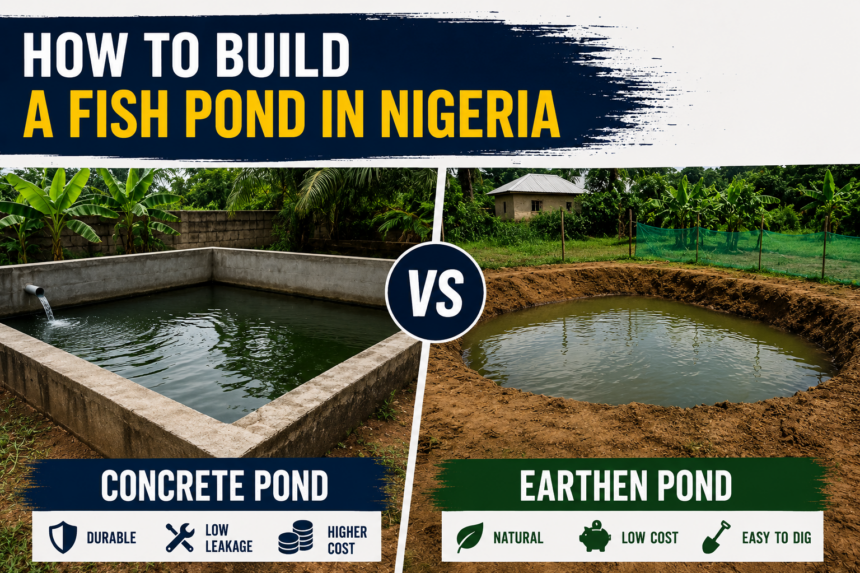
This piece gets into the practical side: what each pond type involves in terms of construction, cost, management, and the situations each one is actually suited for in the Nigerian context. Whether you have a quarter plot in Lagos or farmland in Benue, the decision you make here will shape everything about how profitable your fish farming venture ends up being.
How to Build a Fish Pond in Nigeria
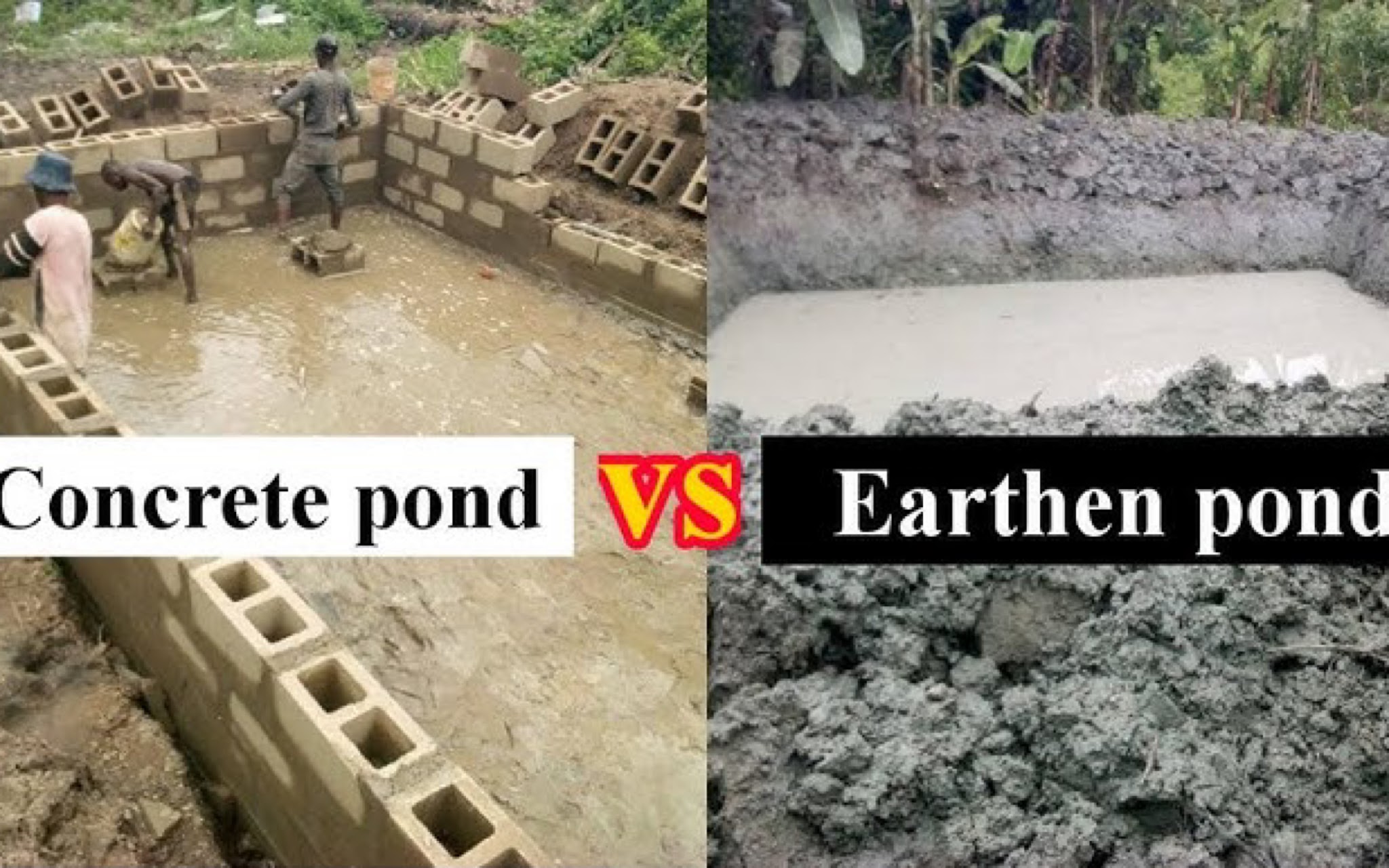
The question of how to build a fish pond in Nigeria is really two questions layered on top of each other: which type of pond fits your land and budget, and how do you build it properly without creating a leaky mess you’ll spend the next year fixing. Getting both answers right from the start saves you from the mistakes that cost Nigerian fish farmers thousands of naira every cycle. This breakdown covers both pond types from site selection through construction, with realistic cost figures and the trade-offs that matter most in local conditions.
Why So Many Nigerians Are Getting Into Fish Farming Right Now
The numbers explain it better than any motivational speech could. Fish accounts for about 44 percent of animal protein intake for the average Nigerian, according to researchers at the University of Plymouth who studied the Nigerian aquaculture sector. With a population now above 220 million and growing, the demand pressure on fish supply is not going away. Nigeria currently imports fish from Chile, the Netherlands, the Faroe Islands, Iceland, and Ireland to plug the gap, spending roughly a billion US dollars a year on fish imports. That is money that could stay in the country if local aquaculture scaled up meaningfully.
Catfish is the fish that drives most small and medium-scale aquaculture in Nigeria. Nigeria accounts for more than 67 percent of global African catfish production, according to a 2023 dataset published in ScienceDirect covering Nigeria’s ten major catfish-producing states. Clarias gariepinus, the North African catfish, is the dominant species farmed here, and it is popular for good reason: it tolerates poor water conditions better than most fish, grows to market weight in roughly six months when fed properly, and is in year-round demand at restaurants, markets, and households across the country.
The economics, when managed well, are hard to argue with. A 2024 study by Professor Olaoye Jacob and his research team, cited in BusinessDay, found that an initial investment of N3 million in fish production yielded a profit of over N700,000 in just six months. For smaller operators, industry stakeholders estimate that N1.2 million in operational costs can generate around N400,000 profit in five months when raising 500 catfish to table size. One kilogram of fresh catfish was selling for between N3,500 and N4,500 in cities as of 2025. Okon Amah, Secretary of the Akwa Ibom Fish Farmers Association of Nigeria and CEO of Prodave Integrated Farms and Services Limited, rated the catfish business at eight out of ten in terms of profitability, saying it can generate returns between 35 and 75 percent with the right knowledge and resources.
None of that profit arrives without a properly constructed pond. Which brings us to the part most people gloss over.
Before You Pick a Pond Type, Four Things Need to Be Settled
The pond type you choose should follow from your situation, not the other way around. Many people ask ‘concrete or earthen?’ before they’ve answered the questions that determine which option is even viable for them.
The first is land ownership. You cannot dig an earthen pond on land you do not own or have a long-term lease on. An earthen pond is a permanent alteration of the ground. If your landlord decides not to renew your agreement after your first harvest cycle, you lose both the pond and the season’s investment. Concrete ponds share the same problem, but because they are typically smaller and can theoretically be modified, the risk is often more tolerable. If your land situation is not stable, neither type of fixed pond makes practical sense, and you should be looking at tarpaulin systems until that changes.
The second is soil type, and this only applies if you’re considering earthen ponds. The soil needs to have a clay content of at least 20 to 25 percent to hold water effectively. Clay and silty clays prevent seepage because their particle structure limits water movement through the ground. Sandy soils are a problem: they drain too fast and your pond will perpetually lose water no matter how much you add. Before committing to an earthen pond, you need to test or at least visually assess the soil. Pick up a handful of moist soil and roll it between your palms: clay soil holds shape and stays cohesive. Sandy soil crumbles and falls apart. If you’re on laterite-heavy land in parts of the southwest or sandy soil near coastal areas, an earthen pond will cost you more in water management than you’re expecting.
The third is access to water. A fish pond is not like a crop that can survive a dry spell. Fish die without consistent water supply, often within hours once oxygen levels drop. If you’re in an area where you can tap into a stream, a natural spring, or reliable groundwater through a shallow well, your water costs are significantly lower. If you’re in a peri-urban area with no natural water source, you need a borehole, and a functional borehole in most parts of southern Nigeria costs between N500,000 and N800,000 depending on depth and geology. That cost changes your break-even calculation considerably.
The fourth is whether you’re farming for subsistence, small-scale commercial production, or building a proper fish business. Location within Nigeria also matters. A quarter plot in Ikotun, Lagos, cannot accommodate the kind of earthen pond that would make commercial catfish production viable. Concrete ponds or tarpaulin systems are the practical reality for urban and peri-urban Lagos. Rural land in Oyo, Kogi, Delta, or Anambra State gives you the space for earthen systems that can hold 5,000 fish or more per pond.
How to Build a Concrete Fish Pond in Nigeria, Step by Step
Concrete ponds are the dominant choice for urban and peri-urban fish farmers across Nigeria. They work in smaller spaces, they don’t require clay-heavy soil, and they give you much tighter control over water quality and fish management. The tradeoff is cost: both at construction and in ongoing water expenses.
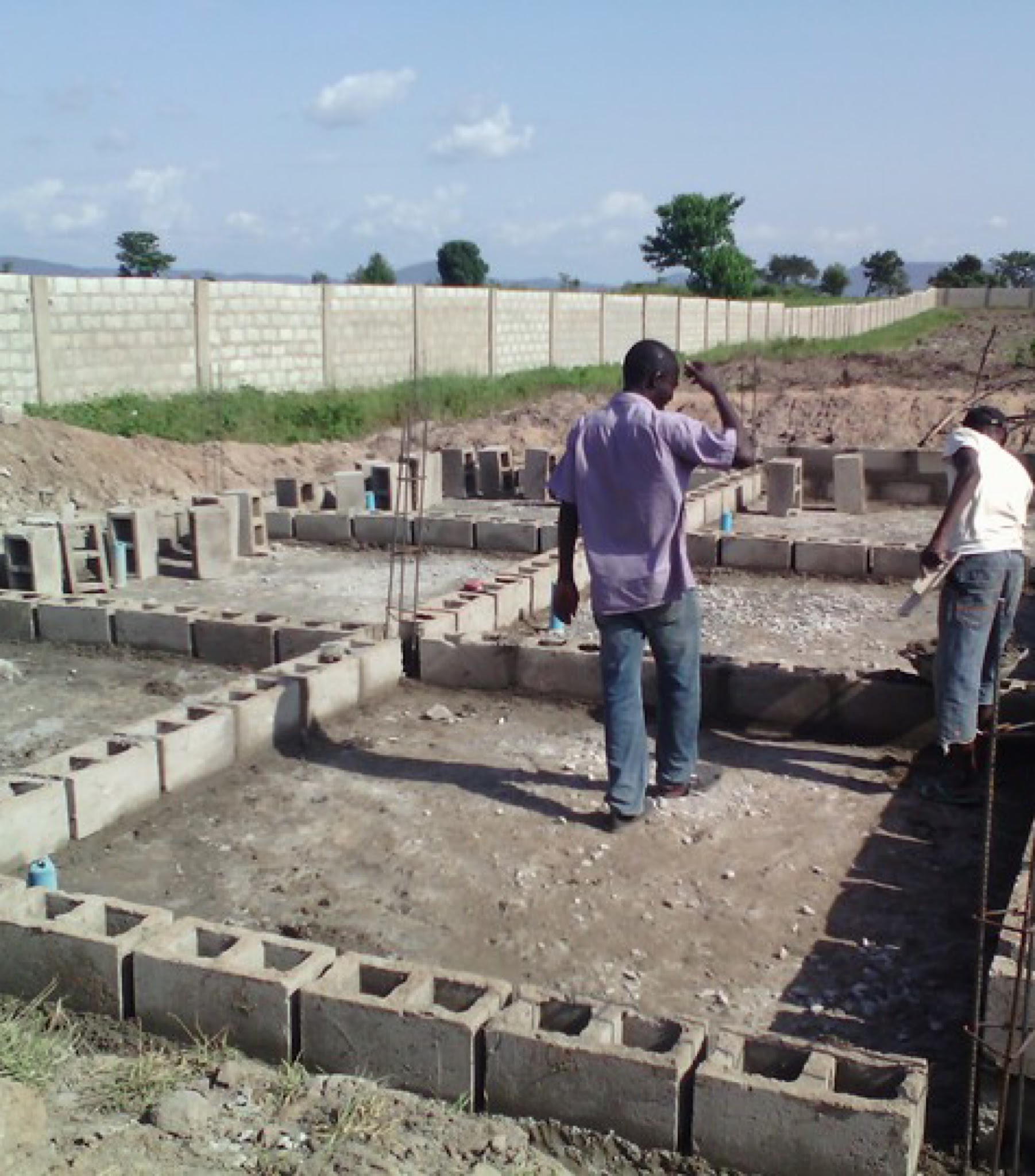
Start by clearing the site completely. Remove vegetation down to bare ground and strip away the topsoil until you hit firm subsoil or a laterite base. For most sites in southern Nigeria, this means digging down anywhere from half a metre to about 1.5 metres before you hit ground solid enough to build on. Peg out the area you want the pond to occupy. A single concrete pond that can comfortably hold 1,000 catfish typically measures around 3 metres by 2.5 metres with a depth of about 1.4 metres, though farmers adjust dimensions based on available space. Larger ponds need iron rod reinforcement in the walls, which adds significantly to material costs, so it’s usually cheaper to build multiple smaller units than one very large one.
Once you’ve marked the perimeter and dug to the required depth, lay the framework for your walls using hollow blocks arranged around the perimeter of the dug-out area. The recommended concrete mix for fish pond walls is a 1:3:6 ratio of cement to sand to gravel. This gives the walls both strength and some resistance to the constant water pressure they’ll be under. Walls should be no less than 5 centimetres thick. The floor of the pond needs to be thicker, around 10 centimetres, because it bears the weight of the water column above it. Work the concrete carefully into all the corners and let it cure fully before moving to plastering.
After the walls set, plaster the interior with a smooth cement finish. This serves two purposes: it closes off any micro-gaps in the block and mortar work that could allow slow leaks, and it creates a surface that’s easier to clean between cycles. Before stocking any fish, insert your flush pipe or outlet at the base of the pond wall. This is usually a PVC pipe with a valve that lets you drain the pond for harvesting and cleaning without having to bucket water out manually. The inlet for water supply should come in from above the waterline so the falling water helps aerate the pond naturally.
Curing the pond is a step that many first-time builders skip, and it causes problems. Fresh concrete releases calcium hydroxide into water, which pushes the pH above what fish can tolerate. Before stocking, fill the pond completely and let it sit for a week, then drain and repeat. Some farmers add a handful of rice husks or stale plantain leaves to the water to help absorb the alkalinity faster. Only after two or three of these fill-and-drain cycles, and after confirming the water pH has normalised, should you introduce fingerlings or juveniles.
How to Build an Earthen Fish Pond in Nigeria, Step by Step
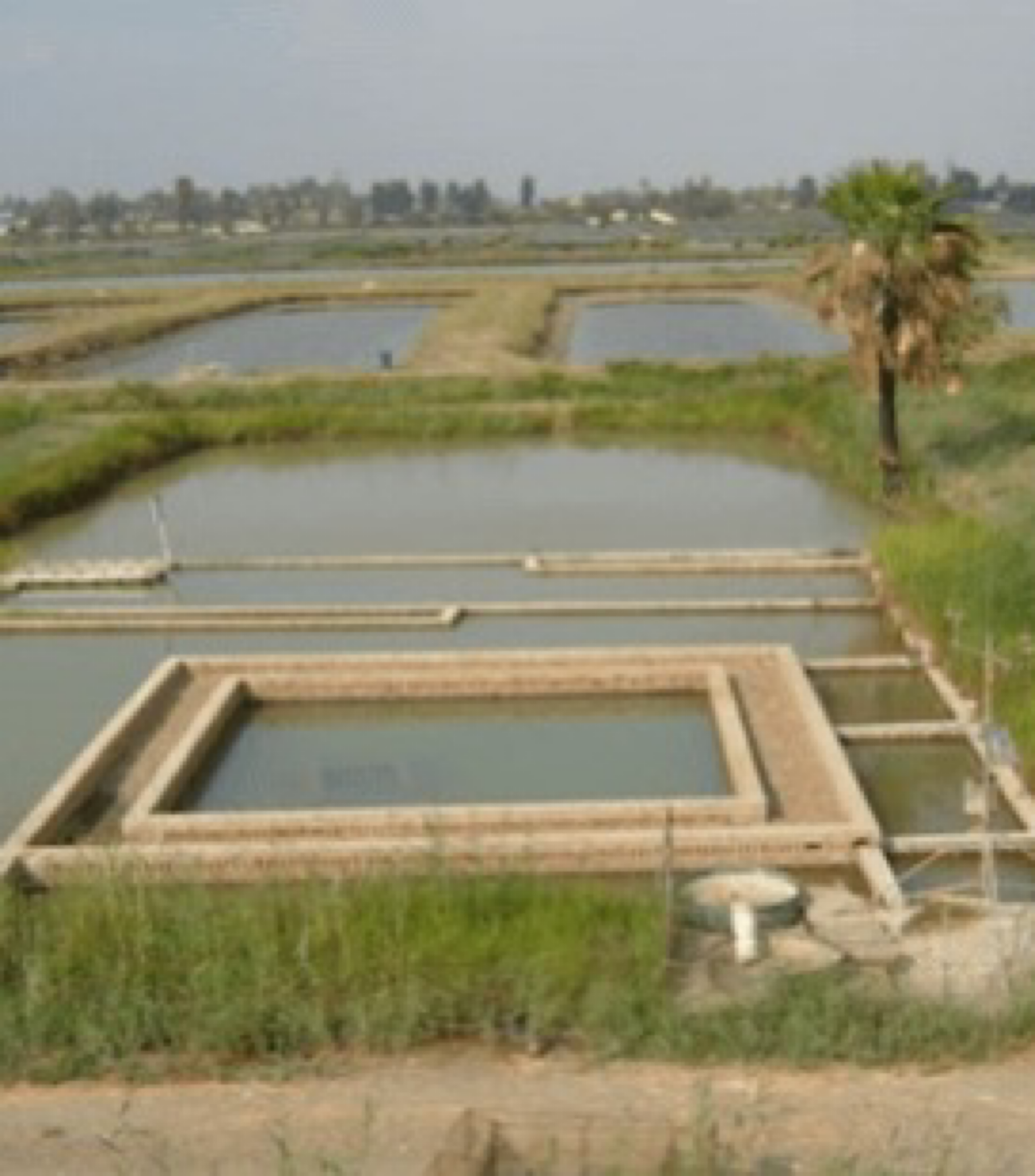
An earthen pond is essentially a managed hole in the ground. It looks simple, but getting it right takes more preparation than most people plan for. The fish grow faster in earthen ponds than in any other system because the environment is closest to their natural habitat. Natural organisms, algae, and benthic fauna provide supplementary feeding. Water temperature regulation is better in earthen ponds because the soil acts as insulation. These advantages are real, but they come with management challenges that concrete ponds do not have.
Site selection is the single most important decision for an earthen pond. You need clay-rich soil, a relatively gentle slope that allows for drainage without flooding, and a reliable water source nearby. Swampy or waterlogged land is often cited as ideal because groundwater is naturally close to the surface, but this also creates drainage challenges during the rainy season. If you’re building in a flood-prone zone, you need embankments strong enough to keep rising water out. For commercial earthen ponds, the National Agricultural Extension and Research Liaison Services (NAERLS) recommends that commercial earthen ponds not go below 0.25 hectares in total area, because banks and agricultural lenders use that threshold when considering facilities for fish farming operations.
Once you’ve chosen your site, mark the perimeter with pegs. Digging is done manually for smaller ponds but requires an excavator for anything above about 20 by 10 metres. A standard earthen pond is dug to a depth of between 1 and 2 metres, shallower at the inlet end and deeper toward the outlet. Uneven depth is deliberate: the shallower end lets sunlight penetrate to encourage natural algae growth, while the deeper section gives the fish room during hot periods and makes harvesting easier since fish naturally congregate in the deepest point.
The soil you excavate is not waste material. It gets piled around the edges of the pond to form the embankment, also called the dyke. These dykes should be compacted thoroughly, built at a slope between 30 and 45 degrees on the inner face, and planted with grass after construction. The grass root system binds the soil and significantly reduces erosion from rain and wave action. A well-grassed dyke can last for decades. A bare dyke erodes season after season and eventually collapses into the pond.
Inlet and outlet management in an earthen pond is different from concrete. The inlet channel should enter from the higher elevation side and be screened to stop wild fish from swimming in and competing with or eating your stock. The outlet structure, known as a monk in technical literature, is positioned at the deepest point and consists of a vertical tower with removable wooden boards that control the water level. You add or remove boards to raise or lower the water. During harvest, you remove all the boards and let the pond drain toward the outlet, which channels fish into a collection area. Before stocking, earthen ponds are typically limed to neutralise any acidity in the soil and to kill off any predatory insects, frogs, or competitor species that may have established themselves during construction.
Concrete vs Earthen: What the Real Cost Comparison Looks Like in 2026
This is where decisions get real. Both types of ponds involve more money than most beginners budget for, and the inflation in building materials between 2023 and 2026 has pushed construction costs noticeably higher across Nigeria.
For concrete ponds, a single unit measuring roughly 17 by 15 feet can cost between N100,000 and N300,000 depending on your location and the cost of labour in that area, according to data compiled by MSME Hub in consultation with fish farmers in Lagos. Three units of concrete ponds, which is typically the minimum setup for a viable commercial operation (a nursery pond, a grow-out pond, and a sorting or buffer pond), will cost at least N650,000 in construction materials and labour if resources are managed tightly, according to Kenchu’s Farm Services, a catfish farming consultancy that operates across Nigeria. That figure does not include borehole drilling (N500,000 to N800,000 in most parts of the south), overhead tanks (around N90,000 for two 5,000-litre tanks), plumbing fittings, or a pump. When you add everything up, a concrete pond setup with its own water supply infrastructure can cost N1.5 million to N2.5 million to get to a properly functional state in an urban or peri-urban location.
Earthen ponds have lower construction costs because you’re mostly paying for excavation labour and basic inlet and outlet infrastructure. Digging an earthen pond can be done for around N150,000 for smaller sizes, though a full commercial pond with proper dyke construction, a screened inlet, and a monk outlet structure will cost more in both material and labour. The big savings come from water: if your site has a natural water source or a stream nearby, you could avoid borehole costs entirely. This is one reason commercial operations in places like Ibadan, Ogun State, or Benue, where farmland with water access is available, tend to favour earthen systems at scale. Akin Showemimo, director of Asher Royal Produce Limited in Ibadan, one of Nigeria’s better-known fish farming operations, runs 36 earthen ponds of 20 by 10 metres each at his main farm, producing 26 tonnes of catfish, 12 tonnes of tilapia, and 3 tonnes of heterotis yearly from a 54,000-fish capacity per cycle.
The hidden cost difference shows up in maintenance. Concrete ponds need to be fully cleaned, disinfected, and dried between cycles. Water change routines are more labour and cost-intensive because you are running treated tap water or borehole water rather than replenishing naturally. Earthen ponds have lower ongoing maintenance but are harder to manage during disease outbreaks: when something goes wrong in an earthen pond, it is much harder to observe the fish, identify sick individuals, and treat selectively. Disease management in an earthen pond is essentially water-wide treatment, which is expensive and not always effective.
Which Pond Type Actually Works for Your Situation
No single answer fits everyone, and anyone who tells you otherwise is either selling construction services or has never built both types. The choice depends on three things: your land situation, your water access, and your scale of ambition.
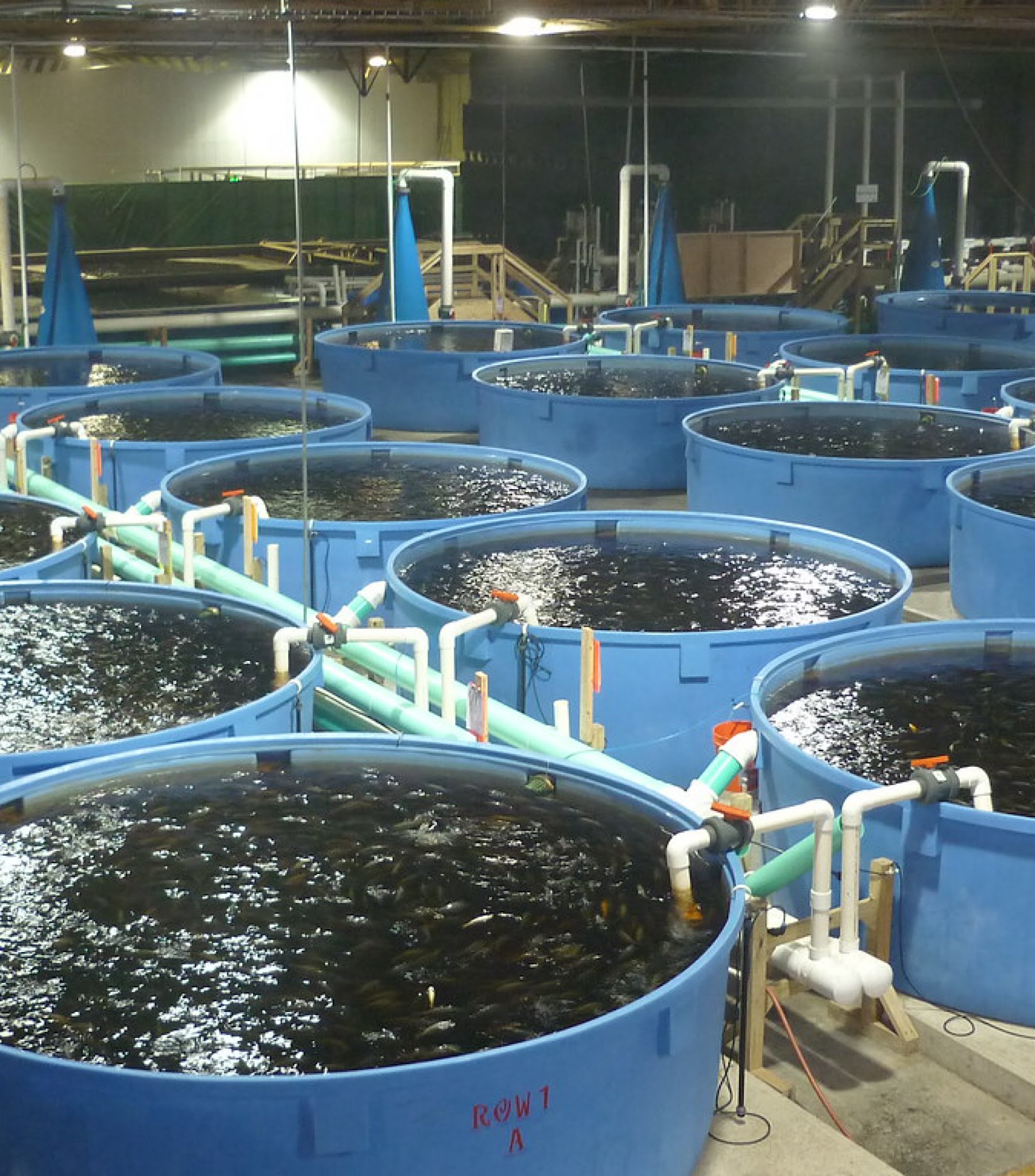
Concrete ponds make sense if you are in an urban or peri-urban location, you’re working with limited space, you don’t own the land outright but have a reasonable lease, or you’re starting with a small number of fish (500 to 2,000) while learning the business. They also make sense if you are raising juvenile fingerlings or running a hatchery, because concrete’s smooth surfaces make it much easier to monitor and treat young fish. Small fry and fingerlings are nearly impossible to sort and manage in an earthen pond. Cannibalism, where stronger fish eat weaker ones of the same batch, is almost impossible to control in earthen ponds when your stock is small. In concrete ponds, you can see the fish, observe their behaviour, and act on problems early.
Earthen ponds make sense if you have your own land in a location with clay-rich soil and natural water access, you’re aiming for genuinely large-scale production (5,000 fish and above per pond), and you can manage the complexity of earthen pond maintenance. Fish grow faster in earthen ponds because the natural environment provides supplementary nutrition through algae and organisms in the water column, reducing your feed conversion costs. For a farmer in Ogun, Kogi, Delta, or Anambra State with a half-hectare or more of suitable land, earthen ponds can offer better returns per naira invested over a multi-year horizon than concrete ever will.
Some commercial operations split the two, and this is increasingly common among serious Nigerian fish farmers. They use concrete systems for fingerling nursery and juvenile stages, then transfer the fish to earthen ponds for the grow-out phase. This gives you the management control of concrete during the most vulnerable period of the fish’s life, and the cost and growth advantages of earthen ponds once the fish are robust enough to handle less controlled conditions. It requires more infrastructure upfront but pays off over multiple cycles.
Water, Borehole, and the Details Most First-Timers Get Wrong
Water is not a line item you can downgrade. It is the farm. A fish pond without a reliable, consistent water source is not a fish pond; it is a slow disaster. Understanding where your water is coming from, how to manage it, and how to protect water quality will determine whether your fish survive long enough to make you money.
Borehole water is the most reliable option for farmers without access to a stream or river. It avoids the contamination risk of open surface water, which can carry agricultural runoff, pesticides, and wild fish carrying disease. The cost of drilling a borehole varies significantly across Nigeria: N500,000 is a common estimate for the southwest, but in parts of the north or in areas with deeper water tables, that figure climbs. A borehole without an overhead tank is also incomplete: you need at least one elevated tank to create gravity-fed flow into your ponds, and two 5,000-litre tanks with scaffolding typically run around N200,000 to N250,000 fully installed.
For those in areas where stream or river water is an option, the cost savings are real but so are the risks. Open water can introduce wild fish species, including predators that eat your fingerlings and parasites that create disease problems. A properly screened inlet that filters incoming water is non-negotiable in these situations, not optional infrastructure to add later.
Water quality is the thing that quietly kills most beginners’ first batch. Ammonia buildup from fish waste is the primary culprit in concrete ponds. Fish excrete ammonia directly into the water, and in a closed or semi-closed system without adequate water exchange, it accumulates and becomes toxic. The signs are fish gasping at the surface early in the morning, listlessness, and unexplained deaths. The fix is regular partial water changes, at least 20 to 30 percent of the pond volume every few days in a densely stocked concrete pond. In earthen ponds, natural biological processes in the soil and water column help break down ammonia more effectively, but this natural buffering has limits that overcrowding will test.
Common diseases in Nigerian catfish production include cottonmouth disease caused by the bacteria Aeromonas hydrophila, crackhead disease, and ichthyophthiriasis (white spot). These are manageable with proper biosecurity: sourcing fingerlings from reputable hatcheries, avoiding introduction of wild fish into your ponds, maintaining water quality, and keeping feed quality consistent. Some farmers use saline solutions and antibiotics like terramycin for treatment, but prevention is substantially cheaper than treatment across a pond of a thousand fish.
Making the Right Call Before You Spend a Kobo
The fish farming opportunity in Nigeria is real. The demand gap is documented, the profitability data from actual farms exists, and both pond types have produced successful operations in different parts of the country. What separates people who make money from it and people who write it off as another failed agribusiness venture is almost always the planning that happened before construction started.
Concrete ponds suit urban reality. They are manageable, observable, and fit the land and water constraints most city and peri-urban farmers are working within. Earthen ponds suit farmers with the right land and soil, a reliable natural water source, and enough capital to build the dykes, inlets, and outlets properly rather than cutting corners. Both types need a borehole or water source infrastructure that is more expensive than most beginners plan for, and both need the three-pond minimum setup to run a proper commercial operation.
The decision is not really concrete versus earthen. It is: what does my actual situation allow, and am I building something I can sustain for at least two to three production cycles before expecting real profit? That question, answered honestly against your own land, water access, budget, and location, is what determines which pond belongs on your property.