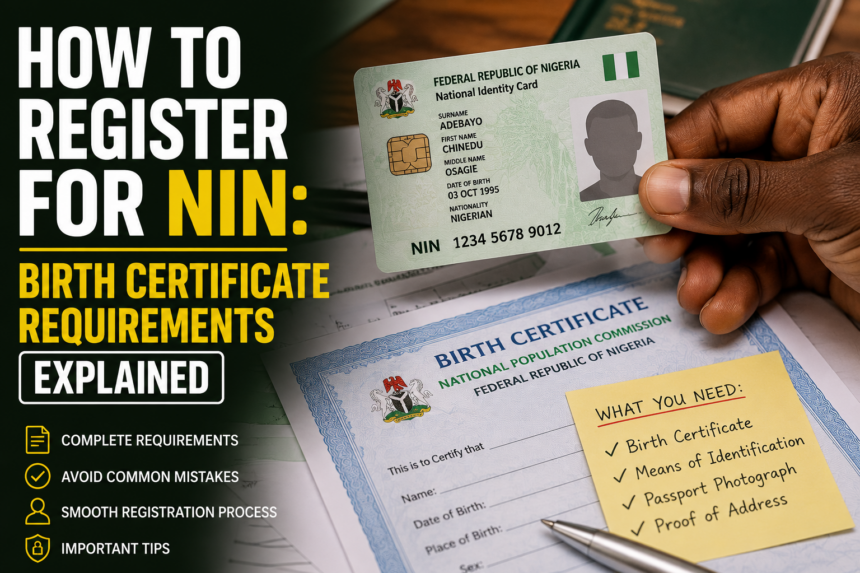
There is a moment many Nigerians know well. You are standing at an enrollment center or trying to fill out an online form, and the system asks for something you either do not have, cannot find, or were never told was required. For a lot of people, that moment happens with the NIN. The question that trips people up most is the one about the birth certificate. Do you actually need one? What happens if you never had one, or the one you have has a different name on it? Is a voter’s card enough? What if you are trying to register a child?
These are not edge cases. Nigeria has a long history of inconsistent civil registration, meaning millions of adults walking around today never had a birth certificate issued in their name. The National Population Commission only moved to a centralized digital registration system relatively recently, and plenty of Nigerians born in the 1970s, 1980s, and even the 1990s have nothing beyond a church baptismal record or a school leaving certificate to show for it. Understanding what NIMC actually requires, and what it accepts as alternatives, is practical information that affects a lot of people.
The stakes have also gone up. The NIN is now woven into nearly every major transaction in the country. Banks need it. Immigration needs it. WAEC and NECO need it. Scholarship portals need it. The government has made it mandatory for services ranging from SIM card registration to passport applications. If you do not have one, you are increasingly locked out of things that matter.
How to Register for NIN: Birth Certificate Requirements Explanation
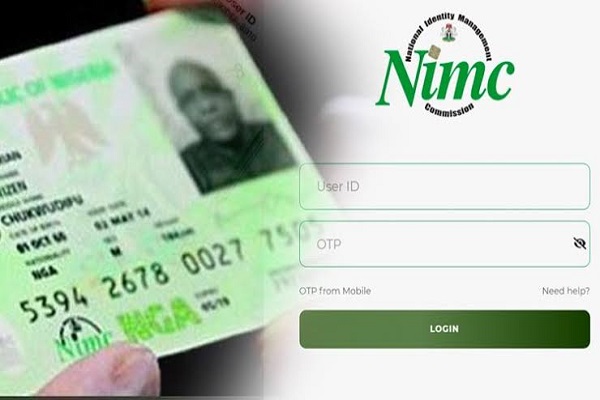
The process of NIN registration is less complicated than most people assume, but the documents side is where confusion tends to pile up. NIMC does ask for supporting documents, and for children, a birth certificate is genuinely required. For adults, however, the picture is much wider than that, and understanding the full list of what qualifies means you do not need to put off your enrollment waiting for a document you may never get.
What NIMC Actually Needs From You at the Enrollment Center
For adults aged 16 and above, NIMC requires one supporting document. You do not need to bring multiple documents, and you do not need to bring a birth certificate specifically. The document you bring is used to verify your identity and confirm your demographic information, so it must be original, valid, and carry your name.
NIMC’s enrollment guidelines list a broad range of acceptable documents for adult registration. The options include a Nigerian international passport (expired copies are generally accepted as long as your identity is still clearly established), a driver’s license, a permanent voter’s card (PVC), an old national ID card, a birth certificate, a declaration of age, a certificate of origin, an attestation letter from a recognized community or religious leader, an NHIS card, a government staff ID, a school ID card from either a public or private institution, a tax clearance certificate, and valid immigration documents. The list also covers refugee certificates issued by the Nigerian Commission for Refugees.
What this means practically is that the vast majority of Nigerians already have something on the list. If you are a registered voter, your PVC is sufficient. If you have ever had a Nigerian passport, that works. If you are a current or former civil servant, your government ID qualifies. The birth certificate is one option among many for adults, not a fixed requirement.
The process itself follows a standard sequence. You walk into any accredited NIMC enrollment center with your document, an officer checks whether you have been enrolled before using the NIN verification portal, you fill out the enrollment form (or hand over a barcode slip if you pre-enrolled online), your biometrics are captured including all ten fingerprints and a facial photograph, and you are issued a transaction ID slip. Your NIN slip typically comes within one to five working days, though the timeline depends on network availability and the processing load at that center.
The Birth Certificate Question: When It Is and Is Not Required for NIN
A birth certificate issued by the National Population Commission is the primary government-issued document that establishes your date of birth and identity from the point of registration. It carries your full name, date of birth, place of birth, and parental details. For purposes like passport applications and foreign university admissions, it holds significant weight.
For NIN enrollment in Nigeria, however, the birth certificate is not a standalone requirement for adults. NIMC treats it as one valid document among a much wider list. The reason is straightforward: NIMC is aware of Nigeria’s civil registration gaps. Requiring a birth certificate as the only acceptable document for NIN would exclude tens of millions of Nigerians who were never formally registered at birth or whose records were lost or never properly maintained by state registries.
Where a birth certificate becomes effectively mandatory is for children. For minors under 16, NIMC’s guidelines specifically require a registered birth certificate or a statutory age declaration alongside the parent or guardian’s NIN slip. This is a harder requirement for that category, and the alternative to a formal birth certificate, a statutory age declaration, itself requires a court affidavit. The flexibility that exists for adults does not fully apply to minors.
There is also a diaspora distinction worth knowing. NIMC-authorized enrollment centers operating abroad, particularly in the UK and other European countries, apply stricter documentation standards. Sources indicate that Nigerians registering for NIN abroad are typically required to present an NPC digital birth attestation, not just a regular birth certificate or age affidavit. Within Nigeria at official NIMC centers, the document flexibility remains broader, and an age affidavit is generally accepted as an alternative where a birth certificate is not available.
If You Have No Birth Certificate: What Documents Can Stand In
This is probably the most common practical question. A lot of Nigerians, especially those born before the NPC overhauled its registration processes, do not have a formal birth certificate. Some were registered at birth but never obtained the physical certificate. Others were born in villages or homes without any formal registration at all. The approach you take depends on which situation applies to you.
For adults enrolling for NIN within Nigeria, the most immediate alternative is any of the other documents on NIMC’s accepted list. Your voter’s card alone is enough. So is a driver’s license, a Nigerian passport, or a government or school ID. You do not need to go through the process of obtaining a birth certificate just to get your NIN if you have any of these already.
If none of those apply and you have no formal documentation at all, the declaration of age route is the one NIMC’s guidelines accommodate. A declaration of age is a sworn affidavit obtained from a Nigerian High Court where a parent, older sibling, or other recognized declarant attests to your date of birth and personal details. Once obtained, it is an acceptable supporting document for NIN enrollment at NIMC’s official centers within Nigeria.
For people who were born in Nigeria but whose birth was never registered, and who now want a formal NPC birth certificate, the situation is more involved. The NPC runs a late registration process for this, which requires an age declaration affidavit first. The NPC’s online birth registration portal at birthreg-selfservice.nationalpopulation.gov.ng handles part of this process. Fees for birth certificates from the NPC currently sit in the range of three thousand to five thousand naira depending on the type of certificate and processing option selected. This is a separate process from NIN registration and is not a prerequisite for it if you have other qualifying documents.
There is one important consistency check NIMC enforces regardless of which document you bring: the name and date of birth on your supporting document must match exactly what is entered into the NIDB. Abbreviated names, spelling variations, or initials that differ from the rest of your documentation create problems downstream, particularly when you try to link your NIN to a passport or bank account.
Registering a Child Under 16: What Parents Must Bring to the Center
The rules for minors are stricter, and there is a reason for that. Children under 16 do not yet have the other forms of identification that adults accumulate over time. They do not have voter’s cards, passports in most cases, or driver’s licenses. The birth certificate is the primary government document that establishes who they are, and NIMC treats it as a mandatory requirement for this group.
To enroll a child under 16, a parent or guardian must be physically present at the center. The parent or guardian must already have their own valid NIN, and they must bring the NIN slip as proof. The child’s original birth certificate or a statutory age declaration is required for the child’s documentation. The child must also be physically present, as biometric data capture is part of the process even for infants and toddlers, though children under 16 are only issued a NIN slip and are not eligible for the physical national ID card until they turn 16.
The child’s NIN is linked to the parent’s NIN in the database until the child turns 16 and has their full biometrics captured. The NIN the child receives at enrollment stays with them for life and does not change when they turn 16. It is the same number that will be tied to their bank accounts, passport, and other records going forward.
NIMC has been explicit about this category in recent months. In a public advisory published on its official X platform, the commission stated: “Dear Nigerian parent, your child needs an NIN. NIN is now important for school registrations, exams, scholarships, and many other government benefits.” The message was directed specifically at the 2026 WAEC and NECO examinations, which now require a NIN for candidate registration. Parents who have not yet enrolled their children are running out of time to do so before key academic milestones.
For a child whose birth was never registered, parents will need to go through the NPC’s late registration process first to obtain either a birth certificate or a statutory age declaration before NIN enrollment can proceed. This adds a step but is not an insurmountable barrier.
How the 2026 Ward Enrollment Drive Changed Where You Can Register
One of the biggest practical changes to NIN registration in 2026 is where you can go to enroll. NIMC launched a nationwide ward-level enrollment drive on February 16, 2026, following a presidential directive to push NIN registration down to the grassroots. The exercise covers all 774 local government areas in Nigeria and is designed specifically to reach people who have not enrolled yet because fixed NIMC centers are too far from where they live.
According to Dr. Kayode Adegoke, Head of Corporate Communications at NIMC, the ward enrollment exercise follows a rotational schedule, with licensed front-end partners and NIMC staff moving through wards on a timetable published on the commission’s website at nimc.gov.ng. Corps members have been trained and deployed as part of the initiative to extend coverage beyond what permanent NIMC staff can reach on their own.
The enrollment at ward-level centers is free of charge, the same as at permanent NIMC enrollment centers. NIMC has repeatedly and publicly warned against unauthorized agents who demand payment for enrollment services. If anyone at an enrollment center, whether at a fixed center or a ward-level outpost, is asking you to pay for basic NIN registration, that is not legitimate. The toll-free NIMC helpline at 08000616462 is available for complaints and inquiries.
The context behind this push is significant. As of October 2025, NIMC had issued NINs to approximately 123.9 million Nigerians, against a population estimated at around 230 million. The commission is targeting 180 million enrollments by the end of 2026 under a restructured World Bank Digital Identity for National Development project that has been extended to December 31, 2026, after Nigeria missed an earlier target of 148 million enrollments by June 2024. The ward-level exercise is a direct response to that enrollment gap.
Pre-Enrollment Online: How It Works and What It Actually Saves You
NIMC runs a pre-enrollment portal at penrol.nimc.gov.ng that allows you to fill out your demographic information online before you visit a physical center. The idea is to reduce the time you spend at the enrollment point by front-loading the form-filling process.
When you complete the pre-enrollment, a 2D barcode is generated. You save or print that barcode and bring it to any accredited NIMC enrollment center. The enrollment officer scans the barcode to pull up your pre-filled information, which eliminates the step where you would otherwise fill out the form at the center. You still need to appear in person for the biometric capture, and you still need to bring your original supporting document with you.
The system is the same for minor enrollment. Parents pre-enrolling their children online are required to provide the parent’s NIN during the pre-enrollment stage. The child’s birth certificate is then scanned at the physical center when the parent and child show up for biometric capture. Pre-enrollment does not remove the documentation requirement; it just reorganizes when you complete which part of the process.
One practical tip: fill out the pre-enrollment form carefully, because errors entered here can create data quality issues in your NIN record that are harder to fix after the fact. A wrong date of birth or misspelled name will require a data modification request, which is a separate process involving a fee of thirty-three thousand naira for name-related changes. Getting the information right the first time is worth the extra attention.
Why Name Inconsistencies Between Your Documents Will Stall Your Registration
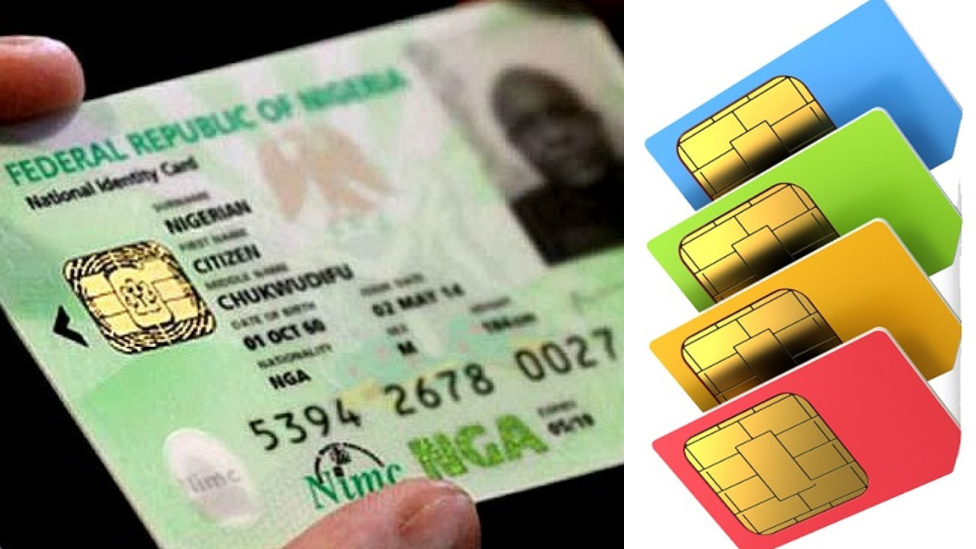
This is where a lot of people run into trouble, not at the enrollment stage but later when they try to use their NIN for something that matters. The NIN links to every other identity document you hold. If the name on your NIN does not match the name on your passport, your bank will flag it. If your date of birth on your NIN differs by a year from what is on your voter’s card, the Nigerian Immigration Service will have questions.
The issue is especially common for Nigerians who have a birth certificate that spells their name one way and a voter’s card or school certificate that spells it differently. Shortened forms of names, the use of initials versus full names, and family name ordering differences between documents are all frequent sources of mismatch. NIMC officers at enrollment centers are instructed to cross-check the information on your supporting document against what you enter on the form, and they are supposed to flag inconsistencies before the data is submitted.
If you already have a NIN with incorrect data and you need to correct it, NIMC has a self-service modification portal at selfservicemodification.nimc.gov.ng. Changes to name or date of birth require supporting documentation to justify the correction and attract a fee. It is significantly easier to get it right at enrollment than to go through corrections afterward.
For people with genuinely different names on different documents, the cleaner approach is to decide before enrollment which name you intend to use as your legal name going forward and to ensure that the document you bring to the NIMC center reflects that name. Where there is a legitimate legal name change, a court order or deed poll should accompany the supporting document.
After Enrollment: Your NIN Slip, the AFRIGO Card, and Timelines
Completing your biometric enrollment does not mean you leave with your NIN in hand. The physical process at the center takes roughly thirty to forty-five minutes for adults. What you receive immediately is a transaction ID slip, which is proof that the enrollment took place but does not itself carry your NIN or give you access to any services.
Your actual NIN slip is issued within one to five working days after enrollment, subject to network availability and processing volumes. Some centers report faster turnaround; others, particularly during periods of high demand or infrastructure disruptions, take longer. The NIN slip displays your eleven-digit number and confirms your identity data as captured in the NIDB.
Adults aged 16 and above are eligible for the physical National Identity Card after receiving their NIN. NIMC has been rolling out a new multipurpose card under the AFRIGO scheme, launched in 2024, which adds payment functionality to the national ID card. You can generate a virtual NIN by dialing *346# on your phone, which is useful for sharing your NIN for verification purposes without exposing the full eleven-digit number to third parties.
If you enrolled and have not received your NIN, NIMC’s official communication channels are the right avenue for follow-up. The toll-free line is 08000616462, and the commission’s website at nimc.gov.ng maintains updated information on center locations, ward enrollment schedules, and the self-service modification portal.
Your NIN, Your Gateway: Why Putting This Off Is Getting More Costly
The NIN is no longer something you can sit on. The list of things it is required for has grown steadily over the past few years and will almost certainly continue growing. Banks need it linked to your accounts. Immigration will not process a passport application without it. Your children cannot sit for WAEC or NECO without it. SIM cards require NIN linkage. The government has tied it to land transactions, tax compliance, and pension management. Whether you find the system convenient or frustrating, staying outside it is becoming harder to justify.
The document question should not be the thing holding you back. For adults in Nigeria, the range of acceptable supporting documents is wide enough that most people already have something that qualifies. Your voter’s card works. Your driver’s license works. A school ID works in many cases. You do not need to chase down a birth certificate first if you have any of these. For children, the requirement is stricter, but the ward-level enrollment drive that launched in February 2026 has made the process physically more accessible, with mobile units now moving through communities rather than waiting for people to travel to fixed centers.
The enrollment itself is free. The only costs come if you are registering abroad through a licensed partner, or if you need to correct data errors after the fact. Getting it right the first time with accurate information and a matching document is the single most effective way to avoid complications later. That means verifying your name spelling, confirming your date of birth is consistent with what is on your document, and not rushing through the form at the center.
Nigeria has 123.9 million NINs issued so far against a population of roughly 230 million. That gap represents real people who are, in varying degrees, locked out of services that others can access smoothly. The system has its frustrations, particularly around data errors and center congestion, but the enrollment process is not the barrier it once was. Go in with your document, take your time with the form, and collect your slip. The harder work, if any, is sorting out documentation before you walk through the door.