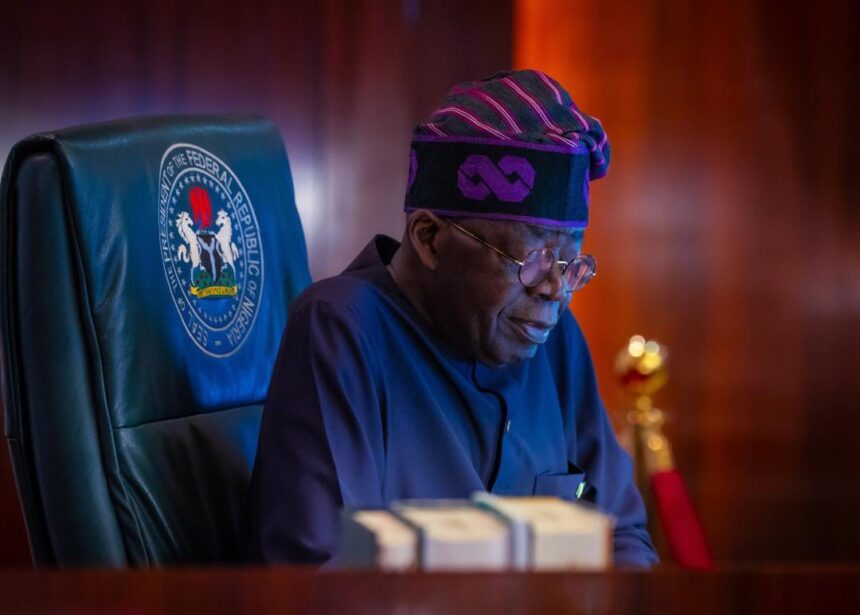
President Bola Ahmed Tinubu has made his call. Vice President Kashim Shettima stays. And with that decision, confirmed through nomination papers submitted to the Independent National Electoral Commission just ahead of the July 11 deadline, Nigeria is right back in a conversation it thought it had settled in 2023: can a Muslim-Muslim ticket win, and should it?
The APC’s National Chairman, Professor Nentawe Yilwatda, received the completed forms on behalf of Tinubu and Shettima at a ceremony in Abuja, with the President’s Special Adviser on Political and Other Matters, Ibrahim Masari, handling the physical handover. Governors, National Working Committee members, and federal lawmakers turned out for what the party framed as a show of unity. Behind the applause, though, was a decision that had been quietly dividing APC members for months.
Months of Speculation, One Quiet Signal
For most of the run-up to 2027, nobody in the party leadership would say plainly whether Shettima was staying or going. That silence did more work than any statement could have. Names circulated as possible replacements, Defence Minister Christopher Musa, Sokoto Catholic Bishop Hassan Kukah, and former House Speaker Yakubu Dogara among them, each one a northern Christian, each one read as a signal that Tinubu might be preparing to widen his religious coalition.
Then, in May, the emergence of Nentawe Yilwatda, a northern Christian from Plateau State, as APC National Chairman stirred a different theory entirely: that installing a Christian at the party’s helm was meant to soften the ground for keeping a Muslim-Muslim ticket at the top, not abandon it. Sunday PUNCH reported that political watchers read Yilwatda’s appointment as a strategic gambit, not a concession.
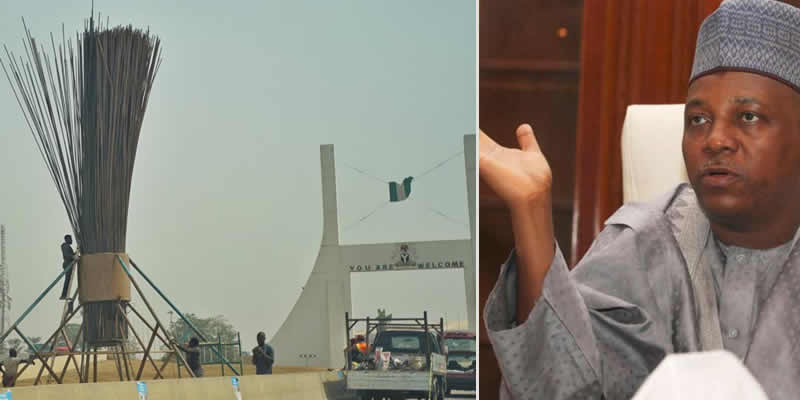
By July, the guessing was over. Shettima submitted Tinubu’s nomination forms himself in early May at the Shettima Hall of the Bola Tinubu International Conference Centre, using the occasion to urge Nigerians “across political, religious and ethnic divides” to back the President’s bid. Weeks later, the ticket was formal.
Why the APC Is Betting on the Same Formula
The party’s argument, in essence, is: it worked once, why fix it? A Kano-based political analyst, Aminu Rabiu, told Daily Post that retaining Shettima signals “unity, continuity and confidence” within the APC, and that dropping him would have been “politically catastrophic” given how settled the arrangement now feels within the ruling party.
APC chieftain Abdulhakeem Adegoke Alawuje made a similar case, describing the reaffirmation as proof of “continuity, stability, loyalty, and strategic leadership,” tied to the administration’s Renewed Hope Agenda. Yilwatda, for his part, pointed to the party’s own numbers, more than 12 million registered members, he said, as evidence the ticket doesn’t need adjusting.
There’s also a quieter argument making the rounds: that several visible offices under Tinubu, from the Senate presidency to the position of Secretary to the Government of the Federation, are held by Christians, which APC-aligned voices say undercuts the idea that the administration is religiously lopsided at the top.
The Pushback Hasn’t Gone Away
Not everyone in the party is buying it. A Niger State APC chieftain, Jonathan Vatsa, didn’t mince words, calling the decision a “serious mistake” that puts Christian members of the party in an impossible spot heading into campaign season. He invoked the biblical image of the rejected stone the builder eventually needs, warning that whoever advised Tinubu to repeat the 2023 arrangement “did not mean well for the President and the APC.” His concern is sharpened by a specific worry: unproven claims from abroad, including remarks by US President Donald Trump about Christian persecution in Nigeria, that he fears the ticket will feed into.
The Christian Media Forum went further, calling the decision “disappointing and insensitive” to millions of Northern Christians and arguing that the pattern of appointments under Tinubu has deepened, rather than eased, feelings of exclusion, especially in communities in the north that have borne the brunt of banditry and terrorism. The Middle Belt Forum, established in 1954 to represent more than 300 ethnic nationalities across parts of 14 northern states and the FCT, called the decision “another missed opportunity” to recognise the region’s political weight.
Even the Arewa Consultative Forum, usually cautious about wading into APC internal matters, acknowledged the tension without taking a side, saying only that the choice of running mate remains Tinubu’s prerogative and that the party would watch how things unfold.
Opposition Parties Say the Debate Misses the Point
Outside the APC, some opposition figures argue that the whole religion-first framing is a distraction. The All Progressives Grand Alliance’s National Publicity Secretary, Ejimofor Opara, said Nigeria needs to move past identity politics altogether: “Competence should remain the defining issue in 2027, not whether candidates are Muslims or Christians.” The Young Progressives Party echoed the sentiment, with spokesman Wale Egbeola-Martins insisting that Nigeria’s real problem has always been poor leadership, not the faith of whoever is leading.
That framing conveniently serves parties still trying to assemble their own tickets, of course, but it also reflects a real shift in how some voters talk about 2027 compared to 2023. Analysts like Ojo (cited in Daily Post) suggest Peter Obi may still draw votes on the back of Muslim-Muslim concerns, “but not as much as in 2023,” partly because many Christians say they’ve benefited materially from the Tinubu administration regardless of who sits in the Villa.
What Happens Next
With the ticket now formally lodged with INEC ahead of the 2027 general election, the debate shifts from speculation to campaign strategy. The APC will have to decide how directly to address Christian unease within its own ranks, particularly in Middle Belt and northern states where insecurity remains a live grievance. Opposition parties, meanwhile, face pressure to finalise their own presidential and vice-presidential pairings, and to decide whether religious balance will be a selling point or a talking point they’d rather avoid altogether.
What’s clear is that the Muslim-Muslim question hasn’t disappeared just because Tinubu made his decision. If anything, submitting the forms only moved the argument from “will he?” to “was this wise?”, and that’s a conversation Nigerians across party lines look set to keep having all the way to the polls.