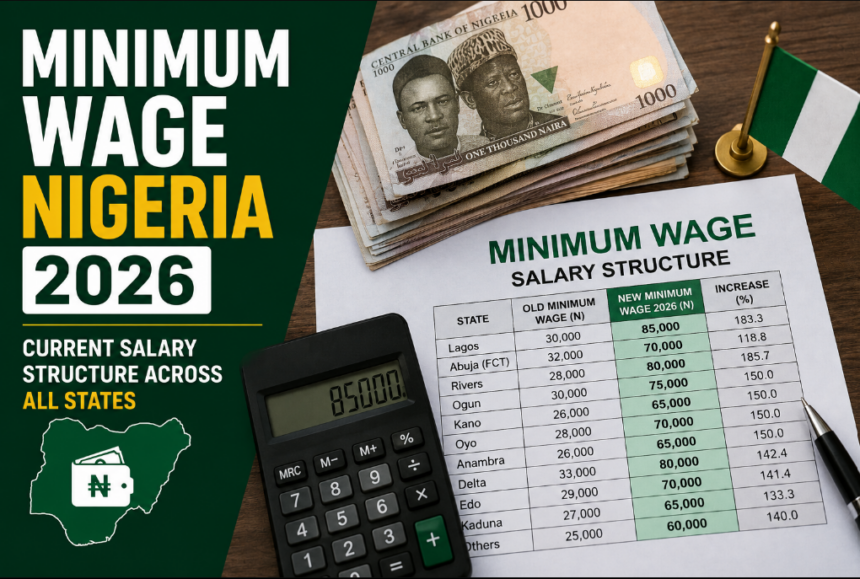
There is a specific kind of quiet frustration that settles over a salary earner in Nigeria when the account alert arrives and the figure staring back is N70,000. Not because the number is unfamiliar, it is, by law, what every employer in the country is supposed to pay. But because by the time you account for rent, transportation, food, and electricity, what remains barely sees the middle of the month. This is the lived reality of Nigeria’s current minimum wage structure, and understanding it properly requires looking beyond the headline figure.
President Bola Tinubu signed the National Minimum Wage Amendment Act 2024 into law on July 29, 2024, raising the statutory minimum from N30,000 to N70,000 after months of bruising negotiations between the federal government, the Nigeria Labour Congress (NLC), and the Trade Union Congress (TUC). Labour had gone into those talks demanding N615,000. The NLC later reviewed that to N250,000. The federal government countered with N62,000. What they settled on was N70,000, a figure that labour accepted reluctantly and has spent every month since trying to get reversed.
Meanwhile, Nigeria’s 36 states have taken wildly different approaches to what the law requires of them. Some have gone above it. Others are still arguing about whether they can afford to meet it at all. Lagos pays N85,000. Imo State now pays N104,000, the highest in the country. Zamfara and several other states have yet to fully implement even the federal floor. This patchwork is not an accident of geography. It is the product of structural fiscal inequality between states that has made minimum wage enforcement one of the most contentious labour issues in the country.
Minimum Wage Nigeria 2026
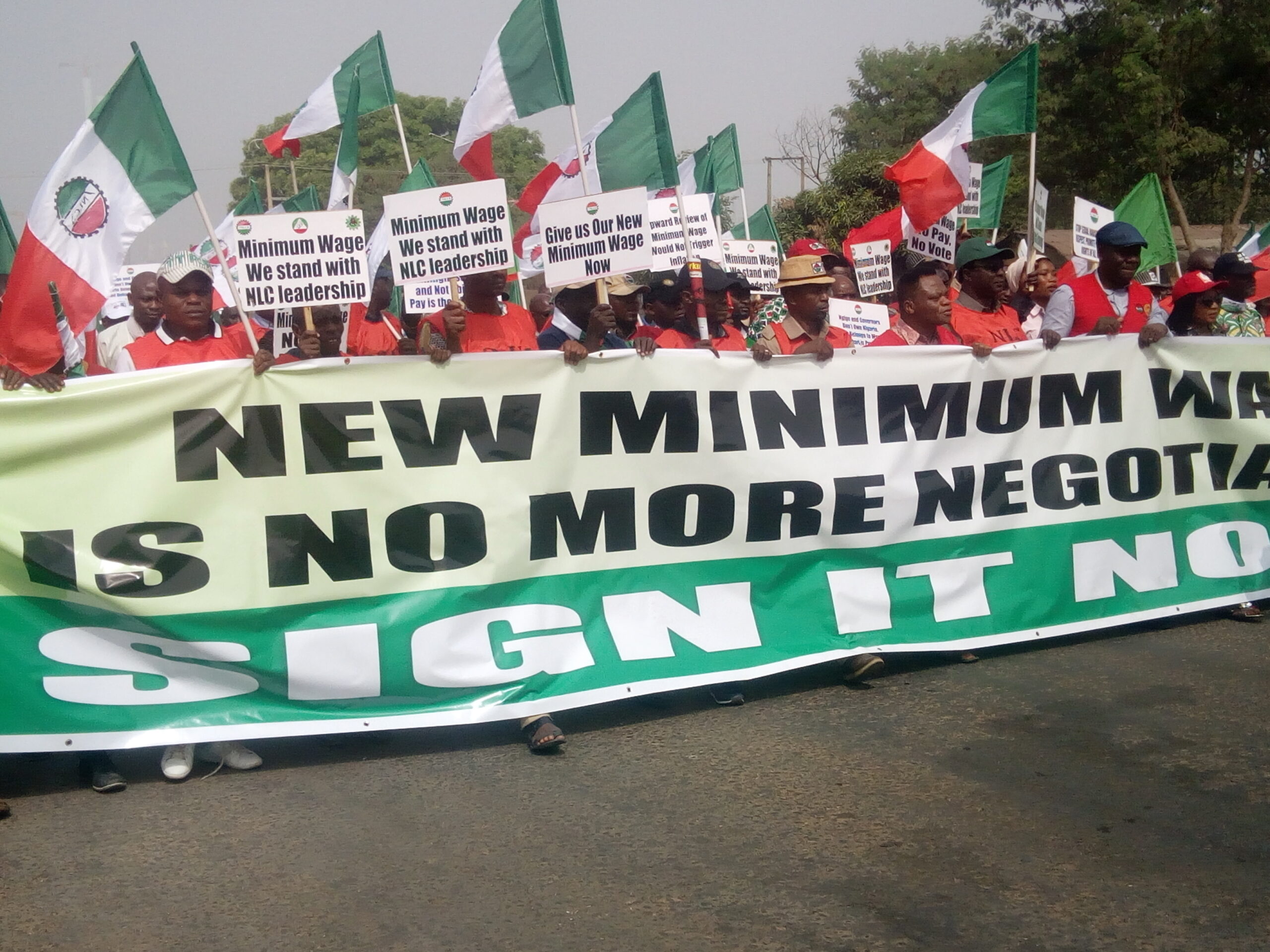
The minimum wage Nigeria 2026 conversation has grown more urgent precisely because the number on paper has not changed since July 2024, while the cost of everything else has. This article covers what the law says, what different states are actually paying, how the federal salary grade structure works, and where the N154,000 demand from organised labour currently stands as of April 2026.
The Law That Set the Floor: What the National Minimum Wage Act 2024 Actually Says
The National Minimum Wage Amendment Act 2024 is an amendment of the previous Act of 2019, which had pegged the minimum at N30,000. The 2024 law sets N70,000 as the legal floor for full-time employees across Nigeria, covering both the public and private sectors. It applies to workers at every tier of government, federal, state, and local, as well as employers in the private sector. The law also changed the review cycle from five years to three years, which means the next statutory review is not constitutionally due until 2027.
One thing the law makes clear, and that gets lost in most public discussions, is that N70,000 is the basic salary. Allowances are calculated separately. So when civil servants receive their pay slips, the N70,000 figure represents only the base component. Transport allowances, housing allowances, and other statutory benefits sit on top of that, though how much each worker receives depends on their grade level and the specific salary structure applicable to their sector.
The law also places a transport obligation on employers. Companies are required to provide free transportation or a transport allowance for employees who commute more than 16 kilometres from their regular place of work. This provision is rarely discussed in media coverage of the minimum wage, but it represents a meaningful layer of protection that workers should know exists.
Enforcement is handled through a Tripartite Committee comprising federal government representatives, organised labour, specifically the NLC and TUC, and the Organised Private Sector. The committee is supposed to monitor compliance and flag violations. In practice, however, there is no centralised wage monitoring framework, and employers who pay below the minimum largely do so without consequence unless a complaint is formally filed. The burden falls disproportionately on the workers least positioned to make noise.
N70,000 in a N500,000 World: What the Money Actually Buys
To understand why labour unions have not stopped pushing for a review since the day Tinubu signed the 2024 Act, you have to do the arithmetic. In Lagos, a modest single room in areas like Ikorodu or Ojota runs from N20,000 to N35,000 monthly. A one-way commute from Alimosho to Victoria Island regularly costs N800 to N1,200 by bus, which adds up to roughly N35,000 to N50,000 monthly in transport costs alone. Basic food, garri, rice, tomatoes, cooking oil, for one person easily runs N30,000 per month at current market prices. On N70,000, a Lagos worker who rents their own room and commutes to work is technically in the red before they buy a single meal.
The Guardian Nigeria reported in March 2026 that the annual earnings of a minimum wage worker, N840,000 before deductions, fall below what several studies estimate is needed to keep a single person above the country’s poverty line, which various analyses place between N90,000 and N130,000 per person per year. For a worker supporting a family of four, the gap is catastrophic. Abuja fares no better. Rent for a modest two-bedroom apartment in Lugbe or Karu hovers between N800,000 and N1.2 million annually, which means N70,000 per month does not cover one month’s rent in many of the capital’s more affordable districts.
The naira’s continued depreciation compounds everything. This is why the Acting General Secretary of the NLC, Benson Upah, told the News Agency of Nigeria: “The truth is that N70,000 is not sustainable under the present economic situation. Workers are under immense pressure, and unless the government responds quickly, the crisis of survival will only worsen.” He added that even factoring in electricity tariffs and transportation, N70,000 could not keep a family going for 10 days.
States That Went Above the Federal Minimum Wage
A number of state governments moved above the N70,000 federal floor following the passage of the 2024 Act, citing the higher cost of living within their jurisdictions. What they pay, and how consistently they pay it, tells a clearer story about fiscal capacity and political will than any federal directive alone.
Imo State holds the record as the highest-paying state for civil servants, following Governor Hope Uzodimma’s announcement on August 27, 2025, of a new minimum wage of N104,000. The increase moved Imo from a previous floor of N76,000. The governor tied the decision to growth in the state’s internally generated revenue. Beyond base pay, Imo also revised salaries for other categories: doctors in the state civil service now earn from N508,000 at entry level, lecturers in state tertiary institutions start at N222,000, and other health workers begin at N108,000. The new structure took effect from August 2025 salaries.
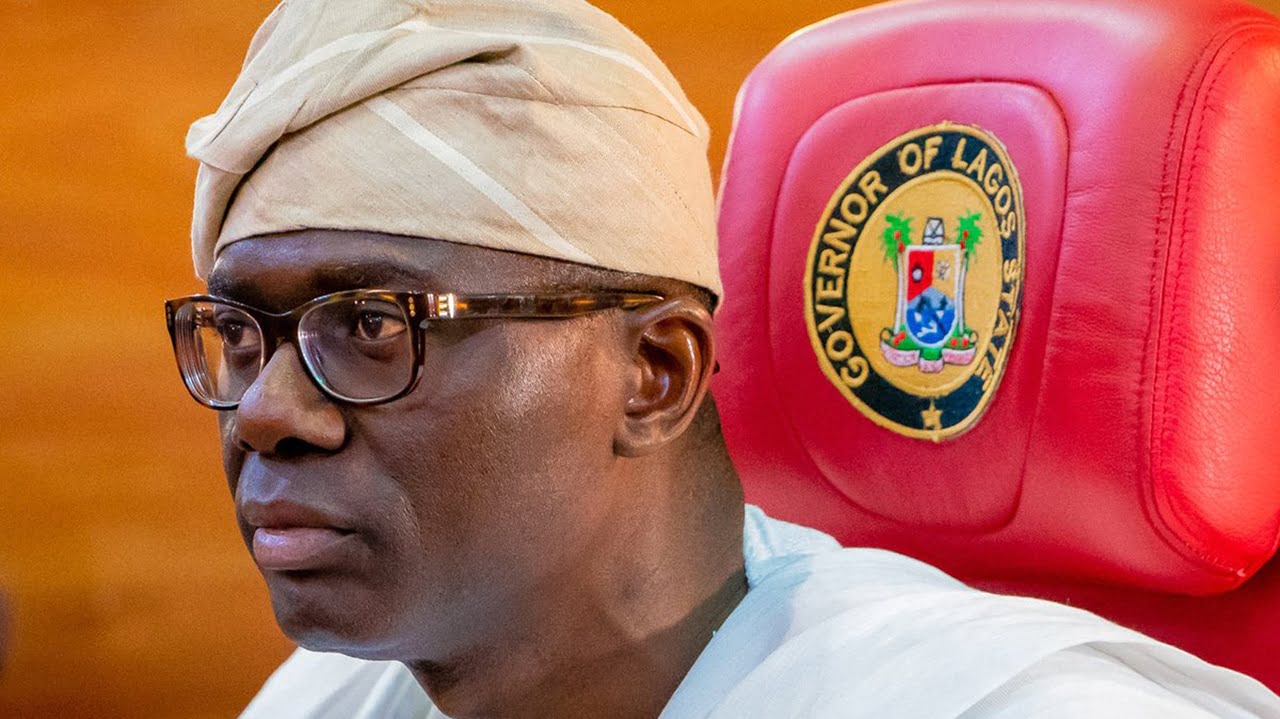
Lagos State and Rivers State both approved N85,000 in October 2024. Governor Babajide Sanwo-Olu announced Lagos’s figure on October 16, 2024, citing the city’s cost of living and indicating an ambition to eventually raise it to N100,000. Rivers State Governor Siminalayi Fubara approved the same N85,000 figure two days later. Bayelsa, Niger State, and Akwa Ibom all landed at N80,000. Ogun and Delta states set N77,000; Benue and Osun settled at N75,000; Ondo pegged theirs at N73,000. Kogi approved N72,500, and Kaduna approved N72,000, with the Kaduna governor also releasing 100 compressed natural gas buses to ferry civil servants to and from work.
What is worth noting in the Lagos situation is the gap between intent and implementation. Governor Sanwo-Olu had promised to raise the minimum to N100,000 by January 2025. That deadline passed without the upward revision being confirmed. The pattern, governors announcing aspirational figures and later quietly not meeting the stated timeline, is a recurring feature of minimum wage politics in Nigeria, and workers are usually the last to know the schedule has slipped.
States Still Struggling to Implement Even N70,000
The honest picture is that not every state in Nigeria was in a position to absorb a 133 percent increase in its wage bill comfortably. States that already owed salaries or ran chronic deficits found the N70,000 mandate harder to swallow than the federal government’s announcement made it seem. Jigawa, Zamfara, and several other states had not, as of late 2024, made definitive announcements about implementing the new wage. Workers in those states were reporting continued payment at the old N30,000 rate or at irregular amounts below the legal floor.
This is not entirely surprising when you consider the structural problem. Most Nigerian states depend heavily on federal allocations from the Federation Account, which are tied to oil revenue. When oil revenue drops or the naira weakens against the dollar, state governments feel the squeeze on their recurrent expenditure almost immediately. Wage bills for civil servants are usually the first obligation to suffer delays because they are large, monthly, and politically costly to openly admit you cannot meet.
The NLC has been explicit that non-compliance will be met with strike action. That threat has had varying degrees of effect across states. Where labour structures are strong and well-organised, such as in the South-South and South-East, states have generally moved faster. In some northern states where the civil service is larger relative to the private sector, the fiscal pressure is more acute and the negotiation longer. Workers in those areas are often left in a holding pattern, legally entitled to N70,000 and practically receiving less.
The absence of any centralised enforcement body with real powers makes the situation difficult to resolve. The National Salaries, Incomes and Wages Commission (NSIWC) publishes circulars and salary structures, but its authority does not extend to compelling states to pay. What exists is largely moral and political pressure, unions threaten, governors negotiate, and workers wait.
The Federal Salary Structure: Grade Levels, Allowances, and the Real Numbers
Federal civil servants in Nigeria are paid through the Consolidated Public Service Salary Structure (CONPSS), which runs from Grade Level 01 at the bottom to Grade Level 17 at the top. The N70,000 minimum applies at Grade Level 01, Step 1. From there, salaries increase with each grade level and each step within that grade, reflecting seniority and length of service. The entire structure was harmonised upward following the 2024 wage increase, because raising the floor requires that everything stacked above it also shifts to maintain pay relativity.
Beyond CONPSS, there are specialist salary structures for specific professions. CONMESS governs medical and dental workers; CONUASS covers university academics; CONTISS II applies to polytechnic and college of education staff; CONTEDISS covers other tertiary educational institutions. Each of these was revised by the NSIWC through circulars issued after the July 2024 Act came into force. A federal medical doctor’s salary structure now starts significantly above the N70,000 baseline, with entry salaries in the medical sector reflecting the specialist nature of the role.
For a typical entry-level federal worker on Grade Level 07, Step 1, monthly earnings inclusive of basic salary and standard allowances, housing, transport, meal subsidy, and utility, generally range between N150,000 and N170,000 per month under the revised structure. The N70,000 minimum applies specifically at Grade Level 01, the point of entry for the most basic categories of service, such as messengers and lower-grade support staff. Workers at that level take home considerably less than colleagues at GL 07 or above, and the gap widens sharply with seniority.
One consequence of the consequential adjustment process that rarely gets discussed is the pension implication. When base salaries rise, pension contributions, 8 percent from the employee and 10 percent from the employer under the Pension Reform Act, rise proportionally. This is, in theory, good for workers’ retirement savings. In practice, it also means the employer’s cost of hiring goes up, which some private sector employers use as justification for keeping headcount low or relying on contract and casual workers who are not entitled to the full statutory package.
Labour’s Push for N154,000: Where the 2026 Negotiations Stand
On March 12, 2026, the Joint National Public Service Negotiating Council (JNPSNC), operating under the NLC, formally submitted a letter to the Office of the Head of the Civil Service of the Federation demanding a new minimum wage of N154,000. The letter, signed by JNPSNC National Chairman Benjamin Anthony and National Secretary Olowoyo Gbenga, calls for a 120 percent upward review of salaries and allowances for all public servants. It is addressed not only to the Head of Service, but copies were sent to Finance Minister Wale Edun, Labour Minister Alhaji Mohamed Daginyadi, and NSIWC Executive Chairman Ekpo Nta.
The council premised its demand on a meeting of the JNPSNC held on March 9, 2026, at the AUPCTRE National Secretariat in Wuse Zone 4, Abuja, where members concluded that the existing salary structure no longer reflects the economic conditions workers are living under. The proposed N154,000 would represent the new minimum salary for a worker on Grade Level 01, Step 1 in the federal public service. All higher grades would be adjusted proportionally from that new base.
As of April 2026, no formal federal government response has been issued, and no negotiation date has been confirmed. The statutory minimum wage review is not due until 2027 under the three-year cycle. The federal government’s position, implicitly at least, is that the current cycle must run its course. The NLC, which separately issued a New Year 2026 message demanding an urgent wage review, is pressing for the review to happen ahead of schedule, arguing that the pace of inflation makes waiting until 2027 unconscionable. Those two positions, labour demanding urgency and government citing legal timelines, frame the current standoff.
The dynamics of 2024 offer a useful reference point. Labour began that negotiation at N615,000 and ended at N70,000. The gap between what workers need and what governments can commit to paying has consistently been vast in Nigerian minimum wage history. The N154,000 demand is considerably more modest than the opening positions labour typically stakes out, which may itself be a signal that the unions are trying to be credible rather than theatrical this time around.
Why the Wage Gap Keeps Growing Despite Every Increase
Nigeria’s minimum wage has increased by 12,600 percent in nominal terms since 1981, when the first national minimum wage of N125 was signed into law under President Shehu Shagari following pressure from the NLC’s Hassan Sunmonu. But when you convert 1981’s N125 at the exchange rate of that time and then express it in today’s naira using current rates, the original minimum wage is worth considerably more in real terms than the current N70,000. That inversion tells you everything about the structural problem.
The core issue is that Nigeria’s minimum wage reviews are reactive rather than indexed. The wage sits unchanged for years, from 2019 to 2024, it stayed at N30,000 while inflation ran at double digits annually and the naira collapsed from roughly N360 per dollar to nearly N1,500. Each increase, when it finally comes, chases an inflation rate that has already sprinted ahead. The 133 percent jump from N30,000 to N70,000 in 2024 looked dramatic on paper but only partially recovered ground that had been lost over the previous five years.
The informal sector complicates the picture further. Over 60 percent of Nigeria’s working population operates in the informal economy, roadside traders, domestic workers, artisans, commercial drivers, market women. The minimum wage law does not meaningfully reach them. They negotiate individually, often from positions of zero power, and their earnings frequently fall well below N70,000 per month without any legal recourse. When the government announces a new minimum wage, it is really announcing a floor for the formal sector, which represents a minority of the Nigerian labour force.
The Tinubu administration’s fuel subsidy removal in May 2023 set off a chain reaction that the N70,000 wage has not been able to contain. Transport costs roughly doubled in many cities within months of the subsidy removal. Food prices followed. Electricity tariffs for Band A consumers, meaning most Nigerians in urban areas who have any grid supply at all, were raised by over 200 percent in 2024. All of this happened against a wage structure that was already inadequate and then took over a year to be officially revised.
The Private Sector Reality: Who Is Actually Paying N70,000?
Within the private sector, compliance with the N70,000 minimum is largely a function of company size and formality. Large corporations, banks, multinationals, telecoms companies, oil and gas firms, pay well above the minimum and have for years. For a software engineer in a Lagos fintech company or an analyst in a Port Harcourt oil services firm, N70,000 is not a salary discussion worth having. The minimum wage conversation matters most for workers in SMEs: the small factory in Aba, the distribution company in Kano, the retail outfit in Onitsha.
For those employers, the jump from N30,000 to N70,000 was not trivial. A business paying 20 workers saw its monthly wage bill double overnight in theory. Many responded by reducing headcount, converting staff to casual or contract arrangements, or simply not increasing pay and absorbing whatever legal risk that carried. Enforcement is, as noted, largely driven by the formality of the workplace. An SME with no union, no HR department, and workers reluctant to complain for fear of losing their jobs is essentially operating in an enforcement vacuum.
At the higher end of the private market, some Lagos and Abuja employers have moved entirely beyond the naira conversation. Technology companies, international NGOs, and foreign firms operating in Nigeria increasingly structure compensation in dollars or dollar-linked figures. A mid-level tech worker in Lagos can earn USD 1,500 to USD 3,000 monthly, figures so disconnected from the N70,000 minimum wage floor that they inhabit a completely different economy. This split labour market, one formally regulated in naira and another informally priced in dollars, is one of the more unusual features of working life in Nigeria right now.
What Workers Can Legally Do If They Are Being Underpaid
The National Minimum Wage Act 2024 is not just a policy statement; it is legally enforceable. Employers who pay below the N70,000 threshold are in violation of the law and can face financial penalties, including fines and potential exclusion from government contracts and procurement processes. Workers who believe they are being underpaid have the right to report their employer to the Ministry of Labour and Employment or approach the National Industrial Court, which has jurisdiction over employment disputes.
For workers in unionised industries, the first point of contact is typically the trade union. The NLC and TUC have state councils and sector-level affiliates that can take up collective complaints with employers. This route is faster and less adversarial than legal proceedings, and it carries real weight in sectors with strong union membership. In banking, aviation, oil and gas, and education, unions have successfully pushed employers to comply with new wage structures through collective bargaining agreements.
For workers outside unionised industries, domestic staff, retail assistants, workers in small shops and workshops, the practical options are narrower. Documentation matters greatly in any dispute. A worker who can show a payslip, a bank statement, or a written contract specifying a wage below the legal minimum is in a stronger position than one who cannot. It is worth noting that employers are legally required to provide payslips that accurately reflect both gross and net pay. Refusing to provide one is itself a compliance red flag.
Workers who register formal complaints can also flag issues with the NSIWC, which oversees salary structures in the public service, and with relevant state labour commissions for state-level employment. The process is not fast. But workers who understand their rights are at least starting from a position of knowledge rather than having the law used against them through ignorance.
A Country Still Negotiating What a Worker’s Time Is Worth
The minimum wage debate in Nigeria is, at its core, a negotiation over what it costs to be alive and working in this country. Every round of that negotiation produces a number that is insufficient at the time it is signed, obsolete within months, and then defended for years by governments that cannot afford to revisit it faster. The N70,000 figure that Tinubu signed in July 2024 has followed exactly that pattern. It is still the legal floor in April 2026, and labour is already drafting the case for why it needs to be more than doubled.
The state-by-state variation in implementation reflects a federal structure that has never quite resolved the tension between national policy and local fiscal capacity. Imo’s N104,000 and Lagos’s N85,000 show what is possible when a government has the will and the revenue. The states that are still paying the old N30,000 or something close to it show what happens when neither condition is fully present. For workers in those states, the gap between what the law says and what their bank accounts show is not academic, it is what they live with every time a salary alert arrives.
What would genuinely change the minimum wage picture in Nigeria is not another round of negotiations producing another insufficient number. It is inflation control, FAAC reform that reduces state dependence on federal oil allocations, and a taxation system that raises revenue fairly without crushing businesses that employ people at the bottom of the wage scale. The Guardian Nigeria’s March 2026 analysis pointed specifically to the Nigeria Tax Acts 2025 as a potential lever, if the progressive structure it introduces is implemented effectively, it could create fiscal space for better public sector wages over time. That is a conditional optimism, and conditions in Nigeria have a habit of not being met. But it is at least a structural argument, not just another number.