Every year, the Nigerian Army recruitment exercise sets off a scramble across the country. Young people from Borno to Bayelsa, from Sokoto to Cross River, line up applications and rehearse fitness drills in backyards, hoping to make it through a process that has no shortcuts and fewer second chances than most people expect. The stakes are real: a confirmed path into one of Africa’s largest military institutions, a structured salary, a pension, and a career that does not depend on the whims of the private sector.
2026 has brought fresh announcements. The 91st Regular Recruits Intake is open right now, with a portal that launched on March 30, 2026, and closes on May 17, 2026. The DSSC intake for graduates has already closed, its February 4, 2026 deadline having passed. What remains for interested Nigerians is to understand exactly which door applies to them, what it takes to walk through it, and what the army will be looking for when they show up.
This is not a topic where guessing is harmless. Wrong information in your application can get you disqualified before you ever step foot at a screening centre. Getting it right matters.
Nigerian Army Recruitment 2026
The Nigerian Army recruitment 2026 cycle covers two distinct entry routes that most applicants consistently confuse: the Regular Recruit Intake for SSCE holders and the commissioned officer routes for graduates. Understanding the difference between them, and which one applies to your qualifications and age, is the first decision you have to get right.
Three Ways to Get In: RRI, SSC, and DSSC Explained
The Nigerian Army does not have a single door. It has multiple entry points, each designed for a specific category of applicant, and they are not interchangeable. Mixing them up is one of the most common mistakes applicants make.
The Regular Recruit Intake, or RRI, is for Nigerians with an SSCE or its equivalent who want to join the army as soldiers rather than officers. The 91RRI currently open is specifically for tradesmen, tradeswomen, and non-tradesmen. A tradesperson is someone who holds a professional trade certificate, like a carpenter, mechanic, electrician, plumber, or tailor. Non-tradesmen are those applying without any trade qualification beyond their secondary school certificate.
The Short Service Commission, known as SSC, and the Direct Short Service Commission, or DSSC, are both for graduates. The SSC is the combatant route: if you want to carry arms, command troops, and serve in a frontline role, SSC is your path. The DSSC, on the other hand, is for professionals who bring a specialist skill into the army, doctors, engineers, lawyers, nurses, pharmacists, architects, and so on. These are the officers who fill the corps and services of the Nigerian Army, applying their civilian expertise under a military structure.
The DSSC for the 29th/2026 cycle had its application window from January 7 to February 4, 2026. That window is closed. For graduates who missed it, the next DSSC cycle will be announced separately. The 91RRI, aimed at SSCE holders, is the recruitment that is live right now.
Who Qualifies for the 91st Regular Recruits Intake
The eligibility requirements for the 91RRI are specific, and the army enforces them strictly. Start with citizenship: you must be a Nigerian by birth. Naturalized Nigerians do not qualify. You also must be single. Married applicants are not eligible for the 91RRI, and this is verified during the screening process.
Age is where non-tradesmen and tradesmen diverge. If you are applying without a trade certificate, you must be between 18 and 22 years old as of June 30, 2026. If you are a tradesman or tradeswoman with a qualifying trade certificate, you can be up to 26 years old by that same date. Apply outside these brackets and you will be disqualified, regardless of how strong your other credentials are.
Height requirements are fixed. Men must be at least 1.68 metres tall. Women must be at least 1.65 metres. These are measured physically at the screening centre, not self-reported. Applicants who are below these thresholds will be turned away.
Educationally, you need a minimum of four credits including English Language from any of WASSCE, GCE, NECO, NABTEB, or NBAIS, achieved in not more than two sittings. Tradesmen and tradeswomen must add a valid Trade Test or City and Guilds Certificate to this. If your result was obtained in more than two sittings, even if you eventually passed, it does not qualify.
You also need two key identification documents: a National Identification Number slip and a Bank Verification Number slip. The name and date of birth on your NIN must match exactly what is on your BVN and all your other credentials. Even a minor mismatch, a middle name missing here, a date transposed there, can cause disqualification at screening. Sort these inconsistencies before you get to the portal.
The army is also looking at character. Anyone with a criminal conviction from any court of competent jurisdiction is disqualified. Tattoos are not allowed on any part of the body. Multiple ear piercings for women are not permitted. Membership in any cult, secret society, or fraternity is an automatic bar. Physical conditions including bow legs, flat feet, knock knees, bent knees, defective eyesight, and certain body deformities will be assessed during the medical screening.
What the 91RRI Application Process Actually Looks Like
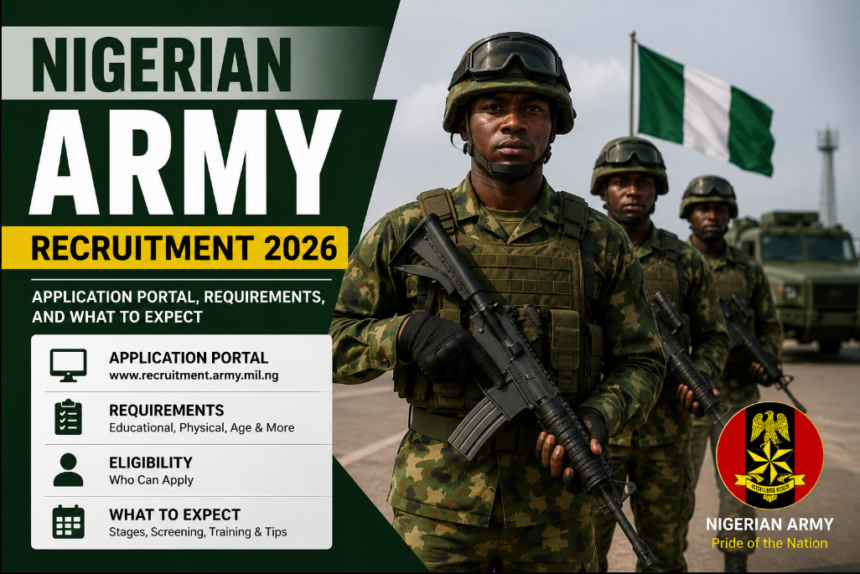
The entire application is done online. There is no physical form collection anywhere, and the process does not cost a single naira. The official portal is recruitment.army.mil.ng, and that is the only legitimate platform. Any other website claiming to offer a special application form or charging for access is a scam.
When you land on the portal, find the 91RRI section and click on it. New applicants need to register with a valid email address. Once your account is created and verified, you can log in and fill out the application form. You will need your personal details, educational qualifications, NIN and BVN information, and trade certification details if you are applying as a tradesperson. Make sure every field matches your supporting documents exactly.
After filling the form and submitting it online, you will need to print your application acknowledgement slip and photo card. This step is mandatory. The army has made it clear that submitting your application online without printing the photo card and completing that step will lead to disqualification. Bring this printed slip to your state of origin screening.
One rule that trips people up: you must apply using your state of origin, not your state of residence. If you grew up in Lagos but your state of origin is Ekiti State, you apply as an Ekiti applicant and you will be screened in Ekiti. You need a valid certificate of state of origin to confirm this. The army cross-checks it.
Do not apply more than once. Multiple applications on the same portal for the same intake will result in disqualification. Submit once, confirm your details are accurate, then print your slip and wait for the shortlisting announcement.
The Screening Exercise: What Happens After You Apply
Once the application window closes on May 17, 2026, the army will process submissions and publish the names of shortlisted candidates on its official website. Shortlisted candidates are expected to report to their respective states of origin for screening between June 9 and June 23, 2026.
There is no pre-selection computer-based test for the 91RRI. The army confirmed this explicitly. What happens at the screening centre is a combination of physical assessment, credential verification, and medical examination. This is where your documents get checked against originals, where your height and physique are assessed, and where your medical history is examined.
You must come with your NIN and BVN slips. You must bring your original academic certificates for verification. The guarantor form, which must be signed by a recognized official such as a local government chairman or secretary, a police officer not below the rank of ASP, or a military officer, must also be presented. The army is very specific about who qualifies as a guarantor, so check the requirements carefully before getting signatures.
Electronic devices are not allowed at screening centres. Tattoos, body inscriptions, and multiple piercings will be caught at this stage if they were not caught in the documentation review. Anyone found presenting falsified documents will be disqualified and handed to law enforcement. The army is not ambiguous about this: forgery leads to prosecution, not just disqualification.
For those who have questions during the process, the army provided two contact numbers for inquiries: 07036499094 and 09041116433.
Graduate Officers: What the SSC and DSSC Routes Require
For university and polytechnic graduates, the Regular Recruit Intake is not the right door. The SSC and DSSC are the applicable routes, and while both deal with graduates, they serve different purposes inside the army.
The SSC is for graduates who want to serve as combatant officers. It is the equivalent of wanting to lead troops. Age requirement for SSC is between 22 and 28 years old. You need at least a Second Class Lower degree from a recognized university, or an HND with at least a Lower Credit from a recognized polytechnic. You also need an NYSC discharge certificate or exemption certificate, and you must be registered with any relevant professional body if your discipline requires it.
DSSC officers are professionals: doctors, engineers, lawyers, nurses, pharmacists, architects, pharmacists, ICT experts. For the 29th/2026 DSSC intake, applicants had to be between 20 and 32 years old by March 30, 2026, with medical consultants allowed up to 40 years. The minimum academic qualification required was a Second Class Upper degree or HND Upper Credit. A key distinction for DSSC: medical consultants who successfully complete training are commissioned as Majors, while other DSSC graduates enter as Lieutenants.
DSSC officers serve for a base term of 15 years. Officers who convert to Direct Regular Commission can serve up to 35 years. The first three years of DSSC service are on probation, and conversion to a full regular commission is not automatic; it requires a formal application. Training duration for DSSC cadets is six months. SSC cadets go through nine months of training.
The application process for both SSC and DSSC involves printing a two-page form after online submission. The first page must be signed by the registrar of any court of law. The second page must be signed by a local government chairman or secretary, or a military officer of Lieutenant Colonel rank or above, from the applicant’s state of origin. Successful applicants for SSC and DSSC are required to take a written examination at designated centres before the final selection stage, which includes interview, physical assessment, and medical screening.
Documents You Must Have Ready Before You Start
One thing that derails applicants unnecessarily is showing up to the portal or the screening centre without the right documents. The preparation phase matters as much as the application itself.
For the 91RRI, you need your SSCE or equivalent result, your NIN slip, your BVN slip, your state of origin certificate, and your birth certificate. Tradesmen and tradeswomen need their trade test or City and Guilds certificate in addition. The names and dates of birth across all these documents must match exactly.
For SSC and DSSC applicants, add your university or polytechnic degree certificate, your NYSC discharge or exemption certificate, professional registration certificates if applicable, at least two letters of attestation from recognized referees, and a valid means of identification such as a national ID card, international passport, or voter’s card. Medical consultants must confirm professional registration with the Medical and Dental Council of Nigeria before cadet training commences.
All documents presented at screening will be verified by the issuing authorities. This is not a symbolic check. The army has active processes with institutions like WAEC, NECO, the National Population Commission, and polytechnic and university records offices. If your result is genuine, it will check out. If it is not, you will be caught.
Scams, Fake Portals, and What the Army Has Said Publicly
Every recruitment cycle brings out the fraudsters, and the 2026 Nigerian Army recruitment exercise is no different. Before the 91RRI portal even opened, the army issued an explicit public warning: the recruitment is free of charge, full stop. No form fee. No screening fee. No processing fee. No payment to any individual or group for assistance at any stage.
The army also warned Nigerians to ignore any application portal that opened before the official announcement. There are websites that look credible, some of them ranking high on Google, that charge candidates for forms that do not exist. There are agents who will offer to secure your slot for a fee. There are WhatsApp contacts who claim to have connections inside the recruitment committee. None of this is real. The only legitimate platform is recruitment.army.mil.ng.
This is not just about losing money. Paying someone claiming to work the recruitment process can result in you being handed the wrong information, missing critical deadlines, or having your details submitted on a fake portal where they are used for other purposes entirely. The safest approach is to go directly to the official website, verify every piece of information against official army announcements, and treat anyone asking for money as a red flag.
The army is not new to this problem. The same warning has been issued in previous recruitment cycles, which suggests it is a persistent issue. In 2025, for the 90RRI, similar warnings were made. Any Nigerian who has watched multiple recruitment cycles play out will recognize the pattern: the scams intensify as the deadline approaches.
What to Expect After Successful Recruitment
For those who make it through the 91RRI screening and are selected, the next stage is training. The Nigerian Army has not published the exact commencement date for the 91RRI training batch, but based on the screening timeline ending June 23, 2026, successful recruits can expect notification and eventual call-up to training shortly after.
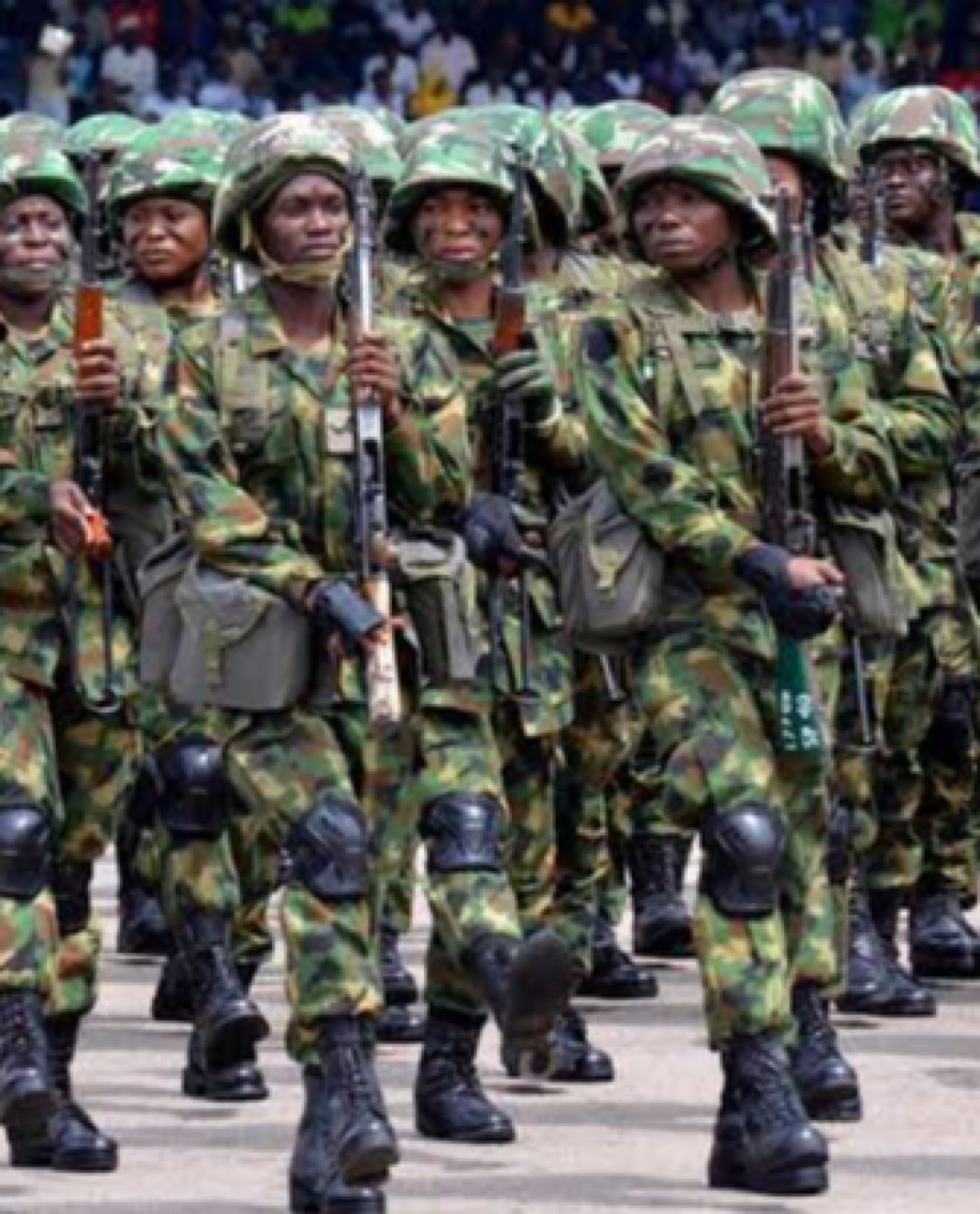
The army has described the training as rigorous. That is not a formality. Basic military training in the Nigerian Army involves physical conditioning, weapons handling, military law, and field operations, among other components. The experience reshapes how new soldiers carry themselves, respond to authority, and operate under pressure. Recruits who are not prepared physically going in will struggle.
On benefits, the army has listed several incentives tied to successful enlistment: a structured career path, defined promotion criteria, a pension scheme, and what the army describes as opportunities for social integration. Salaries within the Nigerian Army are determined by rank and years of service, with additional allowances for operational deployments. The army’s pay structure is governed by government policy and is reviewed periodically, as with all federal government salary schemes.
For DSSC officers who complete training and are commissioned as Lieutenants, the path upward follows military promotion timelines. Performance, additional qualifications, and years of service all feed into advancement. Medical consultants enter at the rank of Major, which gives them an immediate seniority advantage within the health services corps of the army.
The 91RRI is also being conducted against the backdrop of Nigeria’s ongoing security situation. The army has framed the 2026 intake as part of efforts to strengthen its ranks in response to the country’s security challenges, from the insurgency in the northeast to banditry in the northwest and various other operational pressures. This context shapes what the army is looking for: physically capable, mentally stable recruits who can function under operational conditions, not just people who meet the minimum paperwork requirements.
Getting Your Application Right
The portal for the 91RRI closes on May 17, 2026. That date is fixed. The army has given no indication of an extension, and given past cycles, expecting one is a risk not worth taking.
The most practical thing any applicant can do right now is to go through the eligibility criteria one line at a time before touching the portal. Age, height, SSCE grades, NIN and BVN consistency, state of origin certificate availability, and the absence of any disqualifying physical or criminal history. These are the filters. If you clear them all, you have a legitimate shot. If any one of them fails, no amount of application polish will save the submission.
For graduates who missed the DSSC 29/2026 window that closed in February, the 91RRI is not an alternative. It is a different entry route for a different category of applicant. Graduates should keep an eye on the official army portal for the next commissioned officer intake announcement.
For the 91RRI applicants going through screening in June, the advice from every previous recruitment cycle holds: bring originals of everything, not just photocopies. Show up early. Stay composed. And do not, under any circumstances, arrive at a screening centre with a tattoo you were hoping they would not notice.