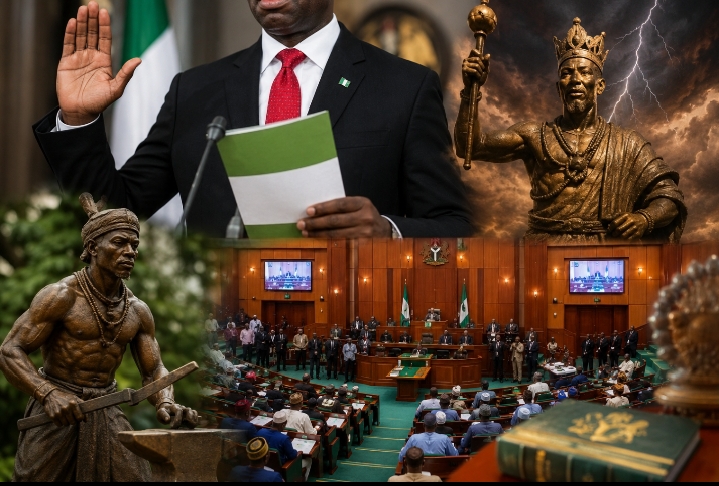
Nigeria’s public office ceremonies have always carried a deeper meaning than the simple act of repeating official words before assuming responsibility. Behind every oath taken by a president, governor, lawmaker, judge or other public officer lies a conversation about loyalty, power, accountability, faith, history and the values a nation chooses to project. As Nigeria continues to search for a stronger connection between its modern institutions and its historical roots, a new debate has drawn attention to an important question about culture, identity and governance.
The conversation gained fresh attention after renowned historian Professor Toyin Falola called for greater recognition of indigenous traditions within Nigeria’s public ceremonies. His suggestion involving the Yoruba deities Sango and Ogun has reopened discussions about the relationship between Nigeria’s ancient heritage and the structures inherited from the colonial period. The issue goes beyond a single oath or ceremony because it touches on how a nation remembers its past while building its future.
For decades, Nigeria’s public officials have taken oaths guided by constitutional provisions, legal responsibilities and established traditions. The words spoken during these ceremonies are designed to remind leaders that public office is a trust rather than a personal possession. However, Falola’s argument has introduced another dimension by asking whether Nigeria’s indigenous history deserves a stronger place within national symbols and official practices.
Understanding this debate requires looking beyond the names Sango and Ogun alone. It involves examining how Nigeria’s oath system developed, the meaning attached to Yoruba traditional symbols, the legal structure surrounding public declarations, and why the conversation has become part of a wider discussion about national identity.
Nigeria’s Oath System Explained
Nigeria’s oath of office system is designed to create a formal commitment between public officials and the Nigerian state. The oath requires individuals entering certain positions of authority to promise loyalty to Nigeria, respect for the Constitution, faithful performance of duties, protection of citizens’ interests and avoidance of personal bias while carrying out official responsibilities.
The current framework is rooted in Nigeria’s constitutional structure. The 1999 Constitution of the Federal Republic of Nigeria, which came into operation on May 29, 1999, provides several schedules containing oaths for different public offices. These include the presidential oath, governor’s oath, legislative oath, judicial oath and other official declarations.
The purpose of these oaths is not simply ceremonial. They serve as a public reminder that authority comes with responsibility. When a president, governor, senator or other official takes an oath, the ceremony represents a legal commitment to serve within the boundaries of the Constitution.
Nigeria’s oath traditions were influenced by systems introduced during British colonial administration, where official declarations were shaped by British legal practices. After independence on October 1, 1960, Nigeria maintained several institutional structures inherited from colonial rule while gradually adapting them to reflect its own political realities.
Over time, public oaths became closely connected with questions about leadership integrity, corruption, constitutional responsibility and citizens’ expectations from those in power. This background explains why any suggestion of changing the wording or symbolism of public oaths attracts significant attention.
The Origin of Public Oaths in Nigeria
The history of official oaths in Nigeria reflects the country’s political evolution. During the colonial era, administrative officers operated under British legal traditions that emphasised allegiance to the Crown and obedience to government authority. These practices influenced how official commitments were structured.
Following independence, Nigeria transformed these arrangements into a national system focused on loyalty to the Nigerian state. The emphasis moved from colonial authority to constitutional responsibility, reflecting the emergence of Nigeria as a sovereign nation.
The country’s constitutional journey also shaped how public officials made declarations. Nigeria experienced military rule from 1966 to 1979, returned to civilian government in 1979, entered another period of military rule from 1983 to 1999, and returned to democratic governance with the Fourth Republic on May 29, 1999.
Throughout these changes, oaths remained an important part of government transition. They became symbolic moments where leaders publicly accepted responsibility before citizens and institutions.
The debate surrounding Sango and Ogun therefore connects with a much older question about what national ceremonies should represent. Should they mainly reflect modern constitutional values, or should they also carry elements of historical traditions that existed before colonial influence?
Who is Toyin Falola?
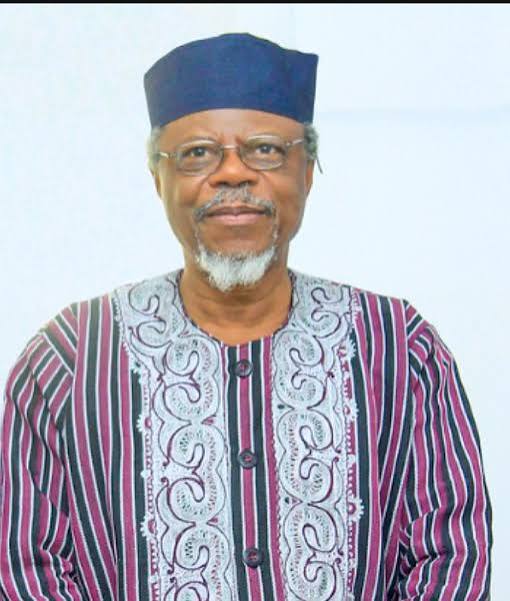
Professor Toyin Falola is one of Africa’s most recognised historians and scholars. Born on January 1, 1953, in Ibadan, Oyo State, he has built an international reputation through his research on African history, Yoruba civilisation, colonialism, politics and cultural identity.
Falola has written extensively on Africa’s historical experiences and the importance of understanding indigenous knowledge systems. His academic work has explored how African societies developed political, social and cultural institutions before colonial rule.
Through books, lectures and public discussions, Falola has often examined the relationship between African traditions and modern governance. His arguments frequently focus on the need for Africans to understand their own historical foundations rather than viewing their past only through external influences.
His call regarding Sango and Ogun fits into this broader academic interest. The argument is centred on cultural recognition and the place of indigenous heritage within national life.
What Falola Proposed
Falola’s proposal focused on the possibility of recognising Yoruba indigenous symbols within Nigeria’s oath taking traditions. The suggestion, reteirated in July 2026, was that public officials could have a connection with indigenous cultural references when making commitments to serve the nation.
The proposal specifically mentioned Sango and Ogun, 2 major figures within Yoruba traditional belief systems. Their inclusion is connected to the meanings attached to these figures rather than simply their religious importance.
The idea behind the argument is that Nigeria’s national identity contains multiple historical layers. Before the arrival of Christianity in the 15th century through European contact and the spread of Islam in various parts of West Africa from earlier centuries, indigenous belief systems already existed across Nigerian societies.
Yoruba traditional practices formed one of the major cultural systems in West Africa, with complex ideas about morality, leadership, justice, community responsibility and human relationships with the spiritual world.
For Falola, the discussion represents an opportunity to examine whether modern Nigeria fully reflects its historical experiences through its official symbols.
The Meaning Behind Sango
Sango is one of the most recognised Yoruba Orisa. In Yoruba tradition, Sango is associated with thunder, lightning, power, authority, justice and leadership.
Historical accounts connect Sango with the old Oyo Empire, where tradition describes him as a former Alaafin of Oyo before his transformation into a revered spiritual figure. The Oyo Empire became one of the most influential Yoruba political systems between the 17th century and 19th century.
The symbolism surrounding Sango is strongly connected with justice and accountability. Thunder and lightning are often interpreted as representations of power capable of confronting wrongdoing.
Because of these associations, some people view Sango as a symbol that could remind leaders about responsibility, fairness and the consequences of abusing authority.
The discussion around Sango is therefore not only about traditional worship. It is also about the cultural meanings attached to leadership, punishment for wrongdoing and public responsibility.
The Meaning Behind Ogun
Ogun occupies another important place within Yoruba tradition. Ogun is associated with iron, metalwork, technology, labour, craftsmanship, warfare and human effort.
Traditional Yoruba societies regarded Ogun as an important figure because iron tools played a major role in farming, hunting, construction and survival. Blacksmiths, hunters, warriors and artisans historically maintained strong connections with Ogun because their work depended on iron.
The symbolism of Ogun centres around productivity and transformation. Iron represents the ability to create tools, develop communities and overcome challenges through human effort.
Within the context of governance, those who support the cultural argument around Ogun see him as representing discipline, hard work and development.
The reference to Ogun in discussions about public leadership connects ancient symbolism with modern ideas about national progress.
Why The Debate Matters
The discussion around Sango and Ogun has become part of a broader conversation about Nigeria’s identity. Since independence, Nigeria has attempted to balance colonial institutions, modern democracy, religious diversity and indigenous cultural heritage.
The country is home to hundreds of ethnic groups with different histories and traditions. Yoruba culture represents one important part of Nigeria’s wider national story, alongside the histories of Hausa, Igbo, Kanuri, Tiv, Ijaw, Nupe, Edo and many other communities.
The debate therefore raises questions about how a diverse country represents itself through national institutions.
For some Nigerians, greater recognition of indigenous traditions represents cultural preservation. They argue that historical identity should have a place within modern governance structures.
For others, official ceremonies should remain focused on constitutional principles rather than specific cultural or spiritual references.
The Constitutional Question
Changing Nigeria’s official oath system would require legal procedures because public oaths are established through constitutional and statutory frameworks.
The National Assembly would need to consider any formal proposal before changes could occur. Depending on the nature of the amendment, constitutional procedures may also become necessary.
At present, the discussion surrounding Sango and Ogun remains a public debate rather than an approved reform of Nigeria’s oath system.
The issue demonstrates how cultural questions can intersect with constitutional matters. A simple change in ceremonial language could create wider discussions about religion, representation, tradition and national unity.
The Bigger Picture Behind The Proposal
The debate surrounding Toyin Falola’s suggestion represents a larger conversation about how Nigeria defines itself in the modern era.
Every nation uses symbols to express its values. Flags, national anthems, public ceremonies and official rituals all communicate ideas about history and identity.
For many years, Nigeria’s public institutions have reflected influences from colonial history, constitutional development and major religious traditions. The discussion around Sango and Ogun introduces another question about whether indigenous heritage should receive stronger recognition.
The significance of the debate is not limited to 2 Yoruba figures. It reflects a broader search for balance between Nigeria’s past and present.
As the country continues to develop its democratic institutions, conversations about culture, history and identity are likely to remain part of national discussions. The question surrounding Sango and Ogun has opened a wider examination of how Nigeria remembers where it came from while deciding the symbols that represent where it is going.
The Role of Traditional Institutions in Modern Nigeria
Nigeria’s relationship with traditional institutions has always been complex. While modern democracy operates through elected officials, constitutional offices and political structures, traditional authorities continue to hold cultural influence across many communities.
Before colonial rule, many Nigerian societies had organised systems of leadership, justice, governance and social responsibility. Traditional rulers, councils of elders and community institutions played important roles in maintaining order and resolving disputes.
The arrival of colonial administration changed many of these structures. The British introduced new political arrangements while also working with existing traditional authorities through systems such as indirect rule. This created a mixture of indigenous leadership and foreign administrative practices.
After independence in 1960, Nigeria retained a democratic state structure while traditional institutions continued to serve cultural roles. Today, traditional rulers may not hold the same constitutional powers as elected officials, but they remain influential figures in areas such as culture, conflict resolution and community identity.
The discussion around Sango and Ogun connects with this history because it asks whether elements of Nigeria’s indigenous worldview should have a stronger presence within modern national institutions.
Indigenous Religion Before Colonial Influence
Traditional African belief systems existed across Nigerian societies long before colonial influence. These systems contained ideas about morality, justice, leadership, family responsibility and the relationship between humans and the spiritual world.
Among the Yoruba people, the belief system involving Orisa represents a complex understanding of existence. The Orisa are traditionally viewed as spiritual forces connected with different aspects of life, nature and human responsibilities.
Sango and Ogun are among the most recognised figures within this tradition because of their historical and symbolic importance.
However, Yoruba traditional religion is not limited to these 2 figures. It includes a wide range of spiritual concepts, practices, festivals and philosophical ideas that developed over centuries.
The conversation around recognising indigenous traditions in public life is therefore connected to preserving a wider cultural heritage rather than focusing only on individual deities.
Nigeria’s Religious Landscape
Religion remains one of the most important aspects of Nigerian society. Christianity, Islam and indigenous belief systems have all shaped the country’s history and social development.
Christianity expanded significantly through missionary activities beginning from the 19th century, while Islam had already spread across parts of West Africa through trade, scholarship and political relationships centuries earlier.
Indigenous traditions continued to exist alongside these religions, with some communities maintaining traditional practices while others adopted or combined different religious identities.
Nigeria’s Constitution protects freedom of religion and prohibits discrimination based on religious belief. This legal principle has influenced debates about how religion should interact with government institutions.
The conversation about Sango and Ogun enters this sensitive space by examining whether cultural recognition should be separated from religious endorsement.
Previous Calls For Traditional Oaths
The idea of using traditional symbols during public declarations is not entirely new in Nigeria.
Over the years, some cultural advocates have argued that indigenous oaths could create a stronger sense of responsibility among public officials. One notable example came from Yeni Kuti, daughter of Afrobeat legend Fela Anikulapo Kuti, who previously suggested that leaders could be sworn using traditional references such as Ogun and Sango.
The argument behind such proposals has often centred on accountability. Some believe traditional systems carried strong moral consequences because individuals were expected to respect spiritual commitments made before their communities.
The renewed discussion following Falola’s remarks has therefore brought an existing cultural argument back into national attention.
The Meaning of Oaths Beyond Words
An oath is more than a collection of sentences. Throughout history, societies have used oaths as powerful commitments that connect personal responsibility with public duty.
In government, an oath represents a promise that an official will place constitutional obligations above personal interests.
Different societies have used different forms of oath taking depending on their historical and cultural backgrounds. Some involve religious references, while others focus entirely on legal commitments.
Nigeria’s current system reflects its constitutional history, but the discussion surrounding Sango and Ogun raises questions about whether cultural symbols can also play a role in reinforcing responsibility.
The central issue is how a modern state balances legal neutrality with historical identity.
Possible Legal Pathway For Any Change
If Nigeria were to consider changing its oath system, the process would require formal government action rather than public discussion alone.
A proposal would need to enter the legislative process, where lawmakers would examine the implications and determine whether changes are necessary.
Depending on the specific amendment being considered, constitutional requirements may apply. Nigeria’s Constitution has established procedures for making changes to important sections of the legal framework.
Any adjustment would also require careful consideration of how official oaths apply across different offices and levels of government.
The process would involve legal analysis, legislative debate and possible approval through established constitutional procedures.
Why The Sango And Ogun Debate Has Returned
The renewed attention around Sango and Ogun reflects a growing interest in African history and cultural identity.
Across the continent, there has been increased discussion about preserving indigenous knowledge, languages, traditions and historical experiences.
Nigeria, as Africa’s most populous country, has often faced questions about how it presents its identity both domestically and internationally.
The debate around public symbols is part of this larger conversation. National ceremonies communicate what a country values, remembers and chooses to highlight.
The discussion surrounding Falola’s proposal has therefore become a reflection of deeper questions about Nigeria’s relationship with its past.
The Future Of Indigenous Recognition In Nigeria
Whether or not Nigeria changes its oath system, the conversation has already highlighted the importance of indigenous history within national discussions.
Cultural recognition can take different forms. It may appear through education, preservation of historical sites, support for traditional institutions, promotion of indigenous languages or inclusion of cultural knowledge in public programmes.
The debate over Sango and Ogun shows that questions about identity remain relevant decades after independence.
Nigeria’s future discussions about culture and governance will likely continue to involve finding a balance between constitutional democracy, religious freedom and historical heritage.
The proposal linked to Toyin Falola has created an opportunity to examine how a modern African nation relates to the traditions that existed long before the formation of the current state structure.
Final Thoughts
Nigeria’s oath of office represents a promise between public officials and the people they serve. It reflects the country’s constitutional journey, political history and expectations of leadership.
The conversation sparked by Toyin Falola’s call for recognition of Sango and Ogun introduces another layer by bringing indigenous heritage into the discussion about national symbols.
Sango represents ideas connected with justice, authority and accountability, while Ogun represents labour, technology and productivity. Their mention in a national debate has created a wider conversation about history, identity and the place of indigenous traditions in modern Nigeria.
For now, the issue remains a proposal and cultural discussion rather than an established change to Nigeria’s official oath system.
However, the attention it has generated shows that questions about Nigeria’s past, present and future continue to shape conversations about what the nation represents and the values it wants its institutions to reflect.