Nigeria’s system for recording the most important moments in a person’s life is entering a new phase as the government begins a nationwide digital approach to tracking births, deaths and other vital events. For decades, millions of Nigerians have depended on physical registration centres, paper documents and manual processes to obtain official records, creating challenges for families seeking identity documents, government services and legal recognition.
The launch of a new online platform by the National Population Commission marks one of the biggest attempts to transform how these records are created, stored and accessed across the country. The move comes at a time when accurate population information has become increasingly important for planning schools, hospitals, social programmes, security strategies and national development projects.
The platform, known as VitalReg, is designed to bring civil registration closer to citizens by allowing eligible Nigerians to begin birth registration, death notification and related processes through a digital system. While physical registration centres will continue to operate, the new approach introduces a system where technology becomes a major part of how Nigeria records the journey of its citizens from birth to death.
The National Population Commission officially moved the Electronic Civil Registration and Vital Statistics system into nationwide operation across Nigeria’s 36 states plus the Federal Capital Territory on July 1, 2026. The development represents a major step in Nigeria’s long term effort to build a more accurate civil registration structure that can provide reliable data about the country’s population.
Why Nigeria Needed a New Civil Registration System
Civil registration is one of the foundations of a modern society because it creates official records of major life events. A birth record confirms a person’s legal identity, while a death record provides government recognition of a person’s passing and supports families during legal and administrative processes.
Nigeria has historically faced difficulties maintaining complete records of births and deaths due to population size, geographical challenges, limited awareness and dependence on traditional registration methods. Millions of citizens, especially those living in remote communities, have struggled to access registration centres or complete documentation processes.
The National Population Commission has stated that Nigeria records approximately 5 million births every year, yet birth registration coverage remains around 57 percent. Death registration remains significantly lower, with coverage estimated below 20 percent. These figures highlight the challenge of accurately documenting the population of Africa’s most populous country.
Poor civil registration creates consequences beyond missing documents. When births are not properly recorded, children may face difficulties accessing education, healthcare services, travel documents and other official opportunities later in life. When deaths are not documented, families may encounter complications involving inheritance, insurance claims, pensions and legal ownership matters.
The government’s decision to introduce a digital platform is aimed at addressing these long standing challenges by making registration easier, faster and more accessible for citizens across different parts of Nigeria.
What Is VitalReg?
VitalReg is the digital platform introduced by the National Population Commission under the Electronic Civil Registration and Vital Statistics framework. The system is designed to support the electronic recording of vital events while improving the way civil records are created, managed and retrieved.
Through the platform, citizens can begin processes relating to birth registration and death notification without depending entirely on physical visits to NPC offices. The system is expected to reduce paperwork, improve data accuracy and create a more organised national database of vital records.
The platform forms part of Nigeria’s broader attempt to modernise civil registration by connecting technology with population management. Instead of relying mainly on manual forms stored at registration centres, digital records can provide faster access to information while reducing delays associated with traditional methods.
Birth registration remains one of the major focuses of the system because official birth records provide the foundation for legal identity. A child without a recognised birth record may face difficulties proving age, nationality or eligibility for certain services as they grow older.
Death registration is also included because official death records help government agencies understand mortality patterns while supporting families handling legal responsibilities after the loss of a relative.
How The Digital Registration Process Works
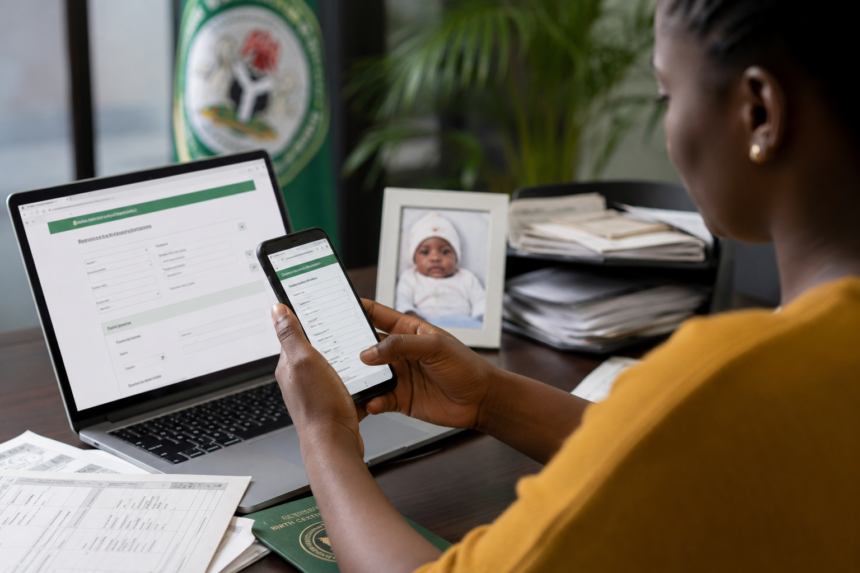
The new system is designed to simplify the journey from reporting a vital event to obtaining official documentation. For birth registration, parents or authorised persons can provide details about a newborn through the digital platform and begin the documentation process electronically.
Information required during registration typically includes details about the child, parents and circumstances surrounding the birth. Once the information is submitted, it can move through the verification process before official records are created.
The digital approach is expected to reduce the pressure on families who previously had to travel long distances to registration locations. Parents in communities far from NPC offices may have a more convenient option for starting the process without immediately leaving their homes or workplaces.
However, the existence of the online platform does not completely remove the importance of physical registration centres. Many Nigerians still require assistance due to limited internet access, lack of digital skills or challenges with technology devices.
For death registration, families or authorised individuals can submit notifications about a person’s death through the system. Proper death records help create official documentation required for legal processes after someone passes away.
Death certificates can play important roles in inheritance procedures, insurance claims, estate management and other matters where families need government recognised proof of death.
Why Accurate Birth Records Matter For Nigeria
A reliable birth registration system goes beyond issuing certificates. It provides government with information needed to understand how the population is changing and where resources are required most.
When more children are properly registered, government agencies can develop better plans for education, healthcare and social services. Population data helps determine where schools should be built, where healthcare facilities are needed and how public resources should be distributed.
Birth records also protect children by giving them legal identity from an early stage of life. A documented identity can become important when applying for examinations, passports, employment opportunities and other official services.
Nigeria’s growing population makes accurate records increasingly important. Without reliable data, planning becomes difficult because authorities may not have a clear picture of how many people live in specific communities or regions.
The introduction of VitalReg is therefore not only about making certificates easier to obtain. It is also about creating a stronger information system that can support national decision making.
The Role Of NPC In Nigeria’s Population Management
The National Population Commission is the government agency responsible for collecting, managing and analysing population related information in Nigeria. Its responsibilities include population census activities, civil registration and maintaining records of vital events.
The commission has historically operated through registration centres spread across local government areas, allowing citizens to register births and deaths through physical locations.
Before the introduction of the nationwide digital platform, many Nigerians depended on these centres for documentation services. However, challenges such as distance, transportation costs and delays affected access for many communities.
The digital system represents an attempt to combine the existing physical structure with modern technology. Citizens who prefer online services can use the digital platform, while those who need physical assistance can continue visiting registration centres.
The NPC currently operates approximately 4,011 functional registration centres across the 774 local government areas in Nigeria, with plans to expand coverage to about 8,000 centres nationwide.
This combination of digital access and physical support is intended to ensure that more Nigerians can participate in the civil registration system regardless of their location or access to technology.
How Nigerians Will Benefit From The New Digital System
The introduction of VitalReg is expected to change how many Nigerians interact with civil registration services by reducing some of the difficulties associated with traditional methods. For families welcoming a newborn child, the process of obtaining official recognition may become easier because registration can begin through a digital platform instead of depending entirely on physical visits.
Many parents across Nigeria have experienced challenges when trying to register their children, especially when registration centres are far from their communities. Transportation expenses, long waiting periods and limited awareness have contributed to low registration levels in some areas.
The online platform creates an opportunity for more families to participate in the registration process without facing some of the barriers that previously discouraged them. By making the first steps accessible through technology, the government hopes more children will receive official birth records at an early stage of life.
The benefits also extend to adults who require access to existing civil records for different purposes. Birth certificates and related documents are often needed for education, employment, international travel, financial services and other official transactions.
A more organised digital system could reduce delays and improve the ability of citizens to access important records when they need them most.
Easier Access For Nigerians Living Outside The Country
Millions of Nigerians living abroad regularly require official documents connected to their identity, family history and citizenship status. Before the introduction of digital civil registration services, some processes required Nigerians outside the country to rely heavily on relatives, representatives or physical visits to Nigeria.
The new platform creates the possibility of starting some registration processes remotely, reducing the pressure of travelling long distances for basic civil documentation matters.
For Nigerians in the diaspora, reliable access to birth and death records can be important for immigration procedures, family documentation, inheritance matters and other legal requirements.
A digital civil registration system also supports stronger connections between Nigerians abroad and government institutions at home. When records are properly maintained, citizens can have greater confidence that their official information is preserved within a recognised national system.
However, remote access will still depend on proper verification procedures to ensure that records remain accurate and protected from fraudulent activities.
Strengthening Nigeria’s National Identity System
Civil registration plays a major role in building a reliable identity system because official identity begins with accurate records of birth. When a person’s birth is properly documented, it creates a foundation for other forms of identification throughout life.
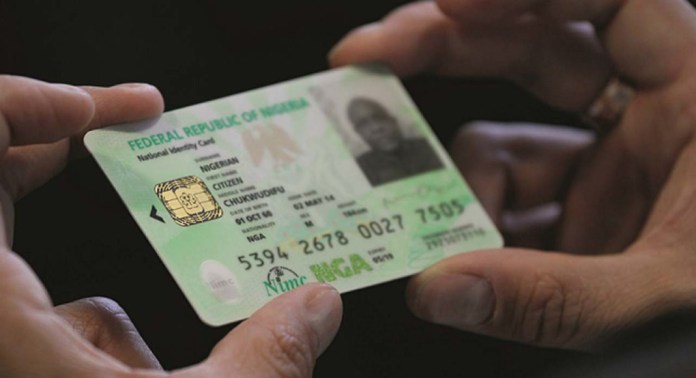
Nigeria has continued efforts to improve identity management through different government programmes, including the work of the National Identity Management Commission. The connection between civil registration records and identity systems can help reduce gaps where citizens exist without proper documentation.
A stronger civil registration structure can support government agencies in identifying populations that require healthcare services, education support, social programmes and other public interventions.
Accurate records can also help reduce identity related challenges by providing a clearer link between individuals and their official information.
The collaboration between civil registration systems and identity management platforms is considered important because reliable population data affects almost every aspect of national planning.
Partnerships Supporting The Digital Registration Programme
The Electronic Civil Registration and Vital Statistics initiative involves cooperation between government institutions, development organisations and technology partners working toward improving Nigeria’s registration system.
The National Population Commission has identified partnerships involving organisations such as the National Identity Management Commission, the Association of Local Governments of Nigeria, UNICEF and technology partners.
These collaborations are designed to improve coordination, expand access and ensure that the digital platform connects effectively with existing government structures.
Local governments remain important because they are closer to communities and often serve as the first point of contact for citizens seeking civil registration services.
The involvement of international organisations such as UNICEF reflects the importance of birth registration as a child protection issue. Globally, birth registration is recognised as a key part of ensuring that children have legal identity and access to basic rights.
Technology partners are also expected to contribute to the development, maintenance and security of the digital system as more Nigerians begin using the platform.
The Continued Importance Of Physical Registration Centres
Although the new platform introduces digital registration, physical centres remain an important part of the system. Nigeria’s population includes millions of people who may not have regular internet access, smartphones or the digital skills required to complete online processes independently.
The NPC’s existing registration centres will continue to provide support for citizens who need assistance. This approach allows the country to combine modern technology with traditional service delivery.
Rural communities, elderly citizens and people living in areas with limited digital infrastructure may continue depending on physical locations to complete registration activities.
The expansion plan from approximately 4,011 functional centres toward about 8,000 centres nationwide shows that physical access remains part of Nigeria’s long term strategy.
The success of VitalReg will depend not only on the technology itself but also on how effectively citizens across different communities can use the system.
Is Birth Registration Still Free?
The National Population Commission has maintained that birth registration for eligible children remains free through its official registration channels.
This policy is aimed at encouraging more parents to register their children without financial barriers preventing access to legal identity documentation.
However, citizens may need to understand the difference between basic registration services provided by the NPC and other additional requests or processes that may involve separate procedures.
The government’s emphasis on free birth registration is connected to its broader goal of increasing registration coverage across Nigeria.
When families understand that registration is accessible without payment, more parents may be encouraged to complete the process early rather than delaying until documents become urgently needed.
The Bigger Picture Behind Digital Civil Registration
The launch of VitalReg is connected to a much larger national challenge involving accurate population information. A country with more than 200 million people requires dependable records to make effective decisions about development.
Government planning depends heavily on reliable information. Without accurate birth and death records, authorities may struggle to determine where population growth is happening, where healthcare demands are increasing or where new infrastructure is required.
Civil registration provides answers to important questions about Nigeria’s population.
How many children are being born each year?
Which areas are experiencing rapid population growth?
How many deaths are occurring across different communities?
What resources are required to support citizens?
Reliable answers to these questions allow government agencies to create better policies and allocate resources more effectively.
The digital system is therefore not simply about replacing paper documents with online forms. It represents an attempt to create a stronger foundation for national planning through better information.
Challenges That Could Affect The Success Of The Platform
Despite the potential benefits, the implementation of a nationwide digital registration system comes with challenges that must be addressed for the programme to achieve its goals.
One major issue is the digital divide. While internet access and smartphone usage have expanded across Nigeria, many communities still experience difficulties connecting to reliable digital services.
Some citizens may struggle with limited network coverage, high data costs or lack of familiarity with online platforms. These challenges could prevent some Nigerians from benefiting fully from the new system.
Digital literacy will also play an important role. A platform can only succeed when citizens understand how to use it and when support systems exist for those who need assistance.
Another major concern involves data security. Birth and death records contain sensitive personal information, making protection against unauthorised access, misuse or cyber threats extremely important.
Government agencies responsible for managing the system will need strong security measures to protect citizens’ information and maintain public trust.
System reliability is another factor that will determine public acceptance. Nigerians using the platform will expect consistent access, accurate processing and minimal technical difficulties.
Experiences with some government digital services in the past have made many citizens cautious about online platforms, meaning the performance of VitalReg will be closely observed as adoption increases.
Protecting Citizens’ Information In The Digital Age
The movement of civil registration records from paper systems to digital platforms brings major opportunities, but it also places greater responsibility on those managing citizens’ personal information. Birth records contain details that remain connected to a person throughout life, including names, dates of birth, family information and other identity related details.
Death records also contain sensitive information that can affect legal processes, inheritance matters and family documentation. Protecting these records is therefore essential because any misuse could create serious problems for individuals and families.
The National Population Commission and its partners will need to ensure that VitalReg operates with strong security measures that prevent unauthorised access, data manipulation and identity related fraud. A reliable digital registration system must not only make services faster but also guarantee that citizens’ information remains protected.
Public confidence will play a major role in the success of the platform. Nigerians are more likely to embrace digital registration when they trust that their information is handled responsibly and that the system can protect their privacy.
As more government services move online, cybersecurity will continue to become an important part of national development. The protection of civil records will determine how effectively Nigeria can build a modern digital identity environment.
How Digital Records Could Change Government Planning
Accurate population information has always been one of Nigeria’s biggest development challenges. With a population spread across urban centres, rural communities and different geographical regions, obtaining reliable data has often required significant effort.
A stronger civil registration system can provide government agencies with information that is updated continuously rather than depending only on periodic exercises.
Birth and death records can help officials understand population changes as they happen. This information can support decisions about where new schools should be established, where healthcare facilities are needed and how social programmes should reach citizens.
Healthcare planning is one area where accurate records can make a significant difference. Knowing birth patterns, death trends and population distribution can help health authorities prepare better strategies for maternal care, child health programmes and disease prevention.
Education planning can also benefit because reliable birth records can provide clearer estimates of future student populations. This can assist government agencies in preparing classrooms, recruiting teachers and developing educational policies.
Infrastructure planning depends heavily on population information as well. Roads, housing projects, water supply systems and other public facilities require accurate estimates of where people live and how communities are growing.
The success of VitalReg could therefore influence many areas of Nigerian life beyond the immediate process of obtaining certificates.
The Connection Between Civil Registration, Identity, Development
A person’s official journey begins with recognition of their birth. That first record becomes a foundation for accessing other forms of identity throughout life.
Without proper civil registration, many citizens can face difficulties proving who they are, where they come from or their eligibility for certain services.
For children, birth registration provides legal recognition and creates opportunities for inclusion in society. It helps ensure that children are counted, protected and considered when government policies are developed.
For adults, official records support access to education, employment opportunities, financial services and international documentation.
For families dealing with loss, proper death registration provides important legal recognition and helps ensure that estates, benefits and other responsibilities can be handled properly.
The introduction of a digital system brings these different stages of life together through a more organised record keeping process.
A stronger civil registration system can help Nigeria move closer to a future where fewer citizens experience difficulties because their important life events were never officially recorded.
What The July 1, 2026 Launch Means For Nigeria
The nationwide activation of the Electronic Civil Registration and Vital Statistics system on July 1, 2026, represents a major milestone in Nigeria’s effort to modernise public services.
The launch means citizens across Nigeria’s 36 states plus the Federal Capital Territory can now access the new digital approach to vital registration services.
The timing of the programme reflects growing demand for faster government services as more Nigerians become familiar with digital platforms in banking, communication, education and business.
The government’s goal is to create a system where registration becomes easier while ensuring that national records become more complete and accurate.
The platform is not designed to replace every existing registration method immediately. Instead, it combines digital access with physical support structures to reach different categories of citizens.
For a country where millions of births occur every year and where death records remain limited, improving registration coverage represents a major national priority.
Why The Success Of VitalReg Matters
The introduction of VitalReg creates an opportunity for Nigeria to address one of its long standing administrative challenges. A country cannot effectively plan for its people without knowing enough about its population.
Reliable civil records can improve government accountability because decisions can be based on stronger information rather than estimates alone.
The system could also reduce the stress many Nigerians experience when trying to obtain important documents. Faster access to official records can save time, reduce unnecessary travel and make government services more convenient.
However, technology alone cannot solve every challenge. Successful implementation will require continued investment, public awareness, strong infrastructure and effective management.
Citizens will need clear information about how the system works, where to access support and how their information is protected.
Government agencies will also need to monitor the platform, address technical issues quickly and continue improving access for communities with limited digital resources.
A New Chapter In Nigeria’s Record Keeping System
Nigeria’s decision to introduce nationwide online birth and death registration represents a major development in how the country documents the lives of its citizens.
For generations, civil registration has depended largely on physical processes that often created barriers for many families. The arrival of VitalReg introduces a different approach where technology becomes a major tool for improving access, accuracy and efficiency.
The platform carries the potential to make birth registration easier for parents, improve death records for families and provide government with better information for national development.
Its long term impact will depend on how effectively it reaches ordinary Nigerians, especially those in communities where digital access remains limited.
The future of civil registration in Nigeria will not be determined by the launch alone but by the ability of institutions, communities and citizens to successfully adopt the system.
Final Takeaway
The National Population Commission’s nationwide online birth and death registration platform marks one of Nigeria’s most important steps toward modernising civil documentation.
Through VitalReg, Nigerians have a new digital option for recording major life events while government agencies gain an opportunity to build a more reliable population database.
The system promises easier access to birth certificates, improved death records, stronger identity management and better planning for national development.
The journey will require attention to accessibility, technology reliability and data protection, but the foundation has now been established for a more connected civil registration system.
Nigeria’s movement from traditional paper based registration toward a digital system reflects a broader effort to use technology to improve how citizens interact with government and how the country understands its own population.