Millions of football fans tuned in to witness history as the FIFA World Cup reached its dramatic conclusion, while millions more found themselves drawn into another conversation that had little to do with the action on the pitch. Long before the final whistle echoed around the stadium, social media timelines had become flooded with eye catching figures, alleged payout lists, celebrity names, screenshots presented as official documents, and bold claims that some of the world’s biggest music stars had received multimillion dollar payments for performing during the tournament’s biggest celebrations. The numbers spread rapidly across platforms, turning curiosity into a global discussion that continued well after the trophy had been lifted.
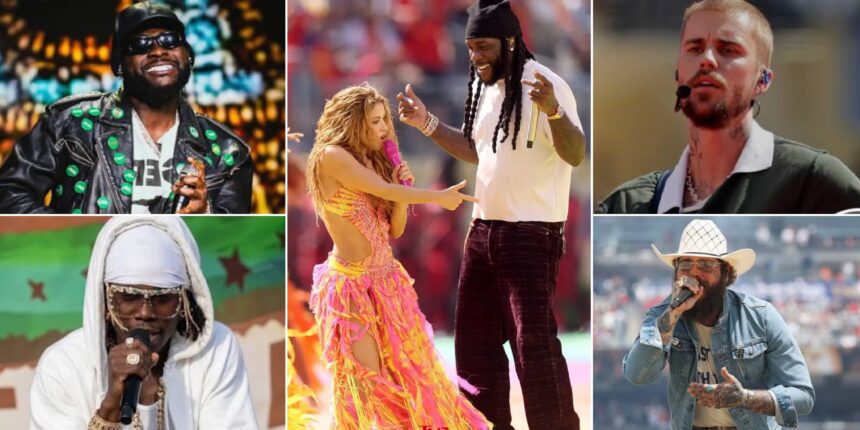
Attention quickly centered on internationally recognised artists including Burna Boy, Shakira, Madonna, Justin Bieber, BTS, Davido, Tyla, Katy Perry, and several others whose names appeared in posts claiming to reveal FIFA’s financial arrangements for the tournament’s musical performances. Many of those claims were shared thousands of times within hours, often without any supporting evidence beyond a viral graphic that appeared convincing at first glance. As interest grew, many readers began searching for official confirmation, hoping to separate documented facts from online speculation surrounding one of football’s biggest entertainment spectacles.
Careful examination of FIFA’s official announcements, alongside statements surrounding the tournament’s entertainment programme, presents a much clearer picture than the one painted across social media.
Understanding where the rumours began, why they gained momentum, and which details can actually be verified offers a more complete view of one of the tournament’s most talked about stories away from the football pitch.
How The Payment Claims Emerged
Hours before the FIFA World Cup final on 19 July 2026, social media platforms became saturated with posts claiming to reveal the exact amount each artist would receive for performing during the tournament’s entertainment programme. The posts appeared across X, Facebook, Instagram, TikTok, and several blogs, with many users presenting the figures as though they had originated from an official FIFA financial document. Because the alleged payout list contained precise dollar amounts rather than rough estimates, many readers accepted it as genuine before checking whether it had been supported by any credible source.
The image listed internationally recognised names alongside specific payments, claiming Madonna would receive $3 million, BTS $2.8 million, Shakira $2.5 million, Katy Perry $2.2 million, Burna Boy $1.45 million, Davido $1.35 million, Anitta $1.1 million, Tyla $950,000, J Balvin $900,000, Michael Bublé $850,000, Alanis Morissette $750,000, and Andrea Bocelli $700,000. Another claim attached to the same graphic stated that FIFA had allocated $20.15 million solely for artist payments during the tournament. Those figures travelled quickly across multiple platforms, often appearing without any accompanying explanation about their origin.
Growing public interest encouraged many football supporters and music fans to search for confirmation from FIFA, Global Citizen, reputable international media organisations, or representatives of the artists themselves. Despite the widespread circulation of the payment list, no official financial document matching the viral graphic emerged through any recognised FIFA communication channel. That absence became one of the most important aspects of the story, because extraordinary financial claims generally require equally strong documentary evidence before they can be treated as established facts.
FIFA’s Official Position
FIFA’s confirmed announcements surrounding the entertainment programme focused on a historic milestone rather than appearance fees. The governing body announced the introduction of the first FIFA World Cup Final halftime show, developed in partnership with Global Citizen, with the initiative linked to the FIFA Global Citizen Education Fund. Rather than highlighting payments to performers, the announcement centred on using football’s biggest stage to help generate support for children’s education around the world.
According to FIFA’s published information, the education initiative carries an ambitious goal of raising $100 million to expand access to quality education for children globally. That objective became the central theme of the collaboration between FIFA and Global Citizen, placing humanitarian fundraising alongside one of the biggest sporting events on the international calendar. Official communications surrounding the partnership consistently emphasised the educational mission, the global audience, and the significance of introducing a halftime performance during a World Cup final.
Publicly available FIFA material did not include a breakdown of appearance fees for individual performers. Likewise, no official document released by the organisation contained the dollar figures that circulated widely across social media before and after the final. That distinction remains essential because official announcements carry a different level of authority from viral posts shared without supporting documentation.
Verified Information About Performer Payments
Covering operational expenses is very different from paying performers fixed appearance fees. Production budgets ensure that an event can be delivered safely and professionally, while appearance fees represent direct compensation paid to artists for taking part. Available reporting surrounding the tournament consistently referred to the former, while credible confirmation of the latter remained absent. That distinction became blurred across social media, where many posts presented production spending as though it represented personal payments to individual artists.
Several widely shared posts also claimed that Burna Boy received $3 million for performing during the halftime show, alongside another $4 million connected to the recording of the official FIFA World Cup song titled “Dai Dai.” Those figures generated significant attention across entertainment pages and discussion forums because they suggested one of the largest music related payouts associated with the tournament. Despite their popularity online, neither FIFA nor Burna Boy’s management publicly confirmed those amounts, while Global Citizen also released no statement supporting the claims.
Why No Official Payment Figures Have Been Confirmed
One of the strongest indicators that the viral payment list should be treated with caution is the absence of official confirmation from the organisations directly responsible for the event. FIFA, Global Citizen, Live Nation, Done + Dusted, and the participating artists have all publicly promoted the historic halftime show, yet none has released a document detailing individual appearance fees.
Major sporting organisations rarely publish confidential performer contracts unless they form part of financial disclosures or legal proceedings. In this case, official announcements focused on the significance of the event, its charitable objective, and the performers involved rather than commercial agreements with individual artists.
As a result, there is currently no publicly verifiable evidence supporting the exact dollar amounts widely shared across social media.
The Difference Between Production Costs and Artist Fees
Another source of confusion stemmed from the way entertainment budgets were interpreted online.
Producing a World Cup halftime show requires enormous expenditure beyond the performers themselves. Organisers must finance stage construction, transportation of equipment across multiple countries, rehearsals, television production, broadcasting infrastructure, lighting, pyrotechnics, security, insurance, accommodation, logistics, and hundreds of technical staff working behind the scenes.
These production expenses can amount to millions of dollars without representing direct payments to the artists. Social media discussions frequently blurred that distinction by assuming that overall production spending reflected personal earnings for every performer.
Industry experts have long noted that large international events often prioritise production quality over performer fees because the global exposure itself provides significant promotional value.
Artists Also Received Global Exposure
Beyond any private contractual arrangements, participating artists gained access to one of the largest television audiences in sporting history.
The FIFA World Cup final remains among the world’s most watched sporting events, giving performers exposure to billions of viewers across television, streaming services, digital platforms, and social media.
For many internationally recognised musicians, appearing on such a stage offers substantial commercial value through increased streaming numbers, wider global recognition, higher demand for tours, brand partnerships, and future business opportunities.
That broader commercial benefit explains why artists sometimes participate in major sporting spectacles under arrangements that differ significantly from traditional concert performances.
Burna Boy’s Role During the Tournament
Burna Boy’s involvement in the 2026 FIFA World Cup extended beyond the final itself.
Months before the championship match, FIFA announced that he and Shakira had recorded “Dai Dai,” the Official FIFA World Cup 2026 Song in support of the FIFA Global Citizen Education Fund. The pair also premiered the song during the opening ceremony in Mexico City before performing it again during the historic final halftime show.
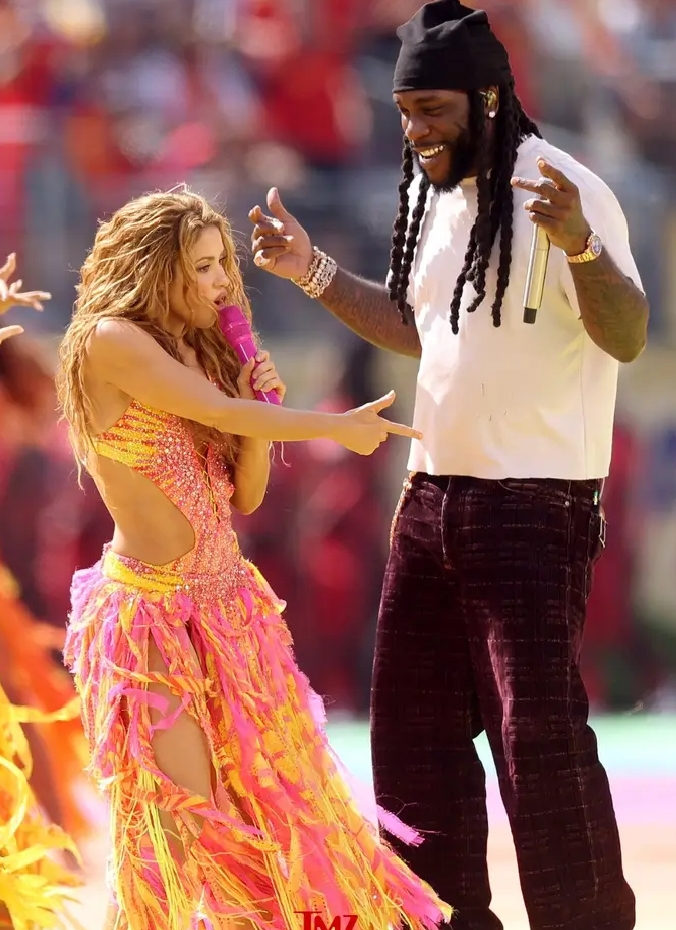
The official announcements emphasised the song’s connection to fundraising for children’s education rather than any commercial payment arrangement involving either artist. Royalties associated with the song were also linked to supporting the education initiative.
What About Davido and Tyla?
Davido and Tyla both featured in various World Cup celebrations during the tournament, leading to additional speculation about their earnings.
However, as with the halftime performers, no official FIFA document has publicly disclosed appearance fees for either artist. While their participation formed part of FIFA’s broader entertainment programme, the viral payment graphics circulating online did not come with documentary evidence from FIFA or the event’s organisers.
Without official confirmation, assigning exact earnings to either performer remains speculative rather than verified.
What Can Actually Be Verified?
After comparing FIFA announcements, Global Citizen releases, and reporting from reputable international outlets, several facts can be confirmed:
FIFA introduced its first-ever FIFA World Cup Final halftime show in partnership with Global Citizen.
The initiative was created to support the FIFA Global Citizen Education Fund, which aims to expand access to education for children worldwide.
Madonna, Justin Bieber, Shakira, BTS and Burna Boy were among the headline performers during the final.
Shakira and Burna Boy performed the official World Cup song, “Dai Dai.”
Official announcements confirmed the performers and charitable mission but did not publish appearance fees for individual artists.
Final Assessment
The viral payment figures attracted enormous attention because they appeared highly detailed and were shared alongside graphics that looked official. However, detailed numbers alone do not establish authenticity.
As things stand, there is no publicly available FIFA or Global Citizen documentation confirming that Madonna earned $3 million, Burna Boy received $1.45 million or $3 million, Davido collected $1.35 million, Tyla received $950,000, or that any of the other figures circulating online accurately represent artist payments.
What is firmly established is that the 2026 FIFA World Cup delivered the first halftime show in the tournament’s history, brought together some of the biggest names in global music, and used football’s biggest stage to promote a worldwide education fundraising campaign. Until official contracts or financial disclosures emerge, the widely circulated payout lists should be regarded as unverified social media claims rather than confirmed FIFA financial records.