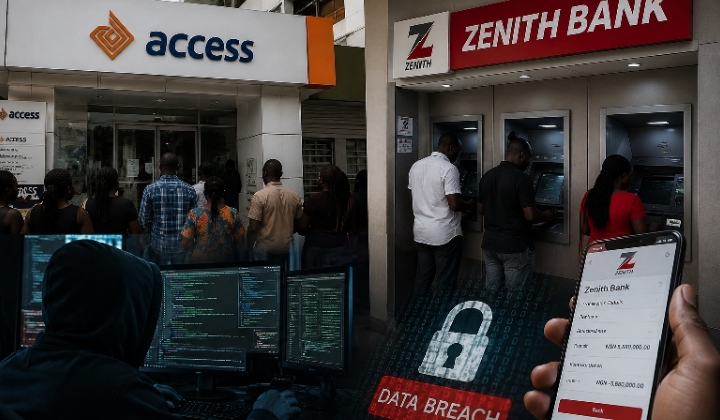
Nigeria’s banking sector has once again found itself at the centre of public attention after two separate stories triggered concern among millions of customers across the country. While one claim suggested a major financial institution could stop operations, another raised questions about the safety of customer information after reports of a possible cyberattack involving another leading bank.
The stories quickly travelled across social media platforms, messaging groups, and online discussions, creating confusion among customers who wanted clear answers about the safety of their accounts, the stability of their banks, and the possibility of disruptions to their daily financial activities. With millions of Nigerians depending on digital banking services for payments, transfers, businesses, and personal transactions, any report involving a bank shutdown or security breach naturally attracts widespread attention.
The Access Bank shutdown claim and the Zenith Bank customer data leak report represent 2 different concerns within Nigeria’s financial system. One centres around misinformation that can create unnecessary fear among customers, while the other highlights the growing cybersecurity challenges facing modern banking institutions in an increasingly digital economy.
The situation has pushed many customers to ask important questions about how banking rumours spread, how financial institutions respond during security scares, and what steps account holders should take when their personal information may be exposed.
Access Bank Shutdown Rumour: How The Claim Started
The first wave of concern came after messages circulated online claiming that Access Bank would shut down its operations. The information spread through social media channels and private messaging platforms, leading some customers to question whether the bank was facing serious financial difficulties or operational problems.
The claim created anxiety because Access Bank is one of Nigeria’s largest financial institutions with millions of customers who rely on its branches, mobile application, internet banking platform, and electronic payment services. Any suggestion that such a bank could suddenly stop operating would naturally attract immediate public reaction.
However, the shutdown claim was later described as false by Access Bank. The financial institution maintained that its operations remained active and that customers should disregard information suggesting the bank was preparing to close.
The bank reassured customers that their accounts remained secure, banking services were available, and there was no official decision or plan to end operations.
Access Bank’s Response To The Viral Claim
Access Bank responded by rejecting the information circulating online and warning customers against relying on unverified reports. The bank explained that false information about financial institutions can create unnecessary panic and confusion among customers.
The response came at a time when Nigerians have become increasingly sensitive to banking related information because of previous experiences involving financial reforms, digital banking challenges, and security concerns.
Financial institutions usually face reputational risks when false shutdown messages begin circulating because customers may rush to withdraw money, abandon digital platforms, or share unconfirmed information with others.
Access Bank’s position was clear that the institution remained fully operational and customers could continue using its banking channels without interruption.
Why Banking Shutdown Rumours Spread Quickly
Banking rumours often gain attention because they involve people’s money, savings, and financial security. When customers see messages suggesting that a bank could collapse or stop operations, many people react immediately before checking whether the information comes from a reliable source.
The growth of social media has also made it easier for unverified claims to reach thousands of people within minutes. A simple message shared through WhatsApp, Facebook, X, or other platforms can create widespread concern before a bank has the opportunity to respond.
Another reason such rumours attract attention is the general awareness around changes happening within Nigeria’s financial sector. Issues such as banking regulations, recapitalisation requirements, and digital service disruptions sometimes create an environment where false information can appear believable.
Despite the attention generated by the claim, the available information shows that the Access Bank shutdown story was a misinformation issue rather than evidence of a confirmed banking closure.
Zenith Bank Data Leak Report: A Different Type Of Concern
While the Access Bank story focused on a false shutdown claim, the Zenith Bank issue involved cybersecurity concerns. Reports circulating in August 2026 suggested that hackers had allegedly targeted Zenith Bank’s systems and obtained customer information.
The report attracted attention because data security has become one of the biggest challenges facing financial institutions worldwide. As banks continue moving more services online, protecting customer information has become just as important as protecting physical cash.
According to reports linked to communications sent to customers, Zenith Bank acknowledged concerns surrounding a possible cybersecurity incident. The focus of the report was on customer information exposure rather than confirmed evidence that customers’ funds had been stolen.
The distinction is important because a data breach and direct financial theft are different situations.
Understanding The Difference Between Data Leak, Account Theft
A customer data leak happens when sensitive information is accessed by unauthorised individuals. This information could include personal details that criminals may attempt to use for fraudulent activities.
Account theft happens when criminals successfully gain access to a customer’s banking account and carry out unauthorised transactions.
A leaked database does not automatically mean hackers have access to every customer’s money. Modern banking systems usually have multiple security layers, including passwords, transaction limits, authentication processes, and monitoring systems designed to prevent unauthorised transfers.
However, exposed personal information can still create risks because criminals may use stolen details to carry out phishing attempts, fake customer service calls, or social engineering attacks.
Customers who receive suspicious messages claiming to be from their bank are usually advised to verify information through official banking channels rather than responding directly.
Claims Linked To ExfilSquad Cyberattack Allegation
The Zenith Bank data leak discussion gained more attention after online cybersecurity reports referenced claims from a group identified as ExfilSquad. The group allegedly claimed responsibility for accessing sensitive information connected to Zenith Bank customers.
Such claims often attract public attention because cybercriminal groups sometimes publish alleged evidence online to create pressure, gain recognition, or attract interest from other criminals. However, claims made by threat actors must always be carefully examined because not every allegation made online represents the complete picture of an incident.
Cybersecurity experts usually separate confirmed facts from claims made by individuals or groups operating online. A reported cyberattack can involve several stages, including initial access into a system, possible extraction of information, verification of stolen data, and assessment of the actual impact on customers.
The Zenith Bank situation therefore requires attention to confirmed information from the bank, relevant authorities, and cybersecurity investigations rather than relying solely on online claims.
The main concern for customers is not simply whether a hacking group made an allegation, but whether personal information was exposed, what type of information may have been affected, and what protective measures should be taken.
Information Reportedly At Risk In Data Breach Concerns
When customers hear about a banking data leak, the immediate fear is usually the safety of their money. However, cybersecurity incidents often begin with concerns about personal information rather than direct access to funds.
Information that could potentially become valuable to criminals includes names, contact details, account related information, and other personal records stored within banking systems.
Criminals may use such information to create convincing scams. A fraudster who knows a customer’s name, bank details, or personal information can attempt to impersonate bank officials and convince victims to reveal additional security details.
These attacks are commonly known as social engineering scams because criminals rely on manipulating people rather than breaking through banking security systems directly.
A customer may receive a phone call from someone claiming to represent a bank’s security department. The caller may mention real personal details to appear legitimate before requesting passwords, one time passwords, verification codes, or other sensitive information.
This is why cybersecurity warnings often focus heavily on customer awareness. Even when banks strengthen their systems, fraud attempts can still succeed if criminals convince individuals to voluntarily provide confidential information.
Did Zenith Bank Customers Lose Their Money?
One of the biggest concerns following reports of a possible data leak was whether hackers had already accessed customer accounts and withdrawn funds.
Based on the information available, the main focus of the report has been the alleged exposure of customer information rather than confirmed evidence that hackers successfully emptied customer accounts.
A data breach does not automatically mean that criminals can transfer money from every affected account. Banking transactions usually require additional security checks before funds can be moved.
Customers should understand the difference between stolen information and stolen money. Both situations are serious, but they involve different levels of risk and require different responses.
A leaked database can increase the possibility of fraud attempts, while direct account compromise involves criminals gaining enough access to complete unauthorised transactions.
This distinction is important because false claims that all customer funds have been stolen can create unnecessary panic and confusion.
Why Banking Cybersecurity Has Become A Major Issue
Nigeria’s banking environment has changed significantly over the years. Millions of customers now depend on mobile applications, internet banking, automated transfers, and digital payment platforms for everyday transactions.
This digital transformation has made banking faster and more convenient, but it has also increased the importance of cybersecurity protection.
Banks around the world face constant attempts from criminals seeking access to valuable financial information. These attacks can come through different methods, including malware, phishing campaigns, stolen passwords, insider threats, and attempts to exploit weaknesses in digital systems.
Nigeria’s large customer base and growing digital payment sector make cybersecurity a major priority for financial institutions.
Banks invest heavily in security systems, monitoring tools, fraud detection technology, and customer awareness campaigns because protecting customer trust is central to banking operations.
How Customers Should Protect Their Accounts
Following reports involving banking security concerns, customers are advised to take practical steps to reduce their exposure to fraud.
The first step is protecting login details. Customers should avoid using weak passwords and should update their banking passwords when they suspect possible exposure of their information.
Customers should never share one time passwords, personal identification numbers, security tokens, or verification codes with anyone claiming to represent a bank.
Legitimate financial institutions do not request confidential security information through random calls, text messages, or social media conversations.
Customers should also be careful with links sent through messages or emails. Fraudsters often create fake websites that look similar to official banking platforms in an attempt to collect login details.
Monitoring account activity is another important step. Customers should check transaction alerts regularly and report unusual activity immediately through official banking channels.
Quick reporting can help financial institutions investigate suspicious transactions and take necessary action.
Role Of Verification During Banking Scares
The events surrounding Access Bank and Zenith Bank highlight the importance of checking information before reacting. Financial matters require accuracy because decisions made during moments of panic can affect people’s savings, businesses, and daily activities.
A message claiming that a major bank is shutting down can spread quickly because people naturally pay attention to anything connected to their money. However, banking information should always be confirmed through official statements, verified communication channels, or recognised financial authorities.
The same approach applies to cybersecurity reports. A claim that hackers have targeted a bank requires careful assessment because the details of cyber incidents often develop over time. Investigations may reveal the exact nature of an attack, the type of information affected, and the level of risk faced by customers.
The speed of online information sharing means false reports and incomplete information can circulate before proper verification takes place. This makes digital awareness an important part of modern financial security.
Why Customers Should Avoid Panic Withdrawals
During banking rumours, some customers may consider withdrawing their money immediately because they fear losing access to their accounts. While such reactions are understandable, they can sometimes create unnecessary pressure and confusion.
Banks operate within regulated financial systems with established processes for handling operational challenges, security concerns, and customer protection.
A false shutdown rumour does not mean a bank is collapsing, just as a data security report does not automatically mean customers’ funds have disappeared.
Making financial decisions based on unverified social media messages can lead to unnecessary stress. Customers are better protected when they rely on confirmed information and follow security guidance from their banks.
The banking sector depends heavily on public confidence, which is why financial institutions usually respond quickly when misleading claims begin spreading.
Digital Banking Growth Has Changed Customer Risks
The rise of digital banking in Nigeria has transformed how people manage money. Customers can now transfer funds, pay bills, receive payments, and manage accounts without visiting a physical branch.
This convenience has also changed the nature of financial risks. Traditional banking concerns focused mainly on physical security, but modern banking requires protection against online threats.
Cybercriminals now target information because personal data can become a tool for fraud. A criminal may not need direct access to a bank’s system if they can manipulate customers into revealing sensitive details.
This has made customer education a major part of banking security.
Banks continue to improve their technology, but customers also play an important role by recognising suspicious activities and protecting their personal information.
What Customers Should Remember From The Incident
The Access Bank shutdown claim and Zenith Bank data leak report provide important lessons for Nigerian banking customers.
The first lesson is the importance of verifying information before sharing or acting on it. Not every message circulating online represents reality.
The second lesson is the need for stronger personal security habits. Customers should treat banking information with the same seriousness as physical money.
Passwords, PINs, verification codes, and account details should remain private at all times.
The third lesson is that digital banking requires shared responsibility. Banks must maintain strong security systems, while customers must remain alert against scams and suspicious activities.
Financial safety in the modern era depends on both institutional protection and customer awareness.
Conclusion: Banking Trust In The Digital Age
The Access Bank shutdown rumour and Zenith Bank data leak report show 2 different sides of the challenges facing Nigeria’s banking industry.
One represents the danger of misinformation spreading rapidly through online platforms. The other represents the growing cybersecurity pressure that comes with a more digital financial system.
For customers, the most important step is understanding the difference between rumours, confirmed incidents, and actual financial risks.
Banks will continue facing challenges as technology develops and cybercriminals search for new methods of attack. At the same time, customers who stay informed, protect their information, and verify claims before reacting will be better prepared.
The latest banking security scare is a reminder that trust remains one of the most valuable assets in the financial sector. Protecting that trust requires accurate information, strong cybersecurity practices, and responsible actions from everyone involved.