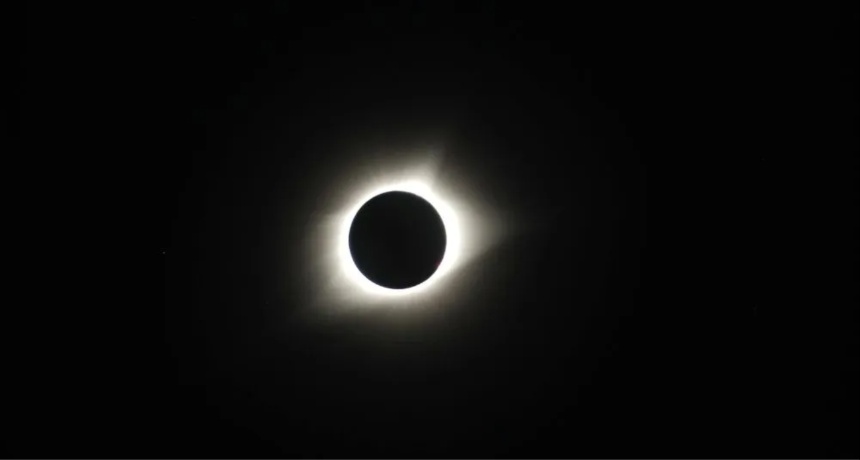
Europe hasn’t gone dark in the middle of the day since 1999. That changes on Wednesday, August 12, when the Moon’s shadow sweeps down from the Arctic, crosses Iceland, and lands on northern Spain just before sunset, the first total solar eclipse to touch mainland Europe in nearly three decades, and the first over the Iberian Peninsula in more than a hundred years.
If you’re anywhere within reach of Spain, Iceland, or Greenland this week, this is the rundown you need: where the path of totality actually falls, what time to be there, and why standing 20 kilometres outside that line means you’ll miss the whole show.
The Path, in Plain Terms
The eclipse begins at an odd hour: just before midnight local time over remote Siberia, where the sun technically “sets” and immediately rises again near the pole. From there, the Moon’s shadow loops over the Arctic ice cap, crosses eastern Greenland’s fjords, sweeps over western Iceland, then races across the North Atlantic before making landfall on Spain’s Atlantic coast in the early evening.
According to NASA, the total eclipse will be visible from Greenland, Iceland, northern Russia, the Atlantic Ocean, Spain, and a small corner of Portugal, with a much wider stretch of the Northern Hemisphere catching a partial eclipse. Totality itself never lasts long. The maximum duration anywhere along the path is 2 minutes and 18 seconds, and for most towns inside the path, it’ll be over in under two minutes.
Iceland: Late Afternoon, Higher in the Sky
Iceland gets the better viewing angle of the two main European stops. The shadow crosses the westernmost part of the country, and unlike Spain, the sun will still be reasonably high, giving Icelandic viewers a cleaner, less obstructed view than what’s coming later down south.
The Moon’s umbral shadow first makes landfall at Straumnes Lighthouse in Hornstrandir in the Westfjords at 17:43:28 UT, where totality lasts 1 minute 26 seconds, while at Látrabjarg you get closer to 2 minutes 13 seconds. The shadow then tracks south over the Snæfellsnes peninsula, Reykjavík, and the Reykjanes peninsula, meaning residents of the capital don’t need to travel far. Totality reaches Reykjavík at roughly 17:48 UTC and runs for about a minute.
The catch, as always in Iceland, is weather. Clear skies aren’t guaranteed in mid-August, and cloud cover along the coast can turn a once-in-a-generation event into a grey afternoon. If you’ve got flexibility, keep an eye on the forecast right up to the day and be ready to move.
Spain: A Sunset Eclipse, and the Best Show in Mainland Europe
This is where most of the attention, and most of the crowds, will land. The path of totality crosses Galicia in the northwest, Asturias, León, Burgos, Soria, Zaragoza, and out to the Balearic Islands, arriving in the early evening with the sun sitting low over the western horizon.
That low angle changes everything about how to watch this one. Across every Spanish totality location, the sun will only be 5 to 8 degrees above the horizon during totality, unusually low, since most total eclipses happen with the sun sitting 20 to 60 degrees up. Translation: you need a genuinely open view to the west-northwest. A hillside, a beach, a rooftop, anywhere buildings, trees, or mountains won’t block the last stretch of the sun’s descent. Get this wrong, and you could be standing in the path of totality with a perfect ticket and nothing to see.
Madrid and Barcelona will not see a total eclipse: This trips a lot of people up because both cities will still see the sun almost completely covered, 99.9% in each case, but “almost total” and “total” are different events entirely. Without full totality there’s no corona, no sudden darkness, no drop in temperature, none of the eeriness that makes people cry the first time they see one. In Madrid, only the northern suburbs, including San Sebastián de los Reyes about 20 kilometres out, actually fall inside the path</cite>. If you’re based in either city, you’ll need to travel.
Best places for totality in Spain
- A Coruña, Galicia — the first major Spanish city in the path, with the sun setting over the Atlantic for dramatic photos, plus the Tower of Hercules lighthouse nearby.
- Zaragoza — widely recommended as the best all-round pick, combining solid totality duration, the highest clear-sky odds on the mainland, and easy transport links. It’s also Francisco Goya’s birthplace and home to the Basilica del Pilar.
- Burgos, Valladolid, León, Palencia — sitting near the centreline through the northern meseta, where totality runs longest, up to roughly 1 minute 48 seconds, and the region’s dry summer climate tends to deliver clearer evenings than the coast.
- Mallorca — the eclipse’s last stop before it ends at sunset over the Balearics. Totality lasts around 1 minute 36 seconds, though the sun will be very low, around 2.5 degrees, so an elevated or coastal viewpoint matters here.
Inland Spain generally has the weather advantage in mid-August. The north coast, including Galicia and Asturias, is more prone to cloud cover than the hot, dry interior, so anyone chasing certainty over scenery might lean toward Zaragoza or the meseta towns rather than the coastline.
Why This One’s Different
Total eclipses aren’t rare on a global scale; there’s one every year or two somewhere on Earth. What makes August 12 unusual is that it’s landing on a heavily populated stretch of Western Europe for the first time since 1999, and it’s doing it as a sunset eclipse, which very few people ever get to witness. A low, fading sun during totality tends to produce a longer, more colourful transition into darkness than an eclipse happening overhead at noon.
It also won’t happen again soon. Once this shadow passes, mainland Europe won’t see another total solar eclipse until August 2027, when the path crosses southern Spain again, and after that, not for years.
How to Watch It Safely
However you’re planning to view it, the basics don’t change. Never look directly at the sun without proper eye protection; even during a partial eclipse, use ISO-certified solar viewing glasses, or a proper solar filter if you’re shooting it on a camera or through a telescope. The only moment you can safely look with the naked eye is during the brief window of full totality itself, when the sun’s disc is completely covered. The second any sliver of sunlight reappears, protection goes back on.
If you’re travelling to catch it, get to your viewing spot early. Roads into small towns along the path are expected to be busy on the day, and a clear line of sight to the west is worth more than being technically inside the path if a building or hillside blocks the view at the critical minute.
Quick facts: August 12, 2026 total solar eclipse
- First total solar eclipse over mainland Europe since 1999
- Path: northern Russia, eastern Greenland, western Iceland, northern Spain, tip of Portugal
- Maximum totality: 2 minutes 18 seconds (over the Atlantic near Iceland)
- Reykjavík totality: around 17:48 UTC, roughly 1 minute
- Northern Spain totality: begins around 20:26–20:31 local time, roughly 1–1.8 minutes depending on location
- Madrid and Barcelona: partial eclipse only (99.9%), no totality
- Next mainland European total eclipse: August 2, 2027
Wherever you end up watching from, get there early, check the sky in your direction of choice, and don’t forget the glasses.