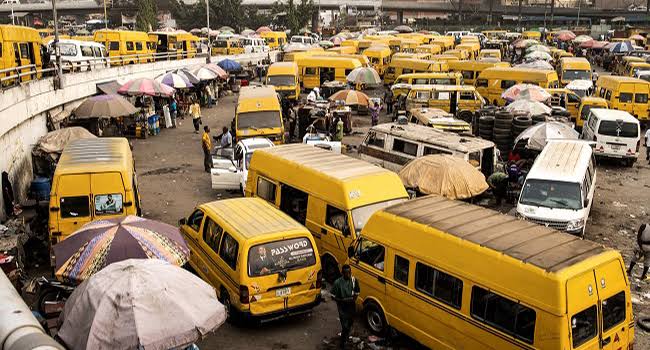
For millions of Lagos commuters, the familiar sight of a yellow danfo pulling up at a bus stop usually comes with a familiar routine. A passenger boards, states the destination, reaches for cash, hands over the fare, receives change when necessary, then settles into the crowded journey through one of the busiest transport networks in Africa. That routine has existed for years, becoming so deeply woven into everyday Lagos life that cash payments inside commercial buses often feel like an unquestioned part of the city itself. Yet, a new agreement signed by the Lagos State Government with major transport unions is beginning to reshape that familiar experience, starting with selected routes rather than the entire state at once.
The development announced on August 5, 2026, carries implications that go beyond the question of whether passengers will still hand cash to conductors. Lagos is attempting to place a significant part of the commercial bus industry under a more structured system involving regulated routes, digital fare collection, identifiable operators, transport infrastructure and greater government oversight.
The first stage is focused on 4 Quality Bus Corridors, giving commuters on those routes a front row view of how the new arrangement could work. For passengers wondering whether their daily route is affected, what payment could look like, whether fares will change and what happens to the traditional danfo system, the details of the agreement provide a clearer picture.
The August 5 Agreement
The latest development dates back to Wednesday, August 5, 2026, when the Lagos State Government signed a Memorandum of Understanding with the Nigeria Union of Road Transport Workers, known as NURTW, and the Road Transport Employers Association of Nigeria, known as RTEAN. The agreement is being implemented under the Lagos State Bus Industry Transition Programme, commonly referred to as BITP, with the wider objective of moving informal commercial bus operations into a more organised public transportation structure. That makes the announcement considerably broader than a simple directive telling passengers to stop carrying cash.
The government is effectively trying to change the way commercial buses operate, how operators are organised, how routes are managed, how fares are collected and how transport activities are monitored. The iconic yellow danfo remains at the centre of this process because it represents one of the most recognisable parts of Lagos commercial transportation. Rather than treating the existing industry as a system that must simply disappear, the transition programme seeks to bring existing operators into a formal structure where their activities can be more clearly regulated.
The involvement of NURTW and RTEAN is therefore important because the government is working with organisations that have long been connected to commercial transportation in Lagos. According to LAMATA Managing Director Abimbola Akinajo, negotiations leading to the agreement lasted more than 30 months. That lengthy process points to the scale of the task involved in changing an industry that has developed through decades of informal operations.
The Cashless Question
The phrase that has attracted the greatest attention is digital payment, but the actual announcement requires some context. Lagos is not declaring that every yellow danfo operating anywhere in the state must immediately stop accepting physical cash. The August 5 agreement establishes a digital fare collection direction for designated routes under the transition programme, with the first phase involving 4 Quality Bus Corridors.
That distinction matters because a passenger travelling on one of the affected corridors will eventually encounter a different payment process from someone using an ordinary commercial bus operating outside the designated programme. The announcement therefore represents a phased implementation rather than an overnight statewide transformation. The broader policy direction is clear, but its application depends on the specific routes and buses brought under the new framework.
Digital fare collection is intended to simplify payments while giving operators and authorities a clearer record of transactions. Instead of relying entirely on physical cash moving between passengers, conductors and operators, electronic transactions can create records that provide information about fares collected and journeys made. That information can become useful for monitoring operations, planning transport services and reducing opportunities for unrecorded revenue.
The 4 First Corridors
The first phase is centred on 4 routes that have been identified as Quality Bus Corridors. They are Iju Ishaga to Abule Egba, Ketu to Alapere to Akanimodo, Iyana Iba to Igando to Iyana Ipaja, and Ojuelegba to Lawanson to Cele. These corridors are important because they are not simply being selected for a payment experiment. They form part of a wider transport improvement programme involving infrastructure, bus operations and route organisation.
Commuters using Iju Ishaga to Abule Egba are therefore among those watching the implementation closely. The corridor connects communities that depend heavily on commercial transportation for daily movement, making the reliability of any new payment system particularly important. Ketu to Alapere to Akanimodo is another major corridor where transport infrastructure and bus organisation have already featured in Lagos transport planning.
The Iyana Iba to Igando to Iyana Ipaja corridor covers another significant part of the city commuter network, while Ojuelegba to Lawanson to Cele links several busy areas that have long depended on commercial buses. Together, the 4 corridors provide a broad testing ground for a more structured commercial bus model.
The Quality Bus Corridor Programme
The routes become easier to understand when viewed through the larger Quality Bus Corridor programme. LAMATA has previously identified corridors where transport infrastructure could be improved through better bus stops, lay bys, junction arrangements and related facilities. Earlier planning around the initial Quality Bus Corridor project targeted 91 bus stops for upgrading.
That means the digital payment component is only one part of a much larger plan. The idea behind the corridors is to make bus operations more predictable and organised while improving the environment in which buses pick up and drop off passengers. Payment technology fits into that structure because a modern transport system requires more than new buses or improved roads. It also requires a system through which fares can be collected, recorded and managed.
The 4 corridors therefore represent an important stage in a process that could eventually cover more routes. The first phase provides Lagos with an opportunity to organise operations, integrate existing transport workers, establish payment systems and observe how commuters respond before the programme is expanded further.
The Bigger Danfo Reform
The most important part of the development may not actually be the disappearance of physical cash. The deeper change concerns the proposed restructuring of commercial bus operations. Under the transition programme, operators on designated Quality Bus Corridors are expected to gradually move towards a franchise based system.
That model would create a more defined relationship between routes, operators, buses, payment systems and government regulation. Rather than having commercial buses operate largely through individual arrangements, the proposed structure seeks to identify operators, establish operational standards and create clearer systems for collecting and accounting for fares.
For passengers, this could eventually mean that the bus they enter is not simply an independently operated vehicle following a familiar route. It could form part of a recognised operating structure with defined requirements. For government, it could mean better visibility over the commercial bus sector. For operators, it could mean a transition from informal arrangements into a more formal system with new responsibilities and potentially new opportunities.
Role of NURTW RTEAN
Transport unions are a major part of this transition because the government is not attempting to rebuild the commercial bus industry from scratch. Existing drivers, operators and transport workers already form the backbone of the network used by millions of Lagos residents.
The agreement with NURTW and RTEAN creates a framework for bringing those existing participants into the new structure. The proposed approach is therefore different from simply ordering traditional danfos off the road. Existing operators are expected to participate in the transition through cooperative structures that can support their movement into the emerging franchise system.
That approach also explains why the negotiations took more than 30 months. Reforming transportation is not merely a question of changing buses or installing payment devices. It involves people who have depended on the existing system for their livelihoods, along with vehicle owners, drivers, conductors and transport organisations whose roles have developed over many years.
Why Digital Fare Collection Matters
Cash has always been convenient in Lagos transport because it is immediate and familiar. A passenger can board a bus, hand over physical money and continue the journey without needing an account, application or electronic device. Yet that same simplicity makes it difficult to create a comprehensive record of the money moving through a large informal transport network.
Digital payments change that equation by creating transaction records. A properly functioning system can provide information about the amount collected, the number of transactions and the performance of individual services. That information could eventually help transport authorities understand passenger demand and revenue patterns across different corridors.
The Lagos State Government has linked digital collection with improved transparency, reduced revenue leakages and more efficient revenue management. The technology therefore serves a financial and administrative purpose at the same time as providing another payment option for commuters.
What Commuters Could Experience
For a passenger, the visible change could initially appear simple. The traditional process involves asking for a fare, producing physical cash and receiving change where necessary. Under a digital system, the fare would instead be recorded through an approved electronic payment method.
The change could be convenient for passengers who already use electronic payment systems regularly. It could also reduce the problem of searching for smaller denominations when paying a bus fare. Conductors would have less physical money to handle, while operators could receive more systematic records of transactions.
However, the actual passenger experience will depend on how the system is implemented on each corridor. The August 5 agreement establishes the direction towards fully digital fare collection on designated routes, but the available announcement does not provide a complete passenger manual explaining every payment device, application, card or alternative that will be accepted in every situation.
The Smartphone Question
One of the practical issues surrounding digital transportation is the assumption that every passenger has access to a smartphone. Lagos has millions of commuters with different levels of access to smartphones, banking applications, mobile data and electronic payment services.
A genuinely inclusive transport payment system therefore cannot depend entirely on smartphone ownership. Lagos already has experience with transport payment infrastructure linked to Cowry Card, Touch and Pay, meaning digital transportation payment does not necessarily have to mean that every passenger must use a smartphone.
The exact payment arrangements for the 4 new corridors will be important as implementation progresses. Passengers will need clear information about where to obtain approved payment instruments, how to fund them, how to check balances and what alternatives exist when a phone, bank application or network connection is unavailable.
Network Failure Concerns
A cashless transport system is only as dependable as the infrastructure supporting it. Lagos commuters are familiar with situations involving poor network connections, failed bank transfers, delayed transactions, insufficient balances, faulty payment terminals and depleted phone batteries.
Those problems become more significant when physical cash is no longer accepted. A passenger who has money in a bank account but cannot complete an electronic transaction still needs a practical way to complete the journey. The system therefore needs to account for situations where technology fails.
Questions surrounding offline payments, failed transactions and temporary equipment problems will become increasingly important as implementation moves forward. The August 5 agreement establishes the policy direction, but detailed operational guidance on every possible payment failure scenario remains an important part of the implementation process.
The Fare Question
The new announcement does not introduce a new universal danfo fare. Its main focus is the restructuring of operations and the movement towards digital fare collection on designated routes.
That distinction is important because digital payment should not automatically be interpreted as a fare increase. A passenger should therefore not assume that the introduction of electronic collection means a new fare has already been announced.
Future fare arrangements could become part of the wider franchise structure, particularly as operating costs, vehicle standards and route management are reorganised. For now, however, the August 5 agreement should primarily be understood as a transport reform and payment development rather than a universal announcement of new danfo fares.
Future Role Of Conductors
The new system also raises questions about conductors. Physical cash collection has traditionally been one of the most visible responsibilities of a danfo conductor, but removing cash from the process does not automatically mean that every conductor disappears.
The broader reform is focused on formalising commercial bus operations and integrating existing transport workers into the transition. That means the role of transport workers could change rather than simply vanish. Depending on how the franchise system is structured, workers could have responsibilities connected to passenger assistance, ticketing, route operations or other parts of the organised system.
The key change is likely to be the reduction of physical cash handling rather than an immediate elimination of the people who currently perform that function.
The Yellow Danfo Question
The iconic yellow danfo is not being abolished across Lagos by the August 5 agreement. That interpretation would go beyond what the announcement establishes.
LAMATA describes the Bus Industry Transition Programme as an effort to integrate informal commercial transport operators, including the yellow danfo sector, into a more regulated public transportation network. The emphasis is therefore on transformation rather than an immediate disappearance of the traditional commercial bus.
The appearance of the industry could change over time as buses, routes, operating standards and payment arrangements become more structured. However, the current phase is about bringing existing operators into a new framework rather than simply removing every danfo from Lagos roads.
Cashless Transport Timeline
Lagos did not arrive at the August 5 announcement suddenly. The state has been moving towards greater use of digital payments across formalised public transportation for some time.
On December 8, 2025, a separate Bus Reform Scheme on the Lekki Epe corridor was scheduled to commence, involving routes such as Ajah to CMS, Marina and Obalende, Ajah to Oshodi, Ajah to Berger and Ajah to Iyana Ipaja. That development formed part of the wider effort to restructure bus operations while introducing more organised payment arrangements.
By February 2026, LAMATA was continuing work on restructuring bus operations along the Lekki Epe corridor, including the use of higher capacity buses, the movement of smaller buses towards inner routes and electronic ticketing.
On May 13, 2026, LAMATA and RTEAN discussed further modernisation of bus operations, including intelligent transport systems, digital ticketing and cashless fare collection. Those discussions showed that electronic payment was becoming part of a broader transport modernisation strategy.
On June 5, 2026, LAMATA continued discussions with NURTW around the Bus Industry Transition Programme, with issues including operator financing, maintenance, dues collection and operating structures forming part of the discussions.
On July 27, 2026, LAMATA announced enforcement against cash fare payments on regulated bus services beginning August 1, 2026. That development concerned already regulated services and should not be confused with the separate August 5 agreement involving the transition of informal commercial buses.
Then, on August 5, 2026, Lagos State, NURTW and RTEAN signed the BITP Memorandum of Understanding, providing the latest major step towards integrating commercial danfo operations into a regulated franchise structure.
Reports published on August 6 and August 7, 2026, subsequently brought greater attention to the 4 Quality Bus Corridors forming the first phase of the programme.
The August 1 Enforcement
The August 1 development is particularly important because it can easily become mixed up with the August 5 danfo announcement.
LAMATA had announced enforcement against cash payments on regulated bus services from August 1, 2026. That policy concerns transport services already operating under the regulated system.
The August 5 agreement is broader in another sense because it deals with the transition of informal commercial bus operations into a formal franchise structure. Digital fare collection is part of that transition, but the agreement does not mean that every yellow danfo in every part of Lagos suddenly became cashless on August 1.
That distinction should remain clear because it determines whether a passenger is actually affected by the new rules.
What Has Not Been Announced
Several important details remain outside the latest announcement. There is no single statewide date established by the August 5 agreement for every danfo in Lagos to become cashless.
There is also no announcement establishing an immediate universal ban on physical cash across every yellow bus in the state. A universal new danfo fare has not been announced either, while a complete list of every payment method that passengers must use on each of the 4 corridors has not been fully established.
The available announcement also does not provide a complete passenger penalty structure specifically covering every possible violation on the 4 new corridors. There is also no complete timetable establishing when every remaining designated Quality Bus Corridor will be brought into the system.
Those details will matter as the policy moves from agreement to actual implementation.
Why The 4 Corridors Matter
The first 4 corridors can be viewed as an important test of the wider model. If digital payment, route management, infrastructure and operator integration work effectively, Lagos will have a practical framework that can potentially be extended to additional Quality Bus Corridors.
The selected corridors also allow the government to test the relationship between technology and everyday transport behaviour. A policy can look straightforward on paper, but its real value becomes visible when thousands of passengers begin using it during morning rush hours, evening traffic and ordinary daily journeys.
That is why the first phase matters beyond the specific locations named in the announcement. The experience of commuters on these corridors could influence how quickly the wider reform develops.
The Transport Infrastructure Connection
Digital payments make more sense when placed alongside the infrastructure improvements planned for Quality Bus Corridors. Better bus stops, lay bys, junction arrangements and organised loading points can help create a transport environment where buses operate according to clearer standards.
A payment system on its own cannot solve congestion, irregular bus operations or poor passenger facilities. Likewise, improved bus stops do not automatically create financial accountability. The Lagos approach attempts to bring these pieces together so that infrastructure, operations, payments and regulation support one another.
The objective is therefore not simply to make a commuter tap a card or complete a digital transaction. It is to create a more structured commercial transport environment around the passenger journey.
What The Reform Means For Operators
For commercial bus operators, the transition could represent one of the biggest changes to the traditional way of doing business. A more formal franchise structure can bring clearer operational expectations, digital records and greater government visibility into daily activities.
That increased visibility could also change how revenue is managed. Under a cash based system, money can pass through several hands before reaching the final operator. Digital transactions can create a more traceable record of the amount collected.
The government sees this as a way to reduce revenue leakages and improve transparency. Operators, meanwhile, will need to adapt to the operational requirements of the new framework, including whatever standards are eventually established for vehicles, payments, route management and financial reporting.
What Passengers Should Watch
Passengers using the 4 affected corridors should pay close attention to official implementation notices as the programme develops. The most important information will include the exact date when digital payment becomes mandatory on a particular route, the payment methods accepted, how passengers can access those methods and what happens when a transaction fails.
Commuters should also look for clear fare information. Digital payment works best when passengers know the exact amount before entering the bus and can easily confirm that the correct fare has been deducted.
Another important issue will be the identification of buses operating under the new system. Passengers need to know which buses are covered so that they can distinguish the reformed services from commercial buses that have not yet entered the programme.
The Larger Lagos Transport Picture
The August 2026 development represents another stage in a long effort to reorganise public transportation in Lagos. The city has an enormous daily demand for movement, with commercial buses playing a central role for workers, students, traders and residents travelling between communities.
The traditional danfo system developed because it could respond quickly to that demand. It reaches areas and follows patterns that larger formal transport systems may not always cover as easily. Reforming it therefore requires more than replacing buses. It requires a system capable of preserving the usefulness of the network while creating stronger standards around its operation.
That is the central challenge facing the Bus Industry Transition Programme. Lagos wants to modernise the commercial bus sector without simply disconnecting the people and operators who currently make the network function.
The Road Ahead
The immediate story is centred on 4 Quality Bus Corridors, but the direction of travel is broader. Lagos is moving towards a transport system where digital payments, route management, formal operators, improved infrastructure and government oversight operate within a connected framework.
The August 5 agreement provides an important foundation for that process because NURTW and RTEAN are part of the arrangement. Their participation gives the transition a pathway into the existing commercial transport structure rather than leaving the government to impose a completely separate system from outside.
For commuters, however, the success of the policy will ultimately be measured by practical experience. The technology must work, fares must be clear, buses must be identifiable, operators must understand the system and passengers must have accessible ways to pay.
The Bottom Line
Lagos is moving towards digital payment for danfo services, but the accurate picture is more specific than a simple statewide cash ban. The August 5, 2026 Memorandum of Understanding between the Lagos State Government, NURTW and RTEAN establishes a framework for gradually bringing informal commercial bus operations into a regulated franchise based system under the Bus Industry Transition Programme.
The first phase focuses on 4 Quality Bus Corridors, namely Iju Ishaga to Abule Egba, Ketu to Alapere to Akanimodo, Iyana Iba to Igando to Iyana Ipaja and Ojuelegba to Lawanson to Cele. Digital fare collection forms a major part of the proposed operating model, while the wider programme also involves route organisation, operator integration, infrastructure improvements and stronger government oversight.
The August 1, 2026 cashless enforcement announcement for already regulated bus services is related to the same wider direction but should not be treated as proof that every danfo across Lagos has already become cashless. The August 5 agreement represents another stage, this time bringing informal commercial bus operations into the transition framework.
For Lagos commuters, the immediate question is therefore not whether every danfo has disappeared from the cash economy overnight. The more relevant question is how the new system will work on the 4 corridors where the first phase is taking shape, how passengers will pay, how operators will adapt and how smoothly the transition will function during the daily pressure of Lagos traffic.
The yellow danfo may still look familiar on the road, but the system surrounding it is beginning to change.