The race for the 2026 Nigeria Prize for Literature has reached a stage where every title on the list now carries a different kind of weight, because what began with 223 poetry entries has been reduced to 11 collections, and before the final winner emerges, another dramatic cut is waiting on August 26. The books now standing are not merely names on a literary announcement, they represent the poets who have survived the first major stage of a competition that comes with a $100,000 prize and one of Nigeria’s most prestigious literary honours.
The atmosphere around the competition is becoming more intense because the 11 longlisted poets know that their journey is far from over, yet the distance to the final prize has suddenly become much shorter. Their books have already passed through the first major selection process, while the judges now face the task of choosing just 3 collections for the final shortlist. By October 9, the field will have been reduced to 1 winner, leaving readers with a simple question that will become harder to answer as the next announcement approaches: which of these 11 poetry collections will go all the way?
The Race Begins With 223 Entries
The 2026 Nigeria Prize for Literature opened its poetry competition to Nigerian writers regardless of where they lived, with eligible works required to meet the rules established for the year’s contest. The submission deadline was March 31, 2026, after which the body of entries moved into the formal adjudication process. By April 2026, Nigeria LNG Limited had formally handed 223 poetry entries to the Advisory Board and panel of judges in Lagos, setting the stage for the first major examination of the books submitted for the prize.
That number gave the judges a substantial field to examine before the competition could become a contest between recognisable names. Every collection had entered with the same broad objective, to make it through the judging process and remain in contention for the biggest literary prize at stake. By the time the longlist was announced in July 2026, the original field had been reduced from 223 entries to just 11 collections, meaning that a large majority of the submitted works had already exited the race.
The 2026 edition is particularly significant because the Nigeria Prize for Literature rotates between 4 literary genres, namely prose fiction, poetry, drama and children’s literature. Poetry is the selected genre for 2026, giving poets another opportunity to compete for the $100,000 award after the previous poetry cycle in 2022. That 2022 prize was won by Romeo Oriogun for his collection Nomad, placing the current competition within a continuing tradition of major recognition for Nigerian poetry.
The 11 Books Still Standing
The July 2026 longlist brought together 11 poetry collections whose titles alone reveal a striking range of themes and literary directions. The list contains established names alongside writers whose inclusion gives the current competition a strong contemporary character. Their books now occupy the most important stage of the contest so far, because every one of them has already survived the first major reduction from the original 223 entries.
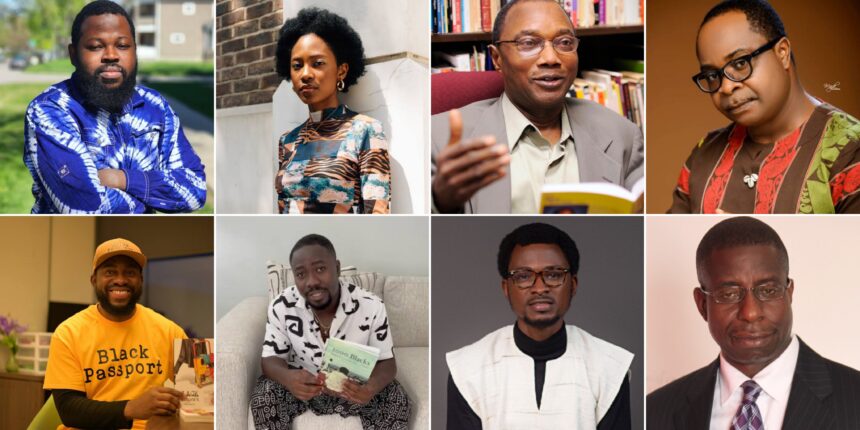
The 11 longlisted collections are Adult Love by Tanure Ojaide, Bakandamiya: An Elegy by Saddiq Dzukogi, Black Passport by Paul Akpomuje, 2000 Blacks by Ajibola Tolase, Ceremony for the Nameless by Theresa Lola, Corpus: Animistic Verses by Ayo Oyeku, Flora’s Love Colony by Tares Oburumu, The Origin of Wounds by Rasaq Malik Gbolahan, The Years of Blood by Adedayo Agarau, Unbind Me Now by James Ngwu Eze and Why Does God Need a Gun by Ogaga Ifowodo.
Each title now has the same immediate destination, the 3 book shortlist due on August 26, 2026. The longlist announcement therefore represents an important achievement, but it does not represent the end of the competition for any of the writers. The next selection will be considerably smaller, and 8 of the 11 books will have to leave the race before the final winner is announced.
Tanure Ojaide Brings Experience
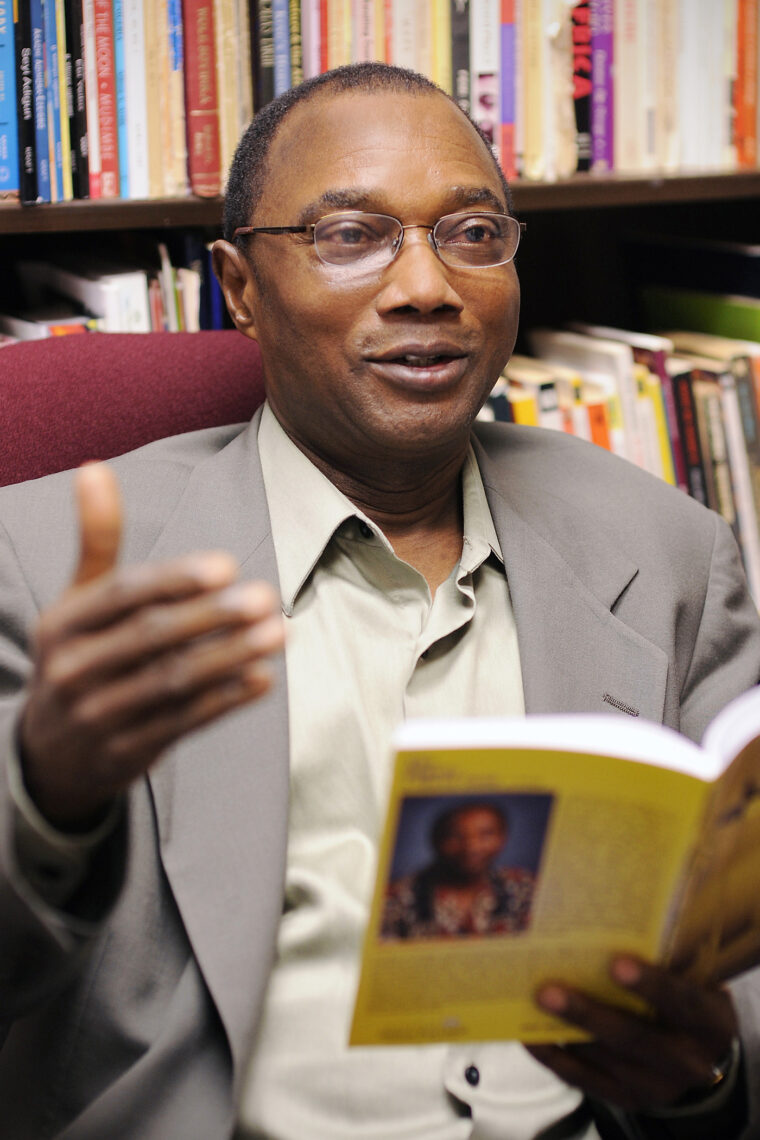
Tanure Ojaide enters the 2026 competition with a literary reputation that stretches across decades, making his presence on the longlist one of the notable features of this year’s contest. His collection Adult Love is now among the 11 books being considered by the judges, putting one of Nigeria’s established poetic voices back into contention for the country’s major literary prize.
Ojaide’s inclusion also gives the competition an interesting connection to its own history, because he previously reached the final stage of the Nigeria Prize for Literature in 2017. His return to the competition years later creates another chapter in a literary journey that has already brought him close to the prize. This time, Adult Love has taken him through the first selection stage, but the more difficult test lies ahead.
The next major question surrounding his entry is not whether his name is recognised, but whether Adult Love can survive the reduction from 11 books to 3. The judges are required to consider the literary qualities of the submitted works, meaning reputation alone cannot determine the final outcome. The August 26 shortlist announcement will reveal whether Ojaide’s latest collection has taken another major step towards the $100,000 prize.
Saddiq Dzukogi’s Elegiac Entry
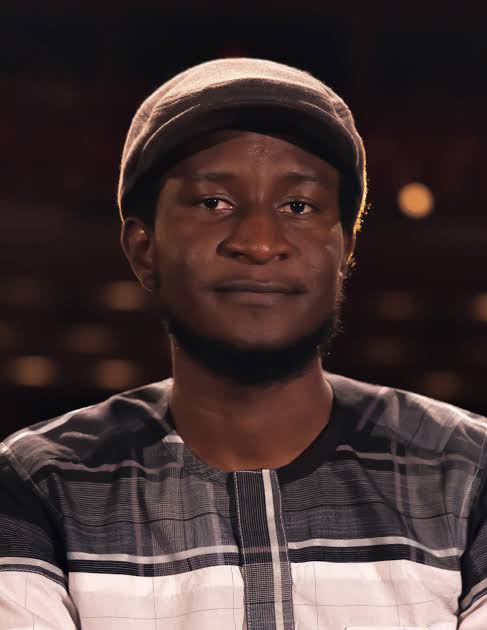
Saddiq Dzukogi’s Bakandamiya: An Elegy occupies another important place on the 2026 longlist, adding a different voice to a competition that has brought together poets of different generations and literary backgrounds. The title immediately places elegy at the centre of the collection’s identity, while the work itself now sits among the 11 books that have passed the first stage of judging.
Dzukogi has become one of the contemporary Nigerian poets attracting attention beyond the country’s literary space, and his presence on this year’s longlist adds another younger voice to a competition that also includes established writers. His journey from the original 223 entries to the 11 book longlist has already established him as one of the poets whose work the judges considered strong enough to remain in contention.
The next stage will determine whether Bakandamiya: An Elegy becomes one of the 3 books that will remain after August 26. That distinction matters because the shortlist will transform the competition from a broad literary field into a direct final contest. Until then, Dzukogi remains one of the 11 poets still carrying a live chance of reaching the October 9 finale.
Paul Akpomuje’s Black Passport

Paul Akpomuje enters the competition with Black Passport, another title that has secured a place among the 11 longlisted collections. His inclusion adds another contemporary voice to the field and places his work alongside poetry collections from writers with different literary experiences and approaches.
The longlisting itself represents a major stage in the journey because the judges had 223 entries before them when the adjudication process began. Reaching the final 11 therefore means the collection has moved through a significant selection process before arriving at the point where public attention can now focus on the individual books.
Akpomuje’s next challenge is the August 26 shortlist. The difference between being among 11 and being among 3 is enormous at this stage because the latter group will move directly into the final phase of the competition. Until that announcement, Black Passport remains firmly inside the $100,000 race.
Ajibola Tolase Enters With 2000 Blacks
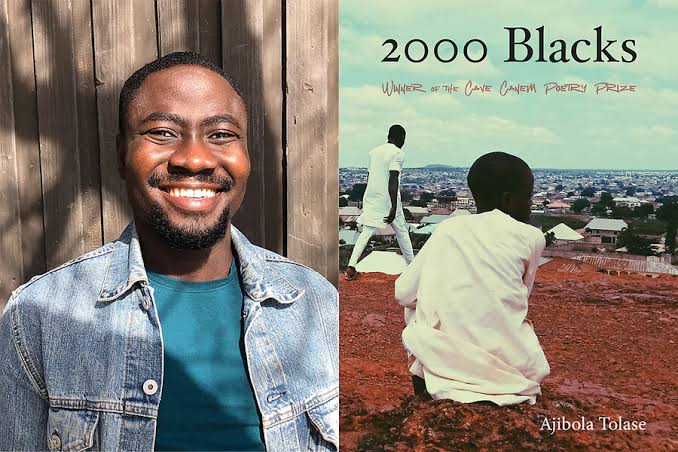
Ajibola Tolase’s 2000 Blacks is another of the 11 collections selected for the 2026 poetry longlist. The title immediately gives the collection a distinctive identity within a field that contains books dealing with history, memory, identity, violence, love, culture and other dimensions of human experience.
Tolase now finds himself among a group that has already been narrowed dramatically from the original 223 entries. The longlist does not guarantee a place in the final 3, but it establishes that his work has passed the first major hurdle of the competition. That alone makes 2000 Blacks one of the books to watch as the August 26 announcement approaches.
The next stage will provide the clearest indication yet of how far the collection can travel. If it reaches the shortlist, Tolase will move from a field of 11 into the final group of 3. If it does not, his 2026 Nigeria Prize journey will end at the longlist stage, leaving the remaining poets to continue towards October 9.
Theresa Lola’s Ceremony for the Nameless
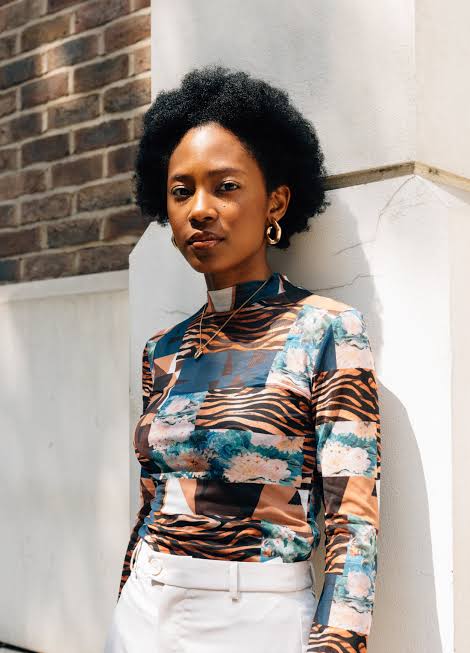
Theresa Lola’s Ceremony for the Nameless adds another distinctive title to the competition and brings a poet with an established contemporary literary profile into the 2026 Nigeria Prize race. Her collection is now part of the 11 book longlist, giving her a place among the writers whose work has survived the first major round of selection.
The journey to this point began with 223 submissions handed over for adjudication in April 2026. By July, the judges had identified 11 collections that would continue in the competition. Lola’s work is therefore now part of a considerably smaller literary field, with the next major selection set for August 26.
The title itself suggests questions around memory, identity and recognition, but the final judgement will rest on the complete literary work rather than its title. The judges will ultimately decide which collections deserve to progress, and the next announcement will determine whether Ceremony for the Nameless becomes one of the 3 finalists.
Ayo Oyeku’s Corpus: Animistic Verses

Ayo Oyeku’s Corpus: Animistic Verses provides another dimension to the 2026 longlist, standing among collections that reflect the variety of poetic approaches represented in this year’s competition. The title points towards a work concerned with animistic ideas and poetic exploration, placing it within a field where cultural and spiritual dimensions form part of the broader literary landscape.
Oyeku’s achievement at this point is significant because the collection has survived a competition that began with 223 entries. The judges have already reduced the field to 11, meaning the book is now within sight of the final stage. Yet the most important reduction is still ahead because only 3 collections will survive the August 26 shortlist announcement.
The journey from 11 to 3 will determine which writers move into the final stretch. Oyeku therefore has less than 3 weeks between the longlist stage and the next major announcement, with Corpus: Animistic Verses now competing directly against 10 other collections for one of those 3 positions.
Tares Oburumu’s Flora’s Love Colony
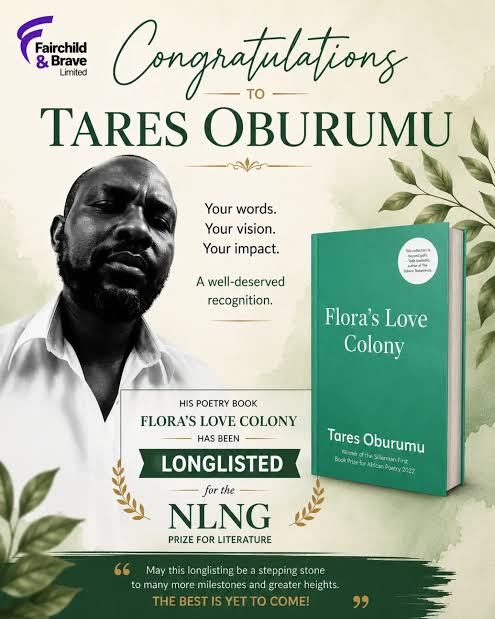
Tares Oburumu’s Flora’s Love Colony brings another distinct title into the competition and further broadens the range of voices represented on the 2026 longlist. Oburumu is among the writers who have made the significant transition from being one of 223 entrants to becoming one of just 11 poets still under consideration.
That reduction changes the nature of the competition. At the submission stage, the task was to enter an eligible collection before the March 31 deadline. After the April handover, the task became surviving the judges’ examination of the submitted books. By July, only 11 collections remained, and now the challenge is to reach the 3 book shortlist.
The next announcement therefore carries enormous significance for Oburumu and every other poet on the list. August 26 will remove much of the uncertainty surrounding the competition, revealing which 3 collections have earned another stage of consideration before the October 9 winner announcement.
Rasaq Malik Gbolahan’s The Origin of Wounds

Rasaq Malik Gbolahan’s The Origin of Wounds is another of the 11 books that survived the first selection stage. The collection’s title immediately evokes questions of injury, memory and human experience, themes that sit comfortably within the broad range of concerns identified by the Advisory Board when describing the 2026 longlist.
The judges have pointed to themes including violence, oppression, social fragmentation, cultural memory, identity, resilience, history and individual and collective experience across the selected collections. That description provides useful context for understanding why the 11 books were brought together, although the final decision will depend on the judges’ assessment of the individual works.
Gbolahan’s collection now faces the same immediate test as the other 10 books. It must survive the August 26 cut if it is to remain in the competition for the $100,000 award. The longlist has opened the door, but the shortlist will determine which writers remain close enough to the final prize to enter the October stage.
Adedayo Agarau’s The Years of Blood
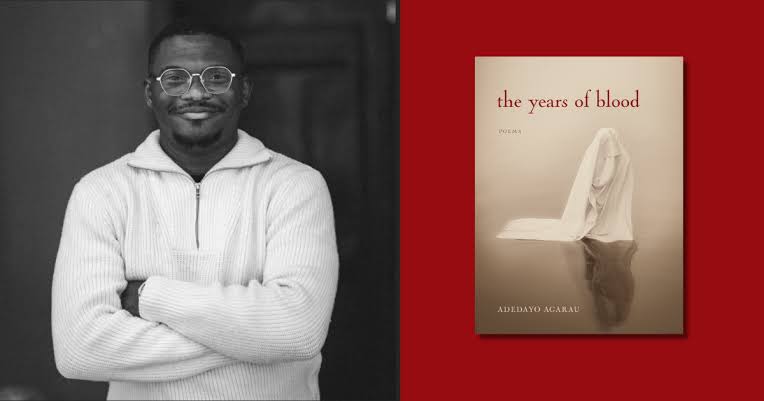
Adedayo Agarau’s The Years of Blood is another title that stands out on the longlist because of the historical and human weight suggested by its name. It is now one of the 11 collections that have survived the first major selection process in the 2026 Nigeria Prize for Literature.
Agarau’s place on the list also reflects the generational range of the competition. The 2026 longlist does not belong exclusively to established literary figures, and the presence of contemporary poets such as Agarau ensures that the contest includes voices from different stages of Nigerian literary development.
The next stage will determine whether The Years of Blood can move beyond recognition as a longlisted work. August 26 will produce the 3 book shortlist, after which the surviving writers will have another major opportunity to make their case before the final winner is announced on October 9.
James Ngwu Eze’s Unbind Me Now
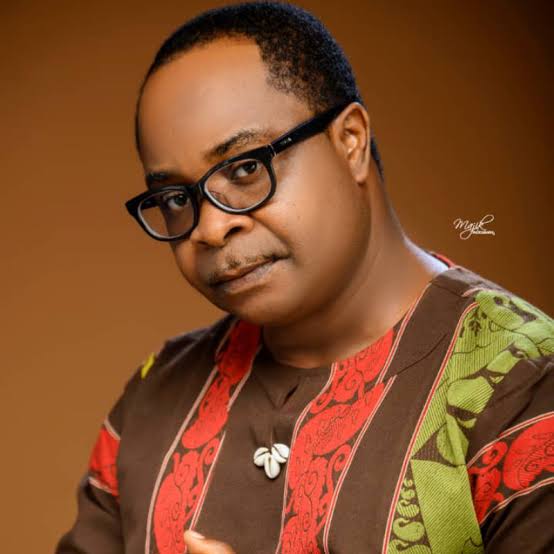
James Ngwu Eze’s Unbind Me Now is also part of the 11 book longlist, giving the collection a place in a competition that has now moved far beyond its original field. Eze is among the writers whose work has survived the first major judgement, and the collection now has a clear path ahead, although the road becomes narrower at every stage.
The competition began with 223 entries, and the July longlist reduced that number to 11. The next reduction will be even more severe, because 8 of the 11 collections will leave the contest when the shortlist is announced. That means every longlisted book currently occupies one of just 11 remaining positions.
For Eze, the immediate objective is therefore clear. Unbind Me Now must secure one of the 3 available shortlist positions on August 26 if the collection is to remain in contention for the $100,000 prize. The final decision will then wait until October 9.
Ogaga Ifowodo Returns to the Race

Ogaga Ifowodo’s Why Does God Need a Gun brings another established literary name into the 2026 contest. Ifowodo has a previous connection with the Nigeria Prize for Literature, having been one of the finalists in the 2017 competition. His return nearly a decade later gives the current race an additional historical thread.
The significance of his longlisting is therefore clear without needing to predict the eventual outcome. Ifowodo has already experienced the pressure of reaching the final stage of the prize, and his 2026 collection has now survived the first cut from 223 entries to 11. The next question is whether he can make the final 3 this time.
His collection also sits alongside Tanure Ojaide’s Adult Love, meaning 2 poets who were finalists in 2017 are once again present in the competition. That shared history adds another layer to the 2026 race, but the current judging process will determine what happens next.
The 2017 Connection Returns
The presence of Tanure Ojaide and Ogaga Ifowodo creates one of the most interesting historical details surrounding the 2026 longlist. Both poets were finalists in the 2017 Nigeria Prize for Literature competition, and both are now back on the longlist almost 9 years later.
Their return does not guarantee anything in the current contest because the 2026 judging is centred on the collections submitted for this year’s poetry cycle. Yet their previous experience gives the competition a connection to an earlier edition while placing 2 established writers among a much broader contemporary field.
August 26 will reveal whether either poet, or both, can make another appearance among the finalists. If either collection reaches the shortlist, the story will move from an interesting return to a much more significant continuation of an earlier Nigeria Prize journey.
What Happens on August 26
August 26, 2026, is now the date that matters most to the 11 longlisted poets. That is when the expected 3 book shortlist will be revealed, reducing the competition to a group small enough for the final stage to begin taking shape.
The change will be immediate. From 11 collections, only 3 will remain. The 8 books that do not make the shortlist will leave the 2026 race, while the 3 selected collections will move closer to the $100,000 prize. The announcement will therefore transform the competition once again, just as the July longlist transformed the original field of 223 entries.
For readers following the competition, August 26 is also the moment when speculation about which books might reach the final stage will give way to an official answer. Until that date, all 11 collections remain contenders. No writer can accurately be described as the winner while the judges are still considering the field.
The October 9 Final
The final stage of the 2026 Nigeria Prize for Literature is scheduled for October 9, 2026, when the winner is expected to be announced. By that point, the journey will have moved from 223 entries to 11 longlisted collections, then to 3 shortlisted books and finally to 1 winning collection.
The winner will receive $100,000, making the final announcement one of the most significant moments on Nigeria’s literary calendar. The prize is sponsored by Nigeria LNG Limited, and its financial value has helped establish it as one of the most prominent literary awards available to Nigerian writers.
Between August 26 and October 9, attention will naturally turn towards the 3 finalists, their collections and the final decision of the judges. The contest will no longer be about surviving a large field. It will be about determining which of 3 books deserves the ultimate recognition.
A Competition Narrowed Step By Step
The simplest way to understand the 2026 race is to follow the numbers. The competition began with 223 entries submitted before the March 31, 2026 deadline, and those works entered the adjudication process after the formal handover in April. By July, the judges had reduced the field to 11 longlisted collections.
The next reduction is scheduled for August 26, when 3 books are expected to make the shortlist. That means 8 of the current 11 collections will leave the race at that stage, leaving 3 writers to continue towards the final announcement.
October 9 will complete the sequence when 1 winner is announced. The numbers therefore tell the whole story without needing to exaggerate the stakes: 223 entries, 11 longlisted books, 3 shortlisted collections and 1 winner receiving $100,000.
The Literary Countdown Is Underway
The 2026 Nigeria Prize for Literature has now reached the point where the longlist is known but the final story remains unfinished. The 11 poets have earned their places among the strongest remaining entries from an original field of 223, but none has yet secured a place in the final 3.
The coming weeks will therefore determine which collections remain standing when the shortlist is announced on August 26. For the poets, it is another decisive stage in a competition that began months earlier with the March 31 submission deadline and moved into formal adjudication in April.
By October 9, there will be no uncertainty about the final result. One collection will take the $100,000 prize, while the other 2 finalists will leave with the distinction of having reached the last stage of one of Nigeria’s most important literary competitions. Until then, the 11 books remain in the race, and the next major chapter is waiting for August 26.