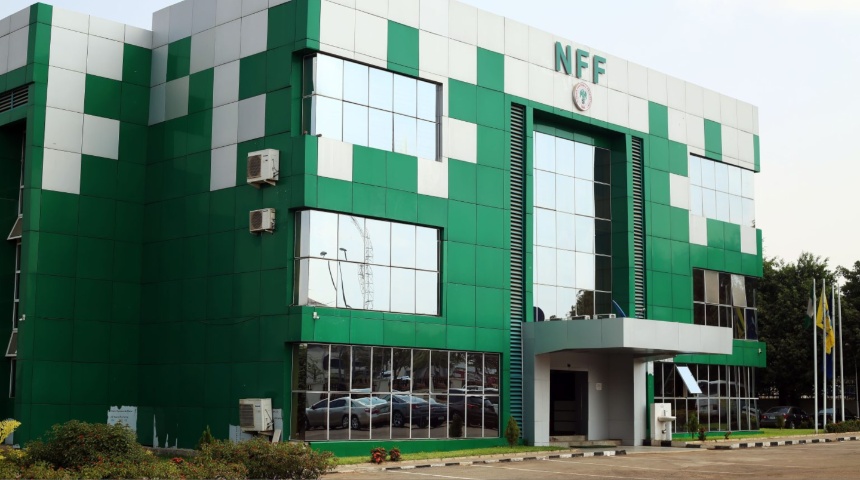
The Nigeria Football Federation has a new headache, and this one isn’t about a missed World Cup qualification. The Economic and Financial Crimes Commission and the Independent Corrupt Practices and Other Related Offences Commission are now digging into how the NFF spent a ₦12 billion federal intervention fund that was supposed to clear years of unpaid wages and bonuses owed to Nigeria’s national teams.
The federation confirmed the investigation itself, almost by accident. It happened while trying to dodge a Freedom of Information request.
How the Story Broke
On August 18, 2026, the NFF wrote a letter, reference number NFF/LEG/10/1/879, to the law firm Cromwell & Okeke, acting on the Principal Partner’s behalf after an FOI request filed on August 7 and received by the federation on August 11. The request was straightforward: hand over the financial records and utilisation logs showing exactly how the ₦12 billion intervention fund was spent.
The NFF’s response wasn’t. Signed by Onoja Joshua on behalf of General Secretary Dr Sanusi Mohammed, the letter said the federation couldn’t release those documents because the matter was already under investigation by the EFCC and ICPC. All the relevant records, the letter said, were already in the anti-graft agencies’ hands.
Sahara Reporters got hold of a copy of the letter first, and other outlets, Daily Trust, THISDAY, and a handful of others, verified and ran with it soon after. Within it lies the admission that matters most here: two of the country’s biggest anti-corruption bodies are actively investigating how a football federation spent public money meant for its players.
What the ₦12bn Was Actually For
The fund traces back to 2024, approved by President Bola Tinubu to settle a backlog of unpaid wages and bonuses owed to players across Nigeria’s national teams, along with salaries owed to coaches on the federation’s payroll. This wasn’t pocket change or a one-off grant, it was meant to clear debts that had piled up for years and had become a source of national embarrassment, with players occasionally threatening boycotts over unpaid allowances.
Sources close to the matter say some NFF officials have already been questioned and are currently on administrative bail, though neither the EFCC nor the ICPC has released an official statement naming individuals or confirming charges at this point. That’s fairly typical at this stage of an investigation, records get pulled, people get interviewed, and nothing becomes public until there’s enough to act on, or until it leaks.
The Timing Isn’t a Coincidence
Football administration stories in Nigeria tend to surface right after something has gone badly wrong on the pitch, and this one is no exception.
The Super Falcons, ten-time African champions and holders of the WAFCON title, were knocked out at the quarterfinal stage of the 2026 Women’s Africa Cup of Nations in Morocco. They then failed in the playoff round to qualify for next year’s Women’s World Cup in Brazil, the first time since the tournament’s inaugural 1991 edition that Nigeria won’t be there. For a team that has dominated African women’s football for three decades, that’s not a bad result. It’s a crisis.
It gets worse. The Super Eagles missed out on the 2026 FIFA World Cup, jointly hosted by the United States, Canada, and Mexico, their second straight absence after also missing 2022. The Flying Eagles and Golden Eaglets, Nigeria’s youth teams, failed to qualify for their respective global tournaments too. All of this despite what has reportedly been substantial financial backing from the Tinubu administration, the ₦12bn fund included.
So the natural question people are asking is simple: if the money was there, where did it actually go, and why are the results this bad anyway?
Gusau’s Re-Election Bid Adds Another Layer
While the probe unfolds quietly in the background, NFF president Ibrahim Musa Gusau has been touring the country campaigning for a second term. An Elective Congress is scheduled for September 27 in Lafia, Nasarawa State, where state FA chairmen, who make up the bulk of the voting congress, are expected to return him to office for another four years.
Critics have been blunt about the optics: a federation under active anti-graft investigation, presiding over the worst run of qualification failures in a generation, campaigning for continuity rather than facing scrutiny. Whether that criticism translates into any real resistance at the Lafia congress remains to be seen. NFF elections have historically favored incumbents with strong state FA relationships, regardless of the federation’s performance on the pitch.
This Isn’t the NFF’s First Rodeo With the EFCC and ICPC
If this all feels familiar, that’s because it is. Between 2018 and 2019, the federation, under then-president Amaju Pinnick, faced similar EFCC and ICPC scrutiny over alleged mismanagement of funds and sponsorship revenue. Those investigations generated headlines for a while and then quietly faded, without any prosecution that matched the scale of what was alleged.
Football reform advocates have been sounding the alarm for a while now. Earlier this year, former international Harrison Jalla publicly urged the EFCC and ICPC to take a page from a court in the Democratic Republic of Congo, where the president of the Congolese football federation was sentenced to life imprisonment, alongside his wife, son, and two other officials, over a $1.3 million FIFA development fund scandal involving money laundering, embezzlement, and forgery. Jalla’s point was pointed: if $1.3 million triggered a life sentence in Congo, what should ₦12 billion trigger in Nigeria?
That comparison has stuck around in football governance conversations ever since, and it’s likely to resurface loudly now that an actual investigation is confirmed.
For now, there’s no indictment, no charge sheet, and no official comment from either the EFCC or ICPC confirming details beyond what’s filtered out through the NFF’s own letter and reporting from Sahara Reporters, THISDAY, and Daily Trust. The federation has effectively confirmed it’s a subject of scrutiny without saying much else, which is its right, and its FOI refusal is a fairly standard move once a matter is sub judice or under active investigation.
What’s worth watching from here:
- Whether the EFCC or ICPC issues any formal statement or invites senior NFF officials for questioning on record
- Whether the September 27 Elective Congress goes ahead as planned, or whether pressure from the investigation forces a delay
- Whether players who were owed wages and bonuses under the fund ever get public clarity on whether, and how, they were paid
- Whether this investigation follows the pattern of 2018/2019 and eventually goes quiet, or whether it actually produces something concrete
Nigerian football fans have heard versions of this story before. Money goes in, results don’t improve, questions get asked, and then the news cycle moves on before answers arrive. Whether this ₦12 billion probe breaks that pattern is the thing to watch over the coming weeks.