For many young people in Lagos, the hardest part of learning a trade is not always finding the interest or determination to begin, but finding a credible opportunity that brings training, practical experience, guidance and a realistic route towards work into the same picture. A new opening connected to Lagos State is now drawing attention for precisely that reason, with applications open to young residents who want to build practical skills in fields that can lead to employment or business opportunities.
The programme has a fixed training period, specific vocational choices, physical training locations and a deadline that is already approaching, giving interested applicants a limited window to make a decision. Behind the current application notice, however, sits a wider programme that has been operating in Nigeria for years and was created with a much bigger employment goal in mind.
The current Lagos opportunity
The latest opportunity is being delivered through a partnership involving Field of Skills and Dreams VTE Academy, King’s Trust International and the Lagos State Employment Trust Fund, giving the training a direct connection to an established youth employment programme rather than making it simply another short vocational course advertised online. The current intake is targeted at young people living in Lagos who are between 18 and 35 years old and are ready to commit themselves to practical training during the working week. Applications for this particular intake are scheduled to close on September 2, 2026, which means applicants have a clearly defined period within which they must complete the registration process. The training itself is presented as free, with several additional benefits attached to participation.
The structure is particularly relevant for people who have been searching for practical alternatives to conventional academic or office based career routes. Participants are being offered training in 4 vocational areas, with each option designed around a practical skill that can be applied in employment, contract work or personal enterprise. The programme also combines technical instruction with employability development, entrepreneurship sessions, mentorship and practical exposure, creating a structure that goes beyond simply teaching participants how to perform a particular task. For a young person who has been looking for a way to acquire a marketable skill without paying tuition fees, the current intake offers a direct route into structured vocational learning.
The 4 vocational fields
The first option is Baking Craft, a field that sits at the intersection of food production, creativity and small business development. Baking can provide several possible routes after training because a person can seek employment with a bakery, restaurant, hotel or food business while also developing the foundation for a personal baking enterprise. Practical training in this area can cover the kind of production knowledge that is difficult to acquire properly through theory alone, especially for someone who eventually wants to turn the skill into a source of income. The programme therefore places Baking Craft among the options available to applicants who want a trade with both employment and entrepreneurship possibilities.
The second option is HVAC R, covering heating, ventilation, air conditioning and refrigeration. This is a technical field with applications across residential properties, offices, hotels, shops, commercial buildings and other facilities that depend on cooling, ventilation or refrigeration systems. Participants interested in technical work can use the training as an entry point into a sector where practical ability is particularly important because employers and customers need people who can install, maintain, inspect and repair equipment properly. The inclusion of HVAC R also gives the current programme a strong technical component, making the opportunity relevant beyond traditional craft based training.
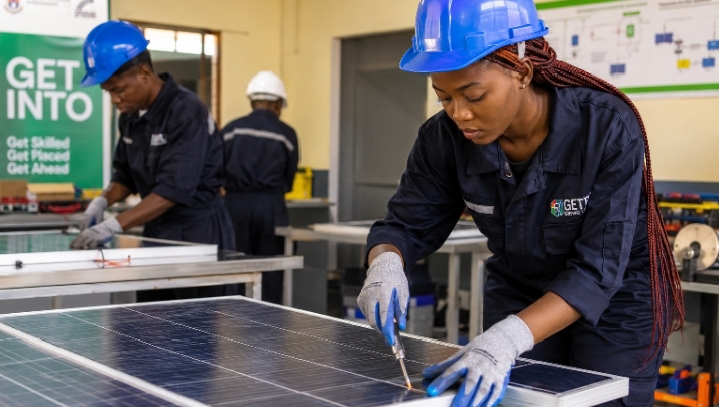
Solar Installation is the third available field, bringing renewable energy into the current vocational selection. Solar systems have become increasingly important across Nigeria because households, businesses and institutions continue to look for alternative ways of meeting their electricity needs. Learning how to install solar equipment can therefore provide a participant with a practical technical skill that can be applied in residential, commercial or small business settings. The training offers an opportunity for someone interested in renewable energy to gain structured practical knowledge rather than relying entirely on informal observation or self teaching.
The fourth option is RTW Garment Making, with RTW referring to ready to wear garment production. The field is suited to people interested in fashion production, tailoring, clothing manufacture and related business activities. Ready to wear production can offer opportunities beyond making individual outfits for customers because it can involve producing garments in quantities, developing collections and supplying clothing to different markets. For a participant with an interest in fashion, the training can therefore serve as a foundation for employment while also providing knowledge that can later support a personal clothing business.
The 6 week training schedule
The current intake is advertised as a 6 week practical and hands on training programme, making the time commitment considerably more serious than a casual skills workshop. Classes are scheduled from Monday to Friday, with training running from 9:00 a.m. to 2:00 p.m. each training day. Anyone considering the opportunity therefore needs to be prepared to devote a substantial part of each weekday to the programme rather than expecting a weekend arrangement. The schedule gives the training a classroom and workshop character, allowing participants to spend consistent time developing their chosen skill.
The weekday structure also matters because practical skills generally require repetition before they become useful outside the training environment. A participant learning solar installation, HVAC R, baking or garment making needs more than a single demonstration to develop confidence. Repeated practice allows mistakes to be identified, corrected and improved while instructors can observe how participants handle practical assignments. The 6 week schedule gives the programme enough time to combine instruction with practical exercises while also allowing participants to receive the wider employability support attached to the opportunity.
Applicants also need to consider the location of the training before committing themselves. Two training locations have been published for the current opportunity, with one located in Ikeja and another located in Agege. The Ikeja location is listed as 13 Acme Crescent, Off Acme Road, Agidingbi, while the Agege location is listed as 2 Powerline, Oko Oba. These addresses are important because participants are expected to attend training regularly, meaning daily transportation can become a major part of the experience for anyone living far from the selected location.
The benefits attached to participation
Free training is perhaps the first benefit that catches the attention of applicants, but the current programme announcement lists several other forms of support that make the opportunity more substantial. Participants are advertised to receive practical vocational instruction alongside soft skills and employability training, giving them an opportunity to work on both their technical abilities and the personal skills needed when dealing with employers, customers or business partners. Entrepreneurship sessions are also part of the structure, which is particularly useful for participants who may eventually choose self employment rather than depending entirely on formal employment.
Mentorship forms another part of the package, giving participants access to guidance beyond the basic teaching sessions. A person may understand how to perform a technical task but still struggle with questions about finding customers, approaching employers, managing a small business or building a professional career. Mentorship can help bridge that gap by exposing participants to practical guidance as they prepare to move beyond the training environment. The programme also advertises a training stipend, starter kit and certification, giving successful participants additional support as they complete the learning process.
Meals are also listed among the benefits during training, which can make a meaningful difference for participants who have to spend several hours at the training centre each weekday. Internship opportunities and access to employment opportunities are also highlighted, placing employment progression at the centre of the programme. The combination is significant because the opportunity is not presented simply as free instruction followed by graduation. Participants are being prepared for the next stage, whether that involves work experience, employment, further training or the development of a small enterprise.
The Lagos State connection
The Lagos State Employment Trust Fund is central to understanding why the opportunity matters. LSETF is the Lagos State Government agency focused on employment and economic empowerment initiatives, and its involvement places the programme within a wider state effort to improve opportunities for young people. The current training is being delivered through the relationship between LSETF, King’s Trust International and Field of Skills and Dreams, bringing together government involvement, international programme support and local vocational training capacity. This structure is also important because it shows that the current notice is connected to an existing programme rather than being an isolated announcement.
King’s Trust International describes Get Into as a programme aimed at helping young people develop practical vocational skills before moving towards job placements. Its Nigeria programme launched in 2021 in collaboration with LSETF, with Field of Skills and Dreams, Centre for Values in Leadership and AI Multimedia Academy identified as local delivery partners. That history gives the current application round a longer background, with the present training forming part of an established model that has already been used to support young people in Nigeria.
The relationship between the organisations has also continued beyond the original launch. King’s Trust International’s 2024 and 2025 reporting referenced a match funding partnership with LSETF, demonstrating that the collaboration has developed into a broader institutional relationship. The current programme therefore sits within a continuing partnership focused on youth employability rather than representing a completely new arrangement created for the September 2026 intake.
The programme goes beyond 6 weeks
The most important detail behind the current announcement is that the 6 week training period does not represent the full concept of GET INTO. LSETF programme documentation describes a wider pathway that can include a pre course or taster stage, employability training, digital skills development, on the job training, work placements, stipends during placement, graduation and follow up progression support. This creates a sequence in which vocational training is treated as the beginning of an employment journey rather than the final destination.
LSETF documentation describes the on the job component as lasting between 3 and 6 months, followed by progression support. King’s Trust International’s description of the Nigerian programme similarly refers to 4 to 6 weeks of vocational training followed by 12 to 24 weeks of job placement with employers. These figures show how the wider programme has been designed around workplace exposure, giving participants the possibility of moving from technical instruction into an environment where those skills can be used professionally.
The current September 2026 application notice focuses on the immediate 6 week training component, while the broader GET INTO structure contains additional stages. That distinction makes the opportunity easier to understand because applicants are not simply signing up for a short class with no connection to employment. The wider programme model is built around training, employability development, practical workplace experience and progression, with the intention of helping participants move closer to employment, further education, self employment or the development of a micro enterprise.
Why the employment pathway matters
A vocational certificate can be useful, but the transition from learning a skill to earning from that skill is often where young people face their biggest challenge. Someone may know how to bake but have no experience dealing with customers, someone may understand solar installation but have no workplace exposure, while someone trained in garment making may have the technical ability but lack knowledge about pricing, production or finding markets. The GET INTO model attempts to address this gap by combining vocational instruction with employability, entrepreneurship, mentorship and opportunities for practical exposure.
The sequence matters because employability is rarely built through technical training alone. Employers need workers who can communicate, work with others, understand workplace expectations and adapt to professional environments. Entrepreneurs need additional knowledge about customers, costs, service delivery and business development. A programme that combines these areas can therefore give participants a broader foundation than a course that focuses entirely on technical instruction.
The work placement element is particularly important because practical experience can change the way a participant understands the skill they have learned. Training can teach the correct procedure, while a workplace can reveal how that procedure is applied when dealing with customers, deadlines, equipment, colleagues and real business demands. That practical transition is one of the reasons the wider GET INTO programme places considerable attention on employment progression.
Who the opportunity is suited to
The programme is particularly suited to young Lagos residents between 18 and 35 who are unemployed, considering a career change or looking for a practical route into the labour market. It can also appeal to people who have completed academic education but have not found a clear route into employment and want to develop a trade that can generate income through either employment or enterprise. The age range is broad enough to include young adults at different stages of their working lives, while the practical nature of the training makes academic qualifications less central to the appeal.
Someone interested in renewable energy may find Solar Installation attractive, while a person who enjoys technical repair work may lean towards HVAC R. Baking Craft may appeal to someone who has always wanted to work in food production, while RTW Garment Making provides a route for those interested in fashion and clothing production. The 4 options give applicants different directions, meaning the opportunity can accommodate several types of vocational interest rather than pushing every participant into the same trade.
Commitment is another important consideration for anyone applying. Training takes place Monday to Friday from 9:00 a.m. to 2:00 p.m., so applicants need to be available during those hours. Daily transportation also needs to be considered because the published training locations are in Ikeja and Agege. Anyone selected for the programme will need to plan around the training schedule if they want to complete the course successfully.
The application is free
The published call states that the training comes without tuition fees or hidden costs, making the opportunity accessible to applicants who may not have the financial capacity to pay for private vocational education. That is particularly important because many young people interested in technical or vocational skills face the initial problem of paying for equipment, instruction and certification before they can even begin. The programme removes the tuition barrier while also attaching several forms of support to participation.
Applicants should use the designated registration route published for the current intake rather than responding to unofficial messages or individuals claiming to control admission. The programme has an official application process, and successful applicants are expected to be contacted by email. Anyone applying should therefore provide accurate contact information and monitor the email address used during registration for subsequent communication.
The September 2, 2026 deadline is especially important because applications cannot be treated as an open ended opportunity. As of August 23, 2026, only about 10 days remain before the published closing date. Applicants who meet the requirements and want one of the 4 vocational options therefore have a narrow window to complete the process and submit their details.
Previous beneficiaries give the programme a track record
GET INTO has also produced beneficiaries before the current 2026 intake. Field of Skills and Dreams has previously highlighted the story of Chigozie, who reportedly moved from unemployment into the solar sector after participating in the programme. The example is relevant because it illustrates the type of progression the programme is designed to support, particularly for participants who choose technical fields with clear workplace applications.
Previous Lagos State communications have also reported strong interest in earlier LSETF and King’s Trust training programmes, including more than 1,000 applications for an earlier cycle. That level of interest suggests that the current intake may attract a significant number of young Lagos residents looking for practical skills and employment opportunities.
The previous participation figures also explain why applicants should treat the application process seriously rather than assuming that every person who registers will automatically move through every stage. A programme involving limited training spaces, practical instruction, mentorship and potential workplace opportunities naturally requires selection and organisation. Completing an application correctly and meeting the stated requirements becomes an important first step.
The September 2 deadline
The deadline gives this opportunity a clear sense of urgency. Applications are scheduled to close on September 2, 2026, meaning anyone interested has to act before the window closes rather than waiting for another announcement. The date also falls shortly before the expected September training period, making the current application round particularly relevant for young people who want to begin a structured vocational pathway around that period.
Applicants should pay attention to the details provided by the programme because the opportunity involves more than selecting a course from a list. The location, weekday schedule and training hours all affect whether someone can participate consistently. A person who selects the opportunity should therefore be prepared for regular attendance and practical engagement throughout the 6 week period.
The deadline also places the opportunity within a period when many young people are actively looking for new ways to improve their employability. The 4 available fields provide different routes, while the wider GET INTO structure gives the training a connection to work placement and progression. For an applicant who has been waiting for a practical opening, September 2 is the date that matters most at the application stage.
What happens after training
The wider programme model points towards several possible outcomes after vocational instruction. Participants may progress into employment, further education or training, self employment or the development of a micro enterprise. That range is important because not every trainee will want the same future. Someone may prefer working for an established company, while another participant may want to turn a newly acquired skill into a small business.
Work placement can also help participants understand which direction suits them best. A trainee may discover that working for an employer provides the experience and structure they need, while another person may become more interested in independent work after gaining practical exposure. The broader progression support is designed to help participants continue moving after the formal training stage rather than simply receiving a certificate and being left to figure everything out alone.
The model also gives the starter kit particular importance for practical trades. Someone trained in baking, garment making, solar installation or HVAC R may need tools and materials to continue practising after training. A starter kit can help bridge the gap between classroom learning and the first attempt to apply the skill independently, especially for a young person who may not have the resources to purchase equipment immediately.
The 4 choices offer different opportunities
Baking Craft provides a route into food production and can be particularly useful for participants who have entrepreneurial ambitions. A person can build experience through employment while gradually developing a customer base, or may eventually focus on personal production. The combination of technical instruction and entrepreneurship sessions makes this field relevant to people who see baking not just as a hobby but as a potential livelihood.
HVAC R offers a more technical route, with applications across buildings and commercial facilities. Cooling and refrigeration systems require practical knowledge, making hands on training particularly valuable. Someone who develops competence in the field can potentially work with technicians, maintenance companies, businesses or individual customers, depending on the career path that follows the programme.
Solar Installation places the participant in another technical field with strong relevance to Nigeria’s energy needs. Proper installation requires practical understanding, safety awareness and knowledge of equipment. The programme gives interested applicants a structured opportunity to begin developing those skills while also connecting vocational learning to possible employment or enterprise.
RTW Garment Making offers a route into clothing production, an area with strong entrepreneurial possibilities. Ready to wear production can allow participants to think beyond individual tailoring jobs and explore production, branding, sales and supply. The field can therefore appeal to someone who wants to work within fashion while building the foundation for a clothing business.
A practical opportunity before the deadline
The current Lagos GET INTO opportunity brings together 4 vocational choices, 6 weeks of practical training and a wider employment pathway that has roots dating back to 2021. The partnership between LSETF, King’s Trust International and Field of Skills and Dreams gives the programme an established institutional background, while the current intake provides a fresh opportunity for eligible Lagos residents between 18 and 35. Participants are being offered free training alongside employability development, entrepreneurship sessions, mentorship, a stipend, a starter kit, certification, meals and access to internship and employment opportunities.
The immediate application window closes on September 2, 2026, with training scheduled from Monday to Friday between 9:00 a.m. and 2:00 p.m. at locations in Ikeja and Agege. The four available fields are Baking Craft, HVAC R, Solar Installation and RTW Garment Making, giving applicants the chance to choose a practical direction that matches their interests and career plans.
The bigger opportunity sits beyond those 6 weeks. GET INTO was created around a sequence that connects vocational learning with employability development, workplace exposure, job placement and longer term progression. For a young Lagos resident searching for a practical way to acquire a skill, gain experience and move closer to employment or entrepreneurship, the current application window offers a timely opening to enter that pathway before the September 2 deadline.