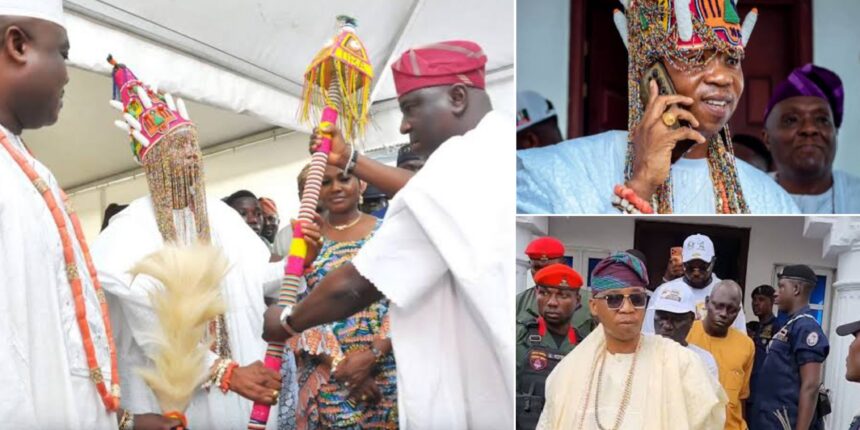
For years, the name Oba Kabiru Adesegun Bashir had been tied to a traditional stool whose fate was still waiting for a decisive government action. A tribunal recommendation had already pointed in one direction, the community had continued to press for recognition, and time kept moving while the expected installation remained outstanding. Then, on August 14, 2026, the long awaited moment finally arrived at the Kosofe Local Government Secretariat, but the significance of that day reaches much further than the ceremony witnessed by guests and traditional figures.
Oko Baba Agba had entered a new phase, with Lagos State formally recognising its traditional institution and installing Bashir as the Olu of Oko Baba Agba. The Staff of Office and Instrument of Appointment presented to him represented the visible outcome of a process that had been developing quietly for years, carrying with it a history that stretches back to November 9, 2021.
Behind the new crown is a story of delayed recognition, traditional authority, royal lineage and a community waiting to see its expectations fulfilled. The events surrounding the installation have also placed fresh attention on the relationship between Oko Baba Agba and the neighbouring Oworonshoki traditional institution, adding another layer to a development that might have looked like a straightforward royal ceremony from a distance.
What led Lagos State to formally recognise the stool after years of waiting, how did Bashir’s journey from Kekeniju of Oworonshoki lead him to the throne, and why has the installation generated renewed attention around the traditional structure of the area? The answers sit across several years of decisions, appeals and developments that have now brought Oko Baba Agba into a new chapter.
The Day Oko Baba Agba Received Its Crown
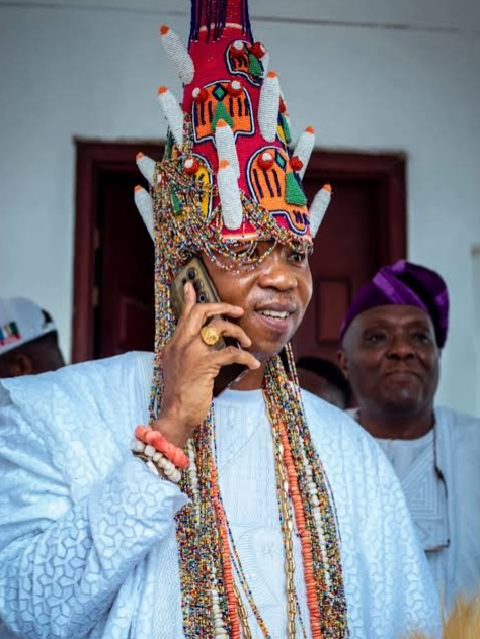
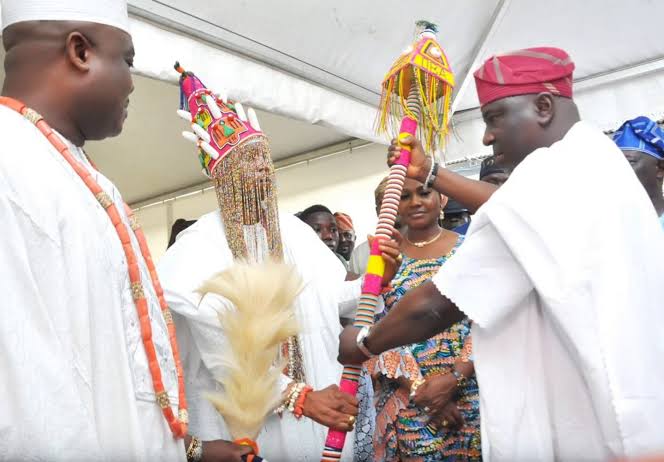
Friday, August 14, 2026, became a major date in the traditional history of Oko Baba Agba when the Lagos State Government formally installed Oba Kabiru Adesegun Bashir as the Olu of Oko Baba Agba Kingdom in Kosofe Local Government Area. The ceremony took place at the Kosofe Local Government Secretariat, where the government formally handed the new monarch the Staff of Office and Instrument of Appointment, giving official recognition to the stool and placing the institution within Lagos State’s recognised traditional governance structure.
Governor Babajide Sanwo Olu was represented at the occasion by his Special Adviser on Rural Development, Dr. Nurudeen Yekinni Agbaje, who performed the government’s formal role at the ceremony and presented the royal instruments to Oba Bashir. The event therefore carried both ceremonial and administrative importance, since the government was not merely celebrating a traditional personality but formally recognising an institution that had moved from the status of a Baale stool into the category of a second class Oba stool.
That elevation is central to understanding the importance of the occasion, because the title Olu of Oko Baba Agba represents a formal change in the standing of the traditional institution. The ceremony gave practical effect to a recognition process that had been discussed for years, bringing the stool into a new level of official status under the traditional administration of Lagos State and giving Oba Bashir a formally recognised position from which he is expected to serve his people.
The Decision That Started the Journey
The roots of the installation can be traced to November 9, 2021, when the Standing Tribunal of Inquiry into Chieftaincy Matters in Lagos State made a recommendation concerning the traditional institution connected with Oko Baba Agba. The tribunal was chaired by retired Justice Titilola Ojikutu Oshode and consisted of 5 members, with its work covering traditional matters and claims requiring government consideration within Lagos State.
Among its recommendations was the elevation of the then Kekeniju of Oworonshoki, Chief Kabiru Adesegun Bashir, to the position of a second class monarch to be recognised as the Olu of Oko Baba Agba. That recommendation became the foundation for the process that eventually led to the 2026 installation, placing Bashir’s name directly at the centre of a traditional recognition matter that would continue to attract attention long after the tribunal had completed its work.
For the Oko Baba Agba community, the recommendation represented an important step because it provided a formal basis for the recognition they had been seeking. Yet a recommendation by a tribunal was not the same thing as the eventual presentation of a Staff of Office, meaning another stage of government action was required before the traditional institution could fully assume its new recognised position.
Years Between Recommendation, Recognition
The gap between the 2021 recommendation and the 2026 installation became one of the defining parts of the story. Nearly 5 years passed between the tribunal’s recommendation and the day Oba Bashir formally received the symbols of office, turning the matter into a prolonged process rather than an immediate transition from recommendation to installation.
August 2023 became another important point in the timeline, as members of the Oko Baba Agba community publicly appealed to Governor Babajide Sanwo Olu to approve the stool and complete the installation process. Their argument was that the necessary traditional procedures had already been completed and that the government should proceed with formal recognition by presenting Bashir with the Staff of Office.
The community’s appeal also reflected the practical expectations attached to the creation of a recognised traditional institution. Residents associated the proposed stool with grassroots development, community security, dispute resolution, economic activity and stronger cooperation between residents and government authorities, giving the matter significance beyond the question of who would occupy the throne.
Bashir Before The New Crown
Before his elevation, Kabiru Adesegun Bashir was known as the Kekeniju or Kekeniju Opemoluwa of Oworonshoki, a traditional position that formed part of his earlier identity within the area’s traditional structure. His movement from that position to the newly recognised stool of Olu of Oko Baba Agba therefore represents more than a change in title, it reflects the formal elevation of the institution attached to his name.
Reports from the period surrounding the 2021 tribunal recommendation and the 2023 community appeal repeatedly identified Bashir as the traditional figure connected with the proposed Oko Baba Agba stool. His eventual installation in August 2026 therefore brought a longstanding process to its formal conclusion, with the earlier chieftaincy position giving way to the recognised second class Oba institution.
A further part of the story emerged after the installation, as recent reporting highlighted a close family relationship involving Bashir and the Oloworo of Oworonshoki. According to a Kosofe Post report published on August 17, 2026, Oba Kabiru Adesegun Bashiru Saliu and Oba Babatunde Bashiru Saliu are brothers and sons of the late Oba Bashiru Olohuntoyin Saliu, placing the 2 monarchs within the same royal lineage.
The Royal Family Connection
The family connection adds another layer to the development because the story now involves 2 recognised traditional institutions whose monarchs are reported to come from the same royal family. Oba Kabiru Adesegun Bashiru Saliu is now the Olu of Oko Baba Agba, while Oba Babatunde Bashiru Saliu, also known as Oba Babatunde Saliu Elebo II, occupies the Oloworo stool of Oworonshoki.
That relationship is significant because the 2 traditional institutions are located around the same wider Kosofe and Oworonshoki axis. Their proximity means the development naturally raises questions about how the traditional institutions will relate to one another, particularly as Oko Baba Agba moves into its newly recognised status as a second class Oba institution.
The family connection also makes the development particularly striking from a traditional perspective, since members of the same royal lineage are now associated with 2 neighbouring traditional stools. The development can therefore be viewed as part of the wider story of a royal family whose members have taken on important roles within the traditional administration of communities in the area.
The Oworonshoki Question
The installation immediately drew attention to the relationship between the newly recognised Oko Baba Agba stool and the existing Oloworo institution of Oworonshoki. Recent local reports noted that the Oloworo was absent from the August 14 installation, while reports also carried objections attributed to his palace concerning the new traditional arrangement.
One August 14 report stated that the Oloworo was considering legal action over the installation, with a source within his palace questioning the existence of a recognised community called Oko Baba Agba within or immediately adjoining Oworonshoki and raising questions about the authority behind the creation of the new traditional jurisdiction.
The issue has therefore moved beyond the ceremony itself, because recognition of a traditional institution inevitably brings attention to the area within which that institution is expected to exercise traditional authority. For Oko Baba Agba, the central question now concerns the practical definition of the territory connected with the newly recognised stool and how that territory relates to the established traditional structure of Oworonshoki.
Boundaries Become The Next Chapter
By August 23, 2026, fresh attention had shifted toward the geographical boundaries of Oko Baba Agba. Residents and community stakeholders were seeking clearer information about the area covered by the new traditional institution, particularly in relation to the existing Oworonshoki domain.
The question is direct and important: where does the traditional jurisdiction of Oko Baba Agba begin, where does it end, and how does it fit into the traditional map around Oworonshoki? Recognition of the stool has settled the question of the monarch who now occupies the new position, but the practical boundaries of the institution have become a separate issue that requires clear definition.
Recent local reporting said the Lagos Ministry of Local Government, Chieftaincy Affairs and Rural Development had not publicly released a detailed boundary description explaining the relationship between the 2 traditional institutions. That has kept attention on the next stage of the process, because geographical clarity can become important whenever different traditional institutions operate close to one another.
The 2023 Community Appeal
August 2023 remains an important date because it showed that the recognition process had not disappeared from public attention. Almost 2 years after the 2021 tribunal recommendation, members of the Oko Baba Agba community were still calling on Governor Sanwo Olu to approve the stool and complete the formal installation of Bashir.
Their position was that the relevant processes had already been completed and that the government should proceed with the formal presentation of the Staff of Office. The appeal demonstrated how strongly the community connected the recognition of the stool with the future administration and development of the area.
Residents also pointed to the expected role of a recognised traditional institution in improving community security, helping settle disputes, strengthening economic activity, supporting grassroots development and creating a stronger bridge between residents and government. Those expectations explain why the eventual installation in 2026 carried significance beyond royal symbolism.
The Meaning Of The Staff Of Office
The presentation of the Staff of Office on August 14, 2026, was one of the most important moments of the ceremony because it represented formal government recognition of Bashir’s position. Alongside the Staff of Office, the government presented the Instrument of Appointment, completing the official process through which the new monarch assumed his recognised traditional position.
The importance of these documents lies in the fact that the ceremony was not simply a celebration organised by the community. The Lagos State Government itself formally installed the monarch, thereby placing the new stool within the state’s recognised traditional framework.
For Bashir, the occasion marked the transition from the earlier Kekeniju position into the office of Olu of Oko Baba Agba. For the community, it marked the moment when years of expectation finally became an official traditional institution with a monarch formally installed by the state.
The Government’s Message To The New Monarch
Representing Governor Sanwo Olu at the ceremony, Dr. Nurudeen Yekinni Agbaje urged the new monarch to make peace, unity, security and development central to his reign. The message reflected the broader role Lagos expects recognised traditional rulers to play within their communities, especially in areas where traditional institutions remain closely connected to everyday grassroots relationships.
Oba Bashir was also encouraged to work with neighbouring traditional rulers, the Kosofe Local Government, government agencies, community stakeholders and residents. The emphasis was placed on cooperation, development and the socioeconomic wellbeing of the people, rather than the ceremonial side of the throne alone.
That expectation gives the new position a practical dimension. The traditional institution is expected to provide a channel through which community concerns can reach government, while the monarch is expected to use his influence to encourage peace, cooperation and development among residents.
Traditional Authority Meets Grassroots Development
The recognition of Oko Baba Agba also reflects the continuing importance of traditional institutions within Lagos communities. Traditional rulers often occupy a position that allows them to interact directly with residents, community associations, local authorities and government agencies, making their role relevant to issues that extend beyond palace ceremonies.
For Oko Baba Agba, the new institution now has an opportunity to build its identity around the priorities outlined by the Lagos State Government. Peaceful community relations, security cooperation, grassroots development, dispute resolution and economic activity are among the areas attached to the expectations surrounding the new reign.
The challenge ahead is therefore not simply about preserving the dignity of the stool. Oba Bashir now enters a recognised traditional office with expectations attached to it, and the manner in which the institution develops will determine how the new kingdom becomes integrated into the wider traditional and administrative structure of Kosofe.
Another Monarch Joins The Lagos Traditional Map
The August 14 ceremony also produced another traditional institution as Lagos installed Oba Adeleke Ayinde Nasir as the pioneer Alajasa of Lagasa Community in Ibeju Lekki. Both monarchs received their Staff of Office and Instruments of Appointment during the same broader exercise, making the day significant for traditional administration in more than one part of Lagos.
Oko Baba Agba received a new recognised second class Oba in Oba Kabiru Adesegun Bashir, while Lagasa received its pioneer Alajasa in Oba Adeleke Ayinde Nasir. The 2 developments demonstrate the state’s continuing role in formally recognising traditional institutions and installing monarchs to occupy those stools.
For Oko Baba Agba, however, the history behind the stool gives the August 14 installation a particularly long timeline. The process had already passed through a tribunal recommendation, a period of waiting, a public appeal and finally a formal government installation, creating a sequence that stretched from 2021 to 2026.
The Earlier Tensions Around Oko Baba Agba
The Oko Baba Agba stool had also been surrounded by community tensions before the formal installation. Reports from 2023 referred to allegations involving intimidation and attacks connected with residents and people associated with the community, while the wider dispute around the proposed recognition of Bashir formed part of the background to those reports.
The same reporting stated that Bashir had provided food assistance to widows in the community for years and carried allegations that some women were attacked while travelling to his palace. Reports also referred to allegations of intimidation involving some residents and youths, placing the proposed traditional institution within a wider atmosphere of disagreement at the time.
Those events form part of the history surrounding the stool and help explain why the road to formal recognition attracted attention before the government eventually completed the installation in 2026. The new reign therefore begins after a lengthy period during which the stool had already been associated with questions about traditional authority and community relations.
A Timeline That Reaches Back To 2021
November 9, 2021, stands as the first major date in the modern recognition journey, when the Standing Tribunal of Inquiry into Chieftaincy Matters in Lagos State recommended the elevation of the Kekeniju of Oworonshoki, Chief Kabiru Adesegun Bashir, to a second class monarch recognised as the Olu of Oko Baba Agba.
The years 2022 and 2023 followed without the immediate installation that the community had expected, while August 2023 became a significant moment when residents publicly appealed to Governor Sanwo Olu to approve the stool and present Bashir with the Staff of Office.
August 14, 2026, finally brought the formal installation, with Lagos State presenting Oba Bashir with his Staff of Office and Instrument of Appointment at the Kosofe Local Government Secretariat. August 16 and August 17 brought further reporting on the significance of the new kingdom, the royal family connection and its relationship with Oworonshoki, while August 23 saw fresh attention directed toward questions surrounding geographical boundaries and traditional jurisdiction.
The New Status Of Oko Baba Agba
The phrase second class Oba matters because it describes an institutional elevation rather than simply a personal promotion. The tribunal’s 2021 recommendation specifically connected Bashir’s elevation with the creation of a recognised second class monarchy known as the Olu of Oko Baba Agba.
The August 14 ceremony therefore gave effect to that earlier recommendation by formally recognising the stool and installing the monarch who had been at the centre of the process. The movement from Baale stool to second class Oba stool represents the central institutional development behind the ceremony.
That change also places Oko Baba Agba within the recognised traditional structure of Lagos State, giving the community a formal royal institution headed by a monarch whose appointment has now been completed through the state’s official process.
The Road Ahead For The New Monarch
Oba Kabiru Adesegun Bashir begins his reign at a point when expectations are already clearly defined. The Lagos State Government has asked him to promote peace, unity, security and development, while community expectations surrounding the stool have long included grassroots development, dispute resolution, economic activity and stronger relationships between residents and government.
His relationship with neighbouring traditional rulers will also form an important part of the new chapter. The government specifically encouraged cooperation with neighbouring monarchs, while the close relationship between the Oko Baba Agba and Oworonshoki royal institutions gives that message particular relevance.
The early period of the reign will therefore be closely connected to how the new institution establishes itself, how its traditional role is understood within the surrounding communities and how the boundaries of its recognised jurisdiction are eventually explained.
The Story Behind The Ceremony
Looking at the August 14 ceremony by itself would reveal a straightforward royal event, with Lagos State installing a monarch and presenting him with the official symbols of office. Following the story back to November 9, 2021, however, reveals a much longer journey involving a tribunal recommendation, years of waiting, a 2023 community appeal and a final government decision that changed the formal status of the stool.
That history makes the installation of Oba Kabiru Adesegun Bashir more significant than a single day at the Kosofe Local Government Secretariat. The ceremony represented the point where a long running traditional recognition process finally became official, giving Oko Baba Agba a formally recognised second class Oba and placing the community within a new chapter of Lagos traditional administration.
The story also carries another dimension because the newly recognised institution sits within an area where an established traditional authority already exists, while reports have identified a close royal family connection between the 2 monarchs. That combination of history, royal lineage, proximity and questions surrounding boundaries gives the development a significance that extends beyond the Staff of Office presented on August 14.
The Next Important Date May Be About Boundaries
August 23, 2026, has already shown that attention is beginning to move from the installation itself toward the practical structure of the new kingdom. Residents and community stakeholders are seeking clearer information about the geographical extent of Oko Baba Agba and its relationship with the traditional territory associated with Oworonshoki.
That question now sits at the centre of the unfolding story because the formal recognition of a monarch has already happened. The next stage concerns how the recognised institution fits into the surrounding traditional landscape, particularly around an area where another established royal institution operates.
For Oko Baba Agba, the journey from the 2021 tribunal recommendation to the 2026 installation has therefore reached its most visible milestone, but the traditional story continues beyond the ceremony. Oba Kabiru Adesegun Bashir now holds the Staff of Office as the Olu of Oko Baba Agba, while the community enters a new phase shaped by the responsibilities attached to the throne, the expectations of residents and the evolving relationship between the newly recognised kingdom and its traditional neighbours.
The August 14 installation has closed one long chapter that began with the 2021 recommendation, yet it has also opened another chapter around the place of Oko Baba Agba within Lagos traditional administration. The crown is now firmly on the head of its new monarch, the stool has received formal recognition and the long wait has reached its conclusion, leaving the future of the kingdom to unfold from here.