Nigerian football has suddenly found itself at a point where one name mentioned in a podcast conversation can carry far more weight than it might have carried under normal circumstances. The timing, the people involved and the uncertainty surrounding the next chapter of the Nigeria Football Federation have turned what could have been an ordinary football discussion into a subject of national interest. Then came the mention of Seyi Tinubu, a name already familiar far beyond the football world, and the conversation immediately took on another dimension.
Former Super Eagles striker Obafemi Martins did not make the suggestion in an empty room or at an ordinary moment for Nigerian football. He spoke on Monday, August 31, 2026, while appearing on The Obi One Podcast with former Super Eagles captain John Obi Mikel, just days after the leadership of the NFF had been thrown into serious uncertainty. That timing matters because Nigerian football was already searching for answers, and Martins placed an unexpected name into that search.
The suggestion also arrives at a moment when the usual questions surrounding the NFF have become much bigger. Who should lead Nigerian football? What type of leadership does the country need? Should the next leadership come from the traditional football establishment or should Nigeria consider a different kind of administrator? Martins’ intervention has placed those questions directly in the public conversation, while the circumstances surrounding the NFF make the subject impossible to dismiss as a casual football opinion.
August 27, 2026: The NFF Leadership Crisis
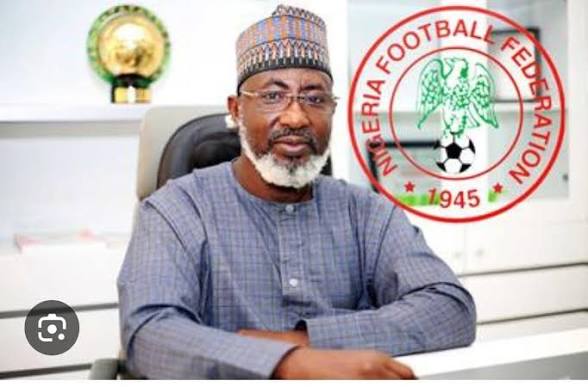
The background to Martins’ statement begins several days earlier, on August 27, 2026, when NFF President Ibrahim Musa Gusau, General Secretary Mohammed Sanusi and members of the Executive Committee resigned amid growing criticism surrounding the administration of Nigerian football. The resignations immediately created an unusual situation for an organisation preparing for an elective congress and already under pressure because of the country’s recent failures on the international stage.
Gusau had taken over the NFF presidency in 2022 after succeeding Amaju Pinnick, becoming one of the central figures responsible for the direction of Nigerian football during a period that eventually produced difficult questions about administration, performance and accountability. His resignation therefore did not simply remove an individual from office, it opened a much wider conversation about the structure and direction of the federation itself.
The timing was particularly significant because Nigeria’s football fortunes had already taken a serious hit. The Super Eagles failed to qualify for the 2026 FIFA World Cup, while the Super Falcons failed to qualify for the 2027 FIFA Women’s World Cup. The Falcons’ failure was especially historic because Nigeria had previously appeared at every edition of the Women’s World Cup since the competition began in 1991.
Those failures created a difficult atmosphere around Nigerian football before the NFF leadership crisis unfolded. The resignations therefore landed on an already tense football landscape, with attention turning towards what could be done differently. That is the environment into which Martins introduced Seyi Tinubu’s name.
August 31, 2026: Martins Makes His Case
Four days after the NFF leadership resignations, Obafemi Martins appeared on The Obi One Podcast hosted by John Obi Mikel. The conversation moved beyond the familiar memories of playing football and into the wider problems surrounding Nigerian football administration. Martins spoke about the need for a different kind of leadership and eventually identified Seyi Tinubu as someone he believed could take on the challenge.
The central point of Martins’ argument was not simply that Seyi Tinubu is young. His reasoning focused on the belief that Nigerian football needs someone who understands the football system, understands what Nigerians want and has the capacity to change the way the game is administered. Martins presented Seyi as a person who could potentially bring a new approach to an area he believes has struggled for years.
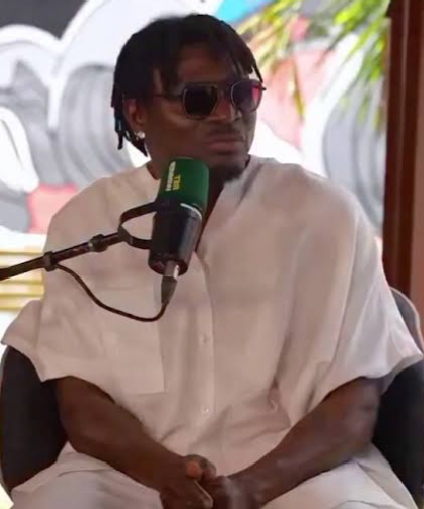
That distinction is important because the statement has sometimes been reduced to a straightforward political sounding headline. Martins was not announcing an NFF election result, nor was he speaking on behalf of Seyi Tinubu. He was putting forward his own preferred choice during a conversation about the future of Nigerian football.
The significance of the statement comes from the fact that the name he mentioned is not one that has traditionally dominated discussions about the NFF presidency. Nigerian football leadership has usually been associated with former football administrators, federation officials and people deeply embedded in the structures of the game. Martins’ suggestion therefore introduced a different possibility at precisely the moment when those structures were being questioned.
The Name Martins Put Forward
Seyi Tinubu occupies an unusual position in this discussion because his public profile extends well beyond football administration. He is the son of President Bola Ahmed Tinubu and is known as a businessman, making his potential connection to the NFF immediately more politically sensitive than the nomination of an ordinary football administrator would be.
Martins’ recommendation, however, was framed around leadership rather than a formal football campaign. His argument was essentially that Nigerian football needs a younger person capable of understanding the system and the expectations of Nigerians, and that he believes Seyi Tinubu could fit that description.
That is where the story becomes more complicated. Seyi Tinubu has not publicly announced an intention to contest the NFF presidency based on the information available in the material surrounding the discussion. There is also no established evidence that the NFF has nominated him or that he has entered an active campaign for the position.
The name is therefore being discussed because Martins put it forward, not because Seyi Tinubu has formally presented himself as a candidate. That difference should remain clear because an endorsement and a candidacy are two very different things in an election.
September 26, 2026: The Election That Was Already Planned
Before the latest crisis, the NFF had already been preparing for an elective congress. September 26, 2026 had been approved as the date for the election in Lafia, Nasarawa State, while electoral and appeals committees had also been inaugurated as part of preparations for the 2026 to 2030 electoral cycle.
The existence of an established electoral timetable made the leadership crisis even more consequential. Nigerian football was not simply approaching an election with a list of possible candidates. It was approaching an election while the federation itself was entering a period of major uncertainty.
The electoral process has since been suspended following the leadership crisis and the push for wider reforms. That suspension changes the nature of the conversation because the immediate question is no longer simply who might win an upcoming NFF election. The bigger question is what the next electoral process will look like after the proposed reforms are completed.
Reports have also referred to September 27 in some accounts, but the originally approved date was September 26, 2026. With the electoral process suspended, neither date should now be treated as a confirmed date for a new NFF presidential election.
The NFF Statutes Bring Another Question
Martins’ suggestion naturally raises a practical question about the rules governing the NFF presidency. The NFF statutes state that the president and other members of the Executive Committee are elected by the NFF Congress. The statutes also contain requirements concerning football activity and eligibility for Executive Committee positions.
One important requirement is that Executive Committee members must have been active in football for 4 years out of the preceding 6 years, alongside other relevant statutory requirements. That provision makes the question of eligibility more complicated than simply asking whether a potential candidate is young, influential or capable of attracting attention.
Seyi Tinubu’s public profile does not by itself establish whether he satisfies every requirement contained in the NFF statutes. If he were ever to formally declare an intention to contest the presidency, the appropriate electoral authorities would have to determine whether he meets the applicable requirements under the rules governing the election.
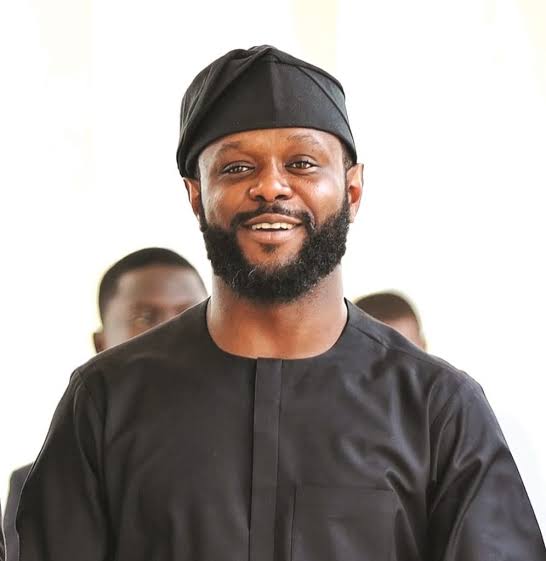
That is why Martins’ statement should not be interpreted as confirmation that Seyi Tinubu is already eligible, nominated or qualified to contest. Those are separate matters that would have to be established through the formal electoral process.
The March 2026 Statute Changes
Another detail makes the situation even more important. The NFF approved amendments to its statutes and electoral code in March 2026, meaning the applicable rules for the current electoral cycle cannot simply be assumed from older versions of the federation’s regulations.
The March 2026 position is therefore particularly relevant when considering any potential candidacy. The rules determine how candidates are nominated, the requirements they must satisfy and how the electoral process is supposed to operate.
The statutes also provide that candidatures for Executive Committee positions must be submitted to the General Secretariat at least 45 days before the relevant elective Congress. That requirement becomes significant because the previously scheduled electoral process has now been suspended.
Until a new process is established, it would be premature to treat any person mentioned publicly as a confirmed presidential candidate. Martins has put Seyi Tinubu’s name into the conversation, but a formal candidacy would require much more than a public endorsement.
August 31, 2026: Football Reform Enters the Conversation
The Martins statement also arrived alongside a much broader push for reform of Nigerian football. President Bola Ahmed Tinubu has directed a comprehensive reform of the country’s football administration following the crisis surrounding the NFF.
The proposed reforms are aimed at addressing structural and administrative weaknesses within Nigerian football, with attention also directed towards governance, stakeholder representation, player development, domestic competitions and accountability. The timing means that the discussion about the next NFF president is happening alongside a discussion about what the federation itself should become.
That makes the question of leadership especially important. A new president would not simply inherit an organisation operating exactly as it did before the crisis. The next administration could emerge from a period of structural review and reform, meaning the person who eventually takes charge could be expected to operate under a changed framework.
Martins’ intervention therefore arrived at a moment when Nigerian football was already asking fundamental questions about leadership. His suggestion of Seyi Tinubu added a specific name to a conversation that was already much larger than one individual.
The Interim Arrangement
With the previous leadership structure disrupted, attention has also turned towards the interim administration of the federation. The National Sports Commission has endorsed Dr Emmanuel Ikpeme as interim General Secretary as part of the temporary administrative arrangement following the resignations.
The interim period is important because it creates space for the authorities to address the immediate administrative situation while broader reforms are considered. It also means the next permanent leadership arrangement has not yet taken shape.
That uncertainty makes the timing of Martins’ comments even more notable. There is no settled presidential contest currently taking place in the normal sense of an election campaign with confirmed candidates competing for votes. Instead, Nigerian football is passing through an unusual period in which its existing structure is being reviewed while possible names for the future begin to enter public discussion.
Seyi Tinubu is one of those names because Martins deliberately placed him there. Whether that name eventually develops into an actual candidacy is another matter entirely.
September 1, 2026: Udeze Rejects the Proposal
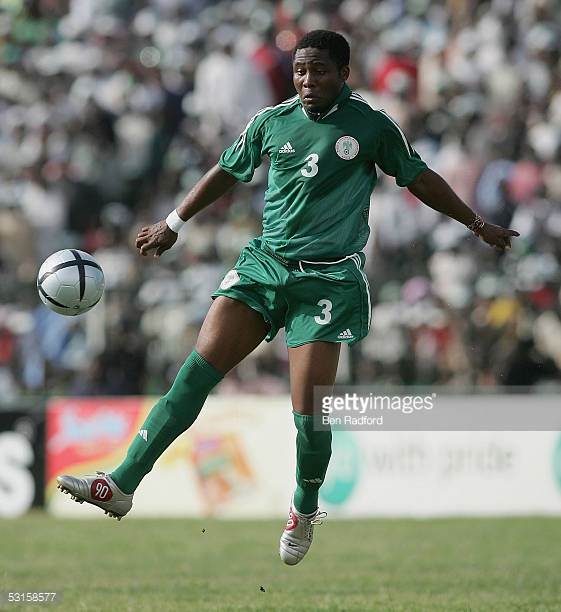
The conversation did not remain one sided for long. Former Super Eagles defender Ifeanyi Udeze, who played alongside Martins for Nigeria, publicly rejected the suggestion that Seyi Tinubu should head the NFF.
Udeze questioned the basis for selecting Seyi Tinubu for such an important position and described Martins’ choice as a bad idea. His reaction immediately gave the discussion another dimension because it came from someone who also understands Nigerian football from the perspective of a former international player.
The timing of Udeze’s response is significant because it demonstrates that Martins’ proposal is already generating a direct football debate. One former Super Eagles player has placed Seyi Tinubu forward as a potential solution, while another former Super Eagles player has rejected the idea.
That disagreement matters because the issue is no longer confined to a podcast conversation. Once a proposal about the future leadership of the NFF enters public debate and attracts an immediate response from another former international, it becomes part of the wider discussion about the direction Nigerian football should take.
What Martins Is Really Proposing
At the centre of Martins’ remarks is a simple proposition. Nigerian football has experienced years of administrative problems, and he believes the country needs a younger leader who understands the system and understands Nigerians.
Seyi Tinubu is the person Martins believes could fit that role. His argument is therefore based on a particular idea of leadership rather than on the announcement of an election campaign.
That is also why the suggestion has attracted so much attention. The NFF presidency is a powerful administrative position with responsibility for the implementation of Congress and Executive Committee decisions, the effective functioning of NFF bodies, supervision of the General Secretariat and relationships involving the federation, FIFA, CAF, political bodies and other organisations.
Whoever eventually occupies the position will therefore have responsibility far beyond public visibility. The role involves managing the machinery of Nigerian football and dealing with the organisations and institutions that shape the game nationally and internationally.
Martins’ recommendation places Seyi Tinubu’s name against that responsibility, creating an obvious question about whether he would eventually seek the position formally or whether the idea will remain simply an endorsement from a former Super Eagles striker.
The Political Dimension
Seyi Tinubu’s family connection inevitably adds another layer to the discussion. As the son of President Bola Ahmed Tinubu, his name carries an obvious political association even when the person making the recommendation is discussing football leadership.
That connection becomes particularly relevant because the current football crisis is happening alongside a presidentially directed reform process. The President has ordered a comprehensive overhaul of Nigerian football, while Martins has suggested the President’s son as someone capable of leading the NFF.
Those circumstances naturally make the proposal more sensitive than an ordinary football appointment discussion. Still, the facts remain straightforward. Martins made the recommendation, Seyi Tinubu has not been established as a declared candidate, the election process has been suspended and the wider reform process is still unfolding.
Everything beyond those established points belongs to the future.
Why The Timing Matters
Had Martins made the same comment during a quiet period in Nigerian football, it might have attracted attention without becoming a major national talking point. The circumstances of August 2026 are completely different.
The NFF leadership had just collapsed, Nigeria’s senior men’s and women’s teams had suffered major World Cup qualification setbacks, the planned election process had been suspended and the government was pushing for reforms. Against that backdrop, Martins’ suggestion landed at precisely the moment Nigerians were looking for names, ideas and possible solutions.
That is why the statement has become bigger than a simple endorsement. The football environment was already searching for a new direction when Martins offered his answer.
Whether that answer survives the formal requirements of the NFF statutes is still unknown. Whether Seyi Tinubu himself wants the position is also unknown. Whether the reformed electoral process will create the same conditions that existed before the resignations is another unanswered question.
For now, Martins has simply placed the name on the table.
The 45 Day Requirement
The NFF’s electoral rules make the distinction between a public suggestion and a formal candidacy particularly important. Candidatures for Executive Committee positions are required to be submitted to the General Secretariat at least 45 days before the relevant elective Congress.
That means a person cannot become an official candidate merely because another person recommends him publicly. There is a formal process that has to be followed, and that process includes the submission and examination of candidatures under the federation’s rules.
The suspension of the previous electoral process further complicates the matter. If a new electoral timetable is eventually approved following the reforms, the relevant deadlines and procedures would have to be followed under the applicable rules.
Consequently, Martins’ statement should be viewed as the beginning of a conversation rather than the conclusion of an election.
What Has Actually Been Established
Several facts are already clear from the sequence of events. Obafemi Martins publicly backed Seyi Tinubu during his August 31, 2026 appearance on The Obi One Podcast with John Obi Mikel. Martins presented him as someone who could potentially change Nigerian football and provide younger leadership at a time when the administration of the game is under intense scrutiny.
It is also established that Ibrahim Musa Gusau, Mohammed Sanusi and members of the NFF Executive Committee resigned on August 27, 2026, creating a leadership crisis inside the federation. Nigeria’s failure to qualify for the 2026 FIFA World Cup and the Super Falcons’ failure to qualify for the 2027 FIFA Women’s World Cup form part of the wider circumstances surrounding the current pressure on Nigerian football.
The NFF’s previously approved electoral process has also been suspended, meaning the earlier September 26, 2026 date cannot currently be treated as the confirmed date for a new election. An interim administrative arrangement has been put in place while the reform process moves forward.
President Bola Ahmed Tinubu has directed comprehensive football reforms, adding another major development to the situation. Then, on September 1, 2026, Ifeanyi Udeze rejected Martins’ proposal, ensuring that the suggestion of Seyi Tinubu as a possible NFF president had already produced a direct response from another former Super Eagles player.
What Has Not Been Established
There is an equally important list of things that have not happened. Seyi Tinubu has not been established as a declared candidate for the NFF presidency. There is no confirmed NFF nomination placing him on a presidential ballot, and Martins’ comments do not constitute an official nomination.
There is also no basis for declaring that Seyi Tinubu is already confirmed eligible to contest the position. The NFF statutes contain specific requirements for Executive Committee membership, including the football activity requirement, and those conditions would have to be assessed formally if he ever enters the process.
Most importantly, there is no basis for saying that Seyi Tinubu will become the next NFF president. That outcome depends on decisions and procedures that have not yet taken place.
The most accurate description at this stage is therefore much narrower. Obafemi Martins has publicly suggested Seyi Tinubu as a person capable of leading the NFF during one of the most uncertain periods in recent Nigerian football administration.
The Bigger Picture
The story ultimately sits at the intersection of football, leadership, reform and an impending change in the NFF’s administrative direction. Martins has introduced a name that was not previously at the centre of the NFF presidential conversation, and he has done so at a moment when the federation’s old leadership structure has broken down.
The next stage will depend on the reforms, the new electoral process, the applicable statutes and the people who eventually decide to enter the contest. For Seyi Tinubu, the immediate fact is that his name has now been publicly associated with one of the most important positions in Nigerian football, but association with the conversation is not the same thing as entering the race.

For Martins, the message is clear. He believes Nigerian football needs younger leadership and sees Seyi Tinubu as someone capable of providing it. For the NFF, however, the road from a public recommendation to the presidency is governed by rules, eligibility requirements and an electoral process that is currently suspended.
That leaves Nigerian football at a fascinating point. The previous leadership has stepped aside, the electoral process has been interrupted, reforms are being considered, and names are beginning to emerge before the next chapter has even been formally written.
Seyi Tinubu is now one of those names.
What happens next will determine whether Martins’ suggestion remains a striking moment from an August 31 podcast conversation or becomes the opening line of a much bigger story about who eventually takes charge of Nigerian football.