For years, the idea of having highly advanced surgical procedures performed in Nigeria has carried a familiar frustration. Patients with complicated conditions have often looked beyond the country for treatment, while families have had to deal with the cost, travel, accommodation and uncertainty that come with seeking specialised medical care abroad. Now, inside Redemption City in Ogun State, a major healthcare project is putting a different picture before Nigerians, one where sophisticated surgical technology, specialist doctors and local medical training are being brought together under one roof.
The story becomes even more interesting when the institution behind the project is a faith based organisation whose influence stretches far beyond the hospital itself, because the development is not simply about acquiring an expensive machine but about building the people, systems and expertise required to make the technology useful for years to come.
The Project Taking Shape In Ogun
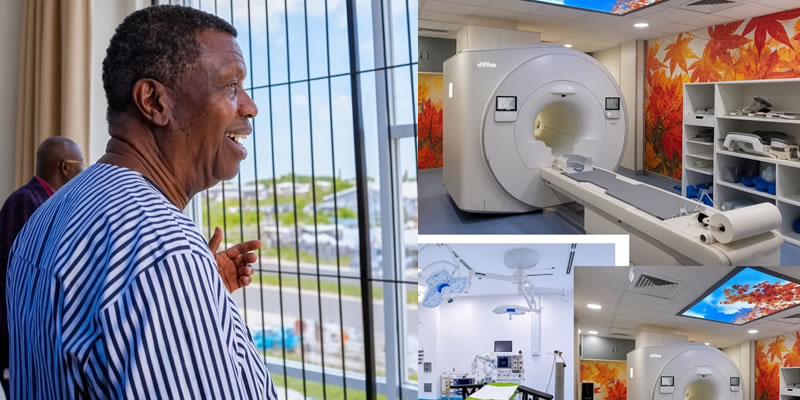
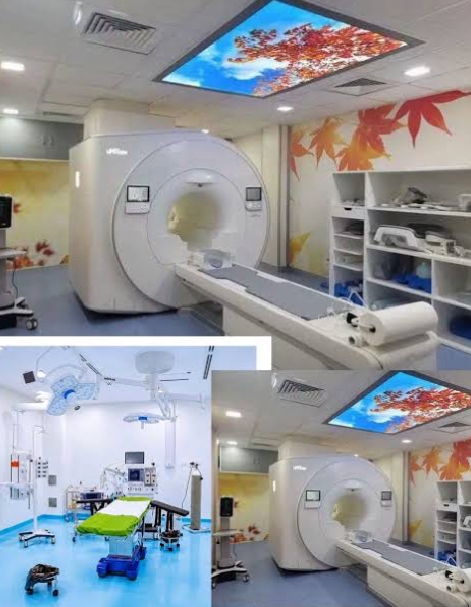
Redeemer’s Health Village, established by the Redeemed Christian Church of God, has emerged as one of the most significant private healthcare projects connected to the current expansion of advanced medical technology in Nigeria. Located at Redemption City, Mowe, Ogun State, the facility is a 300 bed multispecialty hospital designed to provide a broad range of medical services, with the robotic surgery programme adding a highly specialised dimension to its healthcare offering. The project brings together clinical treatment, professional development, research and technology in a way that gives the hospital ambitions that extend beyond serving patients within its immediate environment.
The formal launch of the robotic surgery programme took place on August 22, 2026, during a strategic partnership event in Lagos. The development is being pursued through a partnership between Redeemer’s Health Village and RoboMed Global Inc., a United States based healthcare company with Nigerian diaspora roots. The partnership is particularly important because the project has been structured around more than the installation of surgical equipment, with the organisations also focusing on training Nigerian medical professionals and developing the technical capacity needed to support robotic surgery locally.

Pastor Enoch Adeboye, the General Overseer of the RCCG, was not physically present at the launch, but his position on the project was represented through a message delivered by RCCG’s First National Overseer, Pastor Joseph Olayemi. The message placed science and technology within the wider mission of saving lives and reducing suffering, while highlighting the importance of developing Nigerian expertise in advanced medicine. The objectives include training surgeons, encouraging medical research, reducing the need for Nigerians to travel abroad for specialised procedures and bringing together medical expertise with the precision offered by robotic technology.
How The Robotic Programme Came Together
The reported investment behind the project stands at approximately $4 million, a figure also referenced by the Federal Ministry of Health when discussing the launch. That level of investment gives an indication of the scale of what RHV is attempting to establish at Redemption City, particularly because robotic surgery requires considerably more than the purchase of a surgical platform. Equipment has to be installed within an appropriate theatre environment, medical personnel have to understand how to operate alongside the system, engineers have to maintain the technology and hospitals have to develop protocols that protect patients throughout the entire treatment process.
RHV has acquired 2 robotic systems for the programme, with the 2 machines serving different purposes. One is intended for clinical procedures, while the second has been dedicated to training. That distinction could become one of the defining features of the project because the training system gives Nigerian medical professionals an opportunity to develop familiarity with robotic technology without relying entirely on the equipment being used for active patient treatment.
Dr Adedamola Dada, the Chief Executive Officer of Redeemer’s Health Village, has described the wider objective as the creation of a pipeline of Nigerian professionals capable of participating in robotic surgery locally. That includes the surgeons who operate the system, as well as other members of the medical and technical teams whose work is essential to keeping the programme functional. The long term idea is straightforward, train local professionals well enough that the technology becomes part of Nigeria’s own healthcare capacity rather than remaining something dependent on foreign expertise.
The 2 Robotic Systems
The decision to operate with 2 robotic systems gives the programme a structure that goes beyond immediate patient care. One system can be used for clinical procedures while the other serves as the training platform for doctors and other professionals preparing to work within the programme. Such an arrangement creates room for continuous professional development because training does not necessarily have to compete with scheduled clinical operations for access to the equipment.
That training capacity also matters because robotic surgery involves a different working environment from conventional open surgery and even from many laparoscopic procedures. Surgeons have to understand the technology, learn how to control the instruments, interpret the enhanced visual field and develop the coordination required to perform complex procedures through robotic assistance. Nurses, anaesthetists, biomedical engineers and technical personnel also need to understand their respective roles before a hospital can safely run a sustainable robotic surgery service.
RHV’s approach therefore places considerable emphasis on building an ecosystem around the machines. The equipment itself may attract the most attention when photographs and videos of the programme circulate, but the people operating, supporting and maintaining the system will ultimately determine how useful the investment becomes. That is why the dedicated training system could prove to be one of the most consequential parts of the entire project.
The 6 Medical Specialties
The programme is expected to begin across 6 surgical specialties, giving it a considerably wider scope than a centre focused on one particular type of procedure. The specialties identified for the programme are urology, general surgery, gynaecological surgery, colorectal surgery, thoracic surgery and hepatobiliary surgery. This range places the project within a broader multispecialty framework and allows the hospital to develop robotic capabilities across different areas of surgical medicine.
Urology is one of the fields where robotic surgery has gained considerable international use, particularly for complex procedures involving the prostate and other parts of the urinary system. General surgery covers a broad range of procedures, while gynaecological surgery opens the technology to specialised operations involving women’s reproductive health. Colorectal surgery introduces another area where precision and minimally invasive techniques can be particularly valuable for appropriately selected patients.
Thoracic surgery covers operations involving structures within the chest, while hepatobiliary surgery focuses on the liver, gallbladder, bile ducts and related structures. Bringing all 6 areas under the same programme gives RHV the opportunity to develop a multidisciplinary robotic surgery service rather than building expertise around a single procedure. The earlier public information from RHV had highlighted general surgery, urology and gynaecology, while the launch details expanded the stated scope to 6 specialties.
The Surgeon Still Controls The Operation
The word robotic can easily create the wrong mental picture. A robotic surgical system does not arrive in an operating theatre, make decisions by itself and perform an operation without a surgeon. The surgeon remains responsible for controlling the procedure, while the robotic platform provides advanced instruments, visualisation and mechanical assistance that can allow highly controlled movements during surgery.
Former Health Minister and Chairman of the RHV Robotic Surgery Strategic Partnership, Senator Adeleke Mamora, stressed this point during the launch. The technology is essentially an advanced tool in the hands of trained medical professionals. Its usefulness depends on how effectively surgeons and the wider clinical team understand and deploy it, as well as whether patients are properly selected for procedures where robotic assistance is appropriate.
Robotic surgery can offer potential benefits such as smaller incisions, reduced blood loss, improved dexterity, enhanced visualisation and potentially shorter recovery periods for suitable procedures. Those benefits are not automatic guarantees for every patient or every operation. Clinical outcomes depend on several factors, including the surgeon’s experience, the condition being treated, patient selection, the medical team, the equipment, the hospital environment and postoperative care.
The Robotic Academy
Perhaps the most ambitious component of the RHV programme is the planned Robotic Academy. The academy is scheduled to commence on October 22, 2026, providing a formal training pathway for medical professionals who want to develop competence in robotic surgery.
The planned pathway consists of 5 stages. The first stage involves didactic lectures where participants learn the theoretical and clinical foundations of robotic surgery. The second stage moves into a dry laboratory environment where participants can gain practical experience through simulation and technical exercises before progressing to more advanced training.
The third stage is the wet laboratory, which involves training using cadaver and animal models. The fourth stage introduces supervised human training, bringing participants into the clinical environment where they can develop practical experience under appropriate supervision. The fifth stage involves examination and credentialing, providing an assessment process for participants who complete the training pathway.
That structure gives the academy a role that reaches beyond the immediate needs of RHV. A successful training programme could gradually create a larger pool of Nigerian surgeons and other medical professionals with experience in robotic surgery, helping to expand the technology beyond a single hospital. The Federal Ministry of Health has specifically welcomed this aspect of the project, describing the training component as important to developing the skills and certification required for safe robotic surgery.
Why Local Training Matters
Nigeria’s healthcare system has long faced the challenge of losing highly trained professionals to opportunities outside the country. Advanced medical technology creates another version of that problem when the equipment is available locally but the expertise required to use and maintain it remains concentrated abroad. RHV’s training model is therefore designed to address both sides of the equation by bringing advanced equipment into Nigeria while simultaneously developing professionals who can work with it.
The objective is for Nigerian professionals to eventually participate throughout the treatment journey, from the operation itself to patient monitoring and follow up care. Technical specialists also need to understand the systems well enough to support the equipment, while biomedical engineers require the knowledge necessary to keep the machines functioning. Without those supporting professionals, a robotic programme can struggle even when highly skilled surgeons are available.
RoboMed Global Inc. has also framed the partnership around retaining technology, training and healthcare systems within Africa. The broader ambition reaches beyond Ogun State, with the partners discussing the possibility of strengthening robotic surgery capacity across Nigeria and the wider West African region. That makes the training academy an important part of the regional ambition because a healthcare system cannot easily become a destination for advanced treatment without a corresponding pool of trained professionals.
The Cost Question
Cost will naturally remain one of the major issues surrounding robotic surgery in Nigeria. RHV Chief Executive Officer Dr Adedamola Dada has stated that the hospital is targeting prices of approximately 5 percent of comparable procedures in the United States and Europe. That statement represents the hospital’s stated target rather than a comprehensive public price list for individual operations.
No full schedule showing the final cost of each robotic procedure has been established publicly through the launch reports. It would therefore be premature to attach a specific naira figure to every robotic operation at RHV. The eventual cost to patients will depend on the particular procedure, clinical requirements, hospital charges and other factors involved in treatment.
The affordability objective remains significant because one of the major reasons Nigerians seek advanced healthcare abroad is the combination of specialised expertise and access to procedures that may not be readily available locally. A robotic surgery programme can have a stronger impact if patients who would otherwise travel can receive comparable specialised care within Nigeria. That is also where the project’s medical tourism ambition becomes more tangible.
The Federal Government’s Interest
The Federal Government has welcomed the RHV development because it fits into a broader effort to strengthen advanced healthcare services within Nigeria. Health Minister of State Dr Iziaq Salako has linked the availability of sophisticated treatment in Nigeria with the country’s desire to reduce outbound medical tourism.
The underlying idea is simple. When Nigerians have to travel abroad for complex treatment, money leaves the country alongside the patients. Developing advanced services locally creates the possibility of retaining some of that spending within Nigeria while also giving Nigerian doctors opportunities to work with technologies that are already established in other parts of the world.
The Federal Ministry of Health has also emphasised the role of private healthcare providers, which deliver a substantial portion of healthcare services in Nigeria. The RHV project therefore represents an example of how private and faith based institutions can participate in the expansion of specialised healthcare infrastructure while government provides policy support and broader coordination.
The Story Did Not Begin At RHV
The August 22, 2026 launch at RHV is important, but it sits within a larger sequence of developments in robotic surgery across Nigeria. The country’s experience with robotic assisted surgery predates the Ogun State programme, making it important to understand the timeline before describing RHV’s role.
March 2025 marked a major development when Professor Kingsley Ekwueme performed robotic assisted prostate cancer surgery at The Prostate Clinic in Lagos using the da Vinci robotic surgical system. The procedure was reported as Nigeria and West Africa’s first robotic assisted prostate cancer surgery, establishing an important early milestone for the technology within the country.
January 2026 brought another development at the same Lagos centre, with the facility reporting what it described as West Africa’s first robotic gynaecological surgery. That development expanded the application of robotic surgery beyond prostate procedures and demonstrated the possibility of using the technology within women’s healthcare.
August 21, 2026 then brought another milestone when Imo Specialist Hospital performed its first robotic assisted surgery at the Imo Robotics and Oncology Centre in Owerri. The procedure came just 1 day before RHV formally launched its own robotic surgery programme.
August 22, 2026 therefore represents the point at which RHV joined an already developing Nigerian robotic surgery landscape. The significance of its entry comes from the scale of the programme, the 2 robotic systems, the range of specialties and the dedicated training infrastructure attached to the project.
The Nigerian Robotic Surgery Timeline
The sequence is important because it shows how quickly the technology is beginning to develop within Nigeria. The first major reported milestone came in March 2025 with robotic prostate cancer surgery in Lagos. January 2026 brought reported robotic gynaecological surgery, showing an expansion into another specialty.
August 21, 2026 brought the first robotic assisted surgery at the Imo Robotics and Oncology Centre in Owerri. Just 1 day later, on August 22, RHV formally launched its own programme at Redemption City in Ogun State.
The timeline points to a broader development rather than a single institution suddenly introducing a completely new technology to Nigeria. Different centres are gradually adding robotic capability, with RHV entering the field with a programme that places unusual emphasis on training and regional expansion.
What Sets RHV Apart
RHV’s strongest distinguishing feature is the decision to combine treatment with training. Many healthcare technology announcements naturally focus attention on the machine because the equipment is the visible symbol of progress. RHV’s programme goes further by reserving one of its 2 robotic systems specifically for education and professional development.
That decision gives the hospital a mechanism for building expertise while clinical services are being developed. Surgeons can train, supporting professionals can become familiar with the equipment and the institution can gradually establish the protocols required to integrate robotic surgery into routine specialist care.
The programme also has a wider institutional foundation. RHV is a 300 bed multispecialty hospital established by RCCG, meaning the robotic surgery service is being introduced within a broader healthcare environment rather than as a standalone technology demonstration. The hospital can potentially connect robotic surgery with other medical departments, diagnostic services, nursing services, critical care and postoperative management.
The Maintenance Challenge
A robotic surgery programme does not end when the operation is completed. Sophisticated equipment needs regular maintenance, technical support and access to spare parts. Reliable electricity is essential, while the hospital’s information technology infrastructure must also be capable of supporting the systems involved.
The human resources required are equally broad. A robotic theatre needs surgeons, anaesthetists, theatre nurses and other clinical professionals, but it also depends on biomedical engineers, technical specialists and information technology personnel. Clinical governance and quality assurance must operate alongside the technology so that the system is used safely and consistently.
Senator Mamora highlighted these requirements during the RHV launch, making the point that sustainability involves much more than purchasing a machine. The long term performance of the programme will depend on whether the entire ecosystem around the technology remains functional.
Beyond Redemption City
RHV’s ambitions extend beyond serving patients around Mowe and Redemption City. The hospital has indicated that it wants to become a centre capable of serving the West African sub region, while RoboMed has also described a wider regional objective involving sustainable robotic surgery programmes and local professional training.
The partners have discussed collaboration with institutions such as the National Postgraduate Medical College of Nigeria and the West African College of Surgeons. Such relationships could become important if robotic surgery is to develop into a recognised area of specialist training rather than remaining concentrated within individual private facilities.
There has also been discussion around exploring remote robotic surgery, including the possibility of a robotic procedure linking Lagos and Abuja. That remains an exploration rather than an established service, but it points toward the kind of technological possibilities the partners are considering as Nigeria develops its robotic surgery infrastructure.
The Adeboye Connection
Pastor Enoch Adeboye’s connection to the project gives the development a distinctive dimension because RCCG is placing advanced medical technology within a healthcare initiative associated with its wider institutional mission. His message at the launch focused on the responsible use of science and technology to preserve lives and reduce suffering.
The project therefore sits at an intersection of faith based healthcare, private investment, medical technology and professional training. RCCG’s involvement provides the institutional foundation for RHV, while RoboMed brings a specialised technology and partnership dimension to the programme.
That combination is reflected in the project’s stated goals. The focus is not merely on having a robotic machine at Redemption City but on developing the skills needed to operate it, creating opportunities for medical research, expanding specialist healthcare access and reducing the need for Nigerians to leave the country for advanced procedures.
The Bigger Picture For Nigeria
Nigeria’s healthcare technology story has often involved acquiring sophisticated equipment without always having enough trained personnel or infrastructure to maximise its usefulness. RHV’s model addresses that problem directly by placing training beside clinical deployment.
The 2 system approach means the hospital has one platform for treatment and another for education. The 5 stage academy pathway provides a structured route from classroom learning through simulation, laboratory experience, supervised clinical practice and assessment. The 6 planned specialties give the programme a broad clinical scope.
Those components create the possibility of something more durable than a one time technology launch. If the programme succeeds in producing Nigerian surgeons and supporting professionals who can operate, maintain and eventually teach robotic surgery, the impact could extend beyond the hospital’s own operating theatres.
The Next Chapter
The next significant date on the RHV calendar is October 22, 2026, when the Robotic Academy is scheduled to commence. That date will mark a movement from the public launch of the programme into the practical business of training professionals who will become part of its future.
The months that follow will reveal how quickly the programme moves from infrastructure and announcements into regular clinical activity, structured training and measurable patient care. The number of professionals trained, the range of procedures performed, the reliability of the equipment and the accessibility of treatment will all become important indicators of how the project develops.
For now, RHV has established the foundations of an ambitious robotic surgery programme with approximately $4 million in reported investment, 2 robotic systems, 6 initial specialties and a dedicated academy scheduled to begin on October 22, 2026. Its significance lies not in being the first robotic surgery programme in Nigeria, but in attempting to combine advanced treatment with the local training and technical capacity required to sustain it.
A New Healthcare Project In Ogun
The picture emerging from Redemption City is therefore larger than a robot placed inside a modern operating theatre. It is a healthcare project built around the idea that sophisticated medical treatment should increasingly be available within Nigeria, while Nigerian professionals are given the opportunity to develop the expertise required to deliver it.
RHV’s entrance into robotic surgery also comes at a time when other Nigerian centres are beginning to build their own capabilities. The March 2025 development in Lagos, the January 2026 gynaecological milestone, the August 21, 2026 procedure in Imo and the August 22 RHV launch form part of a rapidly developing sequence.
Pastor Adeboye’s RCCG backed healthcare project now has its machinery, its partnership, its clinical ambitions and its training plans in place. The next phase is about turning those foundations into a functioning medical service that can treat patients, train professionals and potentially serve a wider West African market. That is where the real story of robotic surgery at Redeemer’s Health Village begins.