
For decades, the names of Yemi Solade and Pete Edochie have been attached to two different but important chapters of the Nigeria movie industry. Both built careers that stretch far beyond the era most people now simply call Nollywood, but a recent exchange has put the question of seniority back in the spotlight.
What began with Solade’s claim about his place in the history of Nigerian acting has now drawn a response from Edochie, bringing old career timelines and the history of Nigerian theatre, television and film back into the conversation.
But to understand why their claims have sparked so much debate, it is necessary to go further back, even before Nollywood had a name, before the home-video boom and before Living in Bondagebecame the film most often associated with the industry’s beginnings.
The stories of these two actors began at very different points in Nigeria’s entertainment history.
Yemi Solade’s 1977 Claim
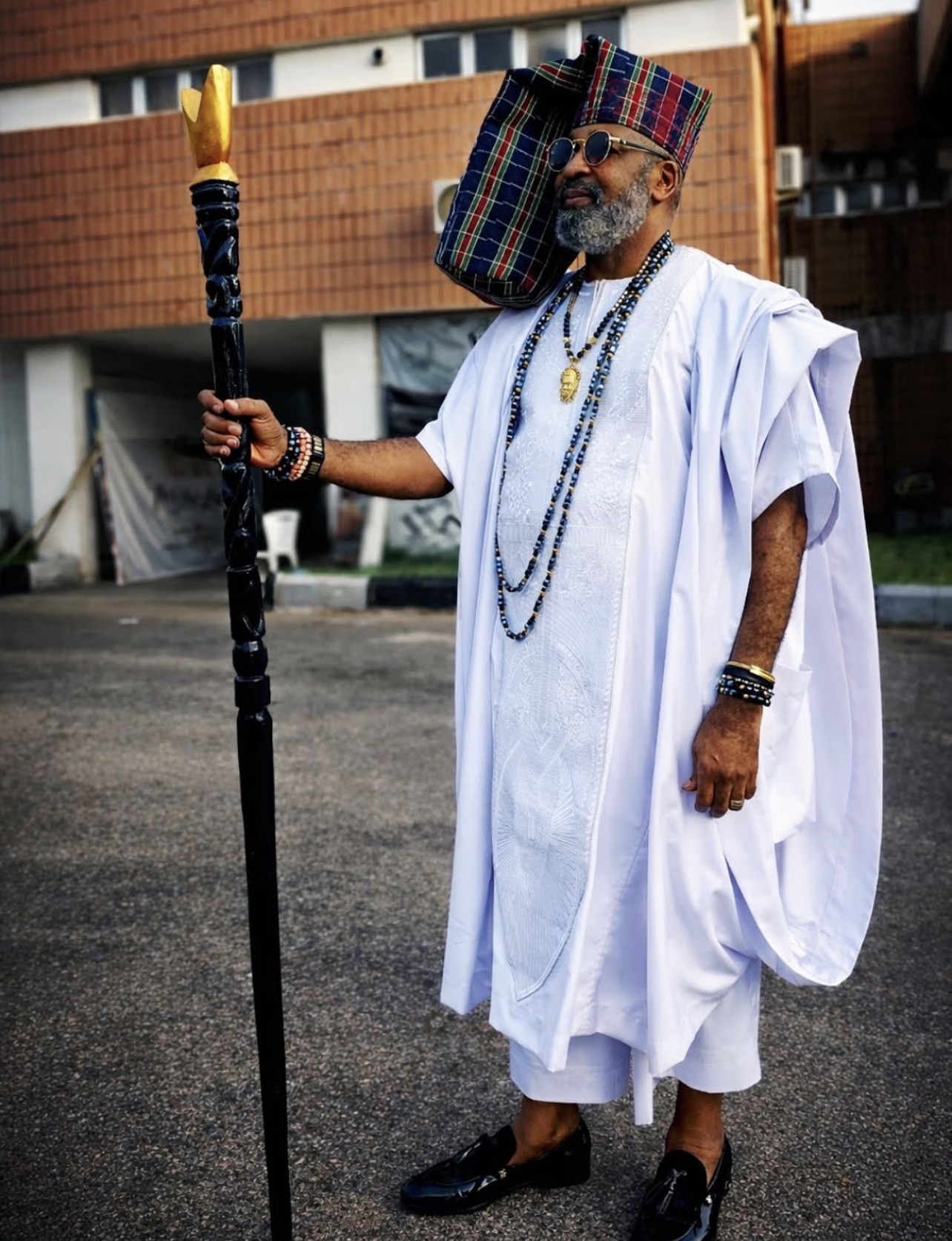
In July 2025, Yemi Solade made a statement that immediately attracted attention. Speaking about his career and the history of the Yoruba section of the Nigerian film industry, Solade said he was senior to Pete Edochie in acting, even though Edochie is older than him.
“I’m senior to Pete Edochie. I started acting before him, though he’s older than me,” Solade said.
He explained that he was only 17 in 1977 when he represented Nigeria as the youngest actor at FESTAC ’77 and said he had spent 48 years in the industry.
FESTAC ’77, officially the Second World Black and African Festival of Arts and Culture, was held in Lagos from January 15 to February 12, 1977. It brought together thousands of participants from Africa and the African diaspora for performances and exhibitions covering music, drama, dance, literature and other forms of culture.
For Solade, that period marked the beginning of his acting journey. But his comments were about more than his own career.
While explaining his seniority, Solade also challenged the popular story about where Nollywood began. He argued that Yoruba performers and filmmakers had been telling Nigerian stories through theatre and film long before the industry became known as Nollywood.
He mentioned pioneers including Hubert Ogunde, Moses Olaiya, popularly known as Baba Sala, Ade Afolayan aka Ade Love, Dr Ola Balogun and others.
Solade’s argument was that the Yoruba entertainment community had failed to properly document its early work, allowing later generations to receive more recognition for developments that had deeper roots.
He also pointed to the transition from theatre to home video, saying Yoruba performers had already been recording stage dramas on video cassettes and selling them before the home-video boom became a defining feature of Nigerian entertainment.
Yemi Solade’s claim brings an important question into the story: If Nigerian actors and filmmakers were already working decades earlier, when exactly did Nollywood begin?
Pete Edochie Brought 1962 Into The Conversation

More than a year after Solade’s comments, Pete Edochie offered his own account of when his acting career began.
In September 2026, while appearing on Isbae U’s Curiosity Made Me Ask, Edochie was asked about claims that other actors were senior to him. His answer took the conversation much further back.
Edochie said his first acting experience came in 1962, when he was 15 years old, in a stage production of William Shakespeare’s The Merchant of Venice.
“By the time I did Merchant of Venice in 1962, I was 15 years,” he said, explaining that there was no film industry as people understand it today and that acting was largely centred on the stage at the time.
That date immediately changed the calculation. Solade’s stated starting point is 1977. Edochie’s is 1962. On those dates alone, Edochie’s first acting experience came 15 years before Solade’s. But there is another important detail.
Edochie’s 1962 account did not first appear in 2026. In a 2007 interview, he had also spoken about beginning his acting journey as a teenager, including his experience performing on stage. In his words:
“The very first time I went on stage was in 1962 when I was 15-years-old as a student of Saint John College, Kaduna and we dramatised aspects of the Merchant of Venice by William Shakespeare. I have been doing that ever since before I got into broadcasting and then full time acting.”
Edochie was talking about his first experience acting on stage as a student. That is not the same thing as saying he began a professional acting career in 1962.
A school production can be an actor’s first encounter with performance without marking the beginning of that person’s professional career. And that difference matters in this particular argument because Solade’s claim was about seniority in acting as a career, not simply who had appeared in a play at the youngest age.
1962 School Play VS 1977 FESTAC ’77

This is where the two timelines should not be treated as though they represent identical milestones. Edochie’s 1962 account describes a teenage student taking part in a school production. Solade’s 1977 milestone was a very different kind of experience.
At 17, Solade auditioned at the National Theatre and was selected to perform in Langbodo, Nigeria’s entry at FESTAC ’77, the major international festival of African and Black arts and culture held in Lagos.
Solade has recalled that he played Efoiye in the production, which was written by Wale Ogunyemi and based on Wole Soyinka’s Forest of a Thousand Daemons.
In a later interview, Solade described the FESTAC experience as his first experience on a major stage and said he had never acted before then. He also described himself at the time as a young, inexperienced performer.
That means 1977 should not simply be labelled as the moment Solade became a fully established professional actor either. However, it was a formal national and international cultural production, and it became the starting point Solade himself has repeatedly used when tracing his journey into acting.
More importantly, his career did not stop at FESTAC. Solade went on to study Dramatic Arts, work in theatre and television, teach Dramatic Arts, and eventually establish himself as a professional actor across stage, television and film.
So, when Solade says he is “senior” to Edochie in acting, the argument cannot fairly be settled by placing a 15-year-old’s school performance in 1962 beside a 17-year-old’s formal FESTAC performance in 1977 and simply declaring the earlier calendar date the winner.
The two milestones represent different stages and contexts in an actor’s development.
The Career That Followed Edochie’s Early Stage Experience

Edochie’s story, however, does not end with the 1962 school play. He has said that after those early school performances, he continued along the path that eventually took him into broadcasting and acting.
In 1967, he joined the Eastern Nigeria Broadcasting Corporation, beginning a broadcasting career that would eventually make him a familiar voice and personality before his major acting breakthrough.
Edochie has also recalled that he and other performers had been on stage before his better-known screen roles. His major national breakthrough came with the television adaptation of Chinua Achebe’s Things Fall Apart, in which he played Okonkwo. The 1987 production became one of the defining performances of his career and established him as one of Nigeria’s most recognisable actors.
This is why it would also be misleading to describe Things Fall Apart as the beginning of Edochie’s entire acting career. It was a major screen breakthrough, not the first time he had ever acted.
That distinction is important because the debate is not really between “1962” and “1977” alone. It is about what point in an actor’s journey should be regarded as the beginning of a career.
Before Nollywood Had A Name
There is another layer to the argument: neither man’s acting history can be understood properly by using “Nollywood” as the starting point.
Nigerian filmmaking and theatrical performance existed decades before the term Nollywood came into popular use. The country’s indigenous performance traditions stretch back through theatre practitioners and travelling theatre companies, particularly the Yoruba travelling theatre tradition associated with pioneers such as Hubert Ogunde.
By the 1960s and 1970s, Nigerian filmmakers were already making feature films and experimenting with indigenous stories and languages.
Francis Oladele, Ola Balogun, Eddie Ugbomah and other filmmakers were part of an earlier generation of Nigerian cinema, while theatre practitioners were increasingly moving between stage, television and film.
This history matters because the phrase “before Nollywood” covers several different eras. There was stage theatre, television drama, celluloid filmmaking, the emerging home-video industry and eventually the modern Nigerian video-film industry that became widely known as Nollywood.
1988 and 1989: The Home-Video Era Was Taking Shape
The emergence of Nollywood in the 1990s also did not happen out of nowhere. By the late 1980s, Nigerian filmmakers were experimenting with video as an alternative to the increasingly difficult and expensive celluloid system.
Ade Ajiboye, popularly known as Big Abass, is credited in several accounts with making Soso Meji in 1988, while Alade Aromire’s Ekun followed in 1989.
These productions are significant because they demonstrate that Nigerian video filmmaking was already developing before the widely acclaimed Living in Bondage. The importance of Living in Bondage therefore lies elsewhere.
1992: Why Living in Bondage Changed Everything
When Living in Bondage emerged in 1992, it became a landmark in the Nigerian video-film industry. The film’s commercial success demonstrated the enormous potential of direct-to-video productions and helped establish the model that would drive the rapid expansion of the industry.
That is why Living in Bondage is so often described as the film that started Nollywood. But “started Nollywood” should not be confused with “was the first Nigerian film.” Nigerian cinema was already decades old.
The film’s importance was that it helped define and accelerate the modern video-film era that would eventually be identified as Nollywood.
2002: When Nollywood Got Its Name
There is another reason the history can become confusing: the word “Nollywood” itself came much later.
The term became widely associated with Nigeria’s film industry around 2002, after international media began using it to describe the country’s booming video-film production.
Reports say the term “Nollywood” (a portmanteau of Nigeria and Hollywood) was coined in 2002 by The New York Times journalist Norimitsu Onishi while reporting on filmmaking in Lagos.
So when people talk about actors who worked “before Nollywood,” they may actually be talking about several different periods.
An actor could have started in theatre before Nigerian television became widespread, moved into television, appeared in celluloid productions, worked in the home-video era and later become associated with Nollywood.
That is precisely why reducing the history to one starting year can produce misleading conclusions.
A Third Voice: Bob-Manuel Udokwu

The disagreement over where to draw the line also surfaced in 2025 when actor Bob-Manuel Udokwu made comments about his own place in the history of Nollywood.
Udokwu argued that he started acting in Nollywood before Pete Edochie and pointed to the distinction between Edochie’s Things Fall Apart era and the modern Nollywood industry associated with films such as Living in Bondage.
Following backlash, he later clarified that he was not claiming to have started acting before Edochie in every sense. His point was about modern Nollywood, rather than Edochie’s entire acting history.
That clarification reinforces the central problem with the Solade-Edochie debate: different people can use “started acting” to mean different things.
So, Who Was Acting First?
If the question is who has the earliest documented acting experience mentioned in this particular debate, Edochie’s account goes back to 1962, when he says he acted in a school production at age 15.
But that does not mean Edochie began his professional acting career in 1962. That was a school performance.
Solade’s 1977 milestone was different. He was 17 when he was selected for Langbodo, Nigeria’s FESTAC ’77 production, and that experience became the foundation of the acting journey he has consistently traced back to 1977.
He subsequently trained in Dramatic Arts and built a professional career in theatre, television and film.
Therefore, if the argument is about professional acting seniority, Solade’s claim cannot be overturned simply by producing Edochie’s 1962 school-play date.
The fairest conclusion is that Edochie acted on stage earlier as a student, but that is not evidence that he began his professional acting career earlier than Solade.
Conclusion
The question of who was “acting first” sounds straightforward until the timelines are placed side by side.
If the debate is about who first acted, Edochie’s 1962 account comes earlier. If it is about professional acting seniority, then it’s in Solade’s favour.
And if the question is about Nollywood, both timelines require yet another distinction, because the Nigerian film tradition predates the name and the modern video-film boom associated with Living in Bondage.
Perhaps that is the most revealing part of the debate. The history of Nigerian acting did not begin on the day Nollywood was named. And it cannot be reduced to a single film, a single year or a single actor.
It was built gradually from stage to television, from celluloid to home video, and eventually into the industry now known around the world as Nollywood.