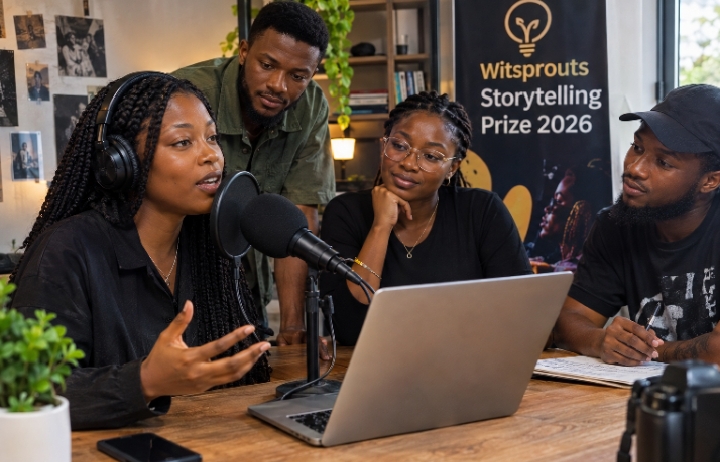
There are creative opportunities that immediately reveal everything they have to offer, then there are those that become more interesting the closer you look at the details. The Witsprouts Storytelling Prize 2026 falls into the second category, particularly for young creatives whose strongest work may not fit neatly into the traditional idea of storytelling. A microphone, a podcast episode, a spoken word performance, an animated production or a carefully produced audio drama could all become part of a much bigger opportunity for a storyteller looking for recognition and financial support.
The 2026 edition has opened with a cash prize attached to the competition, giving African storytellers another opportunity to place their creative work before an organisation specifically interested in the changing ways stories are created and shared. The nomination window opened on August 10, 2026, and will remain open until September 30, 2026, leaving creators, colleagues, friends, fans and other people within their circles with time to put forward a storyteller they believe deserves attention.
What makes this year’s edition particularly worth following is not simply the money attached to the prize. The competition has returned for its second edition with a broader structure that reaches beyond the format used when the prize was launched in 2025. The rules have opened the door to several forms of oral and multimedia storytelling, creating room for creators whose work happens through sound, performance, video, animation and other contemporary formats.
For anyone who has built a creative identity around telling stories rather than simply producing content, the distinction could be important. The Witsprouts Storytelling Prize is not presenting itself as another general content creation competition. Its focus is storytelling, voice, performance, narrative and the ability to make stories connect with people. That places podcasters, spoken word artists, voice creators and other narrative driven creatives firmly within the conversation.
Witsprouts Storytelling Prize 2026 opens
The Witsprouts Storytelling Prize is an annual creative award established by The Witsprouts Project to recognise storytellers who are exploring different ways of telling stories, with particular attention to oral and multimedia forms. The organisation describes the prize as part of its wider effort to revive oral storytelling while giving contemporary storytellers a platform where their creative work can receive recognition and financial reward.
The 2026 competition is the second edition of the prize, following the inaugural competition held in 2025. While the first edition provided the foundation for the award, the new edition has expanded the scope considerably, making it more relevant to creatives who work outside the traditional performance format associated with oral storytelling.
The prize money for the 2026 winner is ₦500,000. This is the same amount that was awarded to the winner of the inaugural 2025 edition, meaning the financial value of the main prize has remained unchanged while the competition itself has become broader in scope.
Witsprouts opened nominations on August 10, 2026, and the closing date is September 30, 2026. Anyone intending to nominate a storyteller therefore has a clear deadline to work towards, while the organisation has not yet announced the exact dates for the shortlist, winner announcement or awards ceremony.
Those dates are currently listed as to be confirmed, so applicants should rely on official updates rather than assuming that a particular announcement date circulating online is final.
The ₦500,000 prize
The financial attraction is straightforward. The winner of the Witsprouts Storytelling Prize 2026 will receive ₦500,000 in cash.
That amount is significant for an emerging creative, particularly one who may be building a podcast, spoken word platform, audio production, animation project or independent storytelling brand without the financial backing available to more established creators. The prize can provide direct support while also placing the winner’s work within the wider creative community surrounding Witsprouts.
The published 2026 information currently identifies ₦500,000 as the prize purse. No separate cash amounts have been officially listed for the second or third position, and there is no published information confirming additional monetary awards for shortlisted creators.
That distinction matters because opportunity announcements sometimes become exaggerated as they circulate across social media. Potential nominees should therefore work with the details that have actually been published and avoid assuming that there are additional cash prizes simply because several creators may eventually appear on a shortlist.
The financial reward is only one part of the attraction. Recognition from a storytelling organisation can also matter to an emerging creative whose work is still building an audience, particularly where the creator has struggled to find competitions that understand the value of oral and multimedia storytelling.
The September 30 deadline
The nomination window opened on August 10, 2026, giving interested people several weeks to identify a suitable storyteller and complete the nomination process.
The deadline is September 30, 2026. That date should be treated as the key date for anyone planning to participate because nominations submitted after the official closing period may not be considered.
The process also makes the opportunity different from competitions where a creator must wait until the final days before preparing a complete production from scratch. Since the 2026 prize operates through nominations, a person who already knows a strong storyteller can begin the process by putting that creator forward.
The nominee could be the person making the nomination. It could also be a friend, colleague, fan or another person who believes the storyteller’s work deserves recognition.
The shortlist date has not been announced, and neither has the final winner announcement date. The awards ceremony date is also yet to be confirmed. Witsprouts is therefore expected to provide further information as the competition progresses.
The eligibility sequence
The 2026 eligibility structure is broad enough to attract storytellers from different creative backgrounds. Witsprouts describes the prize as being open to young storytellers and voice artists who use multimedia to tell engaging and impactful stories.
The competition is also open to people working in oral or multimedia storytelling who are based in Africa or within the African diaspora. This means the opportunity is not restricted to Nigerians living in Nigeria.
A Nigerian storyteller living abroad can potentially fall within the eligibility scope, just as a storyteller based in another African country can potentially qualify. The wider African diaspora is also included within the published eligibility description.
That expansion is one of the clearest differences between the 2025 and 2026 editions. The inaugural competition was specifically focused on Nigerian storytellers, while the second edition has widened its reach to storytellers connected to Africa and the African diaspora.
The phrase young storytellers is used by Witsprouts, but the published 2026 information does not currently provide a specific numerical age bracket. Creators should therefore avoid assuming that an age limit such as 18 to 35 applies unless the organisers officially publish such a requirement.
The nomination processes
The entry process does not require the storyteller to wait for an invitation from Witsprouts. Anyone can nominate a storyteller, including the storyteller themselves.
That means self nomination is permitted, which is particularly useful for independent creatives who may not have a large team, agency or professional network constantly putting their names forward for competitions.
A friend can also nominate a storyteller whose work they admire. A colleague can nominate someone whose creative work stands out. A fan can nominate a storyteller whose performances or productions have made an impression. Someone who simply believes a creator deserves recognition can also take part in the nomination process.
The first step is identifying the storyteller and considering whether their work fits the focus of the prize. The next step is completing the nomination through the route provided by Witsprouts. The nomination must then be submitted before September 30, 2026.
After nominations close, the Witsprouts Project team will review the entries and narrow them down to a shortlist. Shortlisted storytellers will be contacted directly according to the published process.
The storytelling formats
The range of formats is one of the biggest reasons the 2026 edition deserves attention from modern creatives.
Podcasts are specifically included, meaning creators whose strongest storytelling happens through audio episodes can potentially enter the conversation. This is particularly relevant to podcasters who build episodes around narratives, personal stories, cultural history, fictional productions, social experiences or other forms of structured storytelling.
Spoken word is also included. Spoken word performers who use voice, rhythm, emotion and narrative to communicate stories now have a competition whose published scope recognises their format.
Animation is another area mentioned by Witsprouts. This creates room for creators who tell stories through animated characters, visual narratives and digitally produced performances.
Audio drama is also included, giving narrative audio producers another possible route into the prize. This can cover creators who use voice acting, sound design and scripted storytelling to build fictional or dramatic experiences for listeners.
Video storytelling remains relevant as well. However, the 2026 competition does not carry forward the specific 5 to 10 minute theatrical video requirement that was part of the inaugural edition.
The published wording also leaves room for other oral and multimedia storytelling forms. That means creators should look at the actual nature of their storytelling work rather than disqualifying themselves simply because their format does not match one of the examples listed by Witsprouts.
The 2026 format
The absence of a fixed theme is another major feature of the second edition.
Witsprouts has not announced a compulsory storytelling theme for 2026. Creators therefore do not have to force their existing storytelling work into a particular subject simply because of a competition requirement.
That gives the 2026 prize a noticeably different character from the inaugural edition, which was built around the theme “Rebooting Legends and Memories.”
The 2025 competition asked Nigerian creatives to reinterpret traditional African oral storytelling for contemporary digital platforms. Participants were required to create an original theatrical video lasting between 5 and 10 minutes.
That requirement does not define the 2026 competition.
The new edition is much more focused on recognising storytellers across different oral and multimedia formats. This means the competition can accommodate a broader creative ecosystem, including people who may never have considered themselves suitable for a traditional storytelling competition.
The 2025 foundation
Understanding the first edition helps explain why the 2026 competition has attracted attention.
The inaugural Witsprouts Storytelling Prize was built around “Rebooting Legends and Memories,” with Nigerian creatives invited to reinterpret African oral storytelling through digital platforms. The competition required an original theatrical video between 5 and 10 minutes.
The first edition eventually produced 3 finalists, Rachel Ajisafe, Debbie Ajom and Keesh Rowland.
Rachel Ajisafe emerged as the inaugural winner and received the ₦500,000 prize. Her winning performance, “Haunting Song of Promises,” drew from the cultural heritage associated with Sango and was recognised for its storytelling, poetic quality and performance.
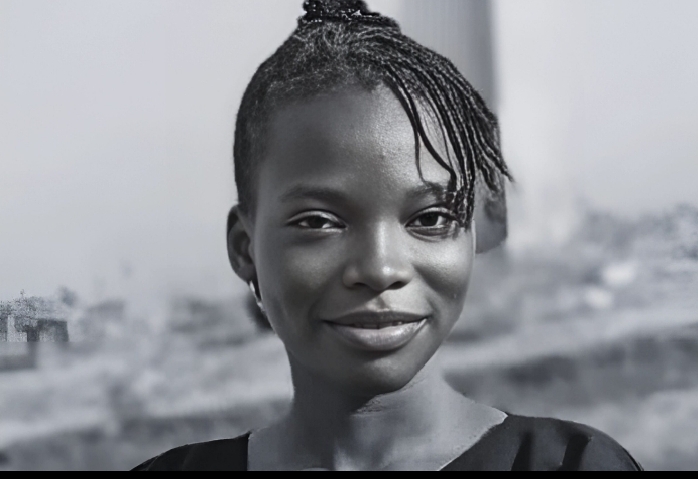
The result gave the prize an identifiable first winner and established the ₦500,000 award as the financial benchmark attached to the competition.
The 2026 edition therefore arrives with a history behind it rather than appearing as an entirely new competition with no previous winner or track record.
The 2025 judging sequence
The inaugural competition was judged by Jude Idada and Akanbi Taofeek.
Jude Idada is a writer and filmmaker who won the Nigeria Prize for Literature, while Akanbi Taofeek is a playwright and stage director. Their involvement reflected the literary, theatrical and performance dimensions of the first edition.
The 2026 judging structure is different in an important way. Witsprouts says its internal team will first review the nominations before narrowing them down to a shortlist.
A guest judge will then be announced to make the final decision.
The identity of the 2026 guest judge has not yet been announced in the published information. Creators should therefore be careful with claims that a particular person has already been confirmed as the final judge unless such information comes directly from Witsprouts.
The opportunity for podcasters
Podcasters may have one of the clearest reasons to look closely at this year’s prize.
Podcasting has become one of the most accessible ways for creators to tell stories without needing the traditional infrastructure associated with television or film. A creator can use voice, interviews, sound, narration and production techniques to take listeners through a story from beginning to end.
The Witsprouts prize is particularly relevant where the podcast itself is built around storytelling rather than simply conversation.
A creator who produces narrative episodes, cultural stories, fictional audio productions, personal narratives or other carefully structured audio experiences may find the competition much closer to their creative lane than a general content creation award.
The important consideration is the storytelling quality. Simply having a podcast does not automatically make someone a suitable nominee. The work needs to demonstrate storytelling through the medium.
The opportunity for spoken word artists
Spoken word artists also have a clear reason to pay attention.
The strength of spoken word lies heavily in delivery, language, emotion, rhythm and the ability to make an audience experience a story through performance. Those qualities naturally connect with the oral storytelling tradition that sits at the heart of the Witsprouts Project.
A spoken word artist does not necessarily need a conventional stage production to demonstrate storytelling ability. A strong recorded performance can carry a story through voice, words and emotion while using contemporary digital platforms to reach an audience.
The 2026 prize’s broader format gives these creators a chance to view their work through a different lens. Rather than thinking only about whether they qualify as content creators, they can consider whether their work demonstrates the kind of engaging oral storytelling Witsprouts is seeking.
The opportunity for voice creators
Voice artists should also take a closer look at the opportunity.
Voice work can sometimes sit behind the final production and receive less public attention than the visual elements surrounding it. Yet a strong voice can carry an entire narrative, particularly in audio drama, animation, narration and other multimedia productions.
Witsprouts’ inclusion of voice artists within its eligibility language gives creators in this space a reason to consider nomination.
The strongest candidates are likely to be those whose voice work contributes meaningfully to storytelling rather than simply providing generic narration. A voice that creates character, emotion, atmosphere and narrative movement can become a central storytelling tool.
That is especially relevant as more African creators experiment with podcasts, animation, audio drama and other digital forms where voice is central to the experience.
The opportunity for emerging creatives
The prize is not presented as an award reserved exclusively for established celebrities.
The published eligibility language refers broadly to young storytellers, voice artists, aspiring storytellers, performers and creatives working in oral or multimedia storytelling. There is no published requirement stating that a nominee must already have a major audience, commercial contract or professional entertainment profile.
That gives emerging creatives a reason to take the opportunity seriously.
A creator with a small audience but a strong body of storytelling work should not automatically assume that the competition is only for famous names. The central question is whether the creator’s work fits the storytelling focus of the prize and demonstrates the qualities Witsprouts is looking to recognise.
Recognition can sometimes come from places outside the creator’s immediate audience. A prize like this can provide an additional platform for work that may otherwise remain known only within a small creative circle.
The African diaspora expansion
The move beyond Nigeria is significant because it changes the geographical identity of the prize.
The inaugural competition was focused on Nigerian storytellers at home or in the diaspora. The 2026 edition now speaks to storytellers across Africa and the African diaspora.
That creates a larger pool of potential participants while also making the prize more representative of the different ways African stories are being told across borders.
A storyteller can live outside Nigeria and still maintain a strong connection to African storytelling through language, culture, family history, personal experience or creative subject matter. The 2026 eligibility structure recognises that African storytelling is not limited to people physically living on the continent.
For Nigerian creatives living abroad, the expansion means their location does not automatically remove them from consideration.
The selection sequence
The selection process begins after nominations are submitted.
Witsprouts says its team will review the nominations internally before narrowing the field down to a shortlist. That means nomination alone does not guarantee that a creator will become a finalist.
The shortlisted storytellers will then be contacted directly.
After that stage, a guest judge will make the final decision. The guest judge for the 2026 edition has not yet been announced.
Witsprouts has not published a detailed scoring system that assigns fixed percentages to originality, delivery, cultural relevance or other individual categories. Such figures should therefore not be presented as official judging criteria.
The safest approach for nominees is to focus on the overall strength of their storytelling work rather than trying to optimise around an unofficial scoring formula.
The details still pending
Several parts of the 2026 competition remain open.
The exact shortlist size has not been announced. The organisation has also not announced the date on which the shortlist will be revealed.
The winner announcement date remains to be confirmed, and the date for the awards ceremony has not yet been published.
The identity of the guest judge is also still pending.
There is currently no official information confirming separate cash awards for runners up.
These gaps do not mean the competition is incomplete. They simply mean that some details are expected to be released later as the process moves forward.
Creators should therefore keep an eye on official Witsprouts communication rather than relying on dates or judging information that has not been confirmed by the organisation.
The entry fee question
The published 2026 information does not state an entry fee.
The nomination process describes how people can nominate storytellers but does not identify a payment requirement.
For that reason, the opportunity can reasonably be presented as having no fee stated in the published official information.
That wording is more accurate than claiming that Witsprouts has formally announced a blanket free entry policy if such wording does not appear in the published announcement.
Anyone completing the nomination should still follow the official process carefully and avoid paying anyone who claims to be collecting an unofficial Witsprouts nomination fee.
The Nigeria connection
Although the 2026 edition has expanded beyond Nigeria, the opportunity remains particularly relevant to Nigerian creatives.
The Witsprouts Project operates from Lagos and Abuja and has positioned itself around African arts, culture, creativity and storytelling. The first edition was also specifically focused on Nigerian storytellers.
For Nigerian podcasters, spoken word performers, voice artists, animators, audio drama creators and video storytellers, the second edition therefore represents an expansion of an opportunity that already had a Nigerian foundation.
The wider African scope also means Nigerian creators will be competing within a broader creative field, but it equally means the prize is becoming more connected to the wider African storytelling ecosystem.
The practical opportunity for creators
The most useful way to approach the Witsprouts Storytelling Prize is to look honestly at the work already being produced.
A podcaster should examine whether the strongest episodes demonstrate genuine narrative storytelling.
A spoken word artist should consider whether their performances carry a compelling story rather than simply presenting isolated poetry.
An animator should look at whether the animation communicates a meaningful narrative.
An audio drama creator should consider the strength of the characters, voices, narrative structure and overall listening experience.
A video creator should consider whether the work is fundamentally built around storytelling rather than simply being a general social media production.
That distinction can help creators understand whether the opportunity fits their work before they nominate themselves or someone else.
The second edition arrives with a wider door
The Witsprouts Storytelling Prize 2026 has kept the ₦500,000 main prize from the inaugural competition while opening the competition to a considerably wider range of storytelling forms.
The deadline is September 30, 2026, following the opening of nominations on August 10, 2026. The prize is open to eligible young storytellers and voice artists across Africa and the African diaspora, and self nomination is allowed alongside nominations from friends, colleagues, fans and other people who believe a storyteller deserves recognition.
Podcasts, spoken word, animation, audio drama, video and other oral or multimedia formats can potentially fall within the scope of the competition. There is no fixed 2026 theme, and the specific 5 to 10 minute theatrical video requirement from the 2025 competition does not carry over into this year’s edition.
That change may be the most important detail for creators deciding whether to pay attention.
The competition is no longer built around one specific production format. It is looking across a wider creative landscape where stories can emerge from a microphone, a performance, a voice recording, an animated production, an audio drama or a video.
For a young storyteller who has spent months building a body of work without knowing where it fits, September 30 provides a clear date to take a closer look.
The opportunity is open, the prize is ₦500,000, nominations have already begun and the second edition is reaching beyond the boundaries of the competition that came before it.
The official nomination route is available through the Witsprouts Storytelling Prize 2026 page, while questions about the competition can be directed to prize@witsprouts.org.
For creators who believe their strongest skill is not simply making content but making people listen, feel, remember and connect with a story, this is an opportunity worth examining before the September 30 deadline arrives.