The final journey of Nollywood actress Temitope Osoba to her resting place in Iperu Remo on September 10, 2026, brought an emotional end to a death that had already raised more questions than answers. Her burial eventually went ahead peacefully, with family members, friends, colleagues and sympathisers gathering in white to honour the actress, but the circumstances that preceded the funeral continued to hang over the ceremony. For many people who followed the story from the beginning, the burial was only the closing chapter of a much longer episode involving her final days, a disputed account of how she died, a postponed funeral, an autopsy, allegations surrounding her relationship and an investigation within the church connected to her fiancé.
Osoba was 40 when she died on August 4, 2026, yet the circumstances surrounding her final hours have remained the subject of conflicting accounts. Her family presented one version of events, while her fiancé, Prophet Itunu Onadeko, disputed important parts of that account and gave a different description of what he had been told about her death. Between those accounts came questions about her previous battle with breast cancer, her state of mind before her death, her movement through Ikorodu, the intervention of the police, the prayers at a Celestial church and the journey towards Sagamu. The eventual autopsy became another important part of the story, although its detailed findings had not been publicly released by the time she was buried.
The final burial in Iperu Remo
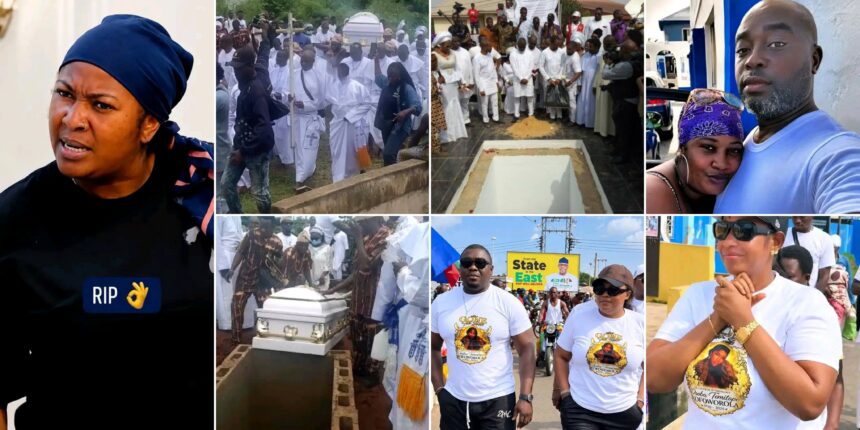
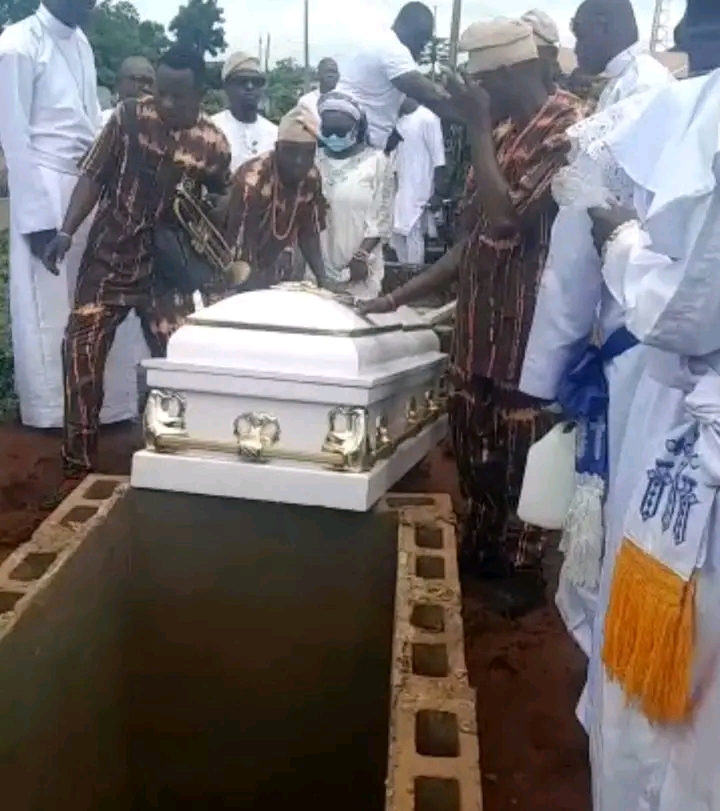
Thursday, September 10, 2026, became the day Tope Osoba was finally laid to rest, 37 days after her death. Her remains were moved from the Olabisi Onabanjo University Teaching Hospital mortuary in Sagamu at about 9am and taken to Akesan Club, opposite Iperu Morning Market, where the burial service was held between 10am and 11am. From the venue, her remains were taken to Iperu Remo Cemetery for interment, bringing an end to the funeral arrangements that had been delayed for several weeks.
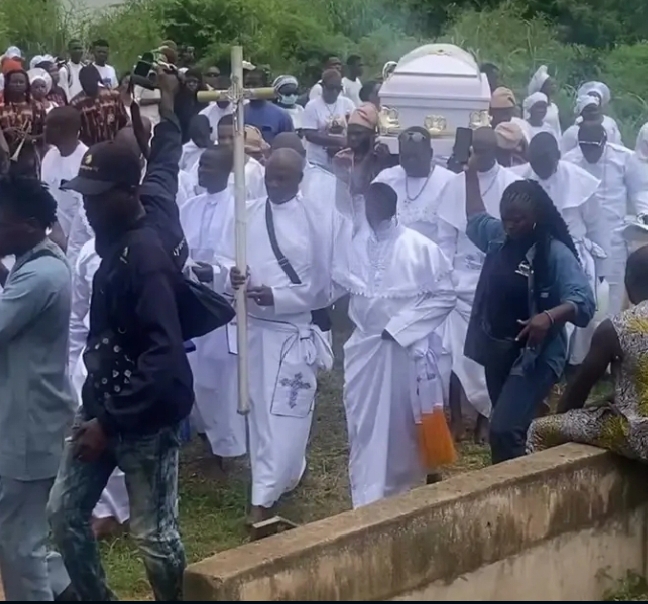
The family had asked mourners to appear in white, giving the ceremony the familiar appearance of a final farewell rather than a gathering centred solely on the controversy that had followed her death. Several Nollywood personalities were reported to have attended, including Kunle Afod, Foluke Daramola Salako, Alesh Sanni, Jigan Babaoja and Toyosi Adesanya. Daramola Salako described Osoba as “momma” while remembering her as talented, cheerful, simple and free spirited, offering a reminder that beyond the controversy surrounding her final days was an actress who had built relationships within the Yoruba movie industry over many years.
The burial therefore settled one part of the story. Tope Osoba had finally been laid to rest, her family had completed the funeral rites and her remains were no longer at the mortuary. The questions surrounding her final hours, however, remained separate from the burial itself. The most important unanswered issue was still the precise medical cause of her death and how the different accounts surrounding August 4 could be reconciled with the findings of the investigations.
The first burial date
The September 10 funeral was not the date originally announced by the family. The first burial arrangement was scheduled for August 13, 2026, only 9 days after Osoba’s death. The planned service was to take place at St James Anglican Church in Iperu Remo between 10am and 11am, followed by interment at Iperu Remo Cemetery. Mourners were again asked to appear in white, showing that the family had initially expected the burial to take place much earlier.
The preparations had already entered the public space before the postponement. On August 11, a candlelight procession and artistes’ night were held in Lagos in honour of the actress. Those activities came shortly after her death was publicly announced on August 5 and at a time when public attention was already growing around the circumstances surrounding her final hours. The expected August 13 burial therefore appeared to be the natural conclusion of the funeral programme.
That plan changed shortly before the scheduled burial. The family postponed the August 13 ceremony, explaining that additional arrangements and unresolved matters still needed to be addressed. The postponement immediately became significant because it happened at a time when several versions of Osoba’s final hours were already circulating. A new date was eventually announced for September 10, with Akesan Club replacing the Anglican church as the venue for the burial service.
The events before August 4
The story surrounding Osoba’s death did not begin on the day she died. Her health history became part of the discussion because she had previously battled breast cancer. Reports about her medical journey indicated that she underwent breast cancer surgery in November 2024 and later publicly announced that she had overcome the disease and was recovering. She subsequently returned to acting, making her death in August 2026 particularly difficult for people who had followed her earlier health battle.
Her previous cancer diagnosis became relevant after different accounts emerged about the cause of her death. Questions began circulating about whether cancer had returned or whether another medical issue was involved. Her fiancé, Prophet Itunu Onadeko, rejected the claim that cancer was responsible for her death. The family also provided an account that focused heavily on events during the days immediately before August 4 rather than presenting cancer as an established cause of death.
By July 31, according to the family’s account, Osoba had reached a point where she contacted her paternal aunt, Revd Mother Kehinde Osoba Eritosin, seeking intervention over worsening personal and relationship difficulties. The family said she had been dealing with emotional distress, worries and health challenges. The contact with her aunt was therefore presented as an attempt to find help at a difficult period rather than simply an ordinary family conversation.
The August 2 contact
The family said Osoba contacted her aunt again on August 2 while receiving treatment and medical drips. According to the account, she wanted her aunt to speak with her fiancé. Her aunt subsequently contacted Onadeko and requested an urgent meeting concerning the situation. The family said that meeting did not take place before Osoba died on August 4.
Those events are important because they form part of the family’s explanation for the concern that had developed around Osoba before her final day. The family did not present August 4 as an isolated incident without warning. Instead, its account described a woman who had been experiencing personal difficulties, seeking intervention from a relative and receiving treatment shortly before her death.
The details also became important because the fiancé later disputed several allegations connected to the family’s version. That meant the public discussion quickly moved beyond the question of whether Osoba had been unwell and into a much more complicated dispute over what happened during her final hours. The different accounts could not simply be treated as one continuous story because important details differed.
The events at Ikorodu
August 4 became the central date in the entire controversy. According to the family’s account, a female friend and hairdresser contacted Revd Mother Osoba after becoming concerned about Tope’s condition. The family said Tope had been unable to sleep, was behaving strangely and had made disturbing statements about death. Her aunt was reportedly attending a programme in Abule Egba when she was later contacted by the Divisional Police Officer at Igbogbo Police Station in Ikorodu.
The family said the police had Tope in custody following an incident in traffic around Ita Elewa, Ikorodu. According to the account, she had behaved strangely, got out of a vehicle and began screaming, leading those around her to seek police intervention. Her aunt reportedly told the police that she would take responsibility for her care and requested that she be released to her associates.
Tope was subsequently released to her friend and 2 maternal relatives who had arrived from Sagamu. That movement from police custody into the care of people close to her became one of the important points in the family’s reconstruction of the final day. It also established Ikorodu as a major location in the story because the events there preceded the journey that eventually took her towards Sagamu.
The church visit in Ikorodu
Following her release, the family said Tope was taken to a Celestial Church of Christ location in Ikorodu. Prayers were offered there, and she was reportedly given water and drinks. Her maternal relatives later decided to take her to their residence in Sagamu, beginning the journey that the family says became critical to understanding what happened before her death.
The account presented her condition as deteriorating during the journey. According to the family, she developed strange physical reactions and became increasingly uncomfortable inside the vehicle. Those accompanying her eventually decided that she needed urgent medical attention, leading them to take her to a private hospital in Sagamu.
The private hospital reportedly considered her condition critical and referred her to Ogun State University Teaching Hospital in Sagamu. The family said she died inside the vehicle before doctors at the teaching hospital could attend to her. This version of events places the final moments of her life on the road towards Sagamu rather than inside a hospital or police facility.
That detail became one of the major points of disagreement after her death. The family’s account was not the only version presented publicly, and the alternative account from her fiancé introduced a very different understanding of where and how she died.
The fiancé’s account
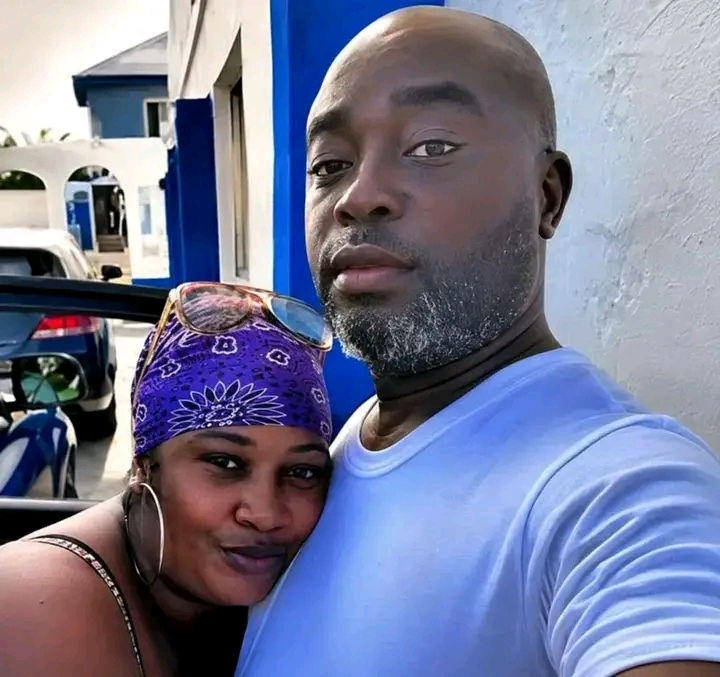
Prophet Itunu Onadeko disputed important aspects of the allegations and the description of Osoba’s final moments. His version became one of the reasons the story developed into a public dispute rather than remaining a straightforward report of an actress’s death.
Onadeko was reported to have said that he had been informed that Osoba died at a police station. That claim differed significantly from the family’s account that she deteriorated during the journey towards Sagamu and died inside a vehicle before treatment could be provided at the hospital. The difference was not a minor detail because the location of death forms part of the basic reconstruction of a person’s final hours.
He also rejected the suggestion that cancer caused her death. His position was that, based on what he understood, Osoba did not die from cancer. That statement became particularly significant because her previous breast cancer battle had already become part of public discussion following her death.
The competing accounts therefore created a situation where the public was presented with 2 very different narratives. The family described a sequence involving emotional distress, police intervention in Ikorodu, prayers at a church, a journey to Sagamu and a medical emergency. Onadeko disputed key elements and gave a different account of what he had been told. Neither version could automatically be treated as the final established account without the findings of the relevant investigations.
The aunt’s account of her final hours
Revd Mother Osoba’s family later provided more details through an account from her maternal aunt, Pejuola Ogunesan. The aunt said Tope had repeatedly expressed fears that she would die that day and allegedly told her that her fiancé had said her obituary would be published. She also spoke about claims concerning strange dreams, difficulty sleeping and disturbing experiences that Tope allegedly described before her death.
The aunt further alleged that Tope discussed problems within her relationship with Onadeko and made several allegations concerning him. Those claims became part of the wider controversy surrounding the relationship, but they remained allegations from the family’s side rather than findings established against Onadeko.
That distinction matters because the circumstances surrounding a person’s final hours can quickly become confused when family statements, personal accounts and investigative questions are reported together. Allegations can explain why a family requested intervention or investigation, but they do not by themselves establish criminal responsibility or a medical cause of death.
The family’s detailed account was therefore important because it showed why those close to Osoba were concerned before August 4. At the same time, the existence of another account meant that the full story required more than simply repeating either side. The autopsy and any formal investigation were expected to provide independent evidence capable of clarifying the medical questions surrounding her death.
The Celestial Church investigation
The controversy eventually reached the Celestial Church of Christ because Onadeko was a shepherd within the church. The church announced an internal investigation into the circumstances surrounding Osoba’s death and the allegations involving him. That decision added another layer to the case because the issue was no longer being discussed solely between the actress’s family and her fiancé.
The church’s involvement did not mean that the allegations had been proven. An internal church investigation has a different purpose from a police investigation, a medical examination or a court proceeding. Its significance was that the institution considered the controversy serious enough to examine the circumstances involving one of its shepherds and the effect the matter was having on the church.
That investigation also formed part of the broader timeline between August 4 and September 10. While funeral arrangements were being reconsidered, the medical questions were still unresolved and the church was examining the allegations surrounding the circumstances of Osoba’s death.
The presence of an internal church investigation therefore should not be interpreted as a final verdict on Onadeko or anyone else. It showed that questions had been raised and that the church had chosen to examine them, while the final determination of any medical or criminal issue remained outside the church’s authority.
The autopsy becomes central
The demand for an autopsy became one of the most important developments after Osoba’s death. Actor Yomi Fabiyi, through his Break The Silence Foundation, called for an autopsy and police investigation into the circumstances surrounding her death. That call gained significance because of the conflicting accounts already circulating.
By the time Osoba was buried on September 10, the autopsy had reportedly been completed. That meant a formal medical examination had taken place, but completion of an autopsy did not automatically mean that its findings had been released to the public.
This distinction is crucial when discussing the case. An autopsy can produce medical evidence about injuries, disease processes, toxic substances and other possible causes of death, depending on the examination conducted. The public cannot responsibly convert the existence of an autopsy into a confirmed cause of death when the detailed findings have not been released.
As of the September 10 burial, the detailed autopsy findings and official cause of death had not been publicly disclosed. The responsible position therefore remains that the autopsy had been completed while the public explanation of its findings remained unavailable.
The cancer question
Osoba’s breast cancer history became one of the most discussed parts of the story because she had publicly spoken about surviving the disease. Her first breast cancer surgery was reported to have taken place in November 2024, after which she later announced that she had overcome the condition and was recovering.
Her return to acting meant that many people saw her health journey as part of her personal story rather than the explanation for her death. After August 4, however, questions about cancer returned because people wanted to understand whether her previous diagnosis had any connection with what happened.
Onadeko rejected the idea that cancer caused her death, while the publicly available information surrounding the autopsy did not establish cancer as the official cause by the time of the burial. This means that it would be inaccurate to present cancer as the confirmed reason for her death without an official medical finding.
The same caution applies to every other theory surrounding the death. Emotional distress, poisoning, abuse, medical complications or any other explanation should not be presented as established fact unless supported by the findings of the appropriate investigation. The strongest information available remains the documented timeline, the competing accounts and the fact that an autopsy was completed.
The postponed burial
The decision to postpone the August 13 burial added another layer of uncertainty to the case. The family had already announced the original date and completed public activities leading towards the funeral, including the August 11 candlelight procession and artistes’ night in Lagos.
The postponement came less than a day before the planned burial. The family explained that additional arrangements and unresolved matters still needed to be addressed. Although the explanation did not publicly settle every question surrounding the decision, the timing attracted attention because the circumstances surrounding Osoba’s death were already under scrutiny.
The eventual September 10 arrangement changed the venue from St James Anglican Church to Akesan Club. The burial still took place at Iperu Remo Cemetery, meaning the final resting place remained connected to the original funeral plan even though the service arrangements changed.
The delay also gave more time for the issues surrounding the death to develop. The family’s account became public, the fiancé’s position received attention, the church announced its investigation and the autopsy became part of the developing story. By the time the funeral finally took place, the burial had become more than a simple farewell ceremony.
Who Tope Osoba was before August 4
Before her final days became the focus of public attention, Tope Osoba had already established herself within Yoruba language Nollywood. Her acting career stretched across almost 2 decades, beginning around 2005 after she studied Business Education at Olabisi Onabanjo University.
Her first known acting role was in Ijoya, produced by Laide Bakare. She later gained wider recognition following her appearance in Dayo Amusa’s Ogun Mi in 2009. Her acting credits also included Ifedolapo, Accident and Gucci Girls, among other productions.
Osoba’s connection to entertainment was not limited to acting. She had a background in dance and appeared in music videos for artistes including Pasuma, Olu Maintain and Adewale Ayuba. Her career therefore developed through several sides of the Nigerian entertainment industry before she became widely discussed because of the circumstances of her death.
Remembering that background matters because the story did not begin with the controversy surrounding August 4. There was a professional career, a health journey, personal relationships and a life outside the final questions that emerged after her death. The September 10 funeral brought colleagues together to remember that side of her life.
The timeline from July 31
The clearest way to understand the story is to follow the dates. On July 31, 2026, the family said Osoba contacted her paternal aunt seeking intervention over worsening personal and relationship problems. That contact became important because it showed that concerns existed several days before her death.
On August 2, the family said she contacted the aunt again while receiving treatment and medical drips. She reportedly asked her aunt to speak with her fiancé. The aunt subsequently contacted Onadeko and sought an urgent meeting, but according to the family, the meeting did not happen before Osoba’s death.
On August 4, the family said a female friend and hairdresser became concerned about Osoba’s condition and contacted the aunt. The family said she was subsequently taken through an episode involving police intervention around Ita Elewa in Ikorodu before being released into the care of people close to her.
She was then taken to a Celestial church in Ikorodu for prayers before her maternal relatives began travelling with her towards Sagamu. According to the family, her condition deteriorated during the journey, she was taken to a private hospital and was referred to Ogun State University Teaching Hospital because her condition was considered critical. The family said she died inside the vehicle before treatment could be provided at the teaching hospital.
The days after her death
Osoba’s death was publicly announced on August 5, 2026. She was 40. The announcement was followed by growing public interest in the circumstances surrounding her final hours, particularly because different accounts began emerging about what had happened before she died.
Around August 9 and August 10, her fiancé’s version became increasingly prominent, including his rejection of some allegations and his claim that he had been informed that she died at a police station. Those claims differed from the family’s account and helped establish the central contradiction that remained unresolved during the funeral period.
On August 11, the entertainment community gathered in Lagos for a candlelight procession and artistes’ night. On August 12, the family released its detailed account, while the Celestial Church announced its internal investigation into the circumstances surrounding the death and the allegations involving its shepherd.
August 13 had been scheduled as the original burial date, but the ceremony was postponed. September 7 brought the announcement of the new burial arrangements, confirming September 10 as the date when Osoba would finally be laid to rest.
The final unanswered questions
By the time the burial took place on September 10, one part of the story had been settled. Tope Osoba had been buried at Iperu Remo Cemetery after the service at Akesan Club, and her family had completed the funeral rites.
The bigger questions surrounding August 4 remained separate. The family had provided a detailed account of the events in Ikorodu and the journey towards Sagamu. Her fiancé had disputed important parts of that account and offered a different version concerning what he had been told about her death. The Celestial Church had opened an internal investigation, while an autopsy had been completed.
The missing piece was the publicly available official conclusion from the medical examination. Without the detailed autopsy findings and any final investigative conclusions, it would be premature to declare one version as the established truth. The death itself is not in dispute, but the precise medical explanation and the full reconstruction of her final hours remain matters that require evidence.
That is why the September 10 funeral did not completely close the story. It closed the chapter concerning where and when Tope Osoba would be laid to rest, but it did not publicly resolve every question about what happened before her death. The family account, the fiancé’s account, the church investigation and the autopsy belong to different parts of the same story, and they should not be presented as though they are already one confirmed narrative.
What is established so far
The established timeline shows that Tope Osoba died on August 4, 2026, at the age of 40, and that her death was publicly announced on August 5. Her family later described a series of events involving concerns about her condition, police intervention in Ikorodu, prayers at a Celestial church and a journey towards Sagamu that ended with her death.
It is also established that her previous breast cancer battle became relevant to the discussion, particularly because questions emerged about whether cancer had caused her death. Her fiancé rejected that explanation, while the detailed official autopsy findings had not been made public by the time of her burial.
The family initially planned her burial for August 13 at St James Anglican Church in Iperu Remo, but the ceremony was postponed. A new arrangement was later announced for September 10 at Akesan Club, followed by interment at Iperu Remo Cemetery. The funeral eventually went ahead with family members, friends and Nollywood colleagues present.
The autopsy had reportedly been completed before the funeral, but the detailed findings remained unavailable publicly. The Celestial Church had also launched an internal investigation because of the allegations involving one of its shepherds. Those facts provide the clearest point from which the story should be understood.
The story beyond the funeral
Tope Osoba’s final burial was emotional, but the larger story lies in the events that led to September 10. She died on August 4, her family raised concerns about what happened during her final hours, her fiancé disputed important parts of that account, the church opened an investigation, an autopsy was conducted and the first burial date was postponed before a new funeral was eventually held.
For now, the most responsible conclusion is also the simplest one. Tope Osoba has been laid to rest, but the public explanation of every circumstance surrounding her death has not reached the same point of closure.
The family has its account. Her fiancé has his account. The church has its investigation. The medical authorities have the autopsy findings. Until the relevant official findings are made public, those different parts of the story should remain clearly separated.
What happened at Ikorodu before her final journey to Sagamu therefore remains one of the most important parts of the unresolved timeline. The September 10 funeral brought Tope Osoba’s physical journey to an end, but the questions surrounding her final hours remain tied to whatever the completed medical examination and investigations eventually establish.