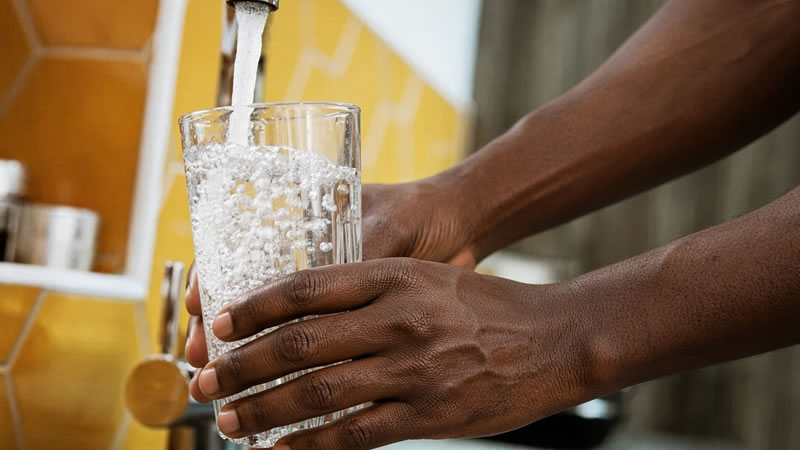
Water that appears clear and clean may still contain disease-causing microorganisms, making proper treatment and storage important for households concerned about illnesses such as typhoid fever.
Typhoid fever is caused by Salmonella Typhi, a bacterium that can be transmitted through food or water contaminated with the organism.
Contamination can occur at the source, during transportation or after water has been brought home, meaning that storing untreated water does not necessarily make it safe for consumption.
Households can, however, reduce the risk of exposure to harmful microorganisms through appropriate boiling, filtration, disinfection and careful storage practices.
Boil water thoroughly
When the safety of drinking water is uncertain, bringing it to a rolling boil and maintaining vigorous boiling for at least one minute can help kill many disease-causing germs.
At very high altitudes, the recommended boiling period is three minutes, after which the water should be allowed to cool before consumption or storage.
The method remains practical for many households because it requires only an appropriate cooking vessel and a dependable heat source.
Filter cloudy water before treatment
Boiling can destroy many microorganisms but does not remove visible materials such as sand, dirt and other particles suspended in cloudy water.
Cloudy water can first be left undisturbed until the particles settle, after which the clearer portion should be carefully transferred without disturbing the sediment.
A clean cloth or suitable household water filter can also be used to remove some visible particles before the water is boiled.
However, filtration with a simple cloth should not be regarded as a substitute for disinfection because it may not eliminate bacteria such as Salmonella Typhi.
Use clean storage containers
Water that has been properly treated can become contaminated again if it is transferred into a dirty container.
Storage vessels should therefore be washed thoroughly with soap and clean water, rinsed properly and made from materials suitable for drinking-water storage.
Containers that have previously held fuel, pesticides, chemicals or other hazardous substances should never be used for drinking water because residues may remain.
Keep treated water covered
Purified water should be stored in a clean container fitted with a tight lid to prevent dust, insects and other contaminants from entering it.
Containers with narrow openings or taps can further reduce the need to place hands or cups inside the vessel when collecting water.
Handle stored water carefully
Treated water can be recontaminated through careless handling, particularly when several people share the same storage vessel.
Hands should not be dipped directly into drinking water, while used cups, spoons and other potentially dirty utensils should also be kept out of the container.
Using a clean cup or a tap provides a safer way of collecting water while reducing opportunities for germs to enter the supply.
Clean containers regularly
Water vessels require routine cleaning because microorganisms and dirt can accumulate inside them even when their exterior appears clean.
Containers should be washed with soap and clean water, rinsed thoroughly and cleaned again as necessary before being refilled.
Where a container has a tap, the tap and surrounding area should also be cleaned regularly because they are frequently handled and can become contaminated.
Maintain household water tanks
Homes that rely on overhead or underground tanks should ensure that the tanks are adequately covered and that openings are protected against insects, dirt and other contaminants.
The tanks should be inspected periodically, cleaned when necessary and repaired if covers or openings become damaged.
Use approved disinfectants correctly
Where boiling large quantities of water is impractical, approved water-treatment products can be used, with chlorine-based products among those capable of killing many harmful microorganisms when applied correctly.
The appropriate quantity depends on the particular product and the volume of water, so households should follow the manufacturer’s instructions rather than estimating the dosage.
Products intended specifically for drinking-water treatment should be used, and any prescribed waiting period before consumption should be observed.
Boiling does not remove toxic chemicals
While boiling can deal with many biological contaminants, it should not be relied upon when water has been contaminated with fuel, pesticides or other toxic chemicals.
In cases of suspected chemical contamination, the safer approach is to obtain drinking water from another reliable source because some harmful chemicals can remain in the water despite prolonged boiling.