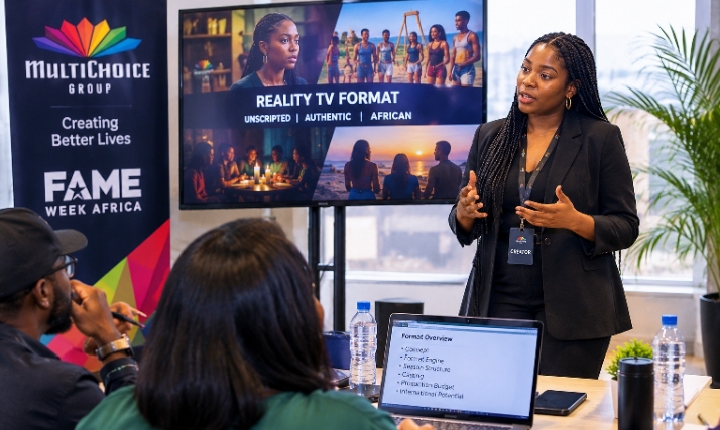
The search for the next reality television idea capable of moving from a creative concept to a major African entertainment franchise has opened a fresh opportunity for creators across the continent, with Nigerian creatives among those who can submit their ideas for consideration. MultiChoice Group and FAME Week Africa are currently inviting African creators to present original unscripted entertainment and reality formats that could attract viewers, generate conversations and potentially grow beyond a single season. The call comes at a time when reality television continues to occupy a strong position in African entertainment, while broadcasters are also looking for formats that can be adapted for different audiences without losing the identity that made them interesting in the first place.
For creators who have spent time developing reality show concepts, game formats, dating ideas, talent competitions or social experiments, the opportunity goes beyond simply putting an idea before an entertainment platform. The selected concepts can move towards a live pitching stage in Cape Town, where shortlisted creators will have the opportunity to present their projects directly to a MultiChoice selection panel during FAME Week Africa 2026. That possibility makes the current application window particularly important for anyone who has an original format that can stand on its own through its rules, characters, structure and repeatable entertainment value.
The Search For New Reality TV Formats
MultiChoice Group and FAME Week Africa are looking beyond the traditional idea of a television programme that works because of a famous presenter or a collection of celebrities. The call is focused on unscripted Entertainment and Reality formats with a strong creative identity, a clear format engine and enough depth to generate stories across multiple episodes. This gives creators room to explore different areas of entertainment while placing considerable attention on how the proposed programme actually works once cameras start rolling.
The official brief identifies areas such as dating shows with a twist, reinvented game shows, reinvented talent shows, social experiments and reality formats among the types of concepts that can be considered. Adaptations of existing intellectual property can also be submitted where the applicant has the necessary rights to present the material. That creates room for ideas connected to games, brands, fiction or digital culture, although the ownership and rights position has to be properly established before the project is submitted.
For Nigerian creators, the opportunity creates space for concepts that draw inspiration from everyday Nigerian life, relationships, entertainment, competition, family dynamics, entrepreneurship, music, fashion, food, digital culture and other areas of popular culture. The cultural identity can be part of the appeal, but the format needs to have a strong enough mechanism to remain understandable when adapted for another audience. That is particularly important because the call is looking at projects with potential beyond their original market.
The October 12 Deadline
The most immediate date applicants need to remember is October 12, 2026, because that is the official submission deadline for the call. Applications must be submitted by 23:59 SAST, and the official terms state that late submissions will not be accepted. Anyone planning to submit therefore has to work backwards from the deadline rather than waiting until the final day to assemble the creative treatment, budget information and supporting documents.
The application period began on September 9, 2026, giving creators several weeks to develop their proposals before the closing date. As of October 2, 2026, the application window remains open, which means Nigerian and other African creators who already have a developed concept still have time to organise their material and make sure the submission meets the stated requirements.
The timeline does not end with the application. Shortlisted projects can progress to the live pitch stage scheduled for October 28 to October 30, 2026, during FAME Week Africa in Cape Town. This creates a relatively short period between the application deadline and the pitching event, so applicants should also think about how they would present their concept verbally if selected.
Who Can Submit
The eligibility rules make the opportunity accessible to more than established television production companies. An applicant can submit as an individual, producer, production company or rights holder, provided the other conditions in the official terms are satisfied. This is important for independent Nigerian creators who may have a strong television concept but have not yet built a large production company around it.
Applicants must be at least 18 years old and based in Africa. They must also own or control the intellectual property rights necessary to submit the project and must have the legal ability to make the submission. A creator therefore does not necessarily need to arrive with the resources of a major entertainment company, but the person submitting the project needs to have a clear legal relationship with the material being presented.
The terms also contain restrictions covering certain employees and people connected to the organisations involved in the call. Employees of RX Africa, FAME Week Africa, MultiChoice Group and CANAL+, as well as members of the judging panel and their immediate families, are among those subject to the stated exclusions. Applicants should therefore read the complete terms before submitting rather than relying only on the headline eligibility requirements.
The Idea Must Stand On Its Own
One of the clearest signals from the brief is the importance of a format that can create entertainment through its own structure. The project should not depend entirely on the presence of celebrities to become interesting. A creator can still discuss talent and casting, but the central attraction should come from the format itself and the situations, choices, rules and consequences created by the programme.
That distinction is important for anyone developing a reality television proposal because a list of famous contestants is not the same thing as a television format. A stronger proposal explains what participants actually do, how the rules affect their decisions, how relationships or rivalries develop, what they stand to gain or lose and how the audience is given a reason to return for the next episode.
The format should therefore be capable of generating entertainment even when the names of the participants change. If the same basic structure could work with a different group of people, in another season or in another country, the creator is closer to presenting a scalable television format rather than simply presenting a cast driven concept.
Understanding The Format Engine
The format engine is one of the most important elements of the application because it explains how the programme repeatedly produces stories. A commissioner needs to see more than an attractive concept on paper. The proposal needs to show how the idea behaves once it becomes a television series, how each episode develops and how the rules create situations that viewers will want to follow.
A strong format explanation should make it easy to understand who participates, what they are required to do, what restrictions they face, what choices they can make and how those choices affect the rest of the season. It should also explain how contestants or participants progress, whether people leave the programme, how winners are determined and what happens when unexpected situations arise.
The format should also provide room for tension, twists and cliffhangers without making the programme feel artificially complicated. The best explanation is often the one that allows a reader to picture an actual episode without needing a long explanation from the creator. Once the core rules are understood, the entertainment should become easier to imagine.
Building A Complete Season
A television commissioner needs to know that the idea can carry an entire season rather than one exciting episode. The creative treatment should therefore explain the season structure, the number of episodes, the expected episode duration and the way the story develops from the opening episode towards the conclusion.
The opening episode should introduce the world of the format and establish the rules clearly enough for viewers to understand what is happening. Subsequent episodes should provide room for escalation, changing relationships, new challenges, unexpected consequences and developments that keep the programme moving. By the time the season reaches its later stages, viewers should have a clear reason to remain invested in the outcome.
Applicants should also consider recurrence because the brief asks about the possibility of future seasons. A concept that works once can be entertaining, but a format with multiple season possibilities gives the commissioner a clearer picture of its long term potential. The proposal should show how a second season could feel fresh while keeping the central identity of the programme recognisable.
Dating Shows With A Twist
Dating remains one of the areas specifically mentioned in the call, but the brief is clearly interested in concepts that bring a distinctive mechanism to the category. That means a creator should look beyond simply placing singles together and recording their interactions.
A dating format could be structured around a specific set of rules, challenges, decisions or social situations that create the central entertainment. The mechanism should determine what participants experience and how their relationships develop, giving the audience more to follow than the personalities of the people involved.
For a Nigerian creator, there is considerable room to explore relationship dynamics through local experiences and social realities while building a format that can still be adapted elsewhere. The cultural details can change from country to country, while the central rules and structure remain recognisable.
Reinvented Game Shows
Game shows are another area highlighted by the brief, with emphasis on reinvention. This gives creators the opportunity to take a familiar entertainment principle and develop a fresh mechanism around it.
The proposal should make clear what makes the game different, how participants win or lose, what creates suspense and how the format prevents the episodes from becoming predictable. The rules need to be simple enough for viewers to understand while providing enough room for strategy, emotion, humour or unexpected outcomes.
A strong game format can also have considerable international potential because the basic rules can travel more easily than highly localised storytelling. Cultural references, contestants, presenters and locations can change while the underlying game remains recognisable.
Reinvented Talent Shows
Talent shows are also included within the call, but the opportunity is not simply an invitation to create another conventional stage competition. Creators are being encouraged to rethink how talent can be discovered, tested, judged or presented.
That could mean developing a different structure around performance, introducing a new decision making mechanism or creating a format where participants face circumstances that reveal more than their technical ability. The important point is that the format should have its own identity and provide a clear reason for viewers to follow the journey.
Talent is still important, but the format should determine how that talent is experienced by the audience. A compelling proposal therefore needs to explain what happens beyond the basic act of performing and being judged.
Social Experiments
Social experiments provide another area where creators can develop distinctive concepts. These programmes can explore how people respond to particular rules, environments, incentives or social situations while creating a strong entertainment structure around the experiment.
The proposal should explain the purpose of the experiment and the conditions under which participants operate. It should also establish what viewers are expected to observe, how the experiment develops and what creates the progression from one episode to another.
A strong social experiment needs a clear point of view without losing the entertainment element. Participants should be placed in a structure that creates genuine decisions and consequences, allowing the audience to follow the human behaviour that develops naturally from the format.
Reality Formats Need More Than A House
The reality television category has expanded considerably, but the call places emphasis on the format engine rather than simply putting a group of people together. A successful proposal should therefore explain why the participants are in that environment and what rules make their experience television.
The creator needs to establish the daily or weekly mechanics, the challenges, the consequences, the progression and the major turning points. The environment itself should serve a purpose within the format rather than simply acting as a backdrop for conversations.
Casting remains important because participants need to be fresh, diverse and compelling, but the official brief makes it clear that the concept should not depend entirely on stereotypes or familiar reality television formulas. The structure should provide enough opportunities for personalities to reveal themselves through the situations created by the programme.
The Creative Treatment
The Creative Treatment is one of the main components of the submission and effectively serves as the document that allows the selection team to understand the entire concept. It needs to communicate the creative vision, the format mechanics, the storytelling approach, the talent and casting plan, the editorial identity, the audience opportunity and the potential for international expansion.
The one sentence hook is particularly important because the brief asks for a singular creative vision that can be communicated quickly. That sentence should give the reader a clear understanding of the central idea without forcing them to read several pages before they understand the basic premise.
The treatment should then build from that hook into the details. The creator can explain why the programme exists, what makes it distinctive, how it works, who participates and what viewers experience. The document should feel like a television proposal rather than a general description of an interesting idea.
Storytelling Pace
The selection team also wants applicants to explain how their format moves from one episode to another. This means the proposal should describe the typical episode as well as the wider season.
Applicants can explain how the first episode introduces the rules, how participants become involved and how the first major challenge or decision establishes the direction of the season. Later episodes can then introduce escalation, changing circumstances, new challenges and developments that keep the audience engaged.
The treatment should also identify potential iconic moments without pretending to know exactly how every scene will unfold. Reality television works partly because participants respond to circumstances in ways that cannot always be scripted, so the format should create opportunities for memorable moments rather than trying to manufacture every detail.
Talent And Casting
The call asks applicants to explain who participates and why those people would be compelling to watch. Casting can include the type of people required, their characteristics, their backgrounds and the qualities that would make them suitable for the format.
A creator should also state whether any talent is already attached to the project. That information can help the selection team understand the current development stage, although the format itself remains central to the submission.
The official brief calls for fresh, diverse and charismatic participants while warning against clichés and overused stereotypes. For creators developing Nigerian concepts, that creates an opportunity to show different sides of Nigerian society without reducing participants to predictable characters.
Editorial Identity
Another important part of the proposal is the editorial DNA of the programme. This asks the creator to think about how the finished production should look, feel and sound.
Applicants can consider the visual identity, production design, camera style, editing approach, sound, tone and overall audience experience. A premium entertainment programme needs a clear creative language that separates it from ordinary television content.
The proposal should therefore allow the selection team to imagine the finished programme rather than only reading about its rules. The creative treatment can describe the atmosphere, visual approach and storytelling style while keeping the focus on the practical realities of producing the format.
Audience Conversation
The audience section should go beyond simply naming an age group. Applicants need to explain who is likely to watch the programme and why the format can create conversations beyond the television screen.
For a Nigerian reality format, social media can play an important role because viewers often discuss contestants, moments, decisions and controversies while programmes are airing. A well designed format can create natural conversation points without depending on manufactured publicity.
The proposal can also explain how the format might generate clips, discussions, audience participation or other forms of social engagement. The important point is to connect those opportunities to the structure of the programme rather than simply saying that the show will trend.
International Franchise Potential
International scalability is one of the strongest themes in the call. The territories specifically mentioned include Nigeria, South Africa, Côte d’Ivoire, Poland and France, giving applicants a clear indication that the organisers are interested in formats that can travel.
A Nigerian version can retain Nigerian contestants, language, locations and cultural references while another country adapts those elements to its own audience. The central format mechanism should remain identifiable even when the local details change.
That is what separates a potentially scalable format from a concept that depends entirely on one location. A creator should therefore think carefully about which parts of the programme are universal and which parts should be adapted locally.
Production Budget
The application also requires an estimated total production budget together with the principal cost assumptions. This means applicants should be prepared to show how they arrived at the proposed figure rather than simply attaching a large number to the project.
Major production considerations can include locations, crew, equipment, set construction, post production, talent, travel, accommodation and other necessary expenses depending on the nature of the format. The exact budget will naturally differ from one concept to another.
The brief also indicates that concepts should not depend on massive financing simply to function. The project should be commercially viable and capable of being funded by one specific business unit before potentially expanding into additional markets. That makes scalability and financial discipline important parts of the pitch.
The Live Pitch In Cape Town
Shortlisted applicants can be invited to pitch their projects in person during FAME Week Africa 2026 in Cape Town. The live pitch is scheduled for October 28 to October 30, 2026, at CTICC2.
Being selected for the pitch therefore represents another stage of the process rather than a guaranteed commission. Applicants should be ready to explain their concept clearly, demonstrate the format engine and answer questions about production, audience, commercial potential and international adaptation.
There is also a practical financial consideration for shortlisted applicants. The official terms state that applicants are responsible for their own travel, accommodation, visa and related costs unless the organisers later confirm otherwise in writing. Applicants should therefore consider the logistical requirements before submitting.
Failure to attend the live pitch can result in disqualification, with the organisers able to invite another project in the place of an applicant who cannot participate. Anyone submitting should therefore be prepared for the possibility of travelling to Cape Town within the stated dates.
No Fixed Cash Prize
The opportunity should not be described as a conventional cash prize competition because the official terms do not advertise a fixed cash reward for winning the call. There is no stated ₦ amount or dollar amount that an applicant automatically receives simply for being selected or shortlisted.
The financial opportunity is connected to the possibility of a development, production or licensing relationship if MultiChoice decides to move forward with a project. That process would involve further discussions and formal agreements.
Being shortlisted or invited to pitch therefore does not automatically create a commission, development agreement, option agreement, production agreement, licence agreement or financial commitment. Any such arrangement would be handled separately if the broadcaster decides to proceed.
Intellectual Property Ownership
The terms also address intellectual property, which is particularly important for independent creators. Submitting a project does not itself transfer ownership of the intellectual property contained in the submission to FAME Week Africa, MultiChoice, RX Africa or CANAL+.
Applicants must, however, confirm that their work is original and that they own or control the necessary rights to submit it. Anyone adapting a game, brand, fictional property, digital concept or another existing work therefore needs to make sure the appropriate rights are available.
The terms also recognise that MultiChoice, CANAL+ or related companies may already be developing or considering similar concepts. Submission does not create a confidential relationship or partnership, which is another reason creators should read the full terms carefully before sending their projects.
Google Drive Submission Requirement
Supporting documents also need to be handled carefully. The terms require supporting materials to be uploaded to Google Drive, with the relevant links made accessible to the selection team.
Applicants are expected to ensure that the links work and can be viewed by the people reviewing the submission. The specified access arrangement is that anyone with the link can view the relevant material.
That may sound like a small administrative detail, but it can become important when a submission depends on supporting documents. A creator who uploads a document but leaves the file restricted to a personal account could create an avoidable problem during the review process.
How The Selection Process Moves
The process begins with the submission of the creative project and supporting material before the October 12 deadline. The submitted concepts then go through an editorial review, with selected projects progressing to the shortlist.
Shortlisted applicants can move to the live pitching stage during FAME Week Africa in Cape Town from October 28 to October 30, 2026. The MultiChoice selection process then considers the projects based on the creative, editorial, audience, commercial and scalability requirements outlined in the call.
A project reaching the pitching stage should therefore not be presented as an automatic winner or guaranteed television commission. The pitch creates an opportunity for the project to enter further consideration and potentially move towards development, production or licensing discussions.
What Nigerian Creators Should Prepare
A Nigerian creator considering the call should first make sure the concept can be explained in one clear sentence. After that, the creator should develop the rules and mechanics so that another person can understand how the programme works without needing the creator to explain every part verbally.
The next step is to build the season structure, including the number of episodes, episode duration, progression, challenges, eliminations or other forms of advancement where applicable. The creator should also consider how the format changes as the season develops and how future seasons can remain fresh.
The budget should then be developed alongside the creative plan. A realistic estimate can help demonstrate that the project has been designed with actual production conditions in mind rather than existing only as an ambitious idea.
The Bigger Opportunity For African Creators
The call creates an avenue for African creators to place original unscripted concepts before a major entertainment organisation through a structured commissioning process. The opportunity is particularly relevant to creators who have ideas that can work beyond a single local audience.
Nigeria has a large entertainment audience and a deep pool of creators working across television, digital media, music, comedy, fashion and popular culture. A strong Nigerian concept can draw from that environment while still being structured in a way that allows another territory to adapt it.
The challenge for each applicant is therefore to turn an interesting idea into a television format with rules, structure, audience appeal and repeatability. That is where the application moves beyond simply having an idea and becomes a serious programme proposal.
Important Dates To Remember
Applications opened on September 9, 2026, marking the beginning of the current submission window for the MultiChoice Group and FAME Week Africa Unscripted Call for Projects.
The application deadline is October 12, 2026, at 23:59 SAST, and the official terms state that late submissions will not be accepted. Applicants should therefore complete their documents, check their supporting links and submit before the closing time.
The live pitch is scheduled for October 28 to October 30, 2026, at CTICC2 in Cape Town, South Africa. Only shortlisted projects move to this stage, and shortlisted applicants should be ready to handle the travel and other practical requirements connected to attending the event.
How To Apply
Interested Nigerian and African creators should begin with the official MultiChoice Group and FAME Week Africa call and review the complete requirements before preparing their project. The submission needs to communicate the creative vision clearly while covering the format mechanics, season structure, talent, editorial identity, audience, budget and international potential.
The creative treatment should make it possible for the selection team to understand the programme without relying on a long verbal explanation from the creator. The strongest part of the document should be the format itself, showing how the rules and structure can generate episodes, stories, tension and audience engagement.
Applicants should also make sure their Google Drive supporting documents are accessible to the selection team before completing the submission. Since the deadline is fixed at October 12, 2026, creators should avoid leaving technical checks and document preparation until the final hours.
The Opportunity In Perspective
This call is not a grant application where an applicant receives a fixed amount simply for being selected. It is also not a conventional competition promising a predetermined cash prize. The opportunity sits within the television commissioning space, where a creator presents an original unscripted concept for consideration by a major entertainment company.
A project that attracts serious interest could enter further conversations around development, production or licensing, but those outcomes depend on subsequent decisions and formal agreements.
For creators with a strong reality television or entertainment concept, the immediate task is therefore straightforward. Develop the idea into a clear format, explain how the episodes work, establish the audience, prepare the budget, demonstrate the potential for future seasons and make sure the project can travel beyond its original setting.
The deadline remains October 12, 2026, at 23:59 SAST, while shortlisted applicants are expected to pitch in Cape Town from October 28 to October 30, 2026. Anyone interested in applying should use the official FAME Week Africa application page and read the full Terms and Conditions before submitting.