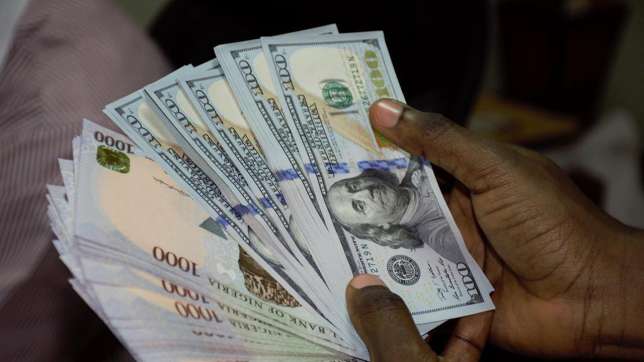
The dollar to naira rate today, Sunday, October 4, 2026, is about ₦1,330 at the official window and between ₦1,365 and ₦1,390 on the parallel market. The naira has barely moved for weeks. Traders, travellers and importers are watching it closely anyway, because it has stayed steady since the Central Bank of Nigeria (CBN) delivered the biggest interest rate cut in its history.
Nigerians who keep checking the rate get roughly the same answer every morning. A dollar costs a little over ₦1,330 through official channels, and around ₦1,375 to ₦1,390 from a Bureau de Change (BDC) operator in Lagos, Abuja, Kano or Port Harcourt.
Dollar to Naira Today: The Quick Numbers
| Market | Buying (₦ per $1) | Selling (₦ per $1) | Reference date |
|---|---|---|---|
| Official (NFEM/CBN) | ₦1,330.10 | ₦1,330.10 | Friday, Oct 2 (latest trading day) |
| Official NFEM close | n/a | ₦1,332.00 | Friday, Oct 2 |
| Black market (Abokifx quote) | ₦1,375 | ₦1,390 | Sunday, Oct 4 |
| Black market (lower trackers) | ₦1,365 | ₦1,375 | Saturday, Oct 3 |
Quotes vary slightly between trackers, and between one BDC operator and the next. The CBN publishes its official figures on trading days only, so Friday’s close is still the latest verified benchmark.
The Official Market: A Quiet Close to the Week
The naira ended the week with barely a flicker. Tribune Online reported that the currency traded at ₦1,330.0965 per dollar on the Nigerian Foreign Exchange Market (NFEM) on October 2 and closed at ₦1,332.00. That was only a shade weaker than the ₦1,329.16 recorded on September 30.
A move of under one naira in a market this size is barely noticeable. Other trackers put the CBN reference rate for Friday at ₦1,329.16, with a buying rate of ₦1,328.16 and a selling rate of ₦1,329.16. These small differences reflect the time each rate was captured.
| Date | Official rate (₦/$) | Note |
|---|---|---|
| Sept 8 | About ₦1,320 | Early-September level |
| Sept 24 | ₦1,328.17 (central rate) | Published after the MPC meeting |
| Sept 29 | ₦1,330.47 | Slight improvement on Monday’s ₦1,331.33 |
| Sept 30 | ₦1,329.16 | Small gain |
| Oct 2 | ₦1,330.10 | Slips slightly after the Independence Day break |
The Independence Day holiday on October 1 meant the market had a short break before Friday’s session. It reopened to the same rates it left.
The Black Market Rate: Where the Street Stands
On the parallel market the story is also one of stability. Reports from October 2 put the dollar at ₦1,375 for buying and ₦1,390 for selling across major BDC markets. A check on Sunday found the same ₦1,390 selling rate in Lagos, Kano, Abuja and Port Harcourt.
Some trackers show it slightly lower. Monierate recorded the black market at ₦1,372 to buy and ₦1,363 to sell on October 2, noting that the dollar had eased about 0.84 percent against the naira in 24 hours. Another tracker put Saturday’s quote at ₦1,365 buying and ₦1,375 selling.
In practical terms, the buying rate is what a dealer pays you for dollars. The selling rate is what you pay to get them.
| Amount | Sell at ₦1,375 (dealer pays you) | Buy at ₦1,390 (you pay dealer) |
|---|---|---|
| $50 | ₦68,750 | ₦69,500 |
| $100 | ₦137,500 | ₦139,000 |
| $500 | ₦687,500 | ₦695,000 |
| $1,000 | ₦1,375,000 | ₦1,390,000 |
How Wide Is the Gap?
The gap between the official and parallel rates is about ₦35 to ₦60 per dollar. At the high end of street quotes that is roughly 4 percent, far narrower than in the years after the 2023 exchange rate unification. Earlier this year the CBN governor said the spread between the official rate and the BDC rate had narrowed to under 2 percent.
| Measure | Official | Parallel (sell) | Gap |
|---|---|---|---|
| Rate per $1 | ₦1,330.10 | ₦1,390 | About ₦60 |
| $100 | ₦133,010 | ₦139,000 | About ₦5,990 |
| $1,000 | ₦1,330,100 | ₦1,390,000 | About ₦59,900 |
For someone sending school fees abroad or paying for a trip, that gap can mean tens of thousands of naira on a modest transaction.
Why the Naira Is Holding Steady
The calm is no accident. The CBN says Nigeria’s gross external reserves stood at $55.25 billion as of September 18, 2026, the highest in 18 years. Governor Olayemi Cardoso said that was enough to cover 11.3 months of imports of goods and services.
The numbers show a steady climb through the year:
| Date | External reserves |
|---|---|
| Jan 2, 2026 | $45.57 billion |
| Aug 19, 2026 | $52.66 billion |
| Sept 3, 2026 | $54.08 billion |
| Sept 18, 2026 | $55.25 billion |
The central bank also reported that the current account surplus rose 67.92 percent to $7.54 billion in the second quarter. Oil earnings helped, with Q2 revenue reported at $9.39 billion as pipeline security improved and outages fell.
Then came the monetary policy surprise. On September 22, the CBN’s Monetary Policy Committee cut the benchmark rate by 350 basis points to 23 percent, the largest reduction in the bank’s history. Cardoso insisted this is a reset of the policy framework and not the start of an easing cycle. He said falling inflation, stronger reserves and calmer FX conditions gave the committee the confidence to act.
What to Watch This Week
Markets reopen on Monday, October 5, and the first CBN print will show whether the weekend’s calm survives. Watch for changes in:
- Weekly reserve data from the CBN
- Oil receipts and FX inflows
- BDC demand as the festive season approaches
- Any signal from the CBN on how it plans to use its new policy framework
Analysts say the naira’s strength depends on FX inflows continuing and the CBN avoiding heavy intervention. For now, the naira is where it has been for most of the past month.
FAQ:
What is the dollar to naira rate today?
The official rate is about ₦1,330 per dollar, based on Friday’s close. The black market rate is ₦1,365 to ₦1,390.
Why is the black market rate higher?
Demand for cash dollars from BDC customers, such as travellers, students and importers, pushes street prices above the official benchmark.