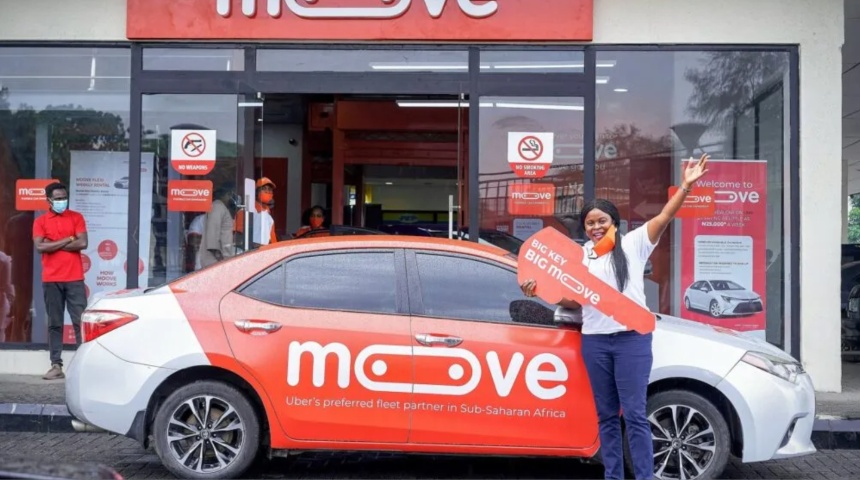
Six years after it put its first 76 cars on Lagos roads, Moove is leaving Nigeria. The Moove Nigeria operations shutdown was confirmed on Thursday, October 8, 2026, and it arrives barely five weeks after Uber switched off its app in the country.
Moove said it will transfer ownership of eligible vehicles worth more than ₦35 billion ($26 million) to the customers currently driving them. Those drivers will own the cars outright, with no further payments to Moove for the vehicles from October 1.
It is an unusual way to close a business. Most companies that quit a market sell off their assets or repossess what they can. Moove is giving the cars away.
What Moove announced
The company said it looked at other ways to keep running in Nigeria and concluded it could not sustain its existing model. Co-founder and co-CEO Ladi Delano was direct about the cause. “Uber was the principal platform supporting our Nigerian model at scale,” he said, “so its departure had a significant effect on the business.”
The exit programme is called “Thank You Nigeria.” Moove describes it as a way of recognising the customers, employees, partners and communities that backed the company from the start. Staff are included too. Every Nigerian employee will receive a free car.
Delano framed the decision as personal as much as commercial. “Nigeria is where Moove began, and everything we have built since carries something of Lagos with it,” he said.
The numbers behind Moove’s Nigerian run
Moove’s Nigerian chapter was not small. The figures it released give a sense of how much of the country’s ride-hailing economy ran through its cars.
| Detail | Figure |
|---|---|
| Founded | Lagos, 2020 |
| Founders | Ladi Delano and Jide Odunsi |
| Starting fleet | 76 vehicles |
| Nigerian customers served | More than 9,000 |
| Revenue from Moove-financed vehicles in Nigeria | About ₦57 billion |
| Value of vehicles being transferred | More than ₦35 billion (about $26 million) |
| Global fleet today | About 42,000 vehicles |
| Cities of operation | 29 |
Moove built a Rental and Drive-to-Own model that gave drivers access to a car and a route to owning it. It then took that model abroad. The Lagos experiment became the template for a global business.
What the transfer means for drivers
For most affected drivers, this is better news than a typical corporate shutdown would bring. There is a catch, though, and it matters.
Customers who qualify will take full ownership of the vehicles they currently operate. Scheduled payments to Moove from October 1, 2026 are waived. But customers must still settle remittances that accrued before that date, and they must complete the ownership-transfer process.
In practice, a driver who is up to date or close to it stands to walk away with a car that is fully theirs. A driver with a large backlog of unpaid remittances will have to clear it first. The word “eligible” is also doing real work in the announcement. Moove has not published detailed eligibility criteria in the public statement, so drivers should expect to confirm their status directly with the company. Moove says it will work with affected customers and employees as it winds down and completes the transfers.
How Uber’s exit set this in motion
The sequence of events is short and brutal.
Uber told Nigerian users it would wind down its operations effective September 2, 2026, ending a 12-year run in a market it entered in 2014. It promised drivers a one-off “goodwill payment” to soften the blow. Uber also left Uganda, and its Nigerian exit followed earlier withdrawals from Ivory Coast in 2025 and Tanzania in January 2026.
Uber gave no detailed reason. Reuters reported that the company did not offer specific reasons for leaving Nigeria. The backdrop, however, was not hard to read. Fuel costs, inflation and currency swings had pushed up operating expenses for drivers and platforms alike. Drivers had also clashed with the company over fares and commissions, and staged a protest in March 2026.
Moove’s problem was structural. Its Nigerian drivers earned on Uber, and Uber was where their repayments came from. Some drivers on Moove-financed UberGo cars had reportedly been required to work exclusively through the platform. When the app went dark, the income that serviced the loans went with it.
Within hours of Uber’s shutdown, Moove told its Nigerian customers they were free to work on Bolt and inDrive. Drivers had asked for that permission for years. The change came too late to rescue the model. The same analysis noted that it also ended the Uber-only arrangement that generated the earnings data used to underwrite those loans.
By September 7, Semafor was reporting that Moove was weighing an exit, with a person familiar with the plans saying Uber’s departure had made the business untenable. Thursday’s announcement turned that reporting into fact.
A currency problem underneath it all
Uber’s departure was the trigger, but there was a second pressure building underneath. Moove expanded its Nigerian fleet partly with dollar-denominated financing, while drivers earned their revenue in naira. That is a hard position to hold in a country where the naira has swung sharply in recent years. Every time the currency weakens, the cost of servicing foreign-currency debt rises faster than a driver’s daily earnings.
That analysis also pointed out something Moove has not said publicly: nobody outside the company can size the Nigerian loan book that was left exposed. Moove has not disclosed that figure, and this article does not guess at it.
Nigeria was never the whole story for Moove
It helps to be clear about what this is not. Moove is not collapsing. The decision is specific to Nigeria, and the company continues to run its international fleet and has expanded into new areas, including autonomous vehicles.
Moove now manages robotaxis in the United States for companies including Waymo, and it secured a roughly $2 billion valuation last month to become Africa’s latest tech unicorn. Uber also holds equity in Moove’s global holding company, so its financial relationship with Moove survives Uber’s own Nigerian exit.
That is the uncomfortable irony. The company that made its name serving Nigerian ride-hailing drivers has grown into a business that no longer needs Nigeria. Delano still insists the country will always be where the story begins: “Wherever Moove goes next, our story will always start in Lagos.”
What it means for Nigeria’s ride-hailing market
The ripple effects go well beyond Moove’s own customers. Ride-hailing in Nigeria grew into an ecosystem of financiers, fleet operators, insurers, mechanics and spare-parts sellers. Moove’s experience shows how closely some of those businesses were tied to the economics of the big platforms.
With Uber and now Moove gone, rivals such as Bolt and inDrive are left with fewer major competitors in the market. Riders are already feeling it at the till. A Launch Base Africa review found that fares on several ride-hailing platforms in Nigeria have risen sharply since Uber’s exit. New players are trying to move into the gap, with Shuttlers launching a carpooling service as rivals race for Uber’s former market share.
For drivers, the picture splits in two. Those who received Moove cars outright now hold an asset and no monthly obligation to the lender, which is a real cushion. Those who never used Moove, or who drove for Uber on their own vehicles, have lost an income source and must compete for trips on fewer platforms. The Amalgamated Union of App-Based Transport Workers of Nigeria has said Uber-dependent drivers would have to migrate to Bolt and inDrive.