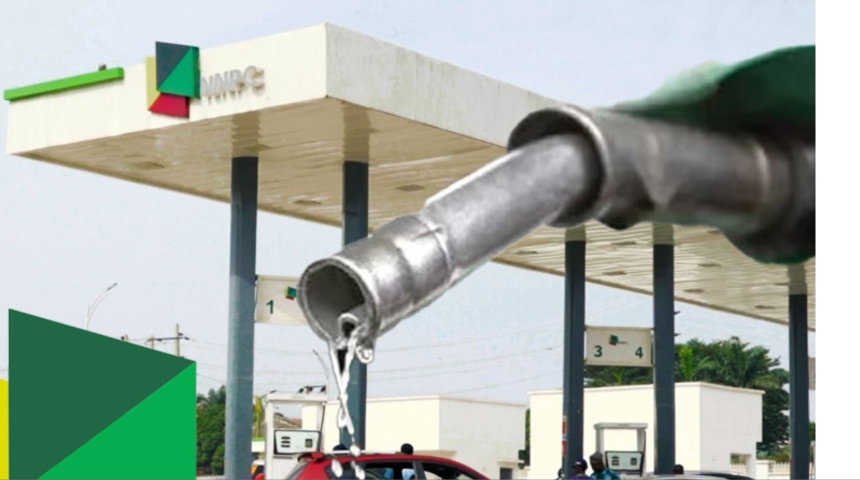
The Federal Government has announced a 30-day petrol price discount at filling stations run by the Nigerian National Petroleum Company (NNPC) Limited, with public transporters first in line. The announcement was made in Abuja on Thursday, October 8, 2026, and it has already set off a fresh argument about whether Nigeria has quietly walked back into the subsidy era it left in 2023.
The Minister of Finance and Coordinating Minister of the Economy, Taiwo Oyedele, broke the news at a press briefing on fuel prices. He was firm that the plan is not a return of the old system. Here is what is known so far about the NNPC petrol price discount, who is likely to benefit, and what remains unclear.
What the Federal Government Announced
Oyedele said the government is offering a discount on petrol dispensed by NNPC Limited for the next 30 days “in the first instance”, with priority for public transporters nationwide. The phrase matters, because it leaves room for the arrangement to be extended or allowed to lapse once the month ends.
The minister described the move as a margin discount at NNPC stations. In his words, the government is simply saying it will sell to buyers at cost. He insisted more than once that the arrangement should not be read as subsidy.
The timing is not hard to explain. Petrol is currently averaging about ₦1,400 per litre, and the government has been under pressure from labour unions such as the NLC over high transport costs and the cost of living.
How Much Are Nigerians Paying for Petrol Now?
NNPC’s latest reported price list puts petrol at ₦1,355 per litre in Lagos and Rivers, while Abuja is listed at ₦1,370. Independent marketers and other stations often charge more, which is why the national average sits near ₦1,400.
Oyedele traced the increase to global events. He said crude oil traded at about $70 per barrel before the conflict, and that petrol climbed from roughly ₦830 per litre to an average of ₦1,400. Tension around the Strait of Hormuz and higher international crude prices have been a recurring complaint in recent weeks, with residents in the Federal Capital Territory telling reporters in July that existing palliatives had given them little relief.
Who Qualifies for the NNPC Petrol Discount?
This is the question most Nigerians are asking, and the honest answer is that the full eligibility rules have not been published.
What the government has said is that public transport operators get priority. That points to commercial bus drivers, taxi operators, tricycle riders and similar groups, since these are the people whose fuel costs flow straight into the fares passengers pay. The minister did not immediately say how large the discount is, what motorists will pay per litre, or how public transporters will access the benefit.
Until NNPC or the Ministry of Finance clarifies, a few questions remain open:
- Will transporters need to register, show vehicle documents or belong to a union?
- Will private motorists also see lower pump prices at NNPC stations, or only priority groups?
- Will the discount be applied at the pump, through a card or through the NNPC Fuel App?
Drivers should expect more detail in the coming days and should be wary of anyone online claiming to sell “registration slots” for the discount. No such process has been announced.
One piece of background can cause confusion. NNPC ran a separate ₦66 Independence Day promotion for customers who paid through its Fuel App between October 1 and 7, 2026. That offer was a short seasonal gesture and has ended. It is not the same thing as the new 30-day arrangement.
The ₦1,350 Ceiling and the National Fuel Reserve
The discount is only one piece of what Oyedele laid out. He also described what he called price modulation. The government is negotiating a ceiling of ₦1,350 per litre on the ex-gantry or landing cost of petrol, and when costs rise above that level, refineries and importers would carry the shortfall and recover it later.
In plain terms, the ceiling applies to what suppliers charge before petrol reaches the pump, not to what a motorist pays at the station. The idea is to stop sharp swings from travelling down the supply chain. The minister said it is neither a subsidy nor price control.
The government is also putting money into a national strategic fuel reserve. Refined products would be released into the market under published rules when global supply problems or hoarding threaten stability. Taken together, the discount, the ceiling and the reserve amount to a short-term cushion and a longer-term attempt to calm a market that has swung widely since 2023.
Tax Waivers Already in Place
Oyedele also reminded Nigerians that petrol already enjoys relief on the tax side. He said the government has granted a full waiver of taxes and duties on petrol, worth more than ₦3.3 trillion for the period up to September 30, 2026.
Earlier this year he had said the Tinubu administration suspended Value Added Tax, excise duty and the surcharge on petroleum products, and argued that prices in neighbouring countries run 20 to 50 per cent higher because those taxes remain there. He has also urged commercial operators who converted to compressed natural gas to pass the savings on to passengers instead of charging the same fares as petrol vehicles.
Is the NNPC Petrol Discount a Return of Fuel Subsidy?
The government says no, and the reasoning is worth setting out carefully.
Under the old regime, the government paid the gap between what petrol cost and what Nigerians were allowed to pay at the pump. That gap ran into trillions of naira a year and was widely blamed for waste and leakage. President Bola Tinubu ended it on the day he was sworn in, in May 2023.
Oyedele’s position is that the present plan sells at cost, which means NNPC is giving up part of its margin rather than being reimbursed for selling below cost. He has also warned that bringing back a general subsidy would amount to creating longer-term harm for a short-term cure.
Critics are not persuaded, and the difference between a “margin discount” and a “subsidy” is largely a matter of who ends up absorbing the loss. If NNPC sells below what it would otherwise earn, the cost lands on a company the federal government owns. Some commentators will argue that this is subsidy by another name, and at least one news outlet has already carried a headline describing the move as a reintroduction of subsidy on fuel sold at NNPC stations. The government rejects that label.
Politics: Atiku and the 2027 Election
It would be naive to read this announcement without the 2027 election in mind. Former Vice President Atiku Abubakar, now the ADC presidential candidate, has said he would restore a petrol subsidy if elected. In August he pointed to NNPC’s own accounts, which recorded about ₦4.84 trillion in energy-security expenses and related shortfalls in 2023 and about ₦7.13 trillion in 2024, to argue that subsidy never really ended. His camp has also claimed the government might quietly bring subsidies back before the vote.
The Presidency has pushed back hard. Presidential spokesman Bayo Onanuga has accused Atiku of either misunderstanding the policy or playing politics with it. A related headline from Daily Nigerian says Atiku has already rejected the 30-day discount and called it election-driven.
For ordinary Nigerians, the argument over labels matters less than what they pay at the pump next month.
What Happens After 30 Days?
That is the biggest unknown. The government has described the discount as temporary, and the “first instance” wording suggests a review at the end of the period. A lot depends on global crude prices, the naira, and how much NNPC can afford to give up without hurting its own finances.
Transporters will also be watched closely. If lower fuel costs do not lead to lower fares, public patience will wear thin quickly, and the policy will be judged a failure no matter how it is labelled.