
African literature has produced books that cross borders, preserve history and introduce readers to societies whose experiences deserve to be understood in their own words. Yet, among the many celebrated works that have emerged from the continent, Chinua Achebe’s Things Fall Apart continues to occupy a special place, with its influence extending far beyond Nigeria and the generation that first encountered it.
The novel’s reputation has remained strong for decades, but a recent comment by veteran Nollywood actor Pete Edochie has brought renewed attention to its standing. Speaking in a TV3 interview, the actor explained why he considers Achebe’s 1958 novel the greatest book ever written on the African continent, pointing to its ability to tell an African story from an African perspective. His argument raises an interesting question about the place of other celebrated works, including Chimamanda Ngozi Adichie’s Half of a Yellow Sun, in the continent’s literary history.
Pete Edochie Explains Why Things Fall Apart Stands Above Other African Novels
Pete Edochie made his position clear while discussing the international reputation of Achebe’s novel and the significance of African writers telling their own stories. He said, “The reason why ‘Things Fall Apart’ is the greatest book ever written on the African continent is because it is telling our own story.” He went on to argue that the book might not have achieved the same popularity if it had focused on the White man’s story, adding that other writers had made efforts since then but had not produced anything as strong as Achebe’s work.
The actor’s comments place cultural representation at the centre of his assessment. His argument is that the novel’s achievement goes beyond its writing and characters because it presents African society through the experiences, customs, beliefs and conflicts of the people who inhabit it. Rather than allowing an outsider’s interpretation to define the community, Achebe gives readers an opportunity to understand its social organisation from within. Edochie’s assessment is personal, but the novel’s international readership and long standing position in African literary studies help explain why he attaches such weight to it.
How Chinua Achebe Changed the Conversation With a 1958 Novel
Published in 1958, Things Fall Apart appeared 2 years before Nigeria gained independence from Britain in 1960. Its publication came at a period when colonial rule and the struggle for independence were central to political and cultural debates across much of Africa. Achebe’s novel offered readers a detailed account of Igbo society before and during the arrival of European colonial influence, giving its characters a history, social structure and worldview of their own.
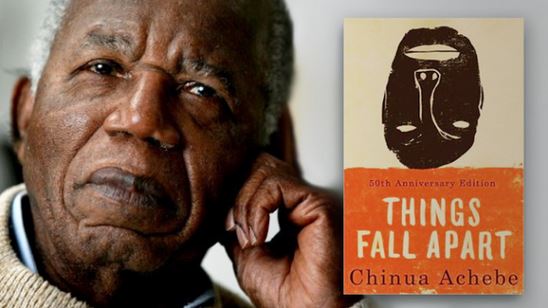
The story centres on Okonkwo, a respected man in the fictional community of Umuofia in southeastern Nigeria. His ambitions, family relationships and personal fears unfold against the background of a society facing major changes. Through village assemblies, religious practices, proverbs, customs and relationships between families, Achebe presents a community with its own rules and disagreements. The arrival of Christian missionaries and British colonial authorities eventually challenges established institutions, creating divisions that affect both the community and Okonkwo’s life.
The novel’s reach grew well beyond its original audience, helping establish Achebe as one of the defining figures in modern African literature. Its influence is closely connected to its portrayal of African people as individuals with complex motives and established cultural traditions rather than as background characters in someone else’s account of history. This is the foundation of Edochie’s argument, as the actor sees the book’s ability to tell an African story as a major reason for its enduring reputation.
Can Half of a Yellow Sun Match Achebe’s Literary Legacy?
Chimamanda Ngozi Adichie’s Half of a Yellow Sun, published in 2006, is among the Nigerian novels frequently discussed when readers consider the country’s most influential modern literary works. Set during the Nigerian Civil War, which lasted from 1967 to 1970, the novel follows characters whose personal lives are shaped by political conflict, ethnic tensions, displacement and the struggle to survive. Adichie approaches this period through the experiences of people whose relationships and ambitions become entangled with the realities of war.
The book has earned international recognition and brought the history of Biafra and the Nigerian Civil War to readers across different countries. Its narrative combines personal experiences with the larger consequences of a conflict that affected millions of people. While Achebe’s novel examines Igbo society during the arrival of colonial rule, Adichie’s work explores a later chapter in Nigerian history, demonstrating how literature can preserve painful memories while examining the human cost of political decisions.
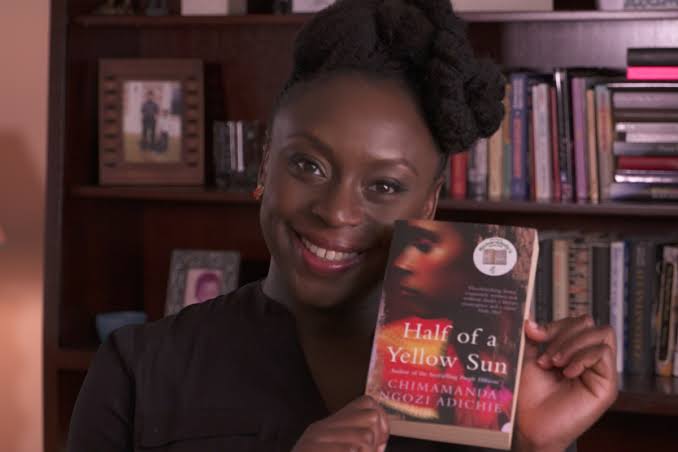
Both novels give Nigerian experiences a central place in their storytelling, but they emerged from different historical moments and literary circumstances. Things Fall Apart helped introduce international readers to a precolonial Igbo community and the changes brought by colonialism, while Half of a Yellow Sun examines the consequences of war and the difficult choices faced by people caught in a national crisis. Adichie’s achievement can be recognised on its own terms without assuming that literary influence must be measured through a single contest with Achebe’s work.
Other African Novels That Have Shaped the Continent’s Literary History
Achebe and Adichie represent 2 generations of Nigerian writing, but African literature extends across numerous countries, languages and historical experiences. Writers from Ghana, South Africa, Kenya, Egypt, Sudan and Zimbabwe, among other countries, have produced works that explore colonialism, independence, social inequality, identity, family life and political change. These books demonstrate that the continent’s literary history cannot be reduced to a single novel or national tradition.
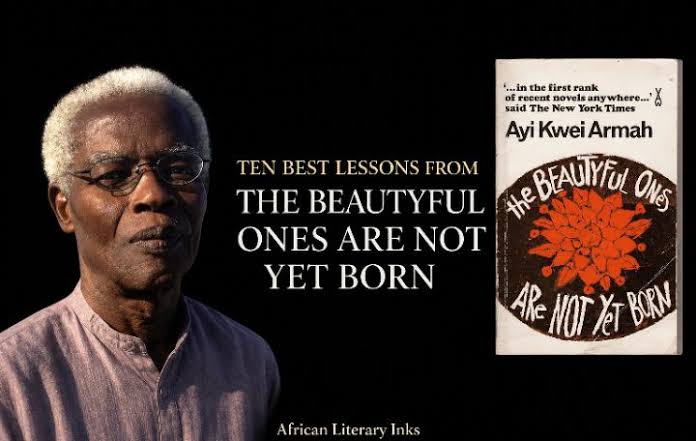
Ayi Kwei Armah’s The Beautyful Ones Are Not Yet Born, published in 1968, examines corruption and moral disappointment in post independence Ghana. Tayeb Salih’s Season of Migration to the North, first published in Arabic in 1966, explores identity, colonial encounters and the complicated relationship between Africa and Europe. Tsitsi Dangarembga’s Nervous Conditions, published in 1988, examines gender, education, family expectations and colonial influence through the experiences of a young Zimbabwean woman.
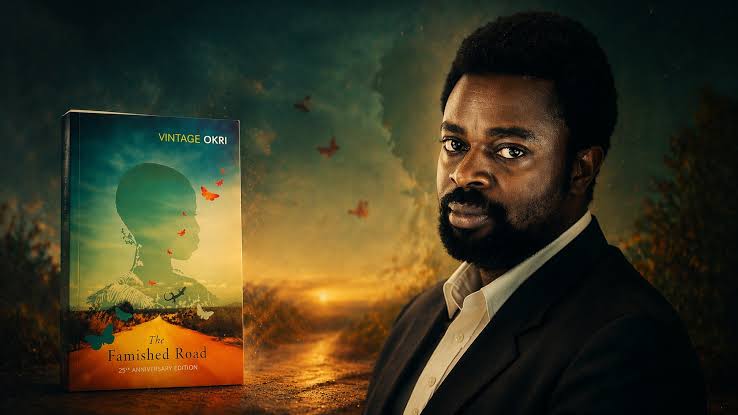
Ben Okri’s The Famished Road, published in 1991, combines social realities with elements of spiritual and magical storytelling, while other African writers have used fiction to explore experiences that differ considerably from those depicted in Achebe’s novel. These works have attracted readers and scholars for different reasons, contributing to a literary landscape in which historical importance, narrative style and cultural representation take several forms. Their existence provides context for Edochie’s strong endorsement of Achebe, even though no universally accepted measure can establish a definitive winner among all African books.
Why Achebe’s African Perspective Remains Central to the Debate
One of the enduring features of Things Fall Apart is the attention Achebe gives to the details of Igbo life. Proverbs, communal discussions, religious beliefs, family obligations and local customs are woven into the narrative rather than treated as incidental details. Readers encounter people making decisions within a society that has its own systems of authority, expectations and consequences. The result is a portrait of a community that existed long before European colonial institutions began to challenge its established way of life.
Achebe also used English in a manner that reflected Igbo expressions and patterns of thought, incorporating cultural references and proverbs that give the novel a distinctive voice. This approach helped readers outside Nigeria engage with a world that had often been presented through unfamiliar or incomplete perspectives. His work demonstrated that African experiences could provide the foundation for internationally recognised literature without losing the cultural details that made those experiences distinctive.
However, the novel is not a complete representation of every African society, nor does its importance suggest that all African stories must follow the same approach. The continent contains hundreds of languages and many different cultural traditions, each with its own history and literary expression. Achebe’s achievement is particularly rooted in Igbo society, and its broader significance lies partly in how successfully he brought that specific world to a global readership.
Pete Edochie Recalls His Former Nicknames Elvis Presley and John Wayne
The actor’s remarks about Achebe’s novel were accompanied by reflections on cultural identity and the influence of overseas entertainment. Edochie recalled a time when people called him Elvis Presley and John Wayne, referring to the internationally recognised American singer and Hollywood actor. He explained that he initially enjoyed answering to those names but eventually decided to abandon them in favour of a name he considered more closely connected to his cultural background.
“We Africans permitted our talents to be submerged by overseas influences. I remember once upon a time I was being called Elvis Presley and John Wayne,” he said. Edochie continued, “I actually enjoyed answering those names but at some point I had to discard them and pick a name that’s culturally relevant to me. Then I went back to the root and started answering Uwadiegwu.” His recollection provides another example of the cultural concerns underlying his comments about African storytelling.
Edochie’s point is not necessarily that Africans should avoid foreign music, films or other forms of entertainment. Rather, he reflects on how admiration for international personalities can influence the way people identify themselves, sometimes placing foreign cultural references ahead of their own heritage. His decision to embrace a culturally relevant name connects with his belief that African people should value their traditions and the stories that emerge from their own communities.
Pete Edochie’s Connection to Things Fall Apart
Edochie’s opinion carries a personal connection because he portrayed Okonkwo in the Nigerian Television Authority’s television adaptation of Things Fall Apart, released in 1987. The role became one of the defining performances of his career and established a lasting association between the actor and Achebe’s central character. For many viewers, his portrayal remains closely linked to the novel’s place in Nigerian television and popular culture.
Playing Okonkwo required Edochie to bring to life a character whose ambitions, fears and decisions are shaped by the expectations of his community and the changes surrounding him. The role placed the actor within a story that explores questions of masculinity, family responsibility, social standing and the consequences of resisting change. His later comments about the novel therefore come from someone whose career has been closely associated with its adaptation and its cultural significance.
His experience does not make his opinion an official verdict on African literature, but it helps explain the conviction with which he speaks about the book. The novel has remained part of his public identity decades after the television adaptation, and his defence of its importance reflects a relationship with the story that extends beyond simply reading it as a literary work.
Can One Novel Be Declared the Greatest in Africa?
Edochie’s statement presents a clear preference, but the question of literary greatness involves several considerations. Some readers may focus on a novel’s influence on later writers, while others may value its treatment of history, its language, its characters or its ability to connect with readers across generations. A book may become internationally recognised without being every reader’s personal favourite, just as a novel with a smaller readership may hold deep significance within a particular literary tradition.
Things Fall Apart has a substantial claim to being one of the most influential African novels ever published. Its international circulation, translation history, academic standing and continuing presence in discussions about colonialism and African identity demonstrate the reach of Achebe’s work. Nevertheless, Half of a Yellow Sun and other celebrated African novels address different periods, societies and human experiences, making direct comparisons difficult when the criteria for greatness have not been clearly defined.
Edochie’s remarks are best understood as a forceful personal endorsement of a novel whose historical and literary importance is widely recognised. His emphasis on African people telling their own stories also provides a reason to examine other works that have brought the continent’s experiences to international readers. The debate does not need a single final winner to demonstrate the lasting value of these books.
Edochie’s Wider Message About African Creative Industries
The TV3 interview also included discussion of Ghana’s film industry, with Edochie calling for greater investment to help local filmmakers produce more work. He argued that Ghana has talented actors and appealed to wealthy individuals and the government to provide financial backing for the industry. Those comments broaden the interview’s focus from literature to the wider conditions that allow African creative talent to develop and reach audiences.
His concern about investment in filmmaking connects with his comments on cultural identity, although the 2 subjects involve different challenges. Writers need opportunities to publish and distribute their work, while filmmakers require resources for production, promotion and exhibition. Both fields depend on audiences being able to encounter stories that reflect their own experiences, alongside opportunities for those stories to reach people beyond their immediate communities.
Edochie’s remarks ultimately return attention to the value of African voices in cultural production. Achebe’s novel became internationally recognised because it placed an African community at the centre of a carefully developed story, while later writers such as Adichie have continued to explore the continent’s history through their own literary approaches. Their achievements show how different generations can contribute to the same broad conversation without having to tell identical stories.
The Lasting Place of Things Fall Apart in African Literature
More than 6 decades after its publication in 1958, Things Fall Apart remains a defining work in discussions about African literature, colonial history and cultural representation. Its portrayal of Igbo society, the arrival of colonial rule and the personal tragedy at the centre of the story has introduced generations of readers to a world that deserves to be understood on its own terms. The novel’s reputation rests not only on its subject but also on the way Achebe developed its characters and presented the consequences of historical change.
Pete Edochie’s declaration that the book is the greatest ever written on the African continent reflects his belief that no later work has matched its strength in telling an African story. Half of a Yellow Sun and other celebrated novels nevertheless demonstrate the breadth of African writing and its capacity to examine different societies, periods and struggles. Each contributes to the continent’s literary record in a distinct way, even when readers disagree about their relative influence.
The enduring conversation around Achebe’s work therefore extends beyond a contest over rankings. It concerns the importance of preserving cultural memory, presenting African experiences with depth and allowing writers from the continent to shape how their histories are understood. Edochie has made his choice clear, while the range of African literature ensures that readers will continue to discover other books whose stories speak powerfully to their own time and experience.