Nigerian workers are watching closely as the battle over the next national minimum wage takes a new turn, with the rising cost of food, transportation, rent and other essentials putting monthly salaries under growing pressure. For many employees, the big concern is whether the next wage review will bring meaningful relief and how long they may have to wait before any change reaches their pockets.
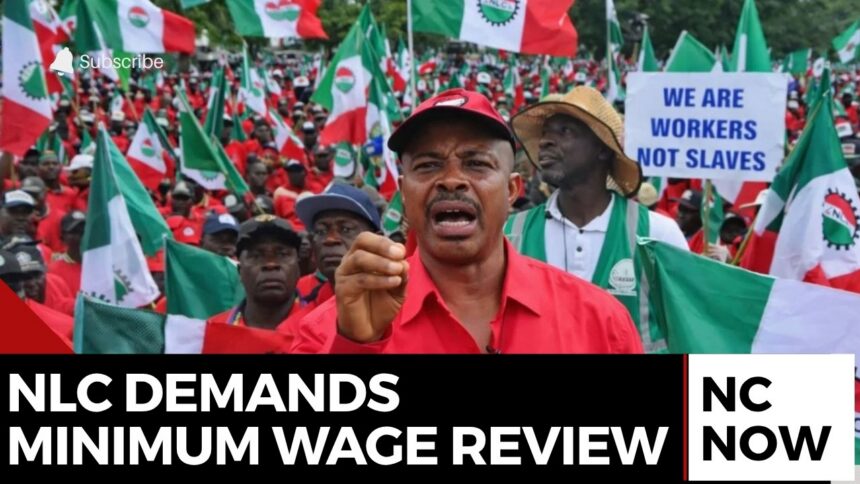
The latest disagreement between the Nigeria Labour Congress (NLC) and the Federal Government has added a new dimension to the debate, with both sides holding different positions on when negotiations should begin. The union is pushing for immediate action, while the government maintains that the current wage is due for review in June 2027. A 2 week ultimatum, demands for lower petrol prices and outstanding agreements with workers have also become part of the dispute, leaving several important issues on the table.
Nigeria’s Minimum Wage Dispute Takes a New Turn
The disagreement intensified in October 2026 after the Federal Government and the Nigeria Labour Congress exchanged letters over the timing of the next minimum wage negotiations. The union wants preparations to begin immediately, arguing that waiting until 2027 could delay the process of reaching an agreement and implementing a new wage structure.
Minister of Labour and Employment Muhammad Maigari Dingyadi maintained that the current minimum wage should follow the review timetable recognised by the government. The NLC challenged that position in a response dated October 13, insisting that the relevant legal provisions do not prevent the government from beginning preparations earlier.
The dispute goes beyond the question of when workers might receive higher salaries, as it also concerns the legal process required to negotiate a new national minimum wage. Both sides must resolve their disagreement over the timetable before the next stage can proceed smoothly.
The NLC has also linked its demand to the rising cost of living, high petrol prices and outstanding agreements affecting employees. These concerns have added urgency to the discussions, particularly for workers who say their current earnings are becoming increasingly difficult to stretch across essential expenses.
How Much Is Nigeria’s Current Minimum Wage?
Nigeria’s national minimum wage stands at ₦70,000 per month, following President Bola Tinubu’s approval of an increase from ₦30,000 in July 2024. The new figure followed negotiations involving the Federal Government, organised labour and employers amid growing concerns about the financial pressure facing Nigerian workers.
The increase represented a substantial adjustment to the statutory minimum, but the cost of everyday essentials continues to influence how much workers can afford with their earnings. Food, accommodation, transportation, healthcare and school expenses take up a significant share of many household budgets, leaving some employees struggling to meet their needs.
The National Minimum Wage Act, as amended in 2024, provides the legal framework for the existing wage arrangement and its review. The timing of the next review has now become the central point of disagreement between the government and organised labour.
There is no confirmed new national minimum wage arising from the latest negotiations dispute. The current statutory figure remains ₦70,000 per month, while higher amounts being discussed should be treated as proposals unless an official agreement and the necessary legal steps establish a new rate.
Why the Federal Government Wants to Wait Until June 2027
The Federal Government maintains that the next minimum wage review should follow the timetable it considers applicable under the law. In his response to organised labour, Minister of Labour and Employment Muhammad Maigari Dingyadi argued that the existing wage became law in July 2024 and would become due for review on June 1, 2027.
The government’s position rests on its interpretation of the National Minimum Wage Act, 2019, as amended in 2024, which it says provides for a review every 3 years. According to the minister, beginning another review before the current arrangement reaches the appropriate point would be premature and inconsistent with the statutory timetable.
The government has also pointed to measures intended to ease economic hardship, including the Presidential Compressed Natural Gas Initiative, food security interventions and other support programmes. It has maintained that the National Minimum Wage Tripartite Committee will be convened at the appropriate time to negotiate the next wage.
The disagreement centres on the timing of the process rather than an immediate change to the existing salary floor. While the government prefers June 2027 as the review point, the NLC wants the preparatory work to start earlier so negotiations can progress without unnecessary delays.
Why the NLC Wants Negotiations to Start Immediately
The Nigeria Labour Congress has rejected the government’s position, arguing that preparations for a new minimum wage should begin without further delay. In its October 13, 2026, response, the union challenged the government’s interpretation of the law and called for the process to move forward.
The NLC argues that the original National Minimum Wage Act was enacted in April 2019 and maintains that the relevant statutory timetable should be considered in light of the original legislation. It also contends that the 2024 amendment did not remove the earlier timeline in the way the government suggests.
The union’s position is that beginning negotiations does not require the government to introduce a higher minimum wage immediately. Instead, the authorities can start by inviting nominations, setting up the tripartite committee and allowing representatives of the government, employers and organised labour to begin discussions.
Starting early, according to the NLC’s argument, would give the parties sufficient time to negotiate an agreement and prepare for implementation. This could reduce the risk of lengthy discussions delaying the eventual introduction of a new wage.
The union wants negotiations to commence by October 17, 2026. Its demand has become a major point of contention, with the government yet to accept the proposed timetable in the reported developments.
NLC Gives the Federal Government a 2 Week Ultimatum
The minimum wage disagreement is taking place alongside a wider ultimatum issued by the NLC over workers’ welfare. On October 8, 2026, the union announced a 2 week ultimatum demanding action on minimum wage negotiations, petrol prices and outstanding agreements with workers.
The ultimatum took effect on October 9, placing pressure on the government to address the union’s concerns within the specified period. The NLC warned that failure to meet its demands could lead to further action by the labour movement.
The government’s response on the minimum wage timetable has failed to resolve the disagreement, with the union continuing to insist that preparations should begin immediately. This has increased uncertainty over whether both parties can reach an understanding before the ultimatum runs its course.
Workers should understand that an ultimatum is different from a formal declaration of a nationwide strike. Although the NLC has warned of possible industrial action, a confirmed strike requires an official announcement establishing the decision and the intended commencement date.
The dispute remains unresolved, and the next significant development will be whether the government takes steps to address the union’s demands or organised labour announces further action.
Petrol Prices Remain Central to the Labour Dispute
The NLC is also demanding a reduction in petrol prices to levels that prevailed when the current minimum wage was negotiated in 2024. The union argues that rising fuel costs have increased the financial burden on workers, particularly those who depend on commercial transportation to get to their workplaces.
For employees who commute daily, higher transport fares can consume a substantial part of their monthly salaries. Money that could have gone towards food, rent or other household expenses may instead be spent travelling to and from work.
Fuel costs also affect the wider economy because businesses depend on transportation to move goods and deliver services. When these expenses rise, consumers may face higher prices for essential products, putting additional pressure on household budgets.
The NLC believes that reducing petrol prices would provide some relief while discussions over a new minimum wage continue. Its demand reflects the union’s position that salary negotiations should be accompanied by measures that address the expenses workers face every day.
The Federal Government has not reached a confirmed agreement accepting the union’s petrol price demand in the latest reported developments. The issue remains part of the wider disagreement over workers’ welfare.
Why the NLC Says ₦70,000 Is No Longer Enough
The NLC has argued that the current minimum wage has lost purchasing power because of rising living costs. Although the increase from ₦30,000 to ₦70,000 in 2024 raised workers’ nominal earnings, the value of those salaries depends on how much they can buy.
Food, accommodation, transportation, electricity, healthcare and school expenses can consume much of a worker’s monthly income. Employees supporting children or other family members may face additional responsibilities, making it harder to manage their household budgets.
The difficulty becomes more pronounced when the prices of essential goods and services rise faster than salaries. A worker may earn more in naira than before but still struggle to maintain the same standard of living because everyday expenses have increased.
This concern forms part of the NLC’s argument for beginning a fresh minimum wage review early. The union wants the next negotiations to reflect the economic conditions facing workers rather than rely solely on the amount approved in 2024.
The demand for lower petrol prices is closely connected to this position because transportation costs can affect both workers’ daily spending and the prices of goods. For the NLC, addressing wages and other living expenses forms part of the broader effort to improve workers’ financial circumstances.
States Already Paying Above ₦70,000
Some Nigerian states have introduced or announced wage arrangements above the national minimum of ₦70,000. On October 9, 2026, NLC President Joe Ajaero cited examples of higher state level wages while discussing the debate over workers’ earnings.
A report by Channels Television attributed to Ajaero references to Imo State’s reported ₦104,000 wage, alongside other figures of ₦100,000, ₦85,000, ₦84,000 and ₦75,000. The examples formed part of the union’s argument that higher wage arrangements already exist in some parts of the country.
These figures should not be taken to mean that every employee in the states mentioned receives the same monthly salary. Actual earnings can depend on the applicable salary structure, job grade, employment category and the terms of the arrangement introduced by each state government.
A higher wage approved by one state also does not automatically change the national minimum wage for the entire country. The national statutory figure remains governed by the relevant law and any subsequent agreement or legal process required to establish a new amount.
Workers should therefore check official announcements from their respective state governments to understand which employees are covered, how much has been approved and whether payment has started. A reported wage increase and an adjustment already reflected in employees’ salaries are not necessarily the same thing.
Is Nigeria Considering a ₦500,000 Minimum Wage?
The possibility of a ₦500,000 minimum monthly wage has featured in discussions about future salary arrangements. A report published by The Sun in September 2026 indicated that public sector workers were pressing for a new wage structure that could raise the minimum monthly salary to ₦500,000 from 2027.
The proposed amount has attracted attention because it is substantially higher than the existing national minimum wage of ₦70,000. However, a demand made by workers or a figure discussed ahead of negotiations should not be mistaken for an agreement reached by the government, organised labour and employers.
The latest developments in October concern the timing of negotiations, the legal review timetable and the NLC’s wider demands. They do not establish that the Federal Government has approved ₦500,000 as Nigeria’s next national minimum wage.
Any new national wage would have to emerge through the appropriate negotiation and legal process before it could be treated as an established amount. Until then, workers should be cautious about social media posts claiming that the figure has already been approved.
The ₦500,000 proposal remains part of the reported debate over future earnings rather than a confirmed national minimum wage. Employees should look for official announcements before making financial decisions based on a proposed salary increase.
What About Proposed Wages of ₦100,000 or ₦150,000?
Figures such as ₦100,000 and ₦150,000 may also appear in discussions about Nigeria’s next minimum wage. The important point is to establish who proposed the amount, whether formal negotiations have taken place and whether the relevant authorities have reached an agreement.
A union leader may advocate for a particular figure, a workers’ group may put forward a proposal, or a state government may approve a higher wage for its employees. Each development has a different status, and none automatically changes the national minimum wage.
The latest reports confirm that the NLC wants negotiations to begin immediately, but they do not establish a final agreement between the Federal Government, organised labour and employers on a new national wage amount.
Workers should be careful when reading headlines or social media posts claiming that ₦100,000, ₦150,000 or another figure has already become the national minimum wage. The source, publication date and official status of the announcement all matter when determining whether a claim is accurate.
The current national minimum wage remains ₦70,000 per month until a new figure is established through the relevant process. Any higher amount should be described according to its actual status, whether it is a proposal, a union demand, a state level arrangement or an approved national wage.
Other Labour Demands Facing the Government
The NLC has raised several other concerns alongside its demand for immediate minimum wage negotiations. These include implementing tax relief measures agreed upon in 2023, paying wage awards intended to cushion the rising cost of living and addressing outstanding agreements affecting public sector employees.
The union has also called for action on agreements involving the Joint Health Sector Unions and the Joint Public Sector Negotiating Council. These issues matter to employees whose payments, working conditions or other entitlements depend on agreements reached between their representatives and the relevant authorities.
Outstanding payments and wage awards can make a difference to workers’ finances, particularly when their regular salaries are already stretched by rising household expenses. Employees waiting for agreed payments may face additional difficulties managing food, transportation, accommodation and other essential costs.
These demands should nevertheless be distinguished from the national minimum wage review. The payment of an outstanding allowance, settlement of salary arrears or implementation of a wage award does not automatically establish a new national minimum wage.
The Federal Government has indicated that relevant ministries, departments and agencies are engaging on matters within their responsibilities. The progress made on these issues will form part of the wider developments to watch as the NLC’s ultimatum continues.
What Federal Government Workers Should Expect
Federal government employees whose salaries are governed by the current national minimum wage arrangement should continue to expect the existing rules to apply until a change is officially established. The latest dispute has not produced an announced increase that workers can assume will appear in their next salary payment.
The NLC’s demand for immediate negotiations could affect the timetable for a future wage agreement, but the start of discussions would not automatically mean a higher salary has been approved. The parties would still need to negotiate the amount, reach an agreement and complete the relevant legal process.
Workers should also understand the difference between a minimum wage increase, a salary adjustment for a particular category of employees, a wage award and outstanding arrears. These arrangements serve different purposes and may apply to different groups of employees under separate conditions.
For employees struggling with rising living costs, the timing of any future adjustment will be important. However, calculating a new monthly salary using a proposed figure could create unrealistic expectations when no new national amount has been established.
Federal workers should follow official government announcements, statements from organised labour and communications from their respective unions. Any confirmed wage change should be assessed according to the approved amount, the implementation date and the categories of employees covered.
What State Workers Need to Know
State government employees should monitor announcements from their respective governments alongside updates from the NLC and other recognised labour organisations. Although the national minimum wage provides a statutory floor for covered employment, the actual salary an employee receives may depend on the applicable salary structure and employment arrangements.
Some states have announced wages above the national minimum, but the amounts and implementation arrangements differ. Workers should check whether a particular announcement covers all eligible employees, selected categories or specific salary grades.
An announcement approving a higher wage does not necessarily mean every employee has already received the adjustment. Implementation depends on the terms of the decision, its effective date and the administrative steps required to update salaries.
The national minimum wage dispute may influence future discussions about workers’ earnings, but it does not automatically change the salary arrangements already in place across the states. Each state government’s formal decisions remain important when determining the amount payable to its employees.
Workers should verify wage announcements through official government channels and their recognised unions. This will help them distinguish between a proposed adjustment, an approved salary change and a payment that has actually started.
What Local Government Workers Should Expect
Local government employees should also pay attention to the national minimum wage dispute, particularly where their salary arrangements are affected by state government decisions and agreements with recognised unions. The debate has implications for the wider public sector because the national minimum wage framework applies to covered employment across different levels of government.
The amount an individual local government employee receives may depend on the applicable salary structure, employment category and implementation arrangements adopted by the relevant authorities. An announcement concerning federal employees or a particular state does not automatically confirm that every local government worker has received the same adjustment.
Employees should follow communications from their local government authorities, state governments and recognised unions. They should also distinguish between the statutory minimum wage and additional benefits or allowances that may be provided under separate arrangements.
The NLC’s demand for immediate negotiations could lead to further discussions about a future national wage, but the latest dispute has not produced a confirmed new national amount. The existing national minimum wage remains ₦70,000 per month.
Any future adjustment should be assessed according to the official terms, including its effective date and the employees covered. Until a new wage is established through the relevant process, local government workers should not assume that proposed figures represent an approved salary increase.
When Could Nigeria Announce a New Minimum Wage?
There is no confirmed date for the announcement of a new national minimum wage. The Federal Government maintains that the current wage is due for review on June 1, 2027, while the NLC wants negotiations to begin immediately.
Should the government agree to start preparations earlier, the process would involve establishing the tripartite committee and appointing representatives of the government, employers and organised labour. The committee would provide a platform for discussions about the proposed wage and the terms of a new agreement.
The parties would need to negotiate the amount, discuss implementation arrangements and reach an agreement before proceeding through the applicable legal process. These steps are necessary before a new national minimum wage can be treated as formally established.
Starting negotiations in October 2026 would not guarantee that a new wage would take effect immediately. The duration of the discussions, the ability of the parties to reach an agreement and the steps required for implementation would all influence the timetable.
The immediate issue is whether the government will agree to begin preparations before June 2027. That decision could determine how soon negotiations move forward, but workers should wait for official announcements before treating any proposed implementation date as confirmed.
Will the NLC Declare a Nationwide Strike?
The possibility of industrial action remains part of the dispute because the NLC has warned that failure to address its demands could lead to further action. The 2 week ultimatum has increased pressure on the Federal Government to respond to the issues raised by organised labour.
However, a warning of possible industrial action is different from a formal declaration of a nationwide strike. An official announcement would need to establish the union’s decision, the intended commencement date and any instructions issued to its members.
This distinction matters to workers, businesses, schools, transport operators and members of the public who may need to make arrangements if a strike is announced. Reports suggesting that a nationwide shutdown has been scheduled should be checked against official statements from the NLC and other relevant labour organisations.
The reported developments have established growing tension between the government and organised labour, but they have not confirmed a nationwide strike date arising from the latest minimum wage dispute. The situation could change as the ultimatum progresses, making subsequent announcements important.
Workers should monitor communications from the NLC, the Trade Union Congress and relevant public sector unions. Any formal strike declaration should be reported according to the actual announcement rather than presented as certain based only on warnings or speculation.
Where Workers Can Follow Official Updates
Nigerian workers can follow the Nigeria Labour Congress for official statements concerning the ultimatum, minimum wage negotiations and possible industrial action. Its communiqués can help clarify whether the union has announced a new position or issued instructions to members.
The Federal Ministry of Labour and Employment is another important source for updates on the government’s position, discussions with organised labour and plans for the tripartite committee. Official statements can help establish whether negotiations have been scheduled or an agreement has been reached.
Workers can also monitor announcements from the State House for information concerning national wage policy and presidential decisions. The official State House website provides access to government announcements and statements.
The International Labour Organization also provides resources on labour standards and national labour legislation through its NATLEX legislation database. These resources can help readers understand the legal framework, while updates on the current negotiations should be checked through the relevant Nigerian authorities and labour organisations.
News reports remain useful for following developments, but workers should pay attention to publication dates and whether a statement comes from an official source, a proposal or an attributed claim. This is especially important when a report mentions a new wage amount or a possible strike date.
Nigeria’s Minimum Wage Dispute Remains Unresolved
The disagreement between the NLC and the Federal Government has brought the next national minimum wage review into focus, with the union demanding immediate negotiations and the government maintaining that the current wage is due for review in June 2027. The dispute centres on the interpretation of the legal timetable and the point at which preparations for a new agreement should begin.
The NLC has argued that the ₦70,000 minimum wage no longer adequately reflects workers’ living costs. Its demands also include lower petrol prices, the payment of outstanding wage awards and the implementation of existing labour agreements.
The Federal Government has maintained its position on the review timetable and said the tripartite committee will be convened at the appropriate time. Meanwhile, proposals for ₦100,000, ₦150,000 and ₦500,000 have featured in discussions about future salaries, but none has been established as Nigeria’s new national minimum wage through the latest reported developments.
The possibility of industrial action remains a concern as the ultimatum progresses, although a nationwide strike date should not be assumed without an official announcement. The next major development will be whether the government agrees to begin negotiations before June 2027 or whether the disagreement leads to further action by organised labour.
Nigeria’s national minimum wage remains ₦70,000 per month, and no new national amount has been officially established through the latest reported dispute. For workers waiting for a salary increase, the most important developments to watch are the government’s response to the NLC’s demands, the commencement of negotiations and any formal announcement concerning a future wage agreement.