
Nigeria’s stock market is heading into a new trading week after another decline left investors weighing the performance of major listed companies against the substantial gains recorded earlier in 2026. Banking stocks have come under pressure, trading activity has slowed considerably, and several companies have moved sharply in opposite directions, creating a market picture that demands closer attention.
Friday, October 16, 2026, ended with the Nigerian Exchange Limited All Share Index at 247,539.73 points, while the total market capitalisation of listed equities stood at approximately ₦160.73 trillion. The market lost 0.33% during the week, extending its losing streak to 3 consecutive weeks, although its year to date return remained positive at 59.07%.
The latest figures raise important questions about the performance of individual companies, the sectors attracting investor interest, and the developments worth monitoring as trading resumes on Monday, October 19. From Livestock Feeds and E Tranzact to Zenith Bank, GTCO and Access Holdings, the latest market movements offer a closer look at the opportunities and risks confronting Nigerian stock market investors.
Nigerian Stock Market Records Another Weekly Decline
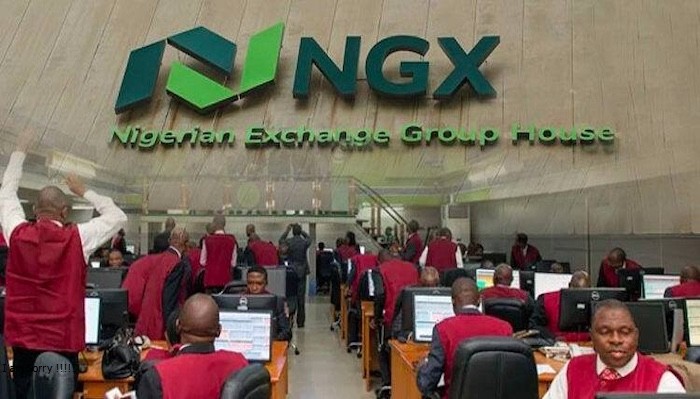
The Nigerian equities market ended the week of October 12 to October 16, 2026, on a negative note, extending a period of short term weakness that has followed substantial gains earlier in the year. The All Share Index closed at 247,539.73 points, down from 248,363.55 points recorded at the end of the preceding week, representing a loss of 823.82 index points.
Market capitalisation settled at approximately ₦160.73 trillion on Friday, October 16, reflecting the combined value of listed equities at the close of trading. The benchmark index declined by 0.33% over the week, while the month to date return stood at negative 1.46%, indicating that the market had surrendered some ground during October.
The decline came after the market lost 0.97% in the preceding week, marking its third consecutive weekly loss. Despite this trend, the year to date return remained at 59.07%, showing that the latest weakness occurred after a strong advance over the preceding months.
Investors therefore face 2 different pictures of the market, with the recent direction pointing downward while the broader performance for 2026 remains positive. The distinction is important when assessing individual shares, because a temporary market decline does not necessarily indicate that every listed company has experienced a deterioration in its financial performance.
Zenith Bank, GTCO Face Selling Pressure
Banking stocks were among the major contributors to the market’s negative performance during the week, with several prominent financial institutions recording share price declines. Zenith Bank Plc fell by 6.46%, while Guaranty Trust Holding Company Plc, popularly known as GTCO, lost 4.37% over the same period.
First HoldCo Plc declined by 3.93%, while Access Holdings Plc recorded a 3.39% decrease. These losses contributed to the pressure on the banking sector, although the performance of individual financial institutions varied, with Stanbic IBTC Holdings Plc gaining 2.75% during the week.
The NGX Banking Index fell by 3.15%, closing at 2,532.47 points compared with 2,614.79 points in the preceding week. The NGX AFR Bank Value Index also declined by 3.80%, reinforcing the picture of weakness across several banking stocks.
Banking shares attract attention from investors because of their earnings potential, dividend payments, loan portfolios and exposure to changes in interest rates. However, a falling share price alone cannot establish whether a bank has become undervalued, making it necessary to examine its financial statements, asset quality, capital position and valuation before considering an investment.
Livestock Feeds Leads Weekly Stock Market Gainers
Livestock Feeds Plc emerged as the strongest performer among the reported weekly gainers, with its share price rising by 44.49% to ₦19.00 from ₦13.15. The increase placed the company at the top of the reported ranking for the week ended Friday, October 16, 2026.
The movement illustrates how individual shares can record substantial gains even when the broader market is declining. An investor who held 1,000 shares throughout the period would have seen the quoted value of the holding rise from ₦13,150 to ₦19,000, representing an increase of ₦5,850 before transaction costs and other applicable charges.
E Tranzact International Plc followed closely, gaining 42.98% as its share price increased from ₦12.10 to ₦17.30. The electronic payments company was among the strongest performers during the week, attracting attention from investors following Nigeria’s financial technology industry.
Multi Trex Integrated Foods Plc also recorded a substantial increase, with its share price climbing by 42.86% from ₦0.42 to ₦0.60. Although the percentage gain was considerable, the stock continued to trade below ₦1, highlighting the need to assess a company’s financial position and market valuation rather than relying on its nominal share price.
Other reported weekly gainers included Austin Laz and Company Plc, which advanced by 32.73% to ₦2.92, and Omatek Ventures Plc, which gained 19.40% to ₦1.60. Fortis Global Insurance Plc rose by 13.10% to ₦1.90, while Guinness Nigeria Plc gained 9.93% to ₦423.00.
Neimeth International Pharmaceuticals Plc advanced by 9.29% to ₦7.65, while Aradel Holdings Plc gained 8.93% to close at ₦1,499.90. VFD Group Plc completed the reported top 10 weekly gainers with an increase of 8.13% to ₦13.30.
These gains represent reported share price movements rather than guaranteed investment returns. Investors considering the companies would need to examine their earnings, corporate announcements, trading liquidity and valuations to understand whether the latest increases are supported by their underlying business performance.
UPDC REIT, NASCON Record Significant Losses
UPDC Real Estate Investment Trust recorded the steepest decline among the selected weekly losers, falling by 11.88% from ₦24.00 to ₦21.15. The performance placed the property investment vehicle among the most notable decliners during the week ended October 16.
NASCON Allied Industries Plc also came under pressure, losing 9.48% to close at ₦171.00. The company operates in the salt and seasoning industry, and its latest share price performance provides a reason for investors to examine its operating costs, revenue growth, profitability and valuation.
Zenith Bank’s 6.46% decline also placed it among the prominent losers, while Guaranty Trust Holding Company recorded a weekly loss of 4.37%. Other reported decliners included PZ Cussons Nigeria Plc, down 5.15%, Oando Plc, down 3.98%, First HoldCo, down 3.93%, Dangote Sugar Refinery Plc, down 3.57%, and Access Holdings, down 3.39%.
MTN Nigeria Communications Plc recorded a smaller decline of 1.79%, illustrating that selling pressure affected companies beyond the banking industry. The range of movements across these businesses shows why the overall market index cannot provide a complete picture of every investor’s experience.
The decline in UPDC REIT may interest investors following listed property investments, while NASCON’s performance may prompt closer attention to the consumer goods sector. Neither movement, however, provides sufficient evidence on its own to establish whether the affected shares represent buying opportunities.
Oil, Gas Stocks Outperform Other Major Sectors
The oil and gas sector delivered the strongest performance among the major sector indices during the week, contrasting with the weakness recorded by banking stocks. The NGX Oil and Gas Index gained 3.13%, while the NGX Commodity Index advanced by 2.36%.
Aradel Holdings Plc was among the companies contributing to the positive picture, rising by 8.93% to ₦1,499.90. The company’s performance drew attention to a sector that has recorded substantial gains over the course of 2026.
The NGX Consumer Goods Index rose by just 0.09%, indicating relatively flat performance across the sector as a whole. Individual companies nevertheless experienced significant differences, with Guinness Nigeria gaining 9.93% while NASCON Allied Industries lost 9.48%.
The NGX Industrial Goods Index was virtually unchanged during the week, advancing by approximately 0.004%, while the NGX Insurance Index declined by 0.14%. These results show that the direction of a sector index may differ from the performance of individual companies operating within the same industry.
Aradel’s weekly gain may attract investors researching energy companies, but further analysis should consider production levels, earnings, operating expenses, capital expenditure and exposure to changes in oil prices. Strong recent performance does not necessarily mean that a stock is attractively valued at its current price.
Oil and Gas Index Leads Year to Date Performance
The broader performance of the Nigerian stock market in 2026 provides additional context for the latest decline. Reported year to date figures show that the NGX Oil and Gas Index had gained 131.96%, placing it among the strongest performing market segments.
The NGX Premium Index advanced by 99.62%, while the NGX Industrial Goods Index recorded a gain of 83.97%. These figures compare with the All Share Index’s reported year to date return of 59.07%, showing that the wider market’s gains have not been distributed evenly across the different indices.
The performance of the insurance sector was considerably weaker, with the NGX Insurance Index recording a year to date decline of 9.23%. The NGX Growth Index also remained negative, falling by 3.20% over the same period.
These figures are index returns rather than individual stock returns, meaning companies within a strong performing sector may still experience losses. Investors should therefore assess the performance and financial condition of each company rather than assume that every stock in a leading sector offers similar prospects.
Trading Activity Falls Sharply During the Week
The market’s weekly decline was accompanied by a substantial reduction in trading activity. Investors exchanged approximately 1.659 billion shares valued at ₦98.088 billion during the week ended October 16, compared with approximately 2.715 billion shares worth ₦158.280 billion in the preceding week.
Trading volume fell by approximately 38.9%, while the total value of transactions declined by around 38.0%. The number of deals also decreased, pointing to a slowdown in activity across the exchange during the reporting period.
UBA, GTCO, Access Holdings, Zenith Bank and Aradel Holdings were among the stocks identified in reports covering significant trading activity. Their presence highlights the continued attention paid to major financial institutions and selected companies outside the banking sector.
Trading volume measures the number of shares exchanged, while trading value represents the monetary worth of transactions. The number of deals measures individual transactions, making each figure useful for understanding a different aspect of market activity.
Lower trading activity does not automatically establish that investors are abandoning the market. It may reflect changing portfolio decisions, reduced participation or a wait for further information, although the reported figures alone cannot determine which explanation applies.
Friday’s Trading Session Sets the Starting Point for October 19
The last completed trading session confirmed in the figures presented for this report was Friday, October 16, 2026. The All Share Index declined by 167.40 points, equivalent to 0.07%, falling from 247,707.13 points to 247,539.73 points.
Market capitalisation decreased by approximately ₦108.70 billion, moving from ₦160.83 trillion to ₦160.73 trillion. Trading activity during the session reached approximately 257.67 million shares across 31,972 deals.
Thomas Wyatt Nigeria Plc led the reported daily gainers, advancing by 10.00% to ₦2.42. E Tranzact International Plc gained 9.84% to ₦17.30, while Austin Laz and Company Plc rose by 9.77% to ₦2.92.
Omatek Ventures Plc advanced by 9.59% to ₦1.60, while Legend Internet Plc gained 9.23% to ₦3.55. These movements reflected the reported closing prices on Friday and should not be treated as confirmed rankings for Monday’s trading session.
On the losing side, UPDC REIT fell by 10.00% to ₦21.15, while Trans Nationwide Express Plc declined by 9.09% to ₦2.70. Critical Minerals Financing Corp Plc lost 8.06% to ₦3.31, Royal Exchange Plc fell by 6.48% to ₦1.01, and NPF Microfinance Bank Plc declined by 5.43% to ₦4.35.
Monday, October 19, was a separate trading day, so Friday’s closing figures should not be presented as Monday’s final market results. A market summary dated October 19 that repeats the previous session’s figures is not, by itself, sufficient confirmation of the latest closing index or share prices.
What Investors Should Watch During the New Trading Week
Corporate earnings and company announcements remain important considerations as investors assess the direction of individual stocks. Financial statements can provide information about revenue growth, profitability, debt levels and dividend capacity, while new disclosures may influence how the market values a company.
The banking sector deserves particular attention following the declines recorded by Zenith Bank, GTCO, First HoldCo and Access Holdings. Developments relating to earnings, capital requirements, asset quality and dividend declarations could influence investor assessments of these institutions, although the effect will depend on each company’s circumstances.
Inflation, interest rates and foreign exchange conditions also remain relevant to Nigerian equities. Higher borrowing costs can affect businesses with substantial debt, while currency movements may increase expenses for companies that rely on imported inputs or foreign currency financing.
Energy sector developments could influence oil and gas stocks, which have recorded some of the strongest year to date gains. Changes in crude oil prices, production levels and operating costs may affect individual companies differently, meaning that investors should consider the financial position of each business rather than rely solely on sector performance.
How Investors Can Assess the Latest Stock Market Opportunities
Investors seeking capital appreciation may wish to research companies such as Livestock Feeds, E Tranzact and Aradel Holdings, which recorded notable weekly gains. Their price movements provide a starting point for further investigation, but recent appreciation alone cannot establish whether the shares will continue rising.
Those interested in dividend income may examine established companies with a history of distributions, paying attention to earnings, payout ratios, cash flow and the capacity to sustain future payments. A company’s previous dividend record does not guarantee that another distribution will be declared.
Long term investors may also consider the market’s recent weakness alongside its positive year to date performance. Their decisions should reflect their investment objectives, financial circumstances, tolerance for losses and assessment of individual companies rather than short term index movements alone.
Investors with limited capital should avoid judging a stock solely by its share price. A company trading below ₦1 is not automatically cheaper in valuation terms than a company trading above ₦100, because the total number of shares, earnings and underlying business value also influence how a stock should be assessed.
Anyone who may need invested money for immediate expenses should also consider the risks of market volatility and the possibility of difficulty selling less actively traded shares at a desired price. Stock market investments can generate losses, and no company identified through this week’s performance figures can be regarded as a guaranteed winner.
Where to Check Official Nigerian Stock Market Prices
Investors seeking the latest share prices and corporate announcements should consult the official resources of Nigerian Exchange Limited and their licensed stockbrokers. Current market data can help distinguish completed trading sessions from ongoing activity and provide more reliable information when assessing individual shares.
The exchange’s disclosures are particularly useful for reviewing company announcements, financial statements and other information that may influence investment decisions. Investors should also verify trading prices before placing orders, as quoted prices can change during a session.
The figures available for the week ended October 16 show a market experiencing short term weakness after a substantial advance in 2026. With the All Share Index down 0.33% for the week, banking stocks under pressure and oil and gas shares recording stronger performance, the coming sessions will provide further information about the direction of individual companies and the broader Nigerian equities market.