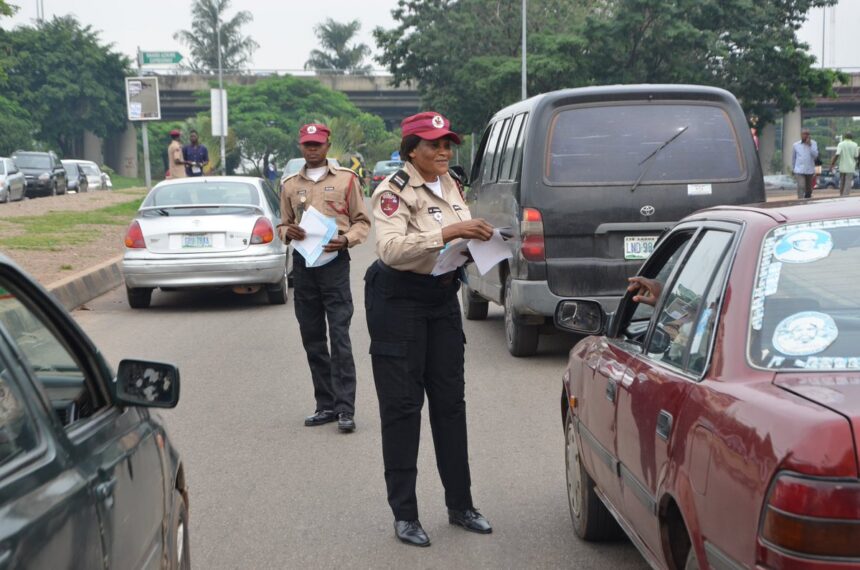
A motorist can spend years driving on Nigerian roads, renewing vehicle documents, buying fuel, and paying attention to traffic lights without becoming familiar with every rule that governs the use of a vehicle. Some offences involve everyday driving habits, while others concern vehicle equipment, the transportation of goods, passenger safety, and responsibilities that arise after a road crash. The Federal Road Safety Corps (FRSC) publishes an official schedule of traffic offences, penalties, and penalty points, offering motorists an opportunity to understand rules that receive less attention than speeding or driving without a licence.
The details become particularly interesting when the published penalties are examined alongside the conduct they cover. A damaged vehicle component, an improperly marked load, or an overlooked document can raise questions about whether a motorist is complying with the relevant requirements. Some entries also carry consequences beyond a financial penalty, making it important to understand the difference between an offence listed by the FRSC and the precise legal provision governing it.
The following breakdown examines unusual driving offences and lesser known traffic rules in Nigeria, using the FRSC’s published schedule as the starting point.
Driving a Right Hand Steering Vehicle
One of the more unusual entries in the FRSC’s published traffic offence schedule concerns driving a right hand steering vehicle. The agency’s online schedule lists the offence under the code DRV, with a penalty of ₦3,000 and forfeiture of the vehicle, alongside 10 penalty points. This entry stands out because the stated consequence includes the possible loss of the vehicle rather than a financial penalty alone. Motorists considering the purchase of an imported vehicle should establish whether its steering configuration complies with Nigerian law before putting it on the road.
There is an important legal distinction to understand, however. Regulation 128 of the National Road Traffic Regulations 2012 contains a provision concerning right hand steering vehicles and states a penalty upon conviction of ₦20,000, 6 months’ imprisonment, or both. The regulation and the FRSC’s published schedule do not present identical penalties, so the figures should not be treated as interchangeable. The applicable penalty depends on the relevant legal provision and circumstances of the case.
Driving With Worn Out Tyres
Tyres can deteriorate gradually, making it easy for motorists to postpone replacement while concentrating on other vehicle maintenance expenses. The FRSC’s published schedule lists driving with worn out tyres as an offence, carrying a penalty of ₦3,000 and 3 penalty points. A vehicle may still move normally even when its tyres have deteriorated, but that does not establish that it is safe or compliant with the relevant requirements.
The condition of the tyres matters because they are the vehicle’s main point of contact with the road. Motorists should inspect tread condition, look for visible damage, and pay attention to signs of deterioration rather than relying solely on whether a tyre remains inflated. The legal question is whether the tyre falls within the applicable prohibited condition, so not every mark or minor imperfection automatically attracts the same penalty. Regular inspection can help drivers identify problems before they become a road safety concern.
Driving Without a Spare Tyre
A spare tyre may remain untouched for months, which can cause some drivers to overlook its condition or forget to replace it after use. The FRSC’s published schedule lists driving with an expired or missing spare tyre under code EWT, with a penalty of ₦2,000 and 2 penalty points. The entry is unusual because it draws attention to equipment that may not be used during an ordinary journey but can become important when a tyre fails.
Motorists should check whether a suitable spare tyre is available and whether it is in a usable condition. The wording in the published schedule refers to an expired or missing spare tyre, but the entry does not explain a technical expiry period that applies to every spare tyre. An old tyre should not automatically be considered illegal simply because of its age. The applicable vehicle requirements should guide the assessment.
Driving With Defective Side Mirrors
Side mirrors help motorists observe traffic approaching from behind and beside their vehicles. They are particularly useful when changing lanes, merging into traffic, reversing, or preparing to overtake another vehicle. The FRSC’s published schedule includes a vehicle mirror violation under code VMV, carrying a penalty of ₦3,000 and 3 penalty points.
The schedule does not explain every defect that qualifies under this category, so every scratch or minor cosmetic imperfection should not automatically be treated as an offence. A missing or seriously damaged mirror can affect visibility and may fall within the applicable offence category, depending on the circumstances. Motorists should arrange repairs when a mirror is damaged and establish whether their vehicles meet the relevant safety requirements before continuing to drive.
Driving With a Damaged Windscreen
A windscreen can crack after being struck by a stone, damaged during a collision, or affected by another impact. Some motorists continue driving while waiting until they can afford a replacement, particularly when the damage appears small. The FRSC’s published schedule lists a vehicle windscreen violation under code VWV, with a penalty of ₦2,000 and 2 penalty points.
The existence of this entry does not establish that every crack automatically constitutes an offence, regardless of its size or position. Damage that interferes with the driver’s view raises an obvious safety concern, while the precise legal position depends on the applicable requirements. Motorists should assess the damage promptly and seek repairs where necessary, rather than assuming that a vehicle remains compliant simply because the engine, brakes, and other systems are functioning normally.
Transporting Loads Without Proper Warning Markings
Transporting timber, metal rods, pipes, furniture, and other long materials is common on Nigerian roads, particularly around construction sites and commercial areas. Loads that extend beyond a vehicle can create hazards for other road users, especially when the projecting material is difficult to see. The FRSC’s published schedule lists failure to fix a red flag on a projected load under code FFF, with a penalty of ₦3,000 and 3 penalty points.
The same schedule separately lists a projected load exceeding the prescribed limit, also carrying a published penalty of ₦3,000 and 3 penalty points. These are distinct entries, meaning that marking a load does not automatically make it lawful if its dimensions exceed the permitted limit. Motorists and transport operators should establish the applicable requirements for the size, positioning, and marking of their loads before setting off.
Transporting Loose Materials Without Covering Them
Trucks carrying sand, gravel, soil, and similar materials can create hazards when the cargo is not properly secured or covered. Loose material may fall onto the road or be blown into the path of other vehicles, potentially affecting visibility and road safety. The FRSC’s published schedule lists failure to cover unstable materials under code FCM, with a penalty of ₦5,000 and 5 penalty points.
This provision is particularly relevant to operators transporting construction materials and other loose cargo. The offence should not be interpreted as meaning that every uncovered object automatically falls within the same legal category, because the applicable requirements and nature of the material remain important. Transporters should secure their loads before departure and check the relevant regulations to establish what measures are required for the particular cargo being carried.
Driving a Vehicle That Emits Excessive Smoke
Vehicles that emit thick exhaust smoke may have mechanical problems that require attention. Some motorists continue using such vehicles because repairs are expensive or because they believe the vehicle can remain in service as long as it moves. The FRSC’s published schedule identifies excessive smoke emission under code ESE, with a penalty of ₦5,000 and 5 penalty points.
The entry provides a useful starting point for explaining the relationship between vehicle maintenance and road safety. However, it should not be interpreted as proof that every visible exhaust emission automatically constitutes an offence. The relevant question is whether the vehicle’s emissions fall within the category prohibited by the applicable requirements. Motorists experiencing persistent smoke should arrange an inspection and address the underlying mechanical problem rather than allowing the condition to continue indefinitely.
Operating a Mechanically Deficient Vehicle
A vehicle can remain capable of moving despite defects that affect its safe operation. Problems involving brakes, steering, lighting, tyres, or other important systems may require attention even when the vehicle can still complete a journey. The FRSC’s published schedule lists operating a mechanically deficient vehicle under code MDV, with a penalty of ₦5,000 and 5 penalty points.
The category concerns mechanical deficiency generally, so the precise application depends on the condition of the vehicle and the relevant legal requirements. Not every mechanical defect automatically attracts an identical penalty. Motorists should pay attention to warning signs, arrange necessary repairs, and avoid assuming that a vehicle is roadworthy simply because it starts and moves. Regular maintenance can also help identify defects before they develop into more serious problems.
Operating a Vehicle With Forged Documents
The FRSC’s published schedule lists operating a vehicle with forged documents under code OFD, with a penalty of ₦20,000 and 10 penalty points. This category should be distinguished from an expired document, an administrative error, or a genuine mistake made during a registration process. Forgery involves a different legal issue, and the consequences may extend beyond the administrative penalty displayed in the schedule.
Motorists should obtain vehicle documents through authorised channels and verify their authenticity when necessary. Anyone who discovers a discrepancy should establish how it can be corrected lawfully rather than assuming that an altered or questionable document will be accepted during enforcement. Whether a particular document is forged and what legal consequences follow depend on the evidence and the applicable legislation.
Failing to Report a Road Crash
A road crash can leave drivers focused on vehicle damage, medical assistance, insurance, or negotiations with other parties. The FRSC’s published schedule lists failure to report a road crash under code FRC, with a penalty of ₦20,000 and 10 penalty points. This makes crash reporting a relevant subject for motorists who may concentrate on resolving the immediate situation without checking their reporting obligations.
The schedule alone does not explain every circumstance in which a report must be made, the precise deadline, or the authority that must receive it. Those details depend on the applicable legal provisions and the circumstances of the incident. Motorists should prioritise assistance for injured people, follow lawful instructions at the scene, and establish the reporting requirements that apply to their circumstances. Reporting obligations should also be distinguished from any other duties arising from a collision.
Using Sirens Without Required Authority
Some motorists use sirens or emergency style warning equipment in an attempt to make other vehicles move aside. The FRSC’s published schedule lists a use of sirens violation under code USV, with a penalty of ₦2,000 and 3 penalty points. The Corps also identifies the regulation of sirens, flashers, and beacon lights among its statutory functions.
The relevant legal requirements depend on the vehicle, equipment, and circumstances. The existence of a siren or warning light does not, by itself, establish that a motorist is authorised to use it on a public road. The applicable restrictions determine whether the use is permitted in a particular situation. Motorists should establish whether the equipment and its use comply with the relevant rules.
Carrying Children in Prohibited Seating Positions
The FRSC’s published schedule lists child restraint violations and child sitting position violations separately. Both entries carry a published penalty of ₦3,000 and 6 penalty points. The distinction indicates that the equipment used to secure a child and the position in which the child is seated are separate issues within the agency’s schedule.
Parents and guardians should check the applicable child safety requirements rather than assuming that any seating arrangement is acceptable during a short journey. The published entries do not, by themselves, explain every age threshold, restraint specification, or seating requirement. Those details depend on the relevant regulations. Suitable restraints and safe seating practices remain important considerations whenever children travel in a vehicle.
Ignoring Road Markings
Road markings help organise traffic, indicate lane arrangements, and communicate instructions to motorists. The FRSC’s published schedule lists a road marking violation under code RMV, with a penalty of ₦5,000 and 5 penalty points. This is separate from the entries relating to traffic signs and unauthorised interference with road signs.
The category provides a useful starting point for explaining why drivers should pay attention to applicable road markings rather than relying only on traffic lights or the movement of other vehicles. However, the schedule does not establish that every manoeuvre involving a painted line automatically attracts the same penalty. Specific examples should be tied to the applicable rules so that readers understand which conduct is prohibited and why.
Removing or Tampering With Road Signs
Road signs provide warnings and instructions that help motorists make decisions while travelling. Removing or tampering with signs without authorisation can deprive other road users of important information and create dangerous conditions. The FRSC’s published schedule lists unauthorised removal or tampering with road signs under code UTS, with a penalty of ₦5,000 and 5 penalty points.
This category extends beyond ordinary driving behaviour because it can involve people who interfere with road infrastructure. Unauthorised interference should be distinguished from legitimate maintenance or roadworks conducted by an authorised organisation. Anyone undertaking work that affects road signs should establish the necessary authorisation and follow the relevant requirements.
Driving on the Wrong Route
The FRSC’s published schedule lists route violations under code RTV, with a penalty of ₦5,000 and 10 penalty points. The entry may be relevant to motorists operating vehicles in violation of applicable route restrictions.
The schedule does not explain every situation covered by the category. The relevant rules for the particular vehicle or road determine whether a specific action amounts to a violation. Motorists should pay attention to applicable route restrictions rather than assuming that every wrong turn automatically falls under the same offence.
Overtaking Where It Is Prohibited
Overtaking is a normal driving manoeuvre, but it can become dangerous when a driver lacks adequate visibility, space, or time to complete it safely. The FRSC’s published schedule lists wrongful overtaking under code WOV, with a penalty of ₦3,000 and 3 penalty points. The entry provides a basis for explaining why motorists must consider applicable road rules before attempting to pass another vehicle.
A clear looking road does not automatically make every overtaking manoeuvre lawful. The legality of a particular action depends on the circumstances and the relevant traffic regulations. Motorists should pay attention to road signs, markings, visibility, and surrounding traffic rather than assuming that the absence of an approaching vehicle makes an overtaking manoeuvre permissible.
Blocking a Road or Creating an Obstruction
A vehicle left in a position that obstructs traffic can force other motorists to change direction suddenly or enter unsafe parts of the road. The FRSC’s published schedule lists road obstruction under code ROB, with a penalty of ₦3,000 and 5 penalty points. This category is relevant to stopping and parking practices that interfere with the movement of other road users.
The precise circumstances of an obstruction matter, so the entry should not be interpreted as meaning that every roadside stop automatically attracts the stated penalty. Motorists should consider whether their vehicle is blocking traffic or creating a hazard and follow the applicable parking and stopping rules. Where a vehicle breaks down, drivers should take appropriate precautions and seek assistance without creating further danger.
Failing to Install a Required Speed Limiting Device
The FRSC’s published schedule includes an offence concerning failure to install a speed limiting device. However, the webpage contains 2 entries using the same description but showing different codes and penalties. Code SLD is listed with a penalty of ₦3,000 and 3 penalty points, while code RMH is listed with a penalty of ₦2,000 and 2 penalty points.
The discrepancy means that the applicable requirement and penalty need to be considered alongside the underlying rules. It would also be inaccurate to claim that every private car must have a speed limiting device without establishing which vehicle categories are covered by the relevant provisions. A reliable explanation should identify the vehicles subject to the requirement and distinguish their obligations from those of other motorists.
Driving in Violation of Construction Area Speed Limits
Roadworks can introduce temporary traffic arrangements and speed restrictions intended to protect motorists, workers, and other people near the construction area. The FRSC’s published schedule lists construction area speed limit violations under code CAV, with a penalty of ₦3,000 and 3 penalty points.
Motorists should pay attention to applicable speed restrictions and traffic instructions when approaching roadworks. However, the entry does not establish a single speed limit that applies to every construction area in Nigeria. The relevant signage, circumstances, and applicable requirements should guide the explanation. Drivers should reduce speed when conditions require it and avoid assuming that their usual speed remains appropriate through a work zone.
Violating School Bus Rules
School buses operate in circumstances where the safety of children requires particular attention. The FRSC’s published schedule lists a school bus violation under code SBV, with a penalty of ₦2,000 and 2 penalty points. The entry does not explain every action covered by the category, so its exact scope depends on the applicable rules.
The relevant requirements govern school bus operations and determine the conduct that constitutes a violation. Not every problem involving a school bus automatically attracts the same penalty. Establishing the particular legal obligation is essential to understanding whether responsibility rests with a driver, operator, school, or another party.
Failing to Carry Required Safety Equipment
Vehicle safety equipment is another area motorists may overlook when concentrating on fuel, servicing, and documentation. The FRSC’s published schedule lists a fire extinguisher violation under code FEV, with a penalty of ₦3,000 and 3 penalty points. The applicable requirements determine which vehicles must carry the equipment and what standards govern its condition.
This is particularly relevant to commercial and passenger carrying vehicles, where the appropriate safety provisions can be important during an emergency. Motorists should check the requirements for their vehicle category rather than assume that the same equipment obligations apply identically to every vehicle. The relevant rules determine whether a vehicle complies.
Overloading a Vehicle
Overloading can affect vehicle stability, braking, handling, and the ability to operate safely. The FRSC’s published schedule lists overloading under code OVL, with a penalty of ₦10,000 and 10 penalty points. The issue can arise in passenger transport as well as the movement of goods, although the relevant capacity requirements differ.
An explanation should distinguish carrying more passengers than permitted from transporting cargo beyond applicable weight or capacity limits. These situations should not be treated as identical without checking the requirements for the vehicle concerned. Drivers and operators should establish the permitted capacity of their vehicles and avoid assuming that additional passengers or cargo can be carried simply because space remains available.
Passenger Manifest Violations
The FRSC’s published schedule includes passenger manifest violations under code PMV, with a penalty of ₦10,000 and 10 penalty points. This is a less familiar entry for motorists who primarily drive private cars, but it may be relevant to commercial passenger transport operations.
The schedule does not fully explain the circumstances covered by the offence or identify every category of transport operation to which it applies. The relevant provisions determine the manifest requirements and the categories of operators required to comply. Understanding these obligations can help transport operators maintain the appropriate records.
Riding a Motorcycle Without a Crash Helmet
Motorcycle riders and passengers face significant risks when involved in a collision, making suitable head protection an important safety consideration. The FRSC’s published schedule includes an offence concerning riding a motorcycle without using a crash helmet, with a listed penalty of ₦3,000 and 3 penalty points.
The webpage displays the code FSLD for this entry, while a separate speed limiting device entry uses code RMH. The applicable offence category and underlying provision should be read carefully. The relevant helmet requirements also determine the obligations of riders and passengers in particular circumstances.
Driving Below the Legal Minimum Age
The FRSC’s published schedule lists under age driving or riding under code UDR, with a penalty of ₦2,000. The entry does not display a penalty point figure. This category offers an opportunity to explain the requirements governing eligibility to drive or ride a vehicle in Nigeria.
The applicable age requirements should be established for the specific vehicle category and distinguished from the separate requirements for obtaining a driver’s licence. The rules are not necessarily identical for every type of vehicle. Parents, guardians, and young people should check the applicable requirements before deciding that someone is legally eligible to drive or ride on public roads.
What Motorists Should Know About FRSC Penalties
The FRSC’s published schedule gives motorists a starting point for understanding the types of traffic offences the agency identifies and the penalties it displays. However, the schedule should be read alongside the underlying legislation, particularly where an entry is broad, the penalty differs from a regulation, or duplicate descriptions display different figures. The right hand steering vehicle provision and the speed limiting device entries illustrate why the applicable legal text matters.
The official references for this article are the FRSC offences and penalties schedule, the Federal Road Safety Commission (Establishment) Act 2007, and the National Road Traffic Regulations 2012. These documents provide the basis for checking the offence categories and relevant legal requirements. The penalties discussed here are the figures displayed in the FRSC’s published schedule, not a guarantee that every figure represents the final applicable legal consequence in every circumstance as of October 19, 2026.
Motorists who receive an offence notice should read it carefully, verify the alleged violation, and follow the prescribed official procedure. They should retain payment receipts and other relevant documentation and seek clarification from the appropriate authority when the offence or process is unclear. Where the circumstances are disputed or the consequences are serious, legal advice may be appropriate. Understanding the rules before driving is a practical way to reduce avoidable problems and make better decisions on Nigerian roads.