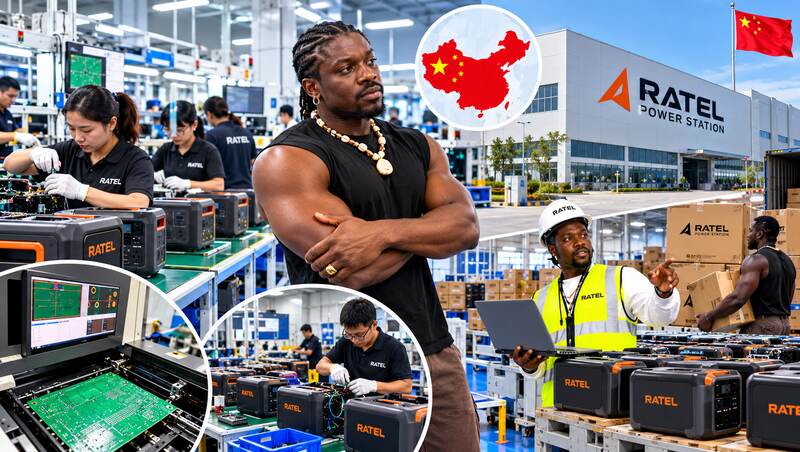
VeryDarkMan’s entry into Nigeria’s alternative electricity market has taken another interesting turn, with the social media activist giving viewers a closer look at the facility behind his Ratel power station business in China. The footage offers a glimpse into an industrial environment where lithium batteries, electronic components and other parts are assembled to produce portable electricity equipment, bringing fresh attention to a business venture that has continued to generate discussions.
The development comes shortly after the arrival of a 40 foot container containing Ratel power stations and other electronic products imported from China. Following his earlier announcements, warehouse inspection and product demonstrations, the October 30, 2026 footage provides another look at the business, its production process and the plans surrounding the Ratel brand.
VeryDarkMan takes Nigerians inside Ratel’s production factory in China
On October 30, 2026, footage emerged showing Martins Vincent Otse, popularly known as VeryDarkMan, taking viewers through a Chinese production facility associated with his Ratel power station business. The video showed different sections of the production environment, with activities involving lithium battery preparation, battery component assembly and the installation of electronic parts used in portable power stations.
The footage attracted attention because VDM was not simply displaying finished products. He was showing viewers the processes involved in assembling the equipment, providing a closer look at the industrial activities behind the Ratel brand.
The production stages reportedly included the preparation of lithium batteries, installation of internal components and assembly of the finished power stations. The facility was presented as part of the manufacturing arrangement behind the products being introduced into the Nigerian market.
A report published on October 30 described the production line as operational and claimed that the power stations were being manufactured from scratch rather than purchased as finished products for rebranding. The factory visit has consequently added another dimension to VDM’s business activities, particularly the production arrangements behind the Ratel brand.
What happens inside the Ratel production line?
Portable power stations contain several interconnected electrical components that must work together to store and supply electricity. Unlike ordinary rechargeable power banks, these devices feature larger battery systems, inverter technology, charging circuits and multiple output connections designed to support different electrical appliances.
Lithium batteries form the foundation of the equipment because they determine how much electrical energy a power station can store. The battery cells are arranged into packs, with the configuration depending on the capacity and specifications of the particular model being produced.
Another important component is the Battery Management System, commonly called BMS. This electronic system monitors battery conditions and helps regulate charging and discharging, while providing protection against problems such as overcharging, excessive current and overheating.
The production process also involves installing circuit boards, inverter systems, charging connections and other internal components. These parts are essential because the equipment must convert stored electricity into a form that connected appliances can use.
The inverter performs this function by converting direct current electricity stored in the battery into alternating current electricity. This allows appliances designed for conventional household sockets to operate using energy supplied by the portable power station.
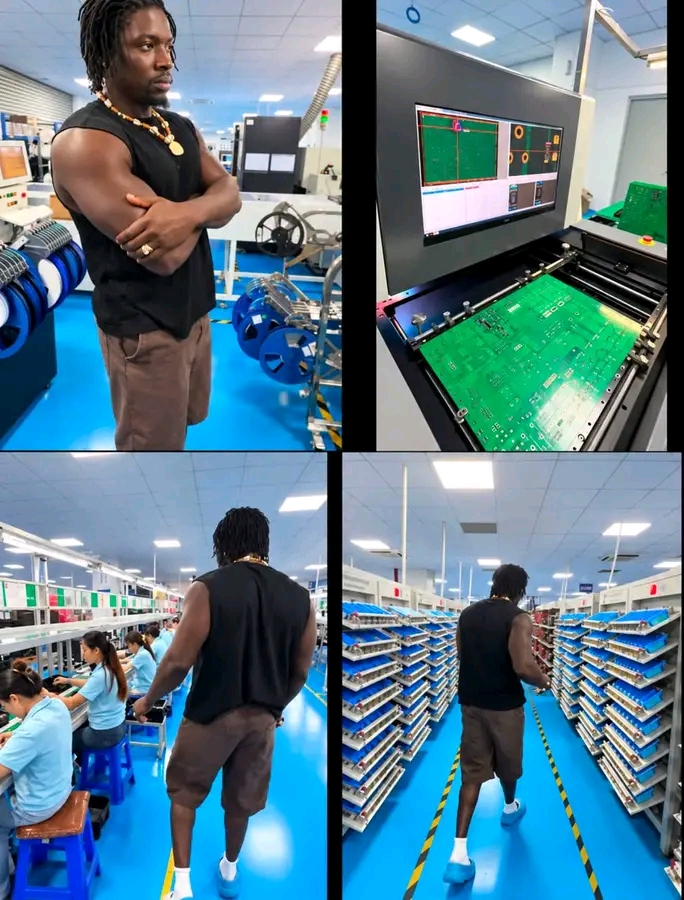
After the different components have been assembled, they are integrated into the product casing before the finished equipment undergoes inspection and testing. The process helps establish whether the battery connections, charging systems and inverter components are functioning properly before the products are packaged for distribution.
Does VeryDarkMan own the factory in China?
VDM’s appearance inside the Chinese facility has generated questions about whether he owns a manufacturing factory or has entered into an arrangement with an established Chinese company responsible for producing the Ratel equipment.
There are different ways entrepreneurs establish manufacturing businesses in China. Some purchase factories and production machinery, while others partner with existing manufacturers that produce goods according to their specifications and branding requirements.
Contract manufacturing is also common in the electronics industry. Under this arrangement, a business can develop its own brand, determine the specifications of its products and pay an established factory to handle production and assembly.
Another possibility is a dedicated production arrangement in which a manufacturer reserves part of its facility for a particular brand. This can give the business greater control over product specifications without requiring it to own the entire factory.
Available reports, as of October 30, 2026, have not established whether VDM owns the Chinese facility, operates a dedicated production line through a partnership or contracts an existing manufacturer. His appearance inside the factory provides a glimpse into the production process associated with Ratel, while the precise ownership and operational arrangements remain undisclosed.
How VDM’s Ratel power station business started attracting attention
The Chinese factory development follows earlier announcements by VDM concerning his plans to introduce electronic products under the Ratel brand. The activist had discussed his business intentions and the importation of products from China before the latest shipment arrived in Nigeria.
The project attracted wider attention when he announced plans to bring power stations and other electronic products into the country. His announcements generated discussions about the scale of the investment, the products involved and whether the business could establish itself in Nigeria’s alternative electricity market.
On October 27, 2026, reports emerged that VDM announced the arrival of a 40 foot container containing Ratel power stations and other electronic products imported from China.
He also directed interested customers to follow the Ratel Power Africa social media account for updates about the products and their availability. The announcement provided a clearer indication that the project had moved beyond business discussions, with imported merchandise already arriving in Nigeria.
The arrival marked an important stage in the development of the business, particularly following questions surrounding the cost of importing the products, shipping arrangements and the process of clearing the container.
VDM inspects Ratel products inside a Nigerian warehouse
Following the arrival of the shipment, attention shifted to the warehouse where the imported products were being inspected. Footage circulated around October 28, 2026, showing VDM at the facility wearing a Ratel branded hard hat and reflective safety vest while examining the merchandise.
The inspection provided another glimpse into the scale of the project, with power stations and other electronic products among the items associated with the shipment. His appearance at the warehouse also reinforced the connection between the Chinese importation arrangements and the planned Nigerian distribution business.
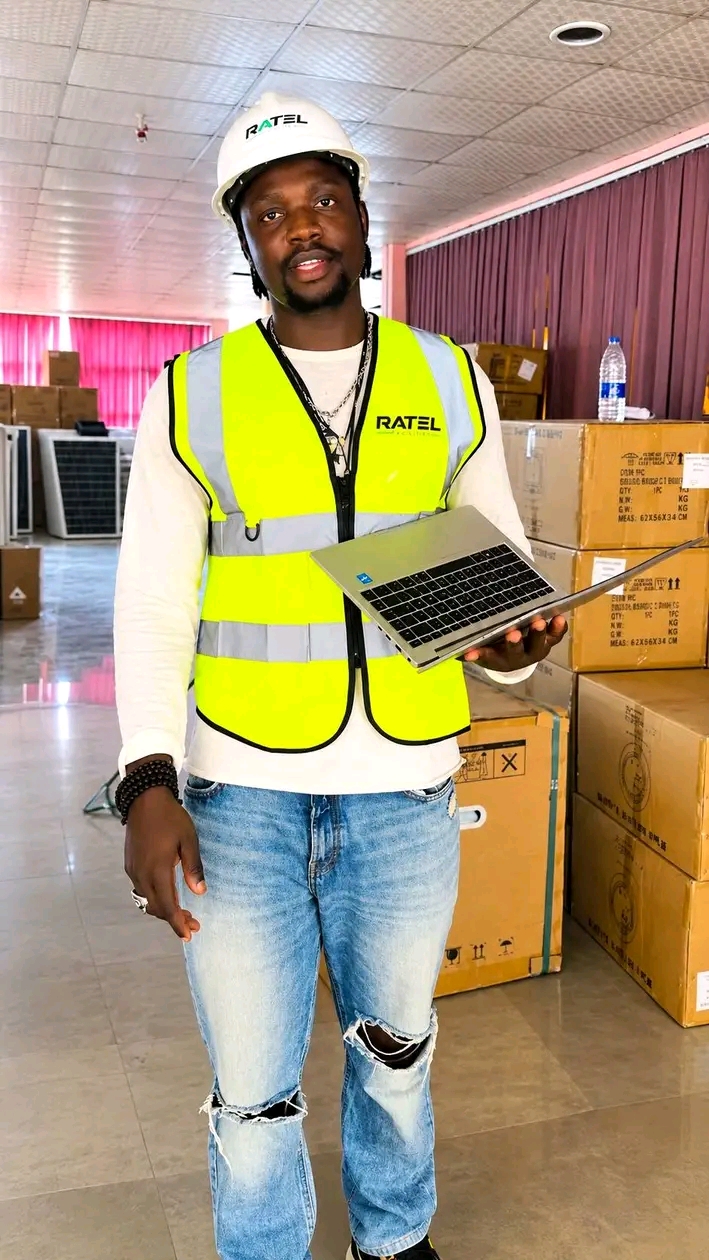
According to reports surrounding the inspection, the products were intended for different categories of customers, including students, barbers, makeup artists and small business owners. These are groups that frequently require electricity to operate electronic equipment, charge devices and carry out their daily activities.
The shipment was therefore presented as an attempt to introduce alternative electricity solutions for Nigerians who depend on backup power to support their work, education and businesses.
Ratel power station models with their advertised prices
The Ratel brand has been associated with different portable power station models designed to serve customers with varying electricity requirements. The product range includes smaller units for charging electronic devices and larger systems intended to support appliances that require more power.
An indexed product catalogue and online store listings have advertised the Ratel RP300 with a 300Wh capacity at ₦185,000, while the RP600, which has a 600Wh capacity, is listed at ₦320,000. The RP1200 has an advertised capacity of 1,200Wh and a listed price of ₦585,000, while the RP2400, with a 2,400Wh capacity, is listed at ₦950,000.
The larger RP5000 model has an advertised capacity of 5,000Wh and a listed price of ₦1,850,000. These figures represent advertised product listings rather than confirmed final selling prices for every model.
The RP1200, for instance, has also featured in testing reports with a 1,200W inverter rating and a 992Wh battery capacity.
The difference between watts and watt hours is important when comparing power stations. Watts measure the amount of power a unit can deliver at a particular moment, while watt hours measure the amount of electrical energy stored in its battery.
A power station with a 1,200W inverter does not necessarily have a 1,200Wh battery. The inverter rating determines the electrical load the equipment can support, while the battery capacity helps determine how long it can supply that load.
The larger Ratel models are intended for customers with greater electricity requirements, although actual performance depends on the appliances connected, battery efficiency and operating conditions.
VDM demonstrates the Ratel RP1200 power station
Before taking viewers inside the Chinese production facility, VDM attracted attention with a demonstration involving one of his Ratel power station models. On October 29, 2026, reports emerged that he tested the RP1200 by connecting different household appliances to demonstrate its ability to supply electricity.

The demonstration reportedly involved a television, standing fan and refrigerator, allowing viewers to see how the equipment performed under a combined electrical load. The television reportedly consumed 74W, while the standing fan used 50W and the refrigerator consumed 150W, bringing their combined electricity consumption to 274W.
According to the published account, the appliances operated for approximately 5 hours and 17 minutes during the demonstration. The test attracted attention because it provided an opportunity to see the power station operating actual household appliances rather than relying exclusively on promotional claims.
The demonstration also brought attention to the difference between advertised capacity and actual performance. A refrigerator, for example, does not necessarily consume the same amount of electricity throughout its operating cycle because its compressor switches on and off depending on cooling requirements.
The actual operating time of a power station also depends on inverter efficiency, battery condition and the electrical demands of connected appliances. Consequently, the reported demonstration should not be treated as a guarantee that every customer will achieve the same result.
Ratel’s entry into the market brings VDM’s rivalry with Blord into focus
The Ratel business has also become part of the ongoing discussions involving businessman Linus Williams, popularly known as Blord. Blord has established business interests involving electronics and power solutions, making his activities relevant to conversations surrounding VDM’s entry into the same market.
Their disagreements have previously attracted attention online, particularly around business activities, product branding and commercial claims. The introduction of Ratel has consequently created another area where their business interests have become part of the public conversation.
On October 29, 2026, reports emerged that VDM took a swipe at Blord while discussing the arrival of his imported products. He reportedly suggested that people who initially doubted his ability to establish the business had started asking questions following the arrival of the shipment.
VDM also reportedly announced a restriction limiting customers to purchasing a maximum of 2 units each. The decision was presented as an attempt to prevent bulk purchases and make the products available to more individual buyers.
Blord had not publicly responded to the particular comments at the time of the report. Nevertheless, the development added another dimension to the competition surrounding portable power stations in Nigeria.
Reported 40 per cent price reduction involving Blord’s products
Pricing has become another issue in the discussions surrounding Ratel’s entry into the market. On October 29, 2026, XTrend published a report claiming that Blord’s Blunt Power products had experienced price reductions of approximately 40 per cent.
The report connected the alleged reduction to the growing competition involving VDM’s Ratel business. However, the reported figure was not accompanied by a comprehensive comparison establishing the original prices, revised prices and affected models.

The 40 per cent reduction therefore remains a reported claim rather than a confirmed price adjustment across the entire product range.
The development has nevertheless brought attention to the potential effect of competition on the prices of portable electricity equipment. Nigerian consumers have increasingly sought alternatives to petrol generators and other electricity solutions, making affordability an important consideration when choosing products.
Why VDM reportedly wants customers to purchase a maximum of 2 units
Another issue surrounding the Ratel business is the reported restriction on the number of units an individual customer can purchase. According to reports published on October 29, 2026, VDM explained that the arrangement was intended to prevent bulk buying and give more customers an opportunity to purchase the products.
The restriction could reduce the possibility of wholesalers purchasing large quantities immediately after the products become available and subsequently reselling them at higher prices. It also suggests that the initial sales arrangement is intended to reach individual consumers rather than concentrate available stock among a few buyers.
The effectiveness of the arrangement will depend on the distribution system and how the company manages customer orders. The availability of sufficient stock will also determine whether the restriction can make a meaningful difference.
For customers interested in purchasing the equipment, the reported policy is another development surrounding Ratel’s introduction into the Nigerian market.
Gehgeh advises VDM to reconsider the power station business
Financial commentator Gehgeh also joined the discussions surrounding VDM’s entry into the alternative electricity market. On October 29, 2026, Daily Post reported that Gehgeh advised the activist to abandon the power station business.
His argument centred on the nature of the alternative electricity market and its relationship with Nigeria’s electricity challenges. He suggested that businesses selling backup electricity solutions could face difficulties if the country’s public electricity supply improves significantly, potentially reducing demand for some of their products.
Gehgeh reportedly advised VDM to consider the construction sector instead, arguing that his popularity and existing audience could help him pursue opportunities in that industry.
The comments introduced another perspective into discussions about the business, particularly regarding its long term prospects and the sectors VDM could explore.
The Ratel project, however, has continued to attract attention, with the latest factory footage providing another indication of the direction the business is taking.
What Ratel’s production arrangement could mean for Nigeria
Nigeria’s demand for alternative electricity solutions has created a market for power stations, inverters, solar systems and rechargeable electrical equipment. Households and businesses frequently require backup electricity to support their daily activities, particularly during periods of unreliable public power supply.
Portable power stations have become another option because they can store electricity and supply selected appliances without requiring consumers to operate petrol or diesel generators. Their suitability depends on battery capacity, inverter rating, charging options and the electrical requirements of connected appliances.
Ratel’s entry could introduce another competitor into this market, particularly if the company maintains affordable prices while delivering reliable products. The advertised models cover different capacity categories, giving potential customers several options depending on their electricity requirements and budgets.
The Chinese production footage also highlights the importance of manufacturing partnerships in the electronics business. Nigerian entrepreneurs can establish relationships with overseas manufacturers, develop product specifications and introduce branded equipment without necessarily operating every stage of production themselves.
For Ratel, the important issues will include product quality, battery reliability, pricing, distribution and after sales support. Customers will also want to know how faulty products will be repaired, whether replacement components will be available locally and how warranty claims will be handled.
Leaving With This
VeryDarkMan’s appearance inside the Chinese production facility on October 30, 2026, has added another major development to his growing Ratel power station business. The footage has brought attention to the production process associated with the brand, particularly lithium battery preparation, electronic component assembly and the finishing of portable electricity equipment.
The development follows the arrival of a 40 foot container from China, the inspection of imported products in Nigeria and the demonstration of the RP1200 power station. Together, these events show how the project has progressed from business announcements to the introduction of products intended for Nigerian consumers.
His entry into the market has also brought renewed attention to his rivalry with Blord, reported pricing developments and the advice from Gehgeh concerning the direction of the business.
The success of Ratel will depend on product reliability, competitive prices, transparent manufacturing arrangements, proper certification and dependable customer support. These factors will determine whether the brand can establish a lasting position in Nigeria’s alternative electricity market.