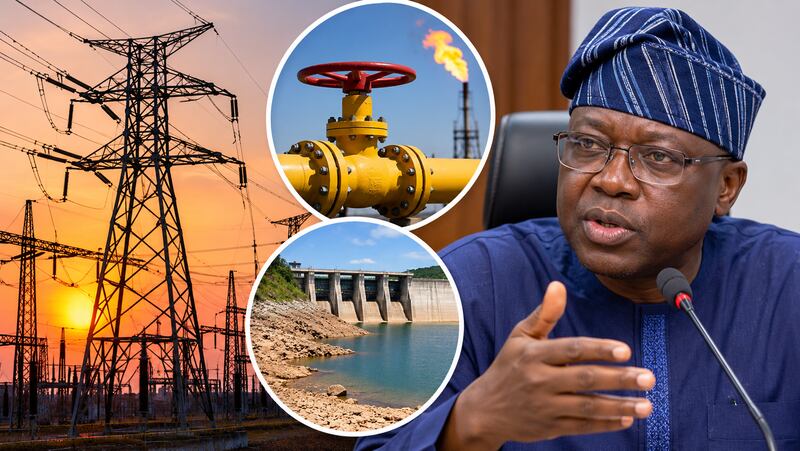
Many Nigerians have spent the past few days sitting in the dark, and the system operator has now said why. The Nigerian Independent System Operator (NISO) blamed the latest drop in electricity supply on inadequate gas delivery to thermal power plants and lower water levels at hydroelectric stations, in a statement issued on Thursday, November 5, 2026.
NISO said the gas shortage stopped affected thermal plants from running at their available capacity, while reduced water inflows into reservoirs cut output at the hydro stations. The result is simple. Less power is available on the national grid, so less is passed on to homes and businesses.
What NISO says is happening on the grid
NISO said the fall in available generation has reduced the electricity allocated to Distribution Companies (DisCos), which means fewer hours of supply and more load shedding across their networks. The impact differs from one network to another, depending on how much generation is available and what each DisCo is allocated.
That explains why a neighbour in another part of town may have light while you do not. It is a rationing problem. When the grid has less to share, each distribution company gets a smaller slice and decides how to spread it.
The operator also acknowledged the pressure on consumers. It said it is working on diversifying the energy mix feeding the grid, while still aiming to keep the system stable and dispatch available generation as efficiently as possible.
Not a grid collapse, says the government
Because Nigerians have lived through several nationwide blackouts, many people assumed the grid had failed again. The federal government says the recent drop was not caused by a major or systemic grid failure, and that Lagos, Abuja, Ogun, Kwara and Oyo States were among the affected areas.
The Federal Ministry of Power also acknowledged the hardship. In a statement from the Minister’s media adviser, Adeola Adelabu, it said the disruptions were especially painful in places that had recently seen better supply, and that they stem from maintenance and operational issues on parts of the power system, alongside the gas and hydro constraints. Power Minister Joseph Tegbe is reported to be working with the Transmission Company of Nigeria (TCN), NISO and the DisCos to restore normal supply quickly.
DisCos have begun apologising to customers. Ibadan Electricity Distribution Company (IBEDC) said it is talking to stakeholders across the electricity value chain to improve supply and thanked customers for their patience.
How much power are DisCos actually getting?
Data from NISO showed the DisCos received a combined 2,926MW. Abuja DisCo got 633MW, Ibadan 391MW, Port Harcourt 320MW, Benin 264MW, Eko 256MW, Enugu 253MW and Ikeja 249MW. Kano received 173MW, Kaduna 167MW, Jos 146MW and Yola 74MW.
The spread shows how thin supply is. Yola’s allocation was a fraction of Abuja’s, and even the biggest share is small for a network serving millions of customers.
By the time of that report, generation had recovered slightly to 3,688.95MW. Azura-Edo IPP contributed 437MW and Okpai 421MW, while the Shiroro, Jebba and Kainji hydro stations produced about 296MW, 245MW and 214MW respectively. That is a modest improvement, and it is too early to say whether it will hold.
Why gas and water matter so much
Nigeria’s grid leans heavily on gas. Gas-fired thermal plants supply more than 70 per cent of the electricity sent to the grid. When gas runs short, output falls almost immediately. Hydro power from Shiroro, Kainji and Jebba adds up to less than a third of production, according to a DisCo executive. So when reservoirs run low, the backup is limited too.
A problem that has been building all year
This is not the first time NISO has pointed to gas. In February, gas delivered to thermal plants was about 692 million standard cubic feet per day, under 43 per cent of what they needed, and average generation fell to roughly 4,300MW. By March 5, generation had slipped to 3,940.53MW.
Money is part of the story as well. Generation companies say they are owed over N1 trillion to gas suppliers and are waiting on more than N6.2 trillion in unpaid receivables, which has held back investment. The same reporting lists pipeline vandalism, foreign exchange constraints and unpaid supplier debts among the causes of gas shortfalls, and notes lower water inflows at the hydro dams.
The grid has also been unstable. At least four major collapses were recorded between November 2025 and February 25, 2026, according to reports from NISO, TCN and industry sources. In August, generation dropped to 1,132.02MW in one evening, and DisCos started load shedding. It was reported as the first grid disturbance under Minister Tegbe.
What to expect
NISO has not given a date for full recovery. Its explanation points to two things that must improve: more gas reaching the plants, and better water levels at the dams. Until then, expect uneven supply from one DisCo to the next. Households and businesses that depend on steady power should plan for shorter supply hours in the coming days, and keep an eye on updates from NISO and their distribution company.