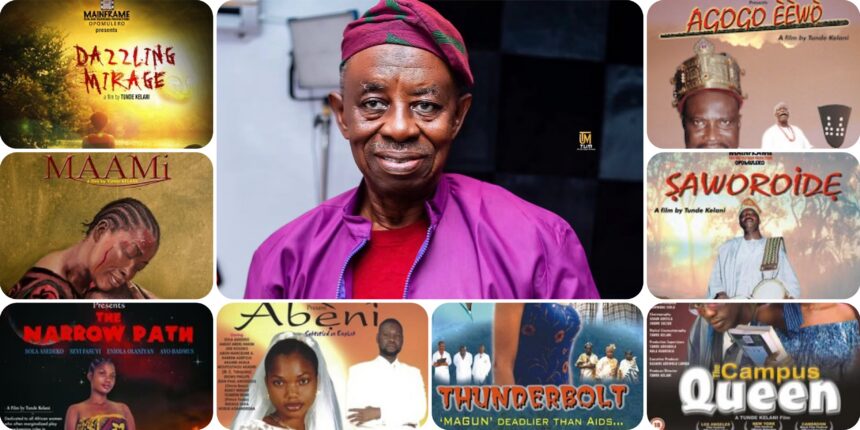
Some people tell stories to entertain, while others use them to preserve memories, question society and give a voice to people whose experiences might otherwise be forgotten. For Tunde Kelani, filmmaking has always been about more than what happens on the screen. It is also about the things people remember, the values they hold and the stories they pass on to the next generation.
Over the years, his work has taken him through different stages of life and an industry that has changed considerably since he first discovered the camera. Yet, some things have remained close to his heart. In a conversation with actress and media personality Biola Bayo, the veteran filmmaker opened up about the experiences, people and beliefs that have influenced his journey.
Growing Up in Abeokuta: The Childhood That Shaped Tunde Kelani
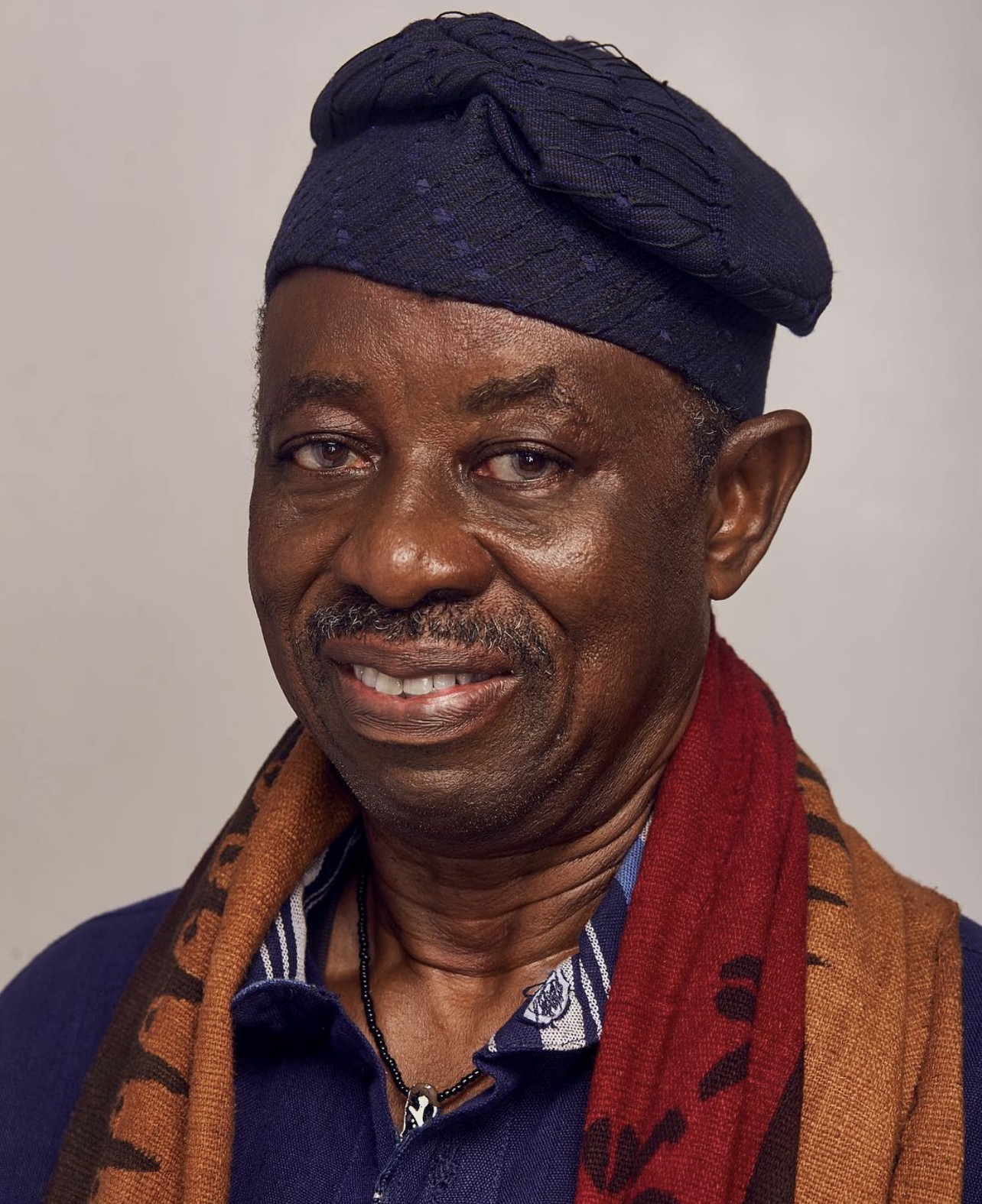
Although Tunde Kelani was born in Lagos, his childhood in Abeokuta, Ogun State, played a major role in shaping the filmmaker he would eventually become. Born Babatunde Kelani Ayinde, he explained that he moved to Abeokuta at the age of four after his father decided to send him there to benefit from the first cohort of Chief Obafemi Awolowo’s free primary education programme.
As the eldest child, he was sent to live with relatives, while his parents remained in Lagos. The separation was difficult for him at the time. He recalled sitting in front of the family compound, hoping that a taxi would arrive so his mother could take him back home. However, he did not return to live permanently in Lagos until adulthood, although he visited during school holidays.
What initially felt like an unhappy childhood experience eventually became one of the most important foundations of his creative life.
Kelani attended Oke-Ona United Primary School in Abeokuta, which he described as a place where he encountered different aspects of Yoruba culture. He later attended Abeokuta Grammar School, where he spent about five or six years as a boarding student.
He grew up in a family compound surrounded by relatives and other women who helped care for the children. He described them as volunteer mothers, reflecting the communal way of life in Yoruba society.
His education also exposed him to Yoruba literature at an early age. He read works by D.O. Fagunwa, including Ogboju Ode Ninu Igbo Irunmole, and shared stories with his grandfather. He also listened to stories from people around him, watched Egungun performances and followed traditional processions.
Because his family were Muslims, he attended Arabic classes in the evenings as well. Looking back, Kelani is grateful that his parents sent him to Abeokuta. He believes the experience introduced him to a cultural heritage that later became an important part of his filmmaking. He said:
“Otherwise, I know nothing about the Yoruba, the richness of Yoruba, which was going to be the ingredient I needed for my expressions, my cultural expressions.”
He also described his primary school as a melting point of culture, adding: “I witnessed everything. I saw everything.”
The language, literature, history and traditions he encountered during those formative years would later become recurring elements in his films.
The Camera That Changed Everything: His Unusual Journey Into Filmmaking
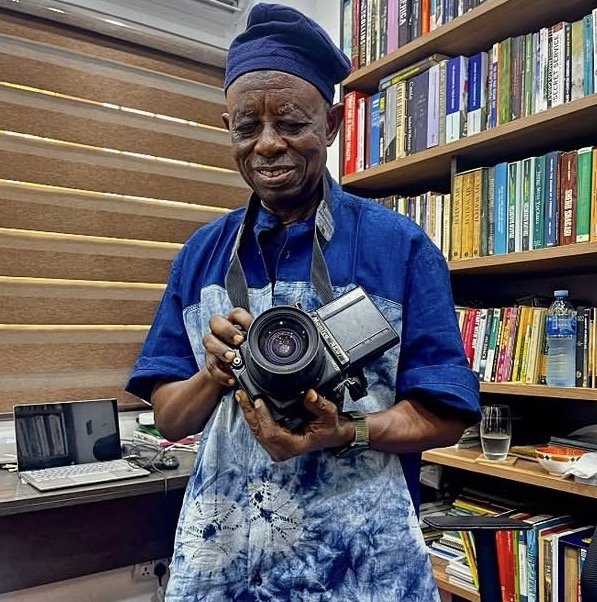
Kelani’s journey into filmmaking did not begin with a plan to become a film director. His first interest was photography. At about 14, he became fascinated by photographs in newspapers and wanted to understand how images were captured and reproduced on paper.
A friend, Adio Sokunbi, introduced him to photography using a box camera. Kelani became so interested that he followed his friend around, hoping to get an opportunity to handle the camera himself.
His curiosity eventually took him to the home of Adio’s father, who was a photographer. There, he saw a darkroom where photographs were developed without electricity. The photographer had constructed an enlarger near a window, using daylight to produce images. That experience opened up a new world for the young Kelani.
While at Abeokuta Grammar School, he and a friend, Ekenechukwu, began processing and printing photographs. He remembered the excitement of watching his first contact print develop, although he stared at it for so long that the paper became completely black from overexposure.
They gradually learnt about exposure time, light and the temperature of the chemicals used in developing photographs. Between 1962 and 1966, he bought several small cameras he could afford and began taking pictures of his schoolmates. He sometimes gave them the negatives to print elsewhere, charging about five pence for his work. When friends could not afford to pay, he occasionally gave the photographs away.
One of the most memorable stories from this period involved his determination to buy a camera. During his final year in secondary school, he wanted a Halina 35X camera sold at Kingsway in Lagos. The camera cost more than the money he had, so he came up with an unusual plan.
The West African Examinations Council (WAEC) examination fee was about £7 10s, while the camera cost approximately £9 10s. Kelani altered the amount on his examination fee form, hoping his father would give him the money to cover the higher figure.
Unfortunately for his plan, his examination fee had already been paid through his scholarship from the United African Company (UAC). His father became suspicious and sent a postal order to the school. The bursar, Mr Babarinsa, eventually summoned Kelani and asked him to explain the altered amount.
Kelani admitted what he had done, telling him in Yoruba, “Mo yi ni o,” meaning he had deliberately changed the figure. He explained that he wanted the money to buy a camera. Rather than punish him, the bursar gave him the money.
The unexpected kindness allowed Kelani to buy the camera he wanted. Years later, he still remembered the gesture with emotion. He even met the bursar’s daughter shortly before the interview and told her what her father had done for him.
Although photography was his first love, Kelani soon realised he wanted something more. After secondary school, he worked at an organisation involved in raw materials control but continued looking for opportunities to develop his photography skills. He eventually secured an apprenticeship with a photographer in Lagos.
However, less than a year into the arrangement, he realised that still photography was no longer enough for him. As he explained: “I prefer if the pictures moved and perhaps talked.”
His love for cinema had already introduced him to the world of motion pictures. He regularly visited cinemas in Lagos and followed the films, actors and production companies that interested him. His next major opportunity came when he secured a position at Western Nigerian Television in Ibadan, where he trained as a film cameraman and cinematographer. After about three years, he was transferred to the organisation’s Lagos office.
But his ambitions extended beyond television. Kelani wanted to work on films that could be shown on the big cinema screen. He began saving towards further training and, in 1976, travelled to London to study at the London Film School, where he enrolled for a two-year diploma course. After returning to Nigeria, he continued working in television for some time before eventually becoming an independent filmmaker.
His journey was not always comfortable. He recalled trekking almost daily from his area in Lagos across Carter Bridge to Broad Street for work. Although he sometimes felt embarrassed about walking such a long distance, he remained focused on his ambition. Reflecting on those years, he said:
“I was just a bit restless… But I have a passion that was driving me.” That passion would eventually take him from photography and television into a career that produced some of the most recognised films in Nigerian cinema.
From Iwa to Saworoide: The Stories Behind His Iconic Films
Before becoming known for his own films, Kelani spent years working behind the scenes as a cinematographer. After leaving television, he established a company with a friend and acquired a used Arri camera from London. He began providing technical support to Yoruba travelling theatre groups, working with different productions and filming more than 20 stage productions.
However, nearly ten years after leaving the London Film School, he realised that he had not yet made a film of his own. That changed in the 1980s when he joined about five friends to produce Iwa, his first film. Although the project achieved some success, it did not recover all the money invested in it.
The production required about N85,000 in cash, and a businessman who believed in the project provided financial support. The same benefactor later helped him acquire his first set of equipment when he wanted to establish Mainframe Productions. Kelani said he valued the relationship because the man supported his work without demanding anything in return.
His subsequent films would demonstrate his interest in adapting literature, exploring Yoruba history and using stories to examine social and political issues.
One of his important collaborations was with Professor Akinwumi Isola, the renowned Yoruba writer and scholar. Kelani wanted Isola to write screenplays himself rather than simply provide stories for him to adapt. He explained that he gave the professor examples of screenplays to help him understand the format. Isola initially sent handwritten pages, sometimes between 30 and 50 at a time, which Kelani would organise and translate into images.
Describing their working relationship, he said: “He works with words, and I work with imagery, images.”
Kelani believes their collaboration gave his films an academic foundation, and he considers the years he spent working with writers and authors among the most productive periods of his career. One of the films that emerged from this relationship was Saworoide. Interestingly, the idea did not begin as a fictional film.
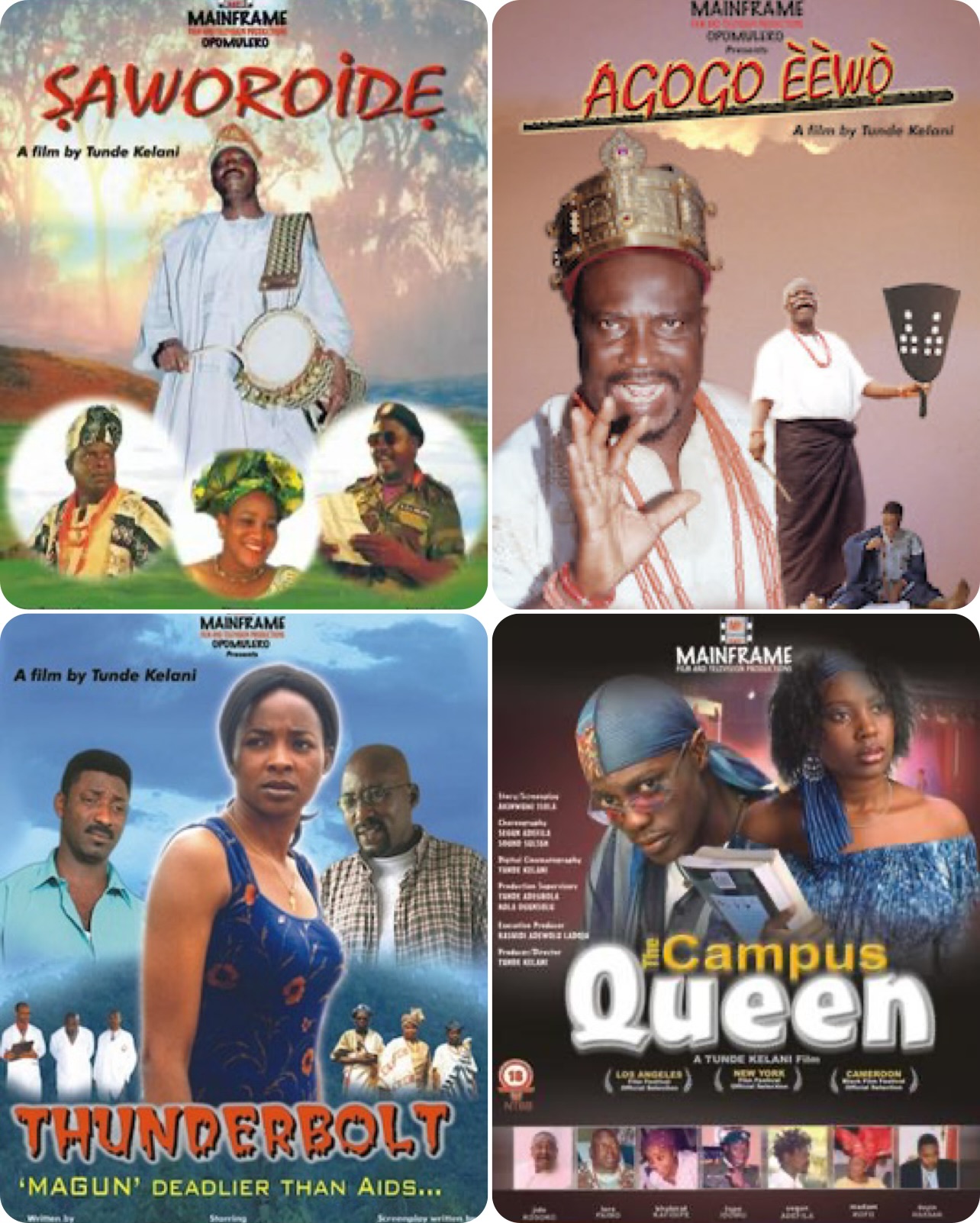
Kelani explained that he and his collaborators had initially planned to make a documentary about a traditional Yoruba drummer who was among the last practitioners of a fading art. However, the drummer died before they could meet him and complete the documentary. They eventually decided to use the talking drum as the voice of the people, an idea that became the foundation of Saworoide.
The film explores leadership, power and accountability through a fictional Yoruba kingdom called Jogbo. Rather than directly setting the story in Nigeria, Kelani and his collaborators used the kingdom’s forestry resources as part of the political conflict. The film’s themes nevertheless encouraged audiences to draw comparisons with events in the country.
Its follow-up, Agogo Èèwọ, shifted attention to the chiefs who enabled the king’s abuse of power. Kelani explained that the film explored the responsibility of those around a leader, rather than placing all the blame on the person at the top.
Another notable production was Thunderbolt, which allowed him to explore a story originally written in English. At a time when some people assumed he could only make Yoruba-language films, the project gave him an opportunity to express himself in English.
The story follows young people who meet during the National Youth Service and decide to marry despite their parents’ objections. Kelani was particularly interested in the cultural differences between the families and the languages they used to communicate.
His film Campus Queen, shot at the University of Lagos, also reflected his interest in collaboration. He gave students in the university’s theatre and design departments room to contribute to the production, including set design and costumes. Some also appeared in the film.
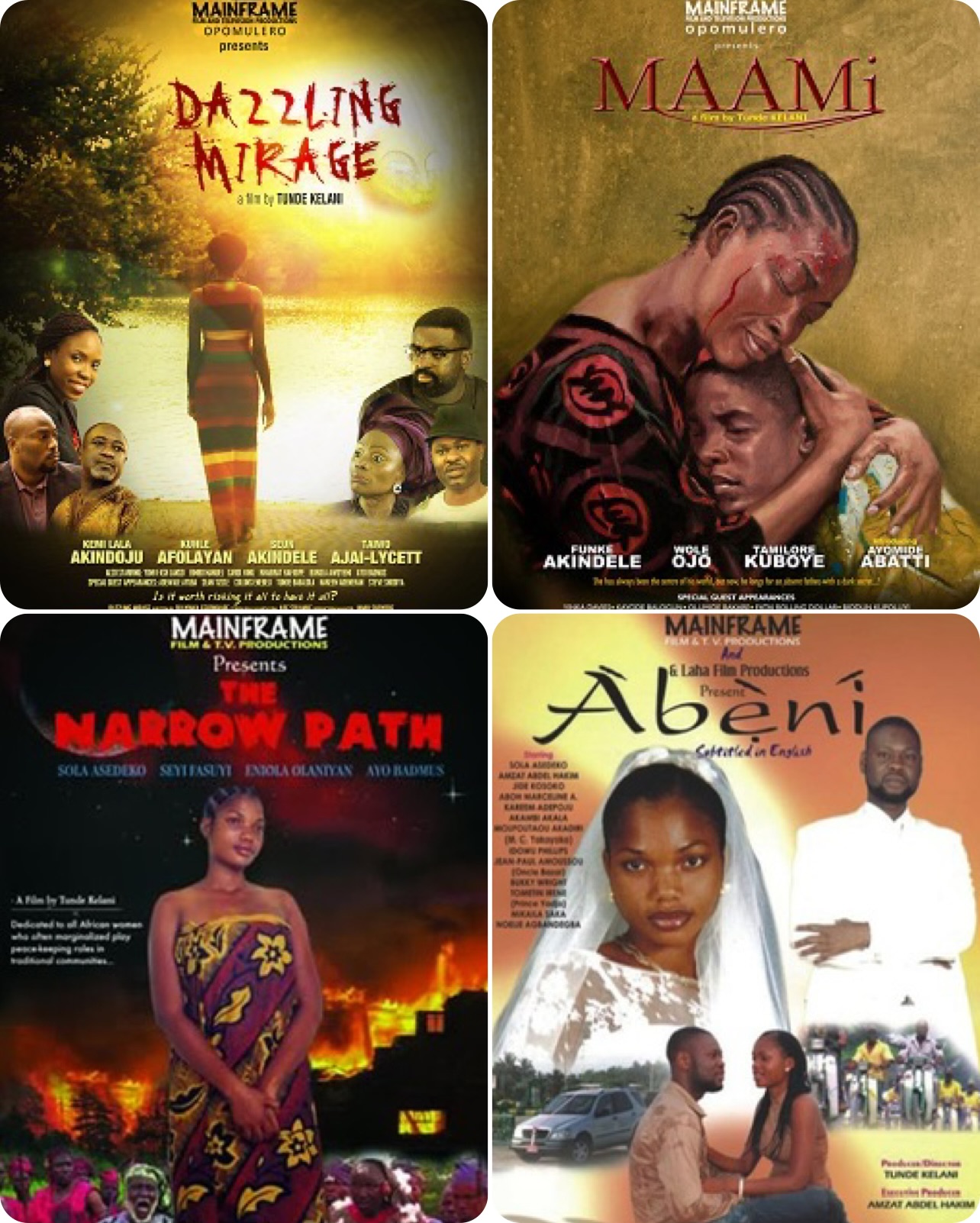
For Dazzling Mirage, based on a work by Yinka Egbokhare, Kelani focused on the experiences of people living with sickle cell anaemia. Preparation for the production lasted more than two years, and the team worked closely with a foundation. Members of the production team underwent genotype testing before filming.
Actress Kemi Lala Akindoju also spent a long period preparing for her role as a sickle-cell patient. Her performance was convincing enough that some viewers assumed she was living with the condition herself.
Another film with a strong personal connection was Mami, adapted from a work by Professor Femi Osofisan. Kelani initially intended to adapt Cordelia, but Osofisan suggested that he read Mami first. After going through a few pages, the filmmaker decided to work on it. The story follows a single mother raising a 10-year-old boy who does not know his father. Kelani connected with the story because of his own childhood experiences in Abeokuta. He chose to shoot the film in his grandfather’s family compound, the same place where he grew up. The interior set was even the room where he slept as a child.
The young character attended Oke-Ona United Primary School, the same school Kelani had attended years earlier. Some of the older relatives and people from the community also appeared as extras. The production therefore became more than a film location for him. It preserved images of a place that was later affected by road construction and changes to the surrounding environment.
Kelani also spoke about Narrow Path, for which he searched across Yoruba communities for a suitable village before eventually finding a location in the Republic of Benin. His experience there later contributed to his work on Abeni, a cross-border production involving Nigerian and Beninese performers.
He had previously made a documentary titled Yoruba Beyond Borders, exploring how colonial boundaries divided Yoruba communities in Nigeria and Benin. With Abeni, he brought performers from both sides together, reflecting the cultural connections that existed before those divisions.
His film Cordelia, meanwhile, took a different creative route. A proposed cultural fusion project involving visitors from the University of Delaware’s music department gave him an opportunity to develop the film through orchestral music. The idea was to remove the existing music from a film, compose a new score and perform it live during screenings in the United States before recording it. Kelani chose Cordelia for the project because he believed its dramatic scenes could support a strong musical composition.
Although the film had not been officially released at the time of the interview, he said private screenings could be arranged for groups. Through these productions, Kelani has shown that his interest in filmmaking goes beyond telling entertaining stories. He has used the medium to explore culture, literature, history, social issues and the experiences of ordinary people.
More Than Entertainment: Why Preserving Yoruba Culture Matters to Him

For Kelani, Yoruba culture is not simply a subject to be included in films. It is an important part of identity that must be protected and passed on. During the Talk To B interview, Biola Bayo asked him a direct question: What is culture? His answer was simple: “Our complete way of life.” He explained that cultural education begins at home, particularly through the mother, which is why indigenous languages are commonly called mother tongues.
According to him, language, names, literature, traditional processions, religion and food all form part of a people’s heritage.
However, he expressed concern that many Yoruba families no longer speak their language at home. Instead, some parents prefer their children to communicate in English, while indigenous food and other cultural practices are increasingly neglected.
He also recalled how speaking Yoruba in school was sometimes discouraged and labelled as speaking vernacular. He believes such attitudes contributed to the way some people grew up viewing their own language.
Kelani argued that colonialism affected more than the political and economic structures of African societies. It also influenced how people viewed themselves and their heritage. He questioned why Africans should continue to place other cultures above their own when they have rich traditions, languages and histories worth developing.
He also spoke about the connection between Africa and its diaspora. Referring to Marcus Garvey’s dream of reconnecting people of African descent with the continent, he expressed concern that some people who return to experience their ancestral homeland may find that the people they expect to preserve their heritage are gradually abandoning it.
He believes a process of reorientation is necessary. His position is not that Africans should reject other cultures. Rather, he wants them to value their own while engaging with the wider world. He gave the example of filmmakers in Japan, China and India who continue to tell stories in their indigenous languages, even while participating in global cinema.
For Kelani, Nigerian filmmakers should have the same confidence. He also connected language to his personal religious practice, explaining that he makes personal supplications in Yoruba. Although Islamic prayers include prescribed Arabic expressions, he believes speaking to God in his mother tongue is important.
His concern about cultural identity also reflects the direction of his filmmaking. Whether he is exploring traditional institutions, family life or the experiences of people across borders, he wants his work to preserve aspects of African life that might otherwise be forgotten.
From Film Cameras to Artificial Intelligence: TK’s Adaptation to Changing Technology
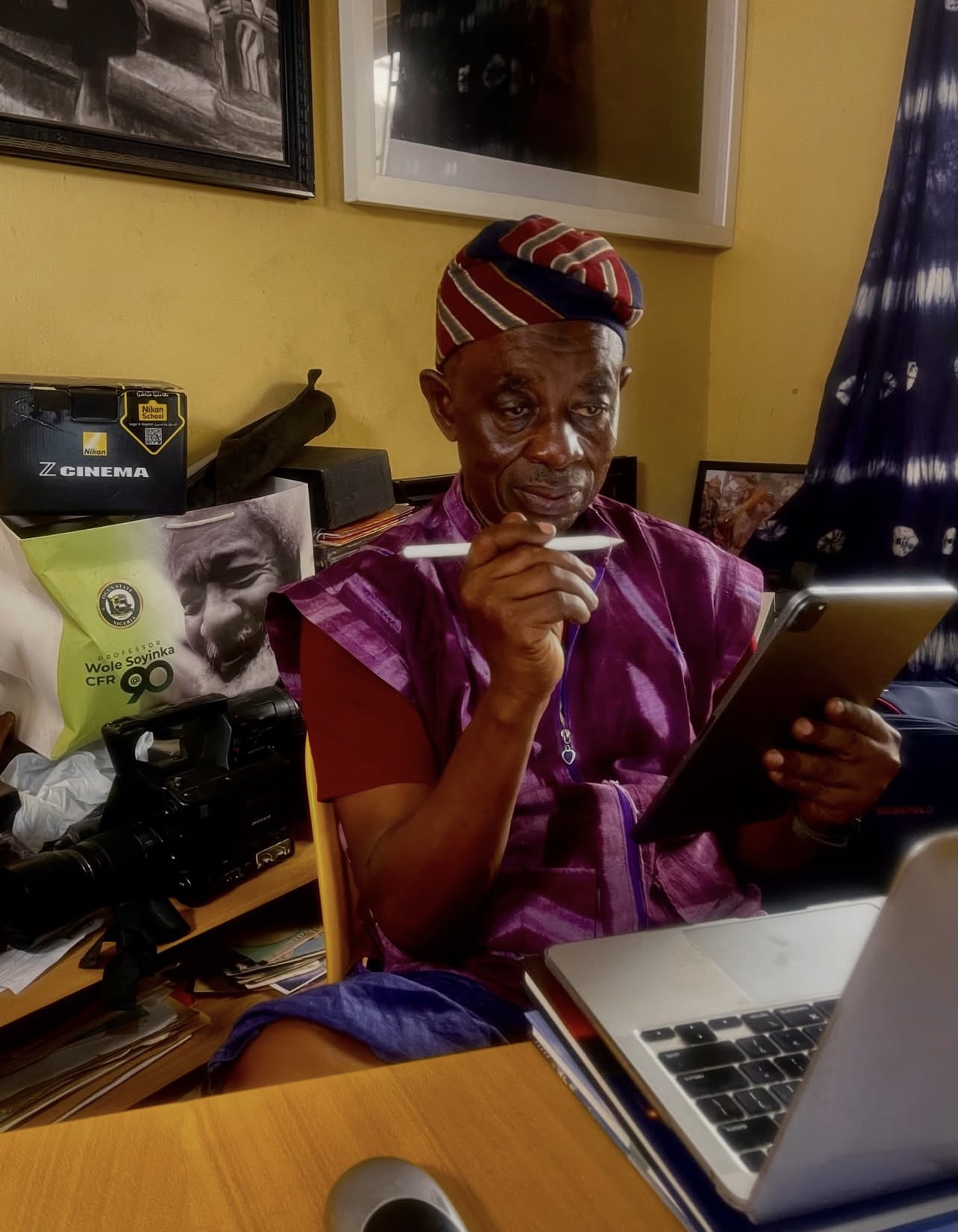
Despite beginning his career in an era when films were shot on celluloid, Kelani has continued to adapt as technology changes.
He explained that when he started working in television, programmes such as news and sports were recorded on film because video technology was not yet widely available in the way it is today.
Over time, the industry moved through different formats, equipment and viewing experiences. He once believed that films belonged on large cinema screens and never imagined a time when people would regularly watch them on mobile phones. Today, he accepts that filmmakers must be ready for changes in how audiences consume content.
He has even used mobile phones to make documentaries, including a production shot with two phones. He also discussed the changing shape of screens, from the older 4:3 format to widescreen 16:9 and the vertical format increasingly used for mobile viewing. More recently, he has been learning about artificial intelligence and said he had spent about a year exploring ways to incorporate it into film production.
For him, technology should not be something filmmakers fear. Instead, they should understand how to use it while remaining connected to the cultural knowledge that gives their stories meaning. His advice to young filmmakers was clear:
“You must be prepared to work with any technology that comes up. You must just be ready to adapt to rapidly changing technology to continue to tell our stories.”
He also stressed that technology cannot replace the cultural identity of the people using it. “Any machine cannot take our language away from us,” he said. Kelani believes that as long as filmmakers remain grounded in their language, history, culture and intangible heritage, they can use new tools without losing the originality of their work.
A Legacy Beyond the Screen: Why He Is Turning to YouTube
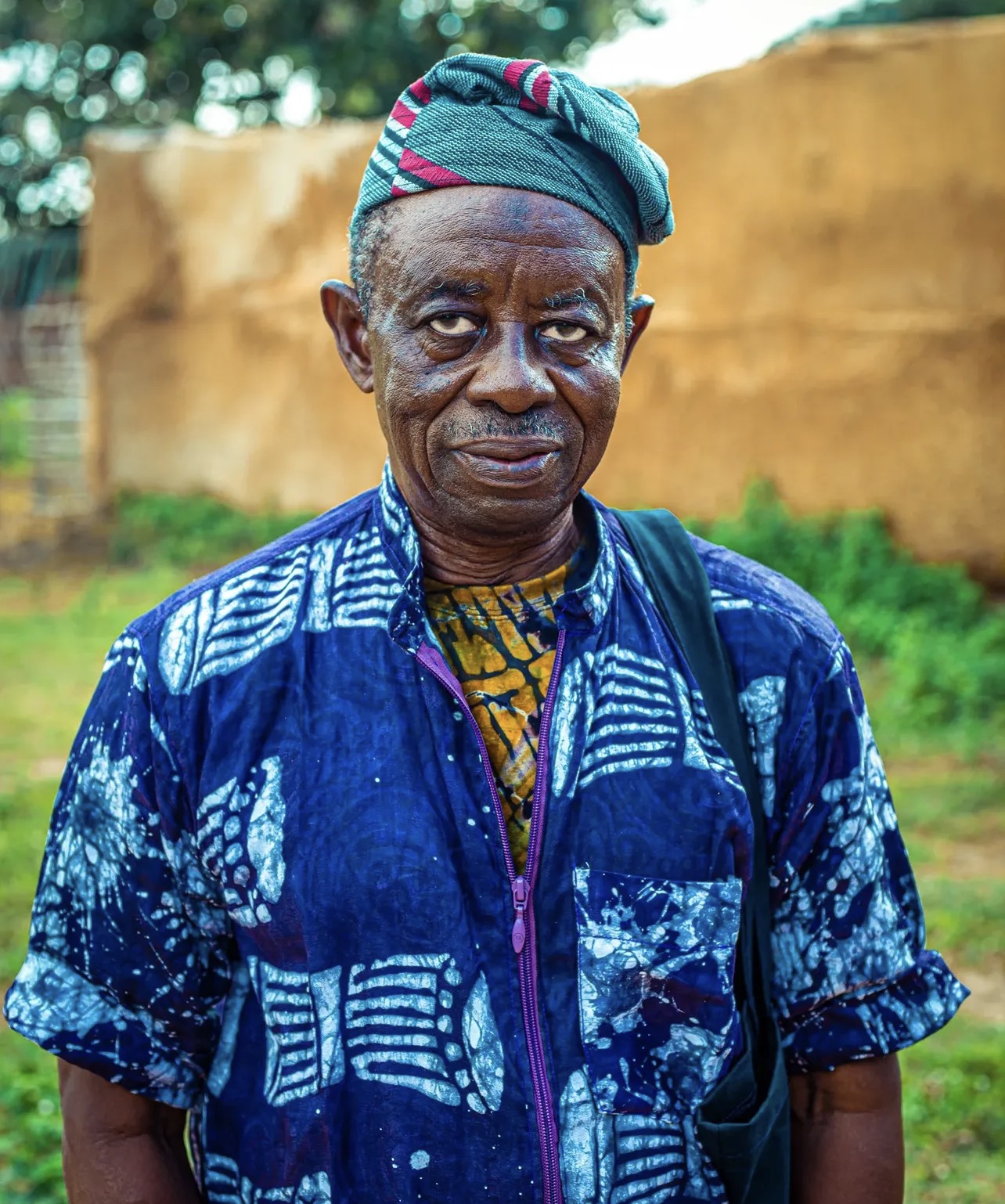
While discussing the future of Nigerian cinema, Kelani raised concerns about the infrastructure available to support the country’s film industry.
He pointed out that although Nigeria is often described as having the world’s second-largest film industry, it has fewer than 1,000 cinema screens, compared with more than 40,000 in the United States, based on the figures he cited.
He believes this limits access to cinema, particularly for people who cannot easily afford the cost of tickets. He recalled an outing with young people who considered spending about N45,000 on a cinema experience too expensive. Rather than proceed, they decided to return and spend their money elsewhere. For him, the experience illustrated how a large part of the potential cinema audience remains unreached.
He therefore believes filmmakers must be open to other ways of distributing their work. One platform he is now using is YouTube.
Kelani described the platform as a digital filing cabinet where he can organise his films and make them accessible to viewers. He revealed that he had discovered several YouTube channels uploading his productions and, in some cases, claiming ownership of the work. Some of the channels, he said, had little or no original content of their own. He decided to take greater control of how his films are presented online by organising them on his own channel, TKO.
The channel features playlists containing documentaries, classic films and short films. He also hopes to earn revenue through advertising and feature. However, his motivation goes beyond making money. He wants to ensure that his films remain available, particularly to African audiences and future generations who may want to study or revisit them.
Explaining his reason for the project, he said: “My work, especially for Africa, are not lost. They are intact. And after I’m gone, long gone, the work will be there.”
The statement captures an important part of his thinking about legacy. For Kelani, making a film is only one part of the responsibility. Preserving it and ensuring that people can still access it years later matter just as much.
Passion, Hard Work and Humility: Tunde Kelani’s Message to the Next Generation
After discussing his experiences in the film industry, Biola asked Kelani what life had taught him. His response was a message about passion, discipline, hard work and character. He encouraged young people to identify something they genuinely care about and pursue it with commitment, whether it is filmmaking, building a business or any other ambition.
He warned that success does not come easily and that people must be prepared to invest their time and money in whatever they choose to do. He also advised them not to lose their identity along the way.
For him, a person’s culture, language and environment should remain important, regardless of where life takes them. He said:
“Be passionate in anything you do. At least, you must have an interest. Whatever it is, you have to have a passion at it. So follow that passion.”
He added that young people should remain humble and maintain good relationships with others.
Kelani’s comments during the interview also revealed his belief in the importance of women in society. While praising Biola for developing her talents and building business interests alongside her entertainment career, he observed that many of his films feature positive female characters.
He explained that he has long believed African women have not been given their rightful place in society. He also expressed concern about their representation in politics and governance, arguing that more opportunities should be created for women to participate in leadership.
For him, the responsibility of storytelling includes recognising people and experiences that society has often overlooked. His final advice to young people also reflected the values he has carried throughout his career: pursue what you love, work hard, remain connected to your roots, treat people well and remember that life is bigger than personal achievements.
Conclusion
A career can be measured in years, awards and the number of productions attached to a person’s name. But there are other things that cannot be easily counted: the memories preserved, the people encouraged and the stories that continue to find new audiences long after they were first told.
For some filmmakers, the next project is always the biggest concern. For others, there is also the question of what happens when they are no longer around to tell their stories. It is a question worth considering, especially when the work has always been about more than the person behind the camera.