


The journey of getting a film seen by the right audience can be just as demanding as making the film itself. For many filmmakers, film festivals creates an opportunity to showcase their work, meet industry professionals and open doors to bigger projects. But, getting through those doors is not always straightforward.
For some, the process begins with an application and a submission fee. For others, the opportunity may come through existing relationships and invitations. And while filmmakers continue to invest in getting their work noticed, questions about how the system operates remain.
A recent exchange between two Nigerian filmmakers Nora Awolowo and Blessing Uzzi, has brought some of these questions into focus, opening up a conversation that goes beyond the price of an application.
How Nora Awolowo and Blessing Uzzi’s disagreement began
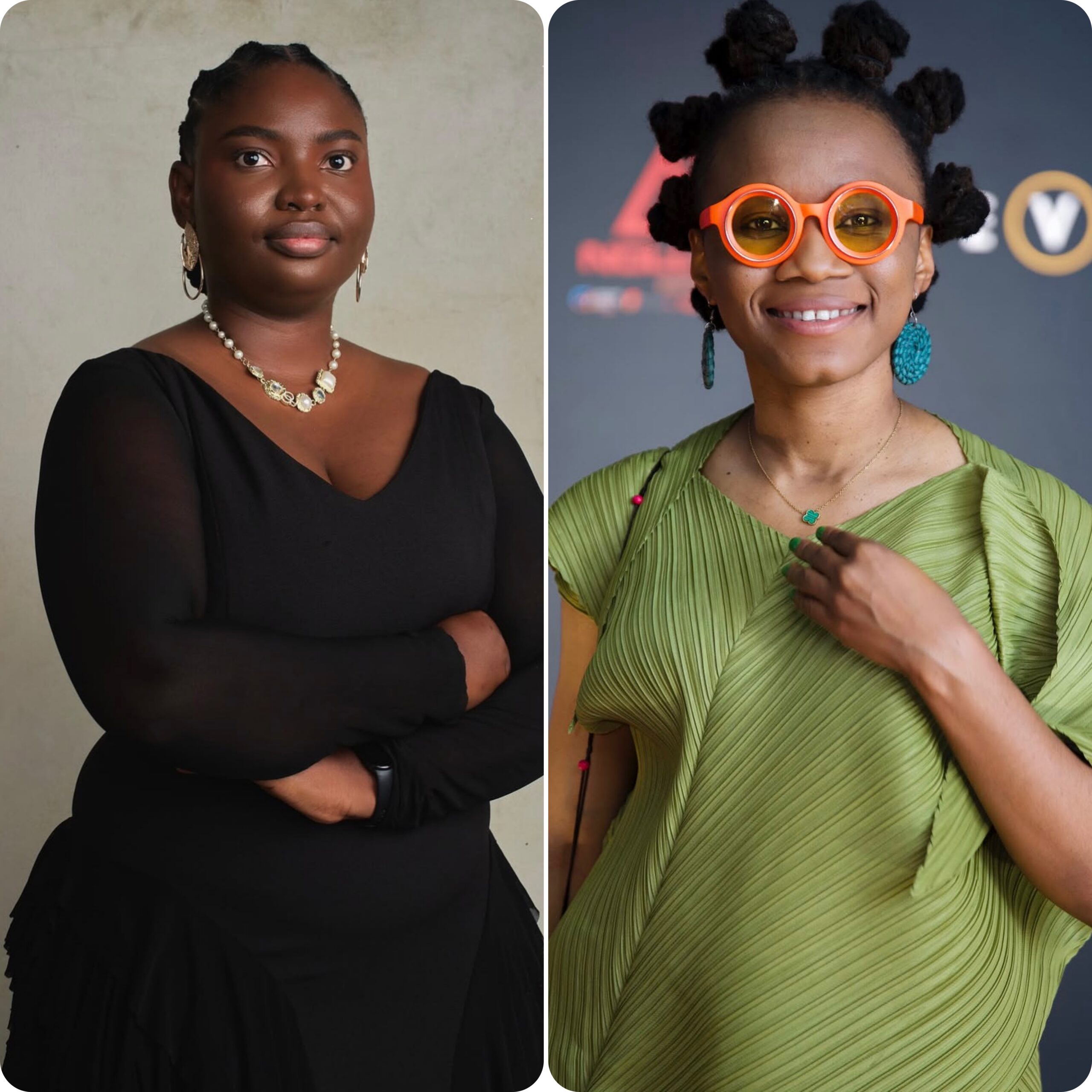
The discussion started on X on Saturday, November 21, 2026, when filmmaker and cinematographer Nora Awolowo questioned the experience of filmmakers who pay submission fees while hoping to get their movies selected by film festivals.
In her post, she pointed out that some filmmakers receive festival invitations even before completing their films, while others have to submit their finished projects and wait for a decision. She wrote:
“While you’re paying submission fees and hoping for selections, some people while still filming already have invitations and the assurance of knowing which festivals their films will screen at.”
She ended the post with “Ma pa ara e”, seemingly urging filmmakers not to put themselves under unnecessary pressure. Her observation drew a response from fellow filmmaker Blessing Uzzi, who argued that submitting films and paying the required fees are part of pursuing festival opportunities. Blessing wrote:
“If you made a film hoping to take it to festivals, submit it! Pay the submission fees. If you can’t afford them, ask friends and colleagues for support. Include festival submissions in your marketing budget. It’s not unreasonable.”
She added that getting selected by even one festival could help filmmakers build relationships with programmers and potentially secure waiver codes for future submissions.
However, Nora clarified that her argument was not necessarily about whether filmmakers should pay or avoid submission fees. She responded:
“The discussion isn’t about why you should pay or not sha. It’s about the statistics of the films that get in via cold submissions.”
This clarification brought the focus to a bigger issue: how likely are filmmakers who submit their movies without prior industry connections to get selected?
Nora Awolowo questions the reality of cold submissions

To explain her position, Nora referred to a discussion about the Sundance Film Festival and research by film industry analyst Stephen Follows.
The post she quoted highlighted that Sundance received 16,201 submissions for its 2026 edition. It also referenced Follows’ research covering films selected by major festivals between 2021 and 2025, which examined how many arrived without established industry backing.
In his research, titled How Many Films Get into Top Festivals with Nobody Behind Them?, Follows examined 3,037 feature films selected by Cannes, Venice, Berlin, Sundance and Toronto.
He defined a film as arriving “cold” if it had none of five forms of backing when the festival announced its selection. These included support from public funders, participation in recognised film labs, backing from studios or distributors, an established producer with previous festival selections, or a sales agent attached before the announcement.
His findings showed that only 70 of the 3,037 films, representing 2.3 per cent, were confirmed to have arrived cold. When films that possibly arrived cold were included, the figure rose to 4.4 per cent.
For Sundance specifically, the estimated share was between 1.9 and 4.3 per cent.
The research also found that only three films across Sundance’s 206 competition slots arrived cold during the five-year period. Two were in the US Dramatic Competition and one in the US Documentary Competition. None of the films in its World Dramatic Competition arrived cold.
These findings help explain the concern behind Nora’s argument, although they do not mean that open submissions never produce selections.
For her, the issue is the number of filmmakers spending money and hoping to be among the small percentage of successful cold submissions. She also referenced the emotional side of the process, pointing out that many filmmakers navigate the festival circuit without understanding the statistics or researching how selections happen.
According to Nora, knowing how the system works could help filmmakers manage their expectations, save money and avoid being unnecessarily hard on themselves.
The financial burden of chasing film festival selections
Another important part of Nora’s argument is the cost of submitting films to festivals. She estimated that filmmakers could spend between $100 and $250 on submissions, especially when applying to several festivals to improve their chances of getting selected.
For independent filmmakers who have already spent considerable money making their projects, these additional expenses can become a burden.
Research published by Stephen Follows in September 2025 also examined the cost of festival submissions. In his study of 4,631 film festivals, he found that average submission fees ranged from $30 to $55 for short films and $47 to $87 for feature films, depending on submission deadlines.
The figures show how quickly costs can add up when filmmakers submit to multiple festivals. Fees may also increase as deadlines approach, with some festivals offering different prices for early, regular, late and final submissions.
For example, Sundance’s published fees for its 2027 festival ranged from $80 to $125 for feature films and $55 to $95 for short films, depending on the deadline.
Although festivals use submission fees to support the process of receiving and reviewing entries, the expense remains a consideration for filmmakers working with limited budgets.
For Nora, the concern is not simply about paying to submit a film. It is about understanding the chances of getting selected before committing money, time and emotional energy to the process.
Blessing Uzzi says filmmakers should take the risk

Blessing, however, believes the competitive nature of the festival circuit should not discourage filmmakers from pursuing opportunities. While acknowledging that getting selected is not guaranteed, she argued that filmmakers who want their movies to screen at festivals should be willing to go through the process.
In a longer response, she congratulated James Amuta, whose book Nora referenced, before explaining why she disagreed with the message she believed Nora’s post could send to filmmakers. She wrote:
“My problem with your tweet is that it indirectly discourages filmmakers from submitting to festivals. I don’t think any filmmaker submits to a festival simply believing they’ll get in. It is fucking competitive.”
She compared the process to releasing a film in cinemas, explaining that filmmakers invest money, put in the work and hope for success, even when there are no guarantees.
According to Blessing, the same determination should apply to film festival submissions. She also questioned why conversations about the financial risks of filmmaking often focus on film festivals but rarely attract the same level of criticism when it comes to cinema releases.
She pointed out that filmmakers also spend significant amounts of money trying to secure cinema releases without knowing whether their movies will perform well. For her, both processes require planning, investment and the willingness to take risks. She stated:
“Both things can be true. You tell filmmakers to manage their expectations; I tell them to take the risk.”
She concluded that filmmakers should be allowed to pursue the opportunities that matter to them, even when success is uncertain.
The bigger question: Do industry connections determine who gets into festivals?
Beyond the disagreement about submission fees, the exchange raises questions about the role of relationships and industry networks in film festival selections.
Nora’s initial post drew attention to filmmakers who receive festival invitations while their projects are still in production, compared with those who complete their films before submitting them through open channels.
Stephen Follows’ research also explored this issue by examining the support systems behind films selected by major festivals. His findings suggest that established relationships, previous festival experience, film labs, producers and sales agents can play important roles in how films reach major festival programmes.
However, arriving with industry backing does not automatically mean a film will be selected, just as submitting without connections does not make selection impossible. There are also differences between festival programmes. Some sections are more open to new filmmakers and experimental projects than others.
For instance, Follows found that Berlin’s Forum section had a higher share of films arriving cold than the main competition sections of several other major festivals.
This suggests that filmmakers may need to look beyond the biggest and most popular festival programmes when deciding where to submit their work.
It also makes research an important part of the process. Rather than sending films to every available festival, filmmakers can consider the festival’s history, the kind of projects it selects, its submission requirements and whether their movies fit its programme.
Where both filmmakers’ arguments meet

Although Nora and Blessing approached the discussion from different perspectives, their arguments are not entirely opposed.
Nora wants filmmakers to understand the realities of the festival circuit, particularly the low chances of getting selected through cold submissions. She believes they should have access to information that helps them make informed decisions before spending money.
Blessing, on the other hand, does not want the difficulty of the process to discourage filmmakers from pursuing their goals. She believes that if festival recognition matters to a filmmaker, the cost and uncertainty should be considered part of the investment.
Both positions touch on important parts of the filmmaking journey. A filmmaker can understand the odds and still decide to submit a movie. Equally, choosing not to spend money on submissions that may not offer a realistic opportunity does not mean a filmmaker lacks ambition.
The debate ultimately leaves room for a question that goes beyond the two filmmakers’ disagreement: how can the film festival circuit create more opportunities for emerging filmmakers while remaining transparent about how its selection process works?