


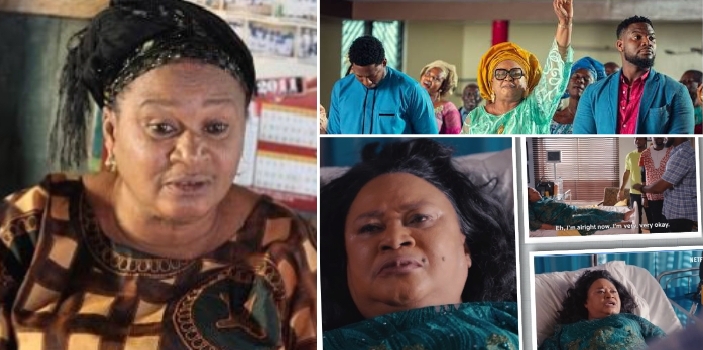
It was a calm afternoon — ordinary in every way that mattered, yet drenched in a kind of quiet that only hindsight can explain. The crew had been filming since morning, the sound engineer adjusting his cables, the director shouting gentle instructions, the studio light turning the Lagos air into molten gold. Amid that technical noise, Rachel Oniga sat motionless.
She was waiting for her cue — hands folded in her lap, wrapper neatly tied, gaze steady on the director but distant, as if her mind had wandered somewhere time couldn’t follow. Around her, there was motion: scripts being flipped, make-up brushes dusting cheeks, assistants darting across the floor. Yet, she was the still point in all of it — unhurried, unbothered, untouched by the rush that defines film sets.
When the camera rolled, something subtle shifted. The room fell into a rhythm that no one controlled. She began her lines slowly, her voice carrying that familiar calm that made her Nigeria’s on-screen conscience for nearly three decades. The words were ordinary — nothing in them screamed farewell — yet the pause after each sentence felt heavier than usual. It was as though the lines weren’t leaving her mouth but her soul.
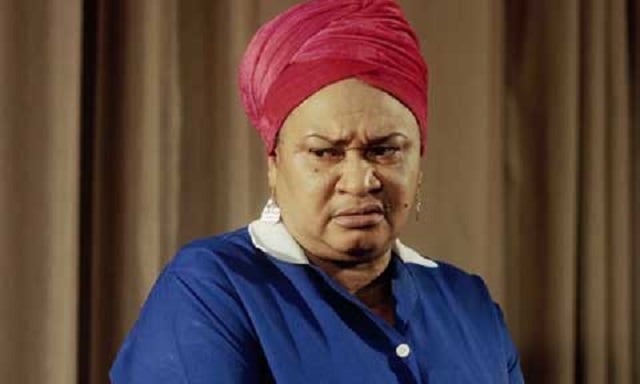
No one on that set could have known they were recording a benediction. Not the director counting takes, not the assistant shuffling scripts, not even Rachel herself. But when the film was released, when news of her death spread like a quiet heartbreak across Nigeria, people began to replay that scene. And suddenly, it wasn’t just dialogue anymore — it was prophecy in plain sight, wrapped in the tone of a mother saying her last goodbye without ever calling it one.
Becoming Rachel Oniga
Rachel Oniga was born on May 23, 1957, in Ebute Metta, Lagos — a city where every sound, from bus horns to church bells, teaches rhythm. Her early life carried the humility of middle-class Lagos families: faith, duty, repetition. She grew up surrounded by Yoruba and Urhobo cultures — the blend of practicality and poetry that later shaped her storytelling instincts.
Before film, she worked in an engineering firm — a detail many Nigerians still find surprising. Acting wasn’t part of her plan; it was part of her calling. The shift came after her marriage ended, an emotional rupture that forced reinvention. What could have broken her became the foundation of her empathy. When she later played widows, mothers, and broken women on screen, she didn’t need to pretend — she simply borrowed from the ache she already understood.
Her Nollywood debut came in 1993 with Onome, a modest production that introduced her to an emerging film industry hungry for authentic emotion. From that moment, Rachel became the industry’s dependable soul. Unlike many of her peers, she didn’t rely on beauty or spectacle; her strength was in her restraint. While others sought to dominate scenes, she listened. That ability — to react truthfully — made her a rare presence in an industry built on exaggeration.
Over the next three decades, she became a fixture of Nigerian storytelling. From Yoruba films like Owo Blow and Sango to mainstream dramas like Love and Age and Super Story, Rachel inhabited her roles with a maternal truth no one could imitate. Her performances were never flashy; they were lived. When she scolded, you felt corrected. When she cried, you felt absolved. To many viewers, she was not “acting” — she was revealing.
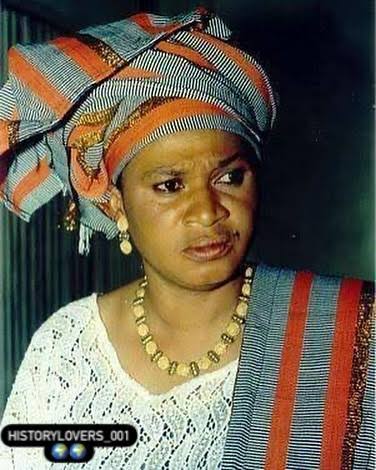
Yet, off-screen, her life mirrored the same resilience her characters carried. She raised children, weathered financial hardship, navigated fame without scandal, and remained fiercely connected to her roots. Rachel Oniga didn’t simply act moral women — she was one. She brought a quiet authority to Nollywood, the kind that didn’t shout but stayed. That consistency made her the matriarch of a generation — the soft heart of an industry built on chaos.
By the time she entered her sixties, her legacy was sealed. Directors called her “Mama Rachel,” not out of flattery but reverence. Young actors described her as both teacher and shelter — a woman who corrected mistakes gently but never compromised standards. She embodied what Nollywood rarely captured on screen: calm strength, private faith, and the kind of grace that endures storms silently.
The Roles That Shaped a Nation’s Conscience
To understand why that last performance felt like prophecy, one must revisit the arc of Rachel Oniga’s career. She was not just an actress; she was Nigeria’s moral memory. Across hundreds of films, she embodied the emotional weight of a society wrestling with itself — its mothers burdened yet forgiving, its wives faithful yet forgotten, its elders wise yet wounded.
Her characters always carried moral gravity. In Super Story: No Pain No Gain, she became the moral axis of a story about betrayal and redemption. In Sango, she grounded myth with human emotion. In Owo Blow, she became the symbolic mother of a generation of Lagos dreamers, teaching resilience without sermonizing. She didn’t need long monologues — her eyes did the storytelling.
These portrayals made her more than a performer. She became the vessel through which Nigerian audiences processed their collective guilt, hope, and faith. At a time when cinema often glorified excess or deceit, Rachel’s presence reminded viewers of endurance and consequence. She played grief like prayer — never loud, never dramatic, but sacred.
Her artistry was also political in its quietness. In a film industry dominated by spectacle and gender stereotypes, Rachel carved space for dignity. She showed that a woman didn’t have to scream or suffer visibly to command attention. Strength, in her interpretation, was the ability to remain gentle in a brutal world. That quiet philosophy became her cinematic signature — one that turned every scene she touched into moral architecture.
Her colleagues said she approached every character as if it were real life. She would ask directors about a role’s spiritual meaning, a character’s unseen trauma, or a scene’s emotional temperature. To her, acting wasn’t about pretending; it was about truth-telling. That’s why, when she finally delivered her last scene, it felt so authentic — because she had spent a lifetime training herself to speak only from truth.
Between Faith and Film
Behind her calm demeanor was a deeply spiritual woman. Rachel Oniga’s faith was private, never performative. She didn’t preach it on red carpets or interviews; she lived it quietly — through gratitude, humility, and service. Her friends described her as someone who prayed not to escape suffering, but to understand it. That inner posture shaped how she handled fame.
In an industry that often rewards noise, she built longevity through silence. She rarely gave interviews. She avoided controversy. She treated film as vocation, not industry. Her colleagues said that if you entered her dressing room before a shoot, you’d often find her humming softly, sometimes reading Psalms between takes. That ritual wasn’t superstition — it was grounding. She believed that acting was an emotional exchange, and she prepared for it like one would prepare for worship.
That mindset infused her roles with tenderness. Even when playing grief, she radiated peace. Her screen presence was a paradox — she made pain look sacred. This spiritual restraint is what made her last performance feel prophetic. There was no visible struggle, no dramatic farewell. Just stillness — the same kind she’d cultivated her entire life.
In many ways, Rachel Oniga didn’t “end” her journey; she fulfilled it. Her passing felt less like disappearance and more like release. Watching her final film today is like opening a letter she wrote to the living — not about death, but about readiness. And in that sense, her life and art became indistinguishable. She didn’t act faith; she embodied it, one frame at a time.
The Echo Before Goodbye
The power of cinema often lies in retrospect. A scene might seem routine when filmed, but its meaning deepens after life itself changes the context. Rachel Oniga’s final appearances — across My Village People and Chief Daddy 2 — became, in hindsight, sacred texts for fans trying to understand her quiet departure.
In My Village People, her role as Mama Chigozie had a spiritual texture that mirrored her essence — stern but loving, rooted in ancestral logic, a woman who understood the invisible boundaries between life’s two halves. In Chief Daddy 2, though brief, her performance carried the faint tone of fatigue, like an echo fading beautifully into distance. These were not characters written as farewells. Yet something in the cadence of her delivery, the softness of her eyes, and her calm humor hinted at closure.
Rachael Oniga’s last movie appearance was in the film A Naija Christmas, which was released posthumously on Netflix in December 2021.
In A Naija Christmas, Rachel Oniga plays Agatha Agu, a widowed mother trying to unite her three sons by offering her home to whoever marries first. It’s a lighthearted premise on the surface — part family comedy, part festive drama. Yet underneath its laughter lies a haunting undertone of farewell.
Her character, “Mama,” is everything Rachel Oniga had become to Nigerian audiences — warm, moral, slightly mischievous, and profoundly nurturing. Throughout the film, she embodies the essence of maternal love that transcends time — guiding, correcting, forgiving. But what makes the performance feel prophetic is how her presence carries an invisible closure.
She spends much of the movie urging her children to settle down, to live meaningfully, to love fully before it’s too late. Watching it after her death, those lines sound less like a mother’s impatience and more like a woman preparing her loved ones — and by extension, her audience — for a world without her.
Even her laughter, her calm admonitions, her pauses — all now echo with an emotional double meaning. When she prays for her sons, it feels like she’s also praying for the people she left behind. When she smiles at the film’s final reconciliation, it feels like benediction.
In essence, A Naija Christmas became Rachel Oniga’s cinematic will — not because it was written that way, but because she lived that kind of love until the very end. Her character’s wish was for family to stay united after her — and that wish mirrors what her real-life departure stirred in Nollywood: unity, reverence, and collective gratitude.
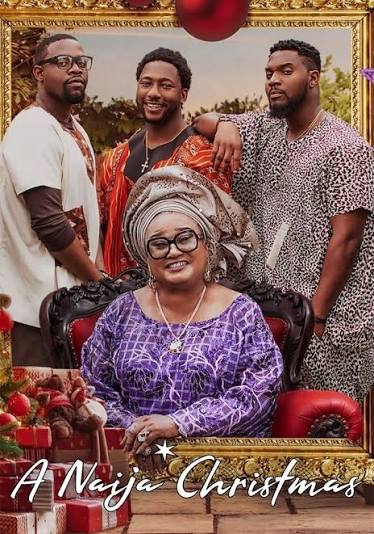
That’s why her last performance feels prophetic — not by design, but by grace. She played a mother preparing her family for joy without her, just months before the world had to learn how to love her memory instead of her presence.
After the Curtain Fell
When the news broke on the morning of July 30, 2021, it didn’t feel real. Social media had become notorious for its false obituaries, and for a few hours, Nigerians clung to denial. “It can’t be true,” someone tweeted. “She was just filming last week.” The disbelief wasn’t naïve — it was born from how alive she still felt to everyone who’d seen her recently. Rachel Oniga didn’t fit the narrative of a woman preparing to leave the world. She was still working, still radiant, still mothering everyone on set.
But confirmation came quickly — from her family, from colleagues, from the guild. The cause: a brief illness. Just like that, an era had ended. For Nollywood, it wasn’t simply another obituary; it was the silencing of its moral compass. The woman whose face had guided the nation’s emotional vocabulary was gone. Directors froze production in tribute. Actors posted memories. Fans replayed old scenes with new tears.
Across Nigeria, people mourned as if they’d lost a relative. That reaction said everything about the intimacy of her art. She had entered homes for decades — through televisions in Ajegunle, through streaming platforms in London, through bootleg DVDs in Onitsha markets. In every household, she had been someone’s mother, someone’s counselor, someone’s symbol of hope. So, when she died, it didn’t feel like losing a celebrity; it felt like losing kin.
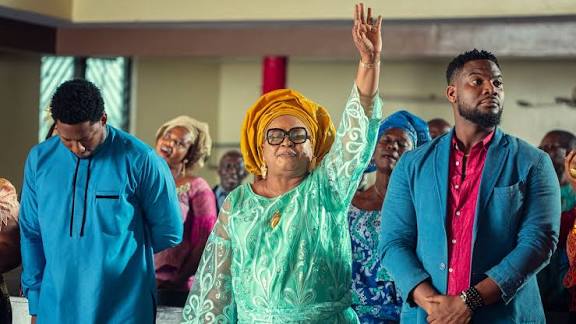
The funeral itself mirrored her spirit: quiet, graceful, deeply human. There were no theatrics, no political fanfare — just people, faith, and memory. Her colleagues spoke about her humility. Her children spoke about her laughter. Her priest spoke about legacy. Even the weather that day seemed subdued, as if the sky itself had joined the mourning. And yet, within that solemnity was peace — the same peace she had carried on screen, now radiating from the people who loved her most.
When Her Scenes Became Sermons
After her burial, something unusual began happening online. Clips of Rachel Oniga’s final scenes started circulating — short videos, slowed down, captioned with words like “she knew,” “rest in peace, mama,” and “a true matriarch.” What had been routine movie dialogue suddenly transformed into memorial scripture. Her voice, once entertainment, became eulogy.
It wasn’t orchestrated by marketers or publicists. It was organic — a collective act of remembrance. Young Nigerians who grew up watching her posted montages on TikTok and Instagram Reels. Editors stitched her dialogue over slow gospel instrumentals. YouTube channels reuploaded her interviews, titling them “Her Last Words.” It was grief in digital motion — modern mourning translated into pixels and soundbites.
But beneath the nostalgia was recognition. People weren’t just remembering Rachel Oniga; they were realizing what she represented. In a country where life feels fleeting and justice unreliable, her characters had always modeled emotional stability — the kind that comes from faith and endurance. Now, rewatching those moments felt like rediscovering a national value system. She reminded Nigerians what calm strength looked like.
Her scenes began circulating among film students too, analyzed for subtext and tone. Critics revisited her earlier films, tracing how her style evolved from expressive in the 1990s to meditative in her later years. In retrospect, that evolution now looked intentional — as though she had been moving toward silence all along. In a way, she had mastered what many actors never do: how to say more by saying less.
Legacy Through Absence
Rachel Oniga’s absence revealed the magnitude of her influence. Within months of her death, producers began speaking openly about how irreplaceable she was. Casting directors struggled to find her equivalent — not because there were no older actresses, but because there were few who carried her kind of emotional gravity. She didn’t just fill roles; she anchored stories.
You could measure her impact in small moments: the way a younger actor would pause before saying “Mama” on set, suddenly remembering her. The way directors would reference her performances as benchmarks. Or the way audiences, upon seeing similar characters in newer films, would remark, “Rachel would have done it differently.” She had become the silent standard against which sincerity was measured.
Her legacy also reshaped Nollywood’s understanding of mortality. Her death reminded the industry that time is not guaranteed — that even the most enduring lights eventually dim. Yet, paradoxically, it also reminded them of film’s power to resist time. Every role she ever played still exists — frozen, alive, replayable. Death had taken the woman, but cinema had preserved the voice.
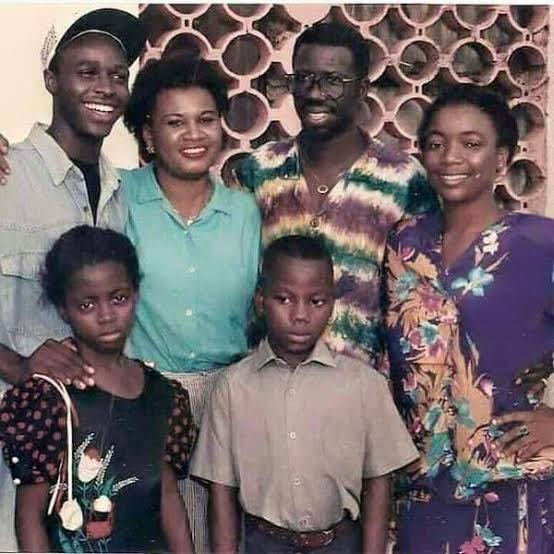
Her children carried that preservation forward. Her daughter, Georgia, spoke publicly about how her mother’s faith and work ethic continue to guide their family. That statement resonated because it captured the essence of Rachel’s artistry — she didn’t act to escape reality; she acted to explain it. In that way, her performances became inheritance, not just for her family but for an entire nation.
Closeout: When Light Learns to Rest
Time has a way of choosing its own endings. Rachel Oniga didn’t chase hers; she simply lived fully until it arrived. A Naija Christmas was meant to be a story about a mother’s wish — but it became something larger, a portrait of a woman who had given all her tenderness to the world and finally allowed herself to rest.
There is no tragedy in the way she left, only completion. Watching her final scene now feels like opening a familiar door and realizing the person you came to see has already gone ahead — but she left the light on for you. That light isn’t grief; it’s gratitude. It’s the reminder that art, at its purest, doesn’t end when the actor exits. It lingers in gestures, in voices, in the quiet space between words.
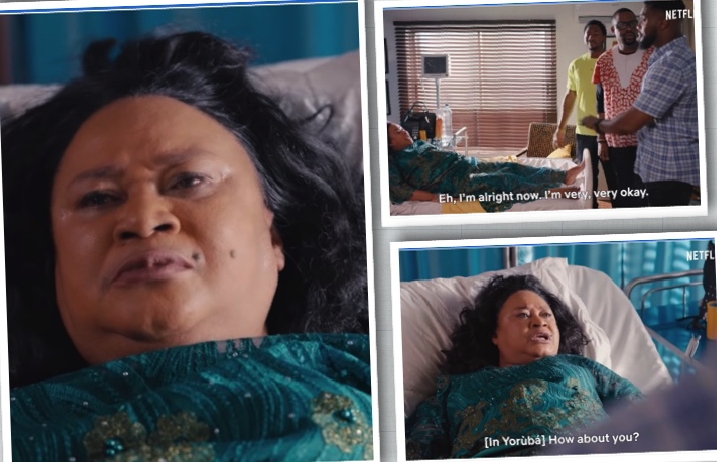
Rachel Oniga’s gift was never about performance — it was about presence. She showed Nigeria what dignity looked like in motion, what motherhood sounded like in silence, what faith felt like without being preached. And in her final frame, she seemed to pass that knowing to everyone watching — that peace is not found in staying, but in having loved well enough to go.
The credits roll, the screen darkens, but the feeling remains. Somewhere between her smile and her stillness, she left us a truth that needs no words:
that even light, when it finally learns to rest, does not stop shining.


Discussion about this post