


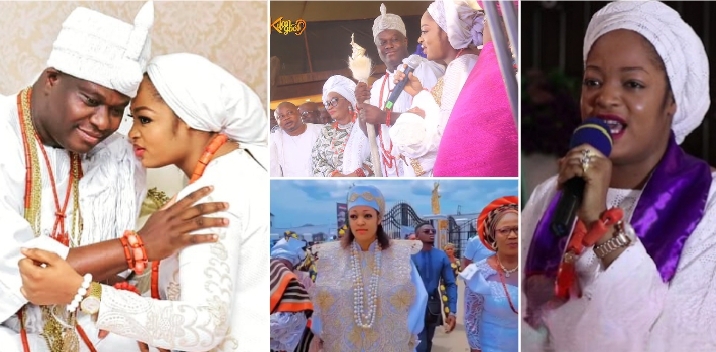
The palace room is more than stone and wood; it is a ledger of history, a mirror of expectation, a place where the weight of centuries pressed on anyone who dared to enter. Sunlight fell in sharp lines across the polished floor, catching the edges of coral beads and brass vessels like silent witnesses.
Every mask on the walls, every carved stool, every ceremonial object seemed to question her presence: Was she fit to stand here, to take her place among the line of queens who had walked these halls before her?
Prophetess Naomi moved through the space with careful awareness. She was a queen, yes, but her role had always been extraordinary—unlike any woman these walls had held. This chamber was designed for tradition to assert itself, for lineage to measure loyalty, for obedience to be silently enforced. And yet here she stood, not defying, not bowing, but existing—an unspoken challenge to the rhythms that had ruled this palace for centuries.
The room did not need voices to speak. Courtiers drifted along its edges, eyes tracking, whispers echoing against history. Every gesture, every pause, every small step was amplified. In that room, tradition was both judge and jury, and she was on trial simply for being herself. The air felt heavier with every passing second, charged with expectation, suspense, and the subtle threat of legacy.
By the time she moved to leave, the chamber seemed to hold its breath—and so did the palace. What happened next would not only determine the fate of a marriage, but also expose the delicate fault lines between faith, duty, and the unyielding weight of Yoruba tradition.
The Making of a King — Ooni Adeyeye Enitan Ogunwusi
On October 17, 1974, in the sacred town of Ile-Ife, a boy was born into the Giesi royal lineage, a line of kings whose names echoed through centuries. He was Adeyeye Enitan Ogunwusi, fifth among seven, son of Prince John Oluropo Ogunwusi and Princess Sidikat Wuraola Ogunwusi. Even as a child, the air around him carried the invisible pulse of history, a rhythm that whispered that one day he would bear the weight of a crown older than memory.
His earliest years unfolded between the ordinary and the extraordinary. At Subuola Memorial Nursery and Primary School and later Loyola College, he learned numbers, letters, and the rhythms of a world that seemed mundane beside the palace corridors he would someday traverse. Secondary school at St. Peters, Ile-Ife stretched his mind further, while each lesson carried the silent reminder that education alone could not teach him how to measure a life destined to straddle ancestral expectation and personal ambition.
The boy who once counted chalk on classroom walls grew into a man whose mastery of numbers and finance mirrored a mind sharpened for leadership. Certified by the Institute of Chartered Accountants of Nigeria, with honorary doctorates in public administration and law, he was a monarch in training, balancing modernity and heritage as deftly as one balances beads on a ceremonial crown.

By the time he was crowned Ooni in 2015, the boy of Ile-Ife had become a man who carried not only a title but the weight of centuries. Every gesture, every decision, every public appearance would be measured against ancestors whose names could not be spoken lightly. And in the quiet spaces of the palace, where walls themselves seemed to record history, he would encounter a presence that would challenge both crown and legacy.
Prophetess Naomi Sinlekunola — A Voice Beyond the Walls
She emerged not from marble halls or ancestral courts, but from a family where faith and conviction were as natural as breath. Her upbringing instilled a sense of purpose: to speak boldly, act decisively, and navigate life with a moral compass that never wavered. Her education sharpened her mind and her voice.
Schools and mentors in her formative years taught her not only knowledge, but also the subtler lessons of leadership—how to hold attention, how to inspire trust, how to communicate authority without demanding it. Each sermon she delivered, each community project she led, reflected a careful balance of intellect, intuition, and spiritual insight.
Naomi’s rise in public life was marked less by spectacle than by quiet resonance. Followers and observers alike recognized her ability to navigate scrutiny, speak truth to power, and advocate for transformation in spaces that often resisted change. She became a figure whose influence was measured not by visibility alone, but by the subtle force of integrity and conviction she carried into every room, every gathering, and every decision.

Before any palace doors would ever open, Naomi had already built a life defined by purpose, resilience, and the courage to stand in spaces that tested both conviction and adaptability. She was a woman poised at the intersection of potential and principle, with a story that hinted at great encounters yet to come—an arc that would eventually lead her into the corridors of tradition, where faith and expectation are weighed with equal force.
When Prophecy Met the Crown
They had met not in a dream, but in something close to one. It was 2018, a season of reawakening for the throne of Ile-Ife. The Ooni, Adeyeye Enitan Ogunwusi, had returned from a stormy first marriage and was rebuilding both his palace and his public image as a modern custodian of ancient heritage. Naomi, at twenty-five, had built a reputation as a fiery preacher with a ministry known for spiritual depth rather than glamour.
Their meeting was brief but magnetic. Witnesses say she spoke with conviction, the kind of poise that carried both innocence and authority. He, the monarch who bore 400 ancestral titles, saw in her something rare—a voice that seemed untouched by palace politics. In Yoruba cosmology, certain unions are described as ayanmo—destiny written before birth. To their followers, this seemed like one of those.
The royal court moved swiftly. In October 2018, Ile-Ife witnessed one of its most memorable coronations. A Prophetess walked into the ancient palace dressed not in beads and silks alone but in the confidence of calling. Cameras captured her smile, a portrait of grace framed in coral and faith. The Ooni placed his right hand over hers, and the hall erupted in chants.
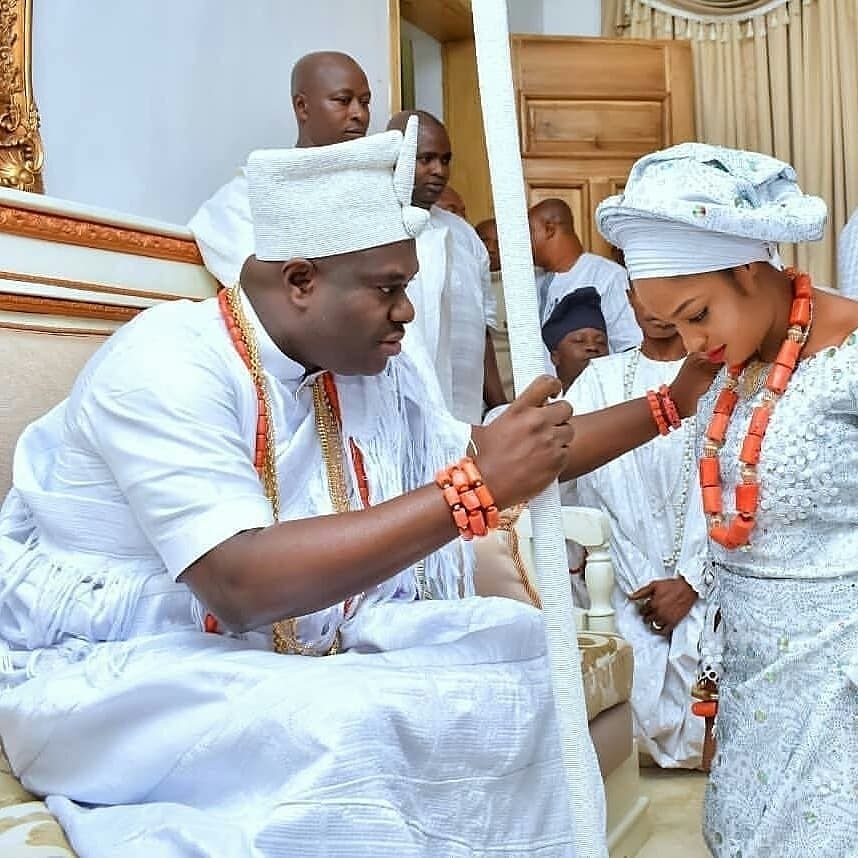
For a brief moment, the Yoruba world celebrated harmony between altar and throne. A Christian prophetess had become a Yoruba queen, and for many Nigerians, it symbolized something hopeful—the idea that modern faith and ancient power could coexist. But coexistence, as history often proves, is never simple.
The Palace as a Living Scripture
To understand what happened next, one must understand the palace itself. The Ooni’s palace is not just a residence; it is a living scripture, every column a verse, every corridor a ritual. Within those walls, the past is not a memory—it breathes. Drummers do not just entertain; they speak. Courtiers do not simply serve; they guard symbols of cosmic balance.
When Naomi first moved in, she was received with reverence and curiosity. The palace women, steeped in the rhythm of old traditions, observed her white garments and soft-spoken prayers with a mix of wonder and caution. She prayed at dawn while they prepared libations for the gods. At first, they coexisted politely, each world circling the other like planets bound by gravity yet separated by orbit.
But palaces, like hearts, hold secrets. Over time, the Prophetess began to feel the weight of unseen expectations. Every gesture, every sermon she preached outside the palace was dissected by both believers and traditionalists. The media called her “the queen who prayed in tongues inside the ancestral court.” To some, it was divine evolution; to others, cultural desecration.

Still, Naomi pressed on. She attended royal events, blessed visitors, and mothered her son, Tadenikawo, with the tenderness of both priestess and mother. But the palace is a place that demands harmony—one rhythm, one truth. And soon, two faiths began to pull at each other beneath the beaded veil of royalty.
Faith at the Threshold
There were moments when Naomi’s ministry pulled her away from the palace. Invitations flooded in from churches across Nigeria. Congregations saw her as a bridge between heavenly revelation and earthly royalty. But back in Ile-Ife, traditional elders whispered: a queen must not be too visible beyond her husband’s throne.
Her prophetic visions often collided with ceremonial schedules. On nights when she would have led vigils, royal customs demanded her presence at ancestral rituals. On mornings meant for prayer, drummers summoned her to festivals. She obeyed where she could, resisted where her faith demanded, and learned to smile through the friction.
Gradually, tension thickened. Reports reached her of courtiers questioning her loyalty to tradition. In the royal hierarchy, silence can be a weapon; words travel faster than intent. Naomi once reportedly confided to a close aide that she felt like “a dove living in a shrine.” It was not rebellion—just fatigue from balancing two covenants that never fully agreed.

The Ooni, burdened by his role as both monarch and modernizer, according to report, tried to keep peace. He defended her publicly, reminding critics that love transcends ritual. But in private, the pressures grew louder. The Prophetess’s presence was both a blessing and a controversy, her spirituality too luminous for a court built on tradition and continuity.
Between Two Altars: The Marriage That Divided Heaven and Earth
Every Yoruba king sits at the crossroads of heaven and earth—Arole Oduduwa, the divine representative. Every prophetess serves the same purpose in another language. Their marriage, therefore, was not just emotional; it was metaphysical. Yet, in that sacred overlap, fault lines appeared.
Naomi had once said, “I married purpose, not privilege.” But purpose can be jealous. In the palace, her prophetic identity began to shrink under the weight of royal expectations. During cultural festivals, she was expected to bless dancers and observe rites whose origins contradicted her scriptural beliefs. Out of respect, she watched quietly, but her silence became a sermon of its own.
The court began to interpret her restraint as distance. Rumors followed—some born from envy, others from misunderstanding. To the outside world, the couple still smiled for photographs, their hands interlocked in public harmony. But those closest to the throne could feel the cold air between them, the growing divide between belief and belonging.
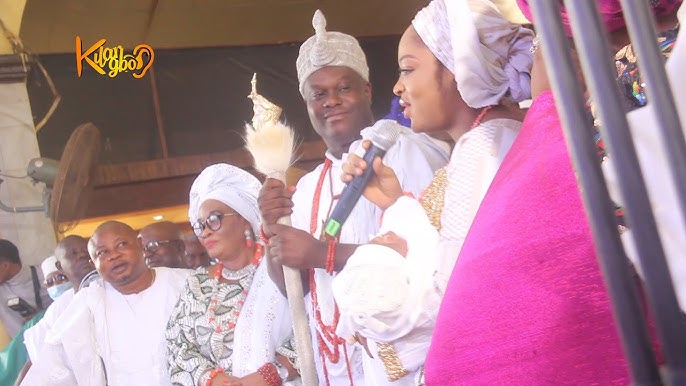
The day she stopped attending certain rituals, the whispers intensified. “A queen who will not dance cannot reign long,” one elder was overheard saying. And so began the invisible trial of Prophetess Naomi—the test of whether faith could survive in a house built for gods.
Whispers Behind Beaded Curtains
Every palace has its politics. In Ile-Ife, politics hides behind courtesy. The Prophetess’s reported withdrawal from some royal engagements emboldened palace insiders who preferred the throne’s older rhythms. Some courtiers resented her youth; others feared her influence over the Ooni’s spiritual life.
Her ministry’s growing fame outside the palace fueled suspicions. To them, she was not just the queen of Ife—she was a preacher commanding millions. To some, that looked like a power rivalry. In palatial dynamics, attention is currency, and Naomi’s glow began to cost her quietly.
As 2021 unfolded, subtle hostilities became open coldness. Aides avoided her wing; events proceeded without her invitation. Even the palace media handlers, according to heresays, began referring to her in the past tense. Yet, she endured with measured grace. Those who saw her during that period described a woman who smiled with her lips but prayed with tears.
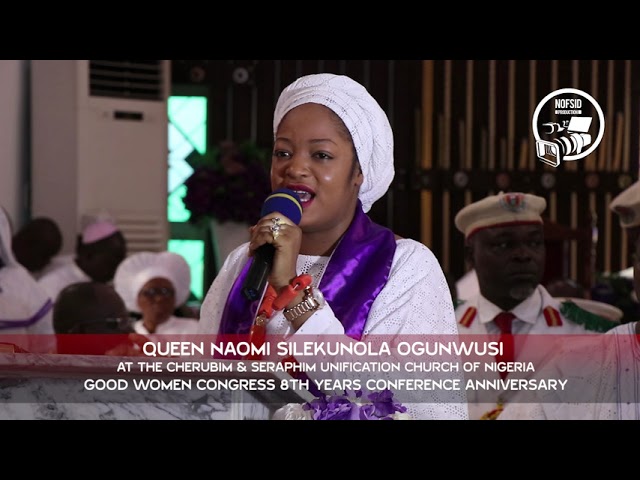
Within those beaded curtains, decisions were already being drafted. The palace would not announce her departure; history would.
The Day the Palace Fell Silent
December 23, 2021. The day began like any other in Ile-Ife—chants, processions, royal visitors. But inside Naomi’s quarters, something irreversible was unfolding. She wrote quietly on her phone, her fingers trembling over each sentence. Her announcement was not rehearsed; it was revelation.
When she finally posted her message to the world—“I shall no longer be known as the wife of the Ooni of Ife…”—the silence in the palace was deafening. Aides froze. Some thought her account had been hacked. Others rushed to confirm. But the Prophetess did not delete it. She sat still, her Bible still open.
Outside, the city buzzed with shock. Social media turned into a public courtroom; opinion split between faith and tradition. But inside the palace, the Ooni withdrew. Those close to him said he spent that evening in his private chambers, staring at the ceiling—neither angry nor relieved, just haunted by what power cannot protect: human fragility.
By nightfall, the drummers stopped playing. The palace gates closed early. The marble corridors echoed again with that same silence that had preceded the storm.
Naomi’s Farewell to Marble
Leaving a palace is unlike leaving any other home. Every step becomes symbolic; every door remembers your presence. On the morning Naomi departed, she reportedly wore no crown, only a simple white dress. The guards bowed without words. The palace women who once adorned her with coral beads wept quietly, unsure whether to follow her with respect or regret.
She walked through the long hallway leading to the courtyard, where the ancient talking drums once greeted her as queen. That morning, they were silent. Somewhere above, pigeons scattered into the golden light. Naomi, according to reports, paused by the marble archway, whispered a short prayer, and touched the pillar—once a sign of royalty, now a monument of memory.
She left without ceremony. No convoy, no farewell dance, no priestly send-off. Only a mother and her son stepping into the open air, free yet uncertain. To many watching from afar, it was a simple separation. But to those who understood the weight of Yoruba cosmology, it was seismic: a covenant between faith and tradition had quietly collapsed.
In Akure, her hometown, she returned to her pulpit, to the rhythm of gospel songs and testimonies. The palace, meanwhile, began its own rebuilding—physically, politically, spiritually.
Ooni’s New Marriages: The Tradition Strikes Back
By late 2022, headlines once again carried the Ooni’s name—this time for a cascade of royal weddings. Within months, he married several wives, each from a family of heritage or influence. To the traditional court, it was restoration—a return to form. To his critics, it was overcompensation for a spiritual wound.
Each ceremony was rich in symbolism: the coral beads, the parrot feathers, the ancestral chants. In Yoruba royal history, polygamy often served diplomatic and cultural functions, binding clans to the throne. But in modern Nigeria, it carried new meaning—especially after the high-profile split with a Christian prophetess.
Observers saw it as tradition reasserting itself, reclaiming territory ceded to modernity. For the Ooni, it was both duty and perhaps therapy—a way to silence questions about his personal life. Yet, every new wedding stirred the same unspoken comparison: none carried the same spiritual intrigue as Naomi’s.
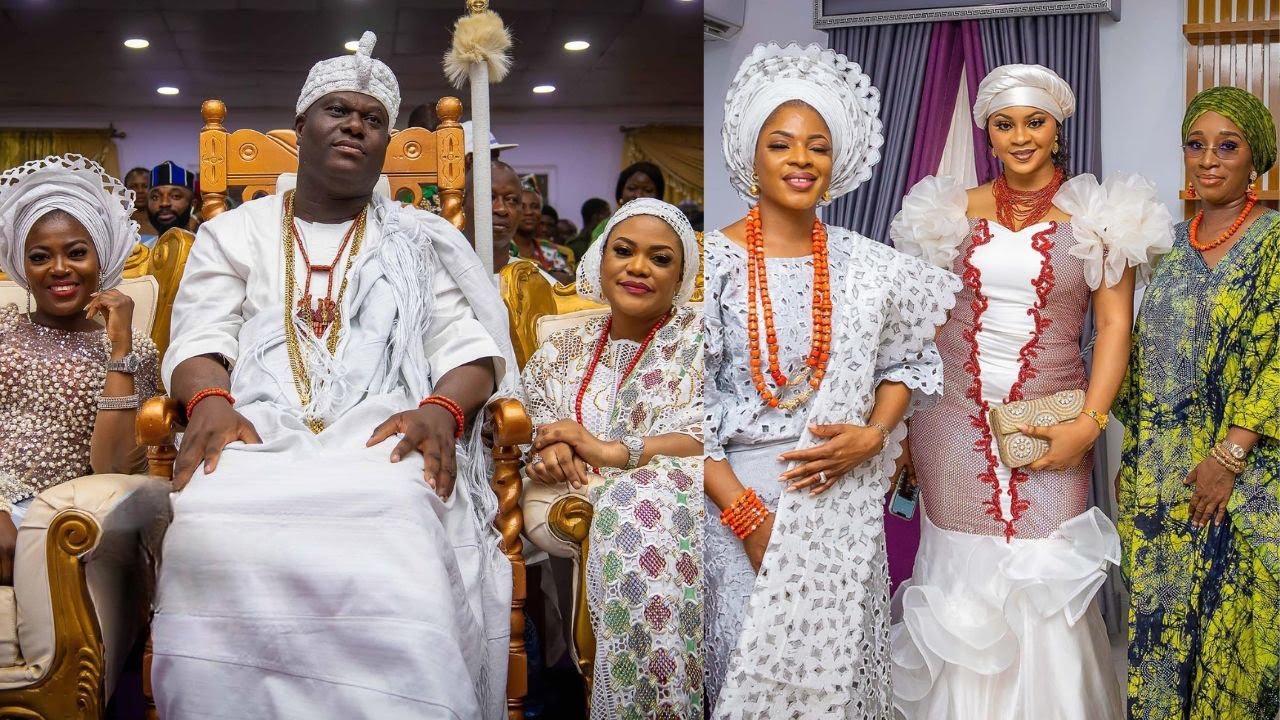
Through it all, he remained regal, poised, publicly diplomatic. But the palace that once echoed with the Prophetess’s hymns now hosted festivals once more, each drumbeat declaring that the old order had returned.
Faith Without a Crown
For Naomi, life after the palace became quieter but deeper. She resumed her ministry, preaching about healing, identity, and divine timing. Videos of her sermons showed a woman transformed—not broken, but refined. “Royalty is not in marble,” she told her congregation one Sunday, “it is in mercy.”
Her followers multiplied. She became a symbol for women navigating faith and societal expectation—a modern echo of ancient resilience. Interviews revealed her calm acceptance: she spoke without bitterness, without denial of her past. “I have seen both power and peace,” she once said, “and I choose peace.”
Then came the Ibadan Stampede, an event that would challenge everything spoken and unspoken in her post-palace life. On December 18, 2024, at a Christmas funfair in Basorun, Ibadan, organized by the Women In Need of Guidance and Support Foundation (her foundation) and Agidigbo FM, over 35 children died in a crowd crush; others were injured. She was arrested along with others — principal, broadcaster — and charged with negligence, among other counts. Bail was granted, amid national outrage and grief. In March 2025, the courts struck out the charges. The case collapsed not for lack of tragedy, but for reasons tied to legal technicalities, empathy from affected families, and procedural shortcomings.
Meanwhile, her son, Tadenikawo, remained a bridge between two worlds—royal bloodline and prophetic heritage. She guarded his upbringing fiercely, shielding him from the noise that once surrounded their family.
Each chapter after the palace whispered a truth larger than her story — that strength in Nigeria, as in faith, is often forged in the space between endurance and evolution.
Takeaway: When God and the Gods Watch in Silence
Years from now, historians will write about the Ooni’s reign and the Prophetess who dared to bring scripture into the palace of Oduduwa. Some will see it as a failed experiment; others will call it divine disruption. Yet, beyond all opinions lies a deeper truth: love, faith, and culture are not enemies—they are simply languages that often misunderstand one another.
In the courtyard of Ile-Ife, the drums have long resumed their beat. Tourists still visit, chiefs still bow, and ceremonies still unfold. But sometimes, in the stillness between two festivals, palace aides say you can still hear faint hymns from the northern wing—the room where a young prophetess once prayed.

Perhaps it is memory. Perhaps it is myth. Or perhaps, in that place where Yoruba tradition once tested her faith, heaven still whispers softly, reminding both king and queen that crowns fade, but conviction endures.


Discussion about this post