


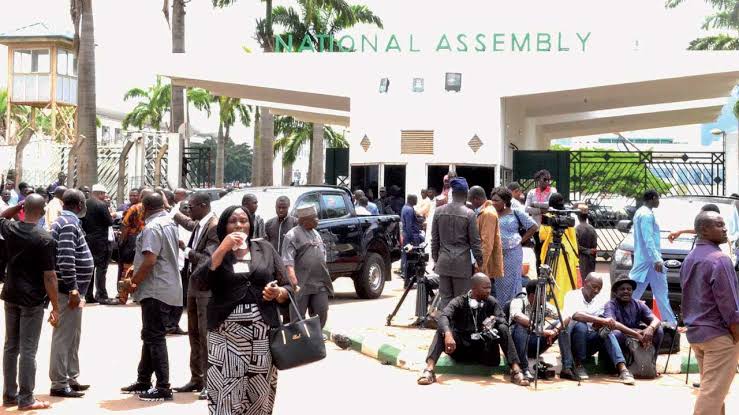

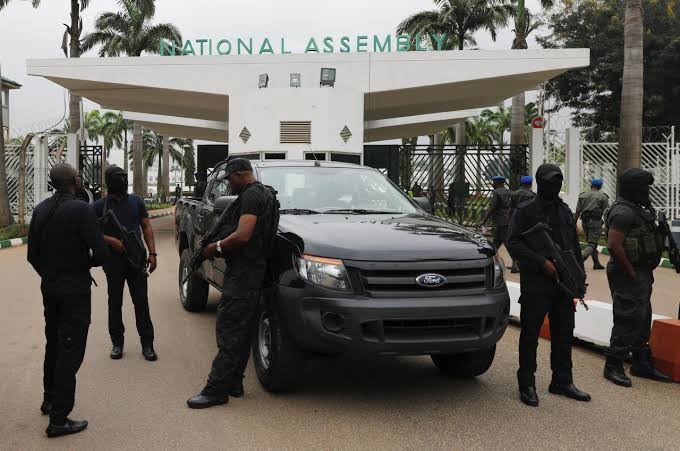
On August 7, 2018, Nigeria’s democracy faced a significant test when operatives of the Department of State Services (DSS) barricaded the National Assembly (NASS) complex in Abuja. This unprecedented action, widely perceived as an attempted legislative coup, led to the dismissal of the DSS Director-General, Lawal Daura, and ignited nationwide debates about the sanctity of democratic institutions in Nigeria.
Prelude to the Siege
In the weeks leading up to the incident, political tensions were high. Senate President Bukola Saraki had defected from the ruling All Progressives Congress (APC) to the opposition People’s Democratic Party (PDP), prompting calls from APC members for his resignation. Amidst this backdrop, the National Assembly was scheduled to reconvene to discuss critical national matters, including the 2019 general elections.
The Siege Unfolds
In the early hours of August 7, masked DSS operatives took strategic positions around the National Assembly complex, preventing lawmakers, staff, and journalists from entering the premises. Clerk to the National Assembly, Mohammed Sani-Omolori, upon arrival, refused to enter the complex, stated he couldn’t do so while his staff were denied access. Deputy Speaker of the House of Representatives, Yusuf Lasun, condemned the blockade, emphasized the difficulty of impeaching a presiding officer without a two-thirds majority of all members.
Public Outcry and Political Reactions
The siege drew widespread condemnation from Nigerians and the international community. Former Vice President Atiku Abubakar described the incident as a “coup against democracy,” urged President Muhammadu Buhari to call the DSS to order. Civil society organizations and foreign missions also expressed concerns over the implications of the DSS’s actions on Nigeria’s democratic processes.
Dismissal of DSS Director-General Lawal Daura
Acting President Yemi Osinbajo swiftly responded to the crisis by summoning Lawal Daura and Inspector General of Police Ibrahim Idris to the Presidential Villa. Following the meeting, Osinbajo terminated Daura’s appointment, described the DSS’s actions as unauthorized and a gross violation of constitutional order. Daura was directed to hand over to the most senior officer in the DSS.
Investigations and Findings
Subsequent investigations revealed that Daura acted unilaterally, without the approval of the presidency or coordination with other security agencies. The police report indicated that Daura may have been influenced by certain political actors aiming to achieve selfish objectives. The report also highlighted that DSS operatives acted like mercenaries, preventing lawmakers from accessing the National Assembly without any legal justification.
Aftermath and Implications
The incident underscored the fragility of Nigeria’s democratic institutions and the importance of upholding the rule of law. It served as a reminder of the need for security agencies to operate within constitutional boundaries and for political actors to respect democratic norms. The swift action by Acting President Osinbajo was lauded as a decisive step in preserving the integrity of the National Assembly and reinforcing the principle of separation of powers.
The August 7, 2018, siege of the National Assembly by the DSS remains a pivotal moment in Nigeria’s democratic journey. It highlighted the challenges facing the country’s democratic institutions and the constant vigilance required to safeguard them. The incident serves as a cautionary tale about the dangers of politicizing security agencies and the imperative of maintaining the independence of the legislative arm of government.
Discussion about this post