


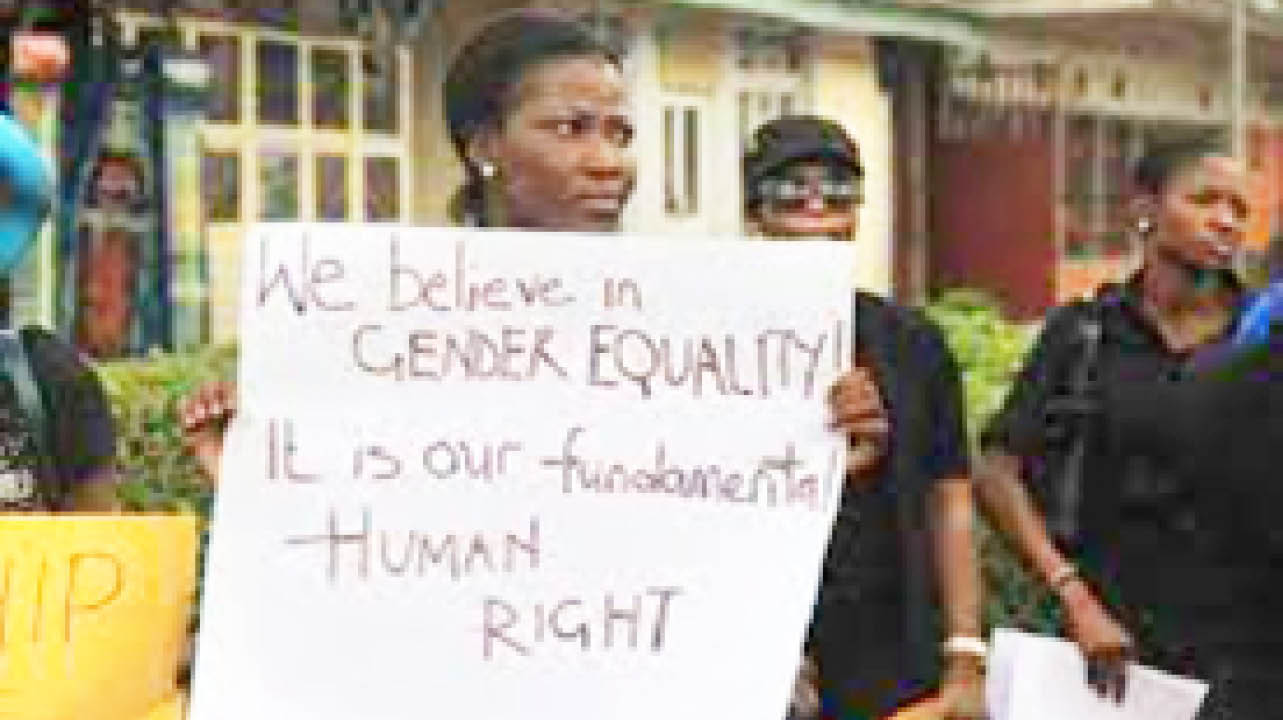

- Campaign financing barriers disproportionately affect women, who often lack access to the substantial resources required for elections.
- Female politicians face heightened risks of electoral violence and targeted harassment, deterring active participation in political contests.
Gender imbalance in political leadership remains a persistent issue in Nigeria despite global and regional commitments to gender equity.
The underrepresentation of women in Nigerian politics is not only a reflection of societal norms but also a product of complex structural, legal, cultural, and institutional challenges that have yet to be adequately addressed.
Nigeria’s political system has historically been male-dominated, with leadership roles predominantly occupied by men since the country’s independence in 1960.
Colonial-era policies entrenched patriarchal governance structures, marginalizing women from the public sphere.
Although women played significant roles in pre-colonial governance, the colonial administration’s restructuring of political authority excluded them from formal leadership, a legacy that has persisted into the post-independence era.
Structurally, political parties — which serve as the main vehicles for political participation — remain largely unwelcoming to women.
Party hierarchies are often controlled by entrenched male elites, and women are frequently relegated to less influential positions such as “women’s wings,” limiting their impact on party decisions and candidate selection processes.
While the Nigerian Constitution guarantees the rights of all citizens to participate in politics, it does not mandate gender quotas or any form of affirmative action.
Various national gender policy frameworks exist, such as the 2006 National Gender Policy, which recommends a minimum of 35% affirmative action for women in political positions.
However, these policies are non-binding and have seen limited implementation due to the absence of legal enforcement mechanisms.
Efforts to introduce gender quota bills in the National Assembly have faced repeated setbacks, often failing to pass through legislative processes.
Resistance to such reforms has been attributed to political conservatism, religious opposition, and the lack of widespread political will.
Deep-rooted socio-cultural norms continue to play a significant role in limiting women’s political participation.
In many parts of Nigeria, politics is still considered a male domain, while women are expected to focus on domestic responsibilities.
These societal expectations often discourage women from seeking public office or participating in politics altogether.
Additionally, traditional and religious institutions exert considerable influence in Nigerian communities, and their support is crucial for political legitimacy.
In many cases, these institutions do not support female political participation, citing religious doctrines or customary practices that prioritize male leadership.
Campaigning for political office in Nigeria is capital-intensive, involving significant financial resources for media outreach, party primaries, mobilization, and security.
Women, who generally face greater economic disparities than men, often lack access to the resources needed to compete effectively.
Economic dependence and unequal access to funding networks further limit their ability to contest elections on equal footing with male counterparts.
Moreover, the absence of institutional funding mechanisms for female candidates within political parties or through state structures further compounds this economic barrier.
Electoral violence and security risks also deter female political participation.
Nigerian elections are frequently marred by violence, intimidation, and harassment, with female candidates often disproportionately targeted.
Reports from election monitoring groups indicate that women face both physical threats and character assassination campaigns, which can dissuade them from contesting or remaining in political races.
The lack of adequate legal protection and support for victims of political violence exacerbates this issue, reinforcing an unsafe environment for female aspirants.
The scarcity of women in prominent political positions contributes to a cycle of underrepresentation.
The lack of visible role models and mentorship networks for aspiring female politicians diminishes motivation and reinforces societal perceptions that women are not suited for leadership.
When women do enter political spaces, they often face heightened scrutiny and are expected to outperform their male counterparts to gain credibility.
Despite Nigeria’s ratification of international instruments such as the Convention on the Elimination of All Forms of Discrimination Against Women (CEDAW) and the African Union’s Protocol on the Rights of Women in Africa, the country continues to fall short in achieving gender parity in political leadership.
Addressing this imbalance requires comprehensive reforms across legal, political, economic, and cultural domains. Without systemic change, the persistent exclusion of women from political leadership will continue to undermine democratic development and inclusive governance in Nigeria.
Discussion about this post