



MURIC is free to raise concern and voice its grievances over what it perceives to be the marginalisation of Muslims in Lagos State. But we must situate and contextualise such expression of displeasure within broader socio-political occurrences in, not just Lagos State, but Nigeria.
In Nigeria, politics and religion are intertwined and hardly separable. Both work together, though discreetly in most cases, to ensure that the interests of the political class and elites are protected. In the north, politicians see religion as a potent weapon needed to gain and consolidate power, and they deploy it with devastating and brutal efficiency. Islamic clerics brainwash largely illiterate people with mostly twisted, distorted and convoluted Islamic teachings and injunctions to make it hard for them to ask questions and make informed and wise decisions when choosing their leaders.
The situation is not any different in the south, though not as prevalent and deep as in the north, owing to some factors, such as better education and cultural superiority over religion. However, some religious groups try to infuse and bake their ideology into governance. One of such groups is the Muslim Rights Concern (MURIC), a muslim rights advocacy group. For years it has positioned itself as the champion of Muslim rights, protecting the freedom and liberty of Muslims wherever they are in Nigeria. However, its posturing and rhetoric are in sharp contrast to the ideals it espouses. Over the years, it has acted in ways that amplify the nation’s faultlines. It wraps its divisive tendency in the tinfoil of inclusivity. It drapes intolerance in the garb of Muslim rights. It carries itself with an air of extremism, hence alienating those who would ordinarily be sympathetic to its cause and align with it.
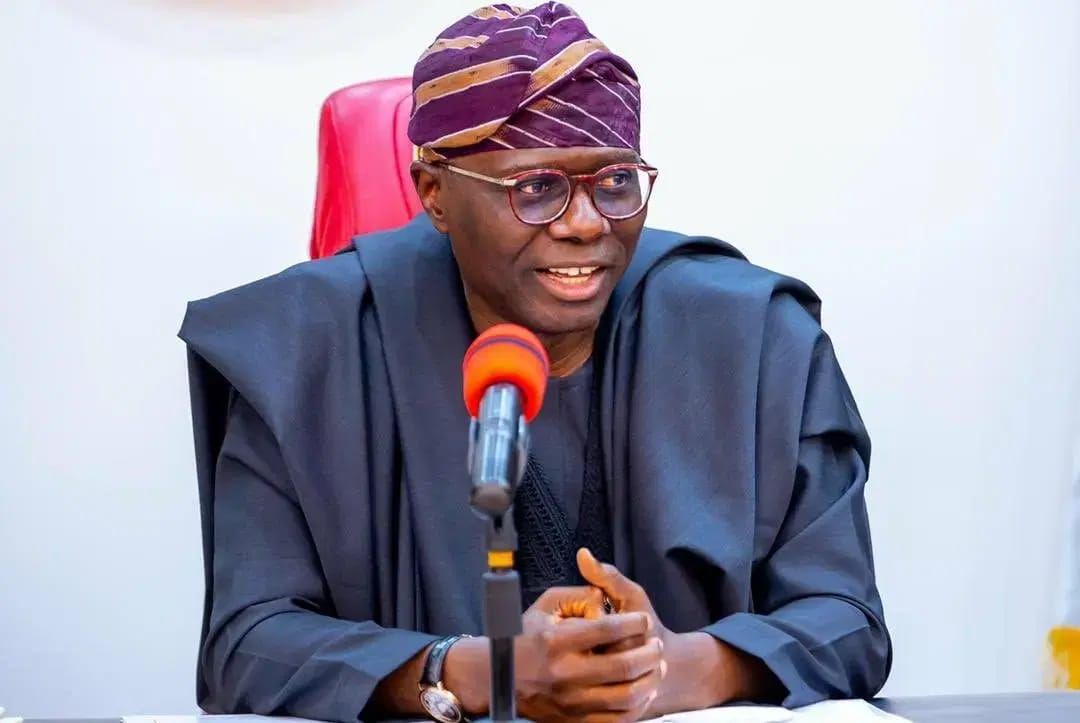
The group is in the news again, and as usual, it is actively embroiled in the battle of wit and nerve with the Lagos state government over the state governor, Babajide Sanwo-Olu,’s recent appointment of nine permanent secretaries, which it labelled “all-Christian list.” The governor had announced the fresh appointments on Tuesday, September 23, 2025, in a circular by the Head of Service, Bode Agoro. Reacting to the appointment, MURIC, through its Executive Director, Prof. Ishaq Akintola, accused the governor of religious intolerance, exclusion of Muslims, and disregard for constitutional provisions. In a statement on Thursday, Akintola said Muslims in the state are unhappy with the appointment.
MURIC is free to raise concern and voice its grievances over what it perceives to be the marginalisation of Muslims in Lagos State. But we must situate and contextualise such expression of displeasure within broader socio-political occurrences in, not just Lagos State, but Nigeria. In Lagos, as it is with other South West states like Osun, Ogun and Oyo, the population of Christians and Muslims is almost evenly split. The state is a melting pot where a jambalaya of culture converges. It’s Nigeria’s economic hub and attracts thousands of people from other parts of the country who flock to it for better opportunities and greener pastures. While it is important to take the divergence and heterogeneous nature of the state into account in its governance, such consideration must not come at the expense of capacity and competence.
MURIC is not questioning the competence and capacity of the new permanent secretaries which should ideally be its concern if it is truly fighting for the interest of Muslims in the state. Its complaints and grievances are rooted in the religion and the faith of the appointees. Except that MURIC has incontrovertible evidence and irrefutable proof that religion played a key role in these appointments, then it is doing a great disservice to Muslims. There are thousands of Muslims working in the state civil service, even at the highest level of governance, one wonders why MURIC has not spotlighted these people rather than whipping up sentiments that clearly do not advance the interest of the Muslims. Muslims are too embedded in the fabrics of governance in Lagos State and have contributed immensely to the development of the state to be sidelined or marginalised, as MURIC would have us believe.
It is also disconcerting that MURIC only finds its voice when it comes to the politics of governance and the shenanigans of power play. There are far more important issues affecting the preponderance of Muslims today in Nigeria than MURIC’s fixation on the permanent secretaries’ appointment. It may want to shift its focus and extend its agitation for Muslims’ rights to the hapless and defenceless Muslims who are constantly at the receiving end of violent attacks and killings by rampaging armed non-state actors in the country, especially in the north. Over thirty worshippers were brutally gunned down in a mosque last month in Katsina, we did not hear MURIC threatening fire and brimstone against the perpetrators of such heinous acts. It did not use his clout and influence to prevail on the government.
When the pictures of armed bandits engaging in peace talks with authorities surfaced on social media a few days ago, MURIC did make a whimper about the abnormality and absurdity of such a gathering. It didn’t lend its voice to the position of many Nigerians, Muslims included, who felt that such a gathering does nothing to help the pursuit of peace and stability in the country; it only serves to reward violence and emboldens others to take up arms against the state. There are more pressing and consequential issues of national significance that affect Muslims which MURIC can channel their energy towards addressing.
It must refrain from reducing the matters of governance to petty bickering that drives a wedge into an already shaky wall of religion, hence widening the cracks of intolerance. MURIC can criticise the performance of the governor and his appointee, but giving the governor’s appointment religious colouration is downright distasteful.
Discussion about this post