


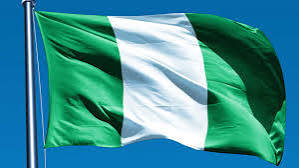

The return to democratic rule in 1999 brought a glimmer of hope, but a republic that started on a positive note and held a lot of promises as we were looking like a nation that had jettisoned the old regressive and visionless way to chart a new path that placed us on the route of economic growth, prosperity and military dominance has since been derailed by corrupt, selfish and unscrupulous ruling elites.
By Wednesday, October 1, 2025, Nigeria would have chalked up 65 years, as a people, a polity and an independent entity, whether or not it is a flag and anthem expression. To think of it, 65 years in a man’s life, no less so, a country, is such a long time. Long enough to take stock.
At 65, Nigeria is still waddling or toddling, and by choice. The result today is that we are increasingly encouraged to have faith in our doubts about the country’s future. The direct outcome of the quandary is that our will to stay together is challenged. I can say without any error of judgement that the bane of this country of noble men and women was, and is, the political class. These people are, by definition, conditioned to act in predetermined ways, just to react or respond to situations, largely created by them, and always out of narrow-mindedness.
Politicians in Nigeria are in military uniform or civilian garb, and have both held the country by the scruff of the neck. A short six years into our independence, achieved without a bloodshed, the military struck, and all hell was let loose on a virgin land, with promises of a good life. Let truth be told, the country was awash with world beaters. Dick Tiger and Hogan Bassey were world boxing champions in the middle and featherweight categories. Emmanuel Arinze Ifeajuna, at the age of 19, became the first Black African to win a gold medal at an international sports event when he won the 1954 British Empire and Commonwealth Games. His winning mark and personal best of 6 ft 8 in (2.03 m) was a game record and a British Empire record at the time.
A relatively unknown Chinua Achebe wrote and published his award-winning “Things Fall Apart” at age 28, in 1958, just as Wole Soyinka, an iconoclast, made his mark, in his late 20s. The incredible list of world beaters of Nigerian extraction is endless. How she has gabbled off her boundless gifts and potentials, continues to boggle the mind. The rot has reached a dizzying height, so that it makes total nonsense to appear to live straight.
While other sciences have advanced, that of the government is at a standstill, in Nigeria. It is a lot better now than on the morning of October 1, 1960, when the British grudgingly allowed us to go. The country struck oil in 1958 or so at Oloibiri, in today’s Bayelsa state. The petrol-dollar boom of the 1970s, has given rise to the melancholy of the 2000s and beyond.
It has often been said that the discovery of crude oil was a curse to Nigeria, as it became the Dutch disease that undermined and hampered the growth of other critical sectors of the economy, like agriculture and mining, which used to be the mainstay of the Nigerian economy during the colonial era and the early years of independence.
The discovery of oil which somewhat coincided with the abolition of Nigeria’s regional system of government that was responsible for the use of key cash crops — cocoa in the West, groundnut in the north and palm oil in the east to earn foreign exchange and develop the nation — spurred a drastic decline in interest in agriculture especially from the government. The government abandoned agriculture for crude and the people followed suit.
It’s not so much the neglect of agriculture that infuriates one but the troubling wastefulness and profound lack of vision by the successive Nigerian governments during the many oil booms starting in the 70s that leave one desolate and forlorn. The absence of foresight and impactful leadership during the oil booms is deeply worrisome. The rhetoric and public remarks of General Yakubu Gowon, the man who oversaw the affairs of the nation during the high oil prices of the 70s, give one a sense of how the country has continued to be beset by bad and unimaginative leaders who stunt its growth. He was said to have remarked that Nigeria’s problem wasn’t money but how to spend. When he made that distasteful statement, Nigeria did not and still does not have a ten-lane highway that connects the nation’s key states. It did not and still does not have a cross-country rail network that connects every major town and city in the country and opens it up. Japan already had a high-speed train in the 60s.
From the soaring oil prices of the 70s occasioned by the oil boom of that era to the oil windfall of the 90s brought about by the Gulf War during the regime of military head of state, General Ibrahim Badamasi Babangida, Nigeria wasted its many golden and glorious opportunities to use the riches brought to it by the black gold to develop the country. It frittered away the financial gains and squandered the proceeds with corruption and mismanagement which engendered economic distortion and stagnation.
The return to democratic rule in 1999 brought a glimmer of hope, but a republic that started on a positive note and held a lot of promises as we were looking like a nation that had jettisoned the old regressive and visionless way to chart a new path that placed us on the route of economic growth, prosperity and military dominance has since been derailed by corrupt, selfish and unscrupulous ruling elites. We went from looking like we had finally found our feet and were getting it right to looking like a rudderless ship that is lost at sea due to having drunk and incompetent sailors.
The country is bereft of ideas, with the result that not everything that counts can be counted, and it is not everything that can be counted that counts. The country is at the crossroads, never mind what die-in-the-wool apologists, disguised as nationalists, want us to believe. Nigeria has burnt bridges she built, and which we built for her. The stigma of belonging to the country or being associated with it is a yoke.
Discussion about this post