


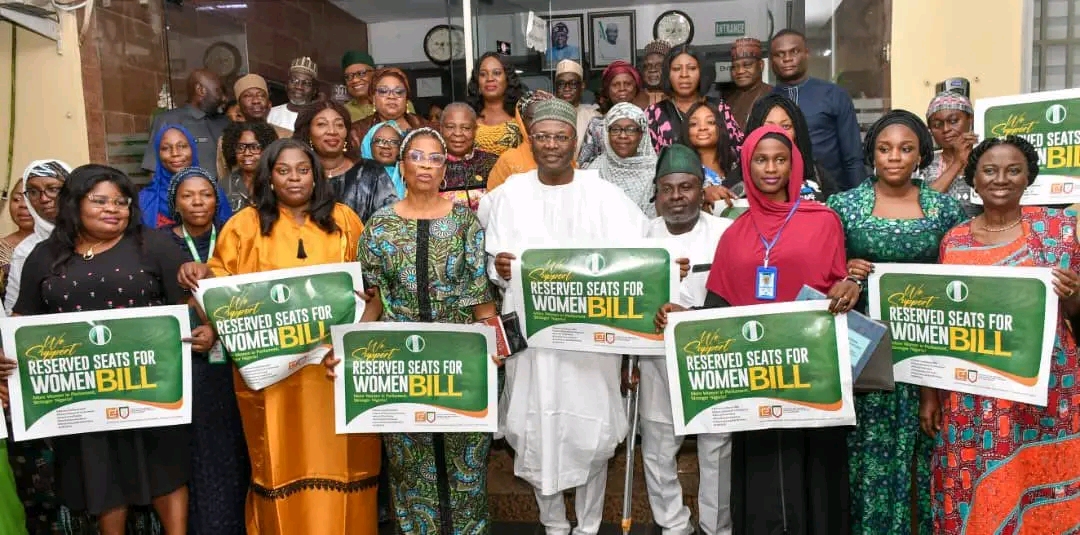

Across Nigeria’s political landscape, the participation of women has continued to draw attention as the nation seeks more inclusive governance.
For decades, women have made efforts to occupy decision-making positions, yet their representation remains low compared to their male counterparts.
Despite a growing awareness of gender balance, women still face numerous barriers that limit their involvement in active politics.
Historically, cultural norms, financial constraints, and political intimidation have slowed women’s progress within the system.
Although several women have emerged as lawmakers, commissioners, and ministers, their numbers still fall short of global recommendations for gender equality in governance.
Political observers note that many female politicians are often placed in positions viewed as symbolic rather than strategic.
This trend has fuelled debates about whether representation alone is enough or if genuine participation must go beyond token appointments.
Efforts to address the imbalance have led to renewed calls for laws supporting gender quotas in elective and appointive positions.
The aim is to ensure that women are not only visible but are also influential in shaping national and state policies.
Over time, advocacy groups and civil society organisations have continued to campaign for equal opportunities during elections and appointments.
Many of these campaigns focus on empowering women with the skills and confidence required to contest and win positions.
Training initiatives now target female aspirants, offering guidance on campaign strategies, communication, and leadership development.
The political environment, however, still presents significant challenges, including the high cost of nomination forms and limited access to funding.
Party structures remain male-dominated, often leaving women with little influence in internal decision-making processes.
As a result, female aspirants sometimes depend on personal networks or external support to remain competitive.
The introduction of digital campaigns has opened new spaces for women to reach voters and share their ideas more widely.
Social media platforms have become essential tools for engagement, helping female politicians connect directly with citizens.
In recent years, the number of women showing interest in politics has grown, reflecting a gradual shift in attitudes towards gender roles.
From local councils to national assemblies, more women are stepping forward to challenge long-standing political traditions.
While progress remains slow, these efforts indicate that the journey toward gender inclusion is steadily gaining momentum.
Beyond election campaigns, women have also taken leadership roles within political parties, advocacy movements, and policy formulation teams.
Their contributions extend to grassroots mobilisation, where they play a vital role in community-based decision-making.
In several states, women-led initiatives have helped improve education, healthcare, and social welfare systems.
Such outcomes highlight how inclusive representation can lead to practical results when women hold positions of authority.
Experts in political development argue that having more women in power improves accountability, transparency, and social equity.
To achieve this, stakeholders have continued to advocate for mentorship programmes linking young women with experienced leaders.
This form of guidance helps bridge generational gaps and prepares more women to contest for higher offices in the future.
Education remains another important factor, as improved literacy and awareness have increased women’s confidence to engage politically.
Community sensitisation efforts also encourage families and traditional leaders to support female participation in governance.
Women in rural areas, once overlooked, are now part of discussions about local representation and development planning.
At the same time, public institutions are being urged to review recruitment and appointment policies to promote gender fairness.
National conversations around women in politics now focus not just on numbers but also on the quality of participation and influence.
Beyond being representatives, women are expected to drive reforms that affect national growth and social inclusion.
As Nigeria prepares for future elections, debates on gender equality continue to shape political narratives across parties.
The progress achieved so far reflects both the resilience of female politicians and the ongoing struggle to break systemic barriers.
Observers believe that meaningful change will come when women move from being symbols of diversity to being true decision-makers.
With more awareness, training, and supportive policies, the goal of full participation may gradually become a reality.
The future of women in politics therefore depends not only on access to power but on the ability to sustain it through competence and leadership.
When inclusion becomes the norm rather than the exception, Nigeria’s democracy will reflect a fairer and stronger representation of its people.
Discussion about this post