


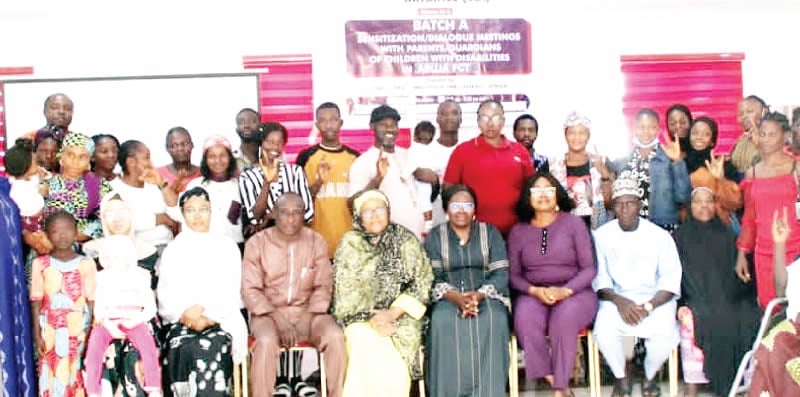

Across Nigeria, millions of people living with disabilities continue to face quiet battles that often go unnoticed in daily life.
For many, physical barriers are only the beginning of a broader struggle to gain fair access to education, employment, and social inclusion.
Although policies have been introduced to support them, implementation remains weak, leaving many persons with disabilities on the margins of society.
Public buildings in most cities still lack ramps, elevators, or tactile pathways that enable independent access for those using wheelchairs or mobility aids.
In rural areas, the challenge is even more profound, as limited infrastructure and social awareness deepen the sense of exclusion.
For children with disabilities, access to quality education remains an uphill task, as few schools provide inclusive classrooms or trained teachers.
Parents of such children often face the dilemma of either keeping them at home or sending them to special schools that are scarce and costly.
Employment opportunities are also restricted, with many employers hesitant to hire people living with disabilities despite existing laws against discrimination.
The National Disability Act, signed to guarantee inclusion, mandates that at least five per cent of public sector employment be reserved for persons with disabilities.
However, years after its passage, the reality on the ground still tells a different story, with limited awareness and weak enforcement.
Many qualified candidates struggle to find jobs that match their skills due to bias or inaccessible work environments.
In some cases, persons with disabilities are forced into street begging or informal jobs that barely sustain them.
Transportation is another major hurdle, as public buses and train stations are rarely adapted to serve people with physical limitations.
This lack of accessibility restricts mobility, limits participation in civic life, and further isolates individuals who already face multiple disadvantages.
Even healthcare delivery poses challenges, as hospitals and clinics often lack sign language interpreters, accessible toilets, or proper consultation spaces.
Women with disabilities face double discrimination — first as women, and again because of their physical conditions.
They often struggle with gender-based violence, poor access to reproductive health, and fewer chances in both formal and informal economies.
Advocacy groups have continued to push for inclusion, urging government agencies, private companies, and communities to adopt universal design principles.
Technology has brought some relief through digital platforms that offer remote work, online education, and telemedicine for those who can afford it.
Yet, poor internet coverage, cost of devices, and digital illiteracy remain barriers for many in low-income areas.
Experts have also highlighted the need for local governments to invest in community-level support systems and social protection for persons with disabilities.
Such systems would ensure access to healthcare, education, and economic empowerment programmes without the usual bureaucracy.
Inclusive societies, they say, are not built on charity but on equal opportunity, fair access, and respect for human dignity.
While progress has been made in policy development, the gap between law and practice remains wide, leaving millions behind.
The struggle for inclusion is not only about building ramps and special schools, but about building empathy and understanding within society.
For Nigeria’s population living with disabilities, visibility and voice remain key to changing perceptions and ensuring no one is left behind.
Until accessibility becomes a shared priority, the silent struggle for equality will continue across towns, cities, and villages.
Discussion about this post