


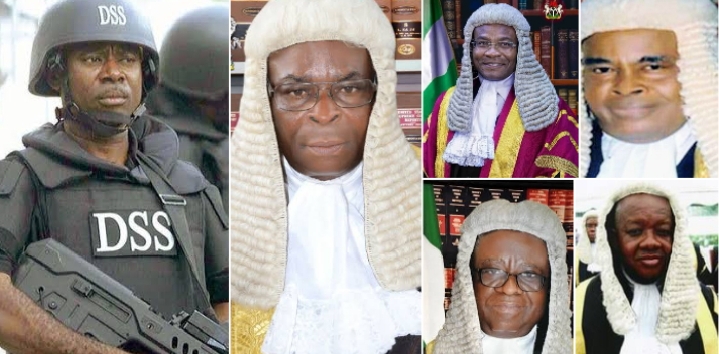

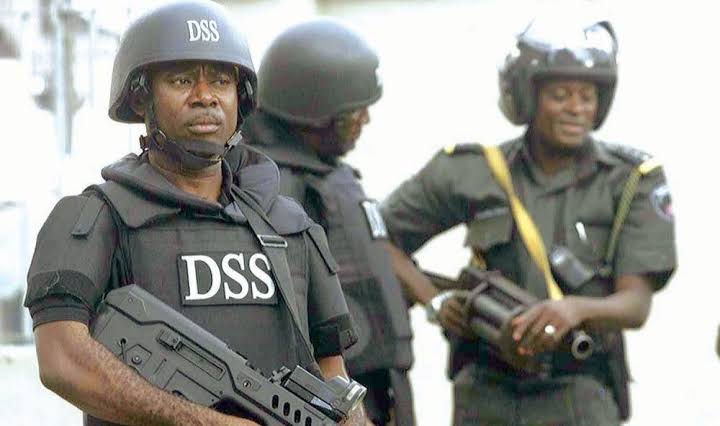
The night was unusually humid over Abuja. In the stillness, before dawn could announce itself, the quiet streets began to stir with the faint growl of engines. Somewhere inside Maitama, the air thickened around a convoy without sirens — black-tinted vehicles gliding toward houses known only to the elite. Behind the dark glass sat officers of Nigeria’s Department of State Services, their faces unreadable, their mission sealed in urgency. It was October 7, 2016 — the night the Nigerian judiciary would awaken to its own nightmare.
There are moments when a country’s conscience trembles, when institutions that once mirrored its dignity suddenly stand naked before the people. The 2016 midnight raids on judges were one of such ruptures. Even before the first door was broken, something sacred was already being violated — the quiet understanding that judges, the last line between the state and its citizens, were untouchable except by law itself.
Phones began to vibrate across the city that night. Within minutes, newsrooms were flooded with whispers: “They are arresting judges.” It sounded absurd at first. Arresting judges at midnight? In their pyjamas? But the truth unfolded before dawn. By morning, photographs and grainy footage of armed operatives storming homes had flooded social media, painting a surreal picture of a judiciary under siege.
Those who had lived through coups in the 1980s described it as déjà vu — a return to the familiar scent of intimidation. Yet this time, it was not soldiers toppling a government. It was intelligence officers invading the sanctum of justice, claiming to defend the nation from corruption.
An Operation Cloaked in Law and Fear
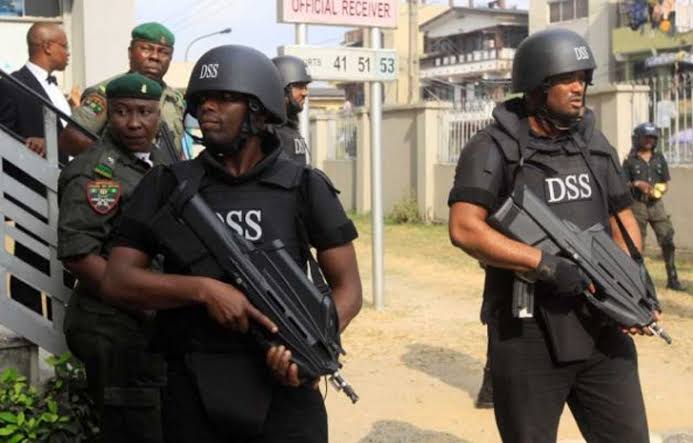
The DSS called it a “sting operation.” According to official briefings, intelligence had been gathered on judges allegedly accepting bribes to influence high-profile cases, particularly election petitions. The agency claimed that marked currencies, documents, and “huge cash sums” were found in their residences. The justification was wrapped in the rhetoric of reform — a call to cleanse the bench of rot.
But beneath that explanation lay a far deeper crisis: the blurred line between lawful enforcement and executive aggression. In total, the homes of at least seven senior judges were raided simultaneously — from Abuja to Port Harcourt, Gombe, and Kano. Those targeted included Supreme Court Justices Sylvester Ngwuta and Inyang Okoro, Federal High Court judges Adeniyi Ademola and Nnamdi Dimgba, Appeal Court Justice Mohammed Tsamiya, and several others.
The Judges Affected — Faces Behind the Robes
In the quiet of that October night, the focus was not on institutions but on individuals — the judges whose homes were suddenly invaded by men in dark vehicles. These were faces the nation had trusted to dispense justice with impartiality, now thrust into a drama that none could have anticipated.
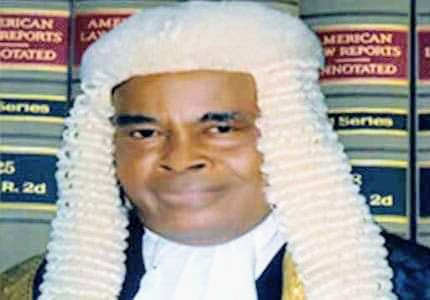
Among them was Justice Sylvester Ngwuta, a Supreme Court jurist known for his scholarly rigor. At his residence in Abuja, the sudden pounding on doors shattered the early morning stillness, and his family woke to strangers rifling through their personal spaces. The scene was surreal, almost cinematic, yet painfully real.
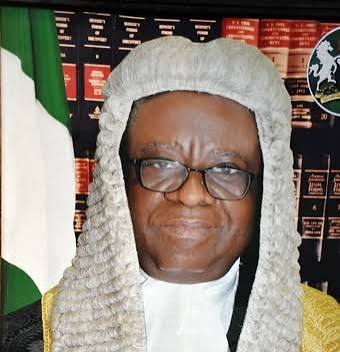
Justice Inyang Okoro, also of the Supreme Court, experienced a similar ordeal. Known for his cautious temperament and measured opinions, he was caught in a storm he could neither anticipate nor control. The agents’ entry was swift, leaving little time for explanation. For the judges, it was not merely a question of legality; it was the violation of their private sanctuaries — a night when the rule of law seemed inverted.
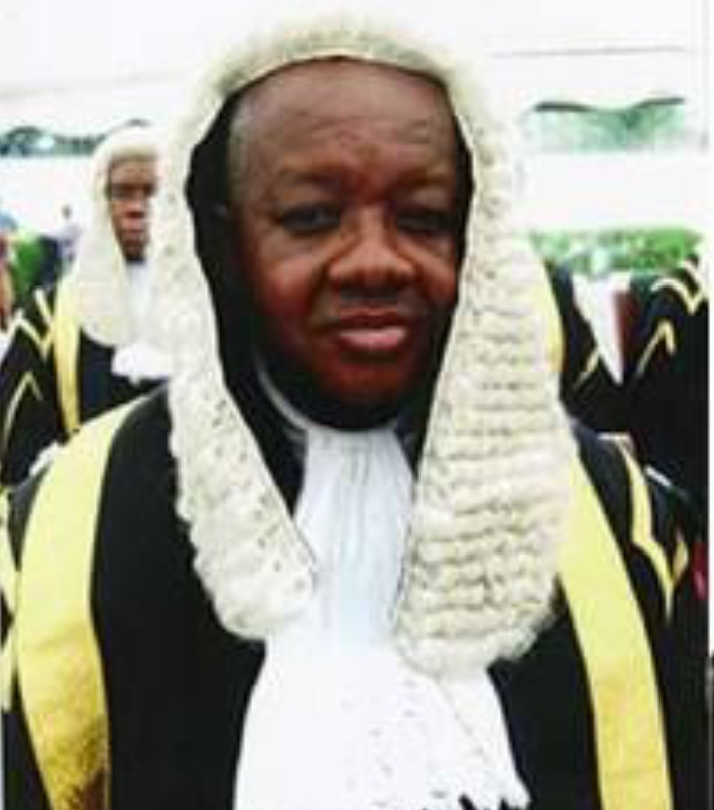
Lower down the judicial ladder, Justice Adeniyi Ademola of the Federal High Court faced the same early-morning chaos. Awakened by loud knocks, he demanded to see a warrant, only to be met with the chilling reply that none was available. In that exchange, the tension between authority and accountability became almost tangible, as the household grappled with fear, confusion, and disbelief.
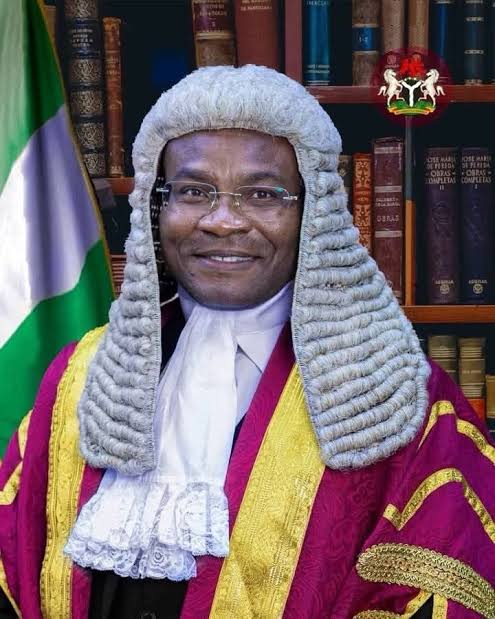
Similarly, Justice Nnamdi Dimgba, another Federal High Court judge, watched as his private life was upended by the very state he had sworn to uphold.
The purview of the DSS extended beyond Abuja. Justice Muazu Pindiga in Gombe, Justice Mohammed Tsamiya of the Court of Appeal, and others across Port Harcourt and Kano were also caught in the sweep. Each had earned their place in the judiciary through years of study and service, yet the midnight raid reduced them to suspects in a spectacle of fear.
These were not abstract symbols of corruption; they were human beings — robed, disciplined, and now suddenly vulnerable — their dignity questioned under the glare of cameras and public debate. The personal cost, emotional strain, and professional implications of that night would linger for years, quietly reshaping the judiciary in ways that remain palpable to this day.
A Gavel in the Shadow of Power
To fathom why those raids happened, one must revisit the political context of 2016. Buhari’s administration was less than two years old, and anti-corruption had become its moral currency. The president had come to power on the promise of cleansing Nigeria’s institutions — a populist crusade that elevated the Economic and Financial Crimes Commission (EFCC) and the DSS to near-mythic status.
But the judiciary was the last frontier. It was the only branch that could question executive authority. Every failed corruption prosecution became, in the eyes of government loyalists, proof that the courts were compromised. Thus, the raids were not just an anti-graft effort — they were a message: no institution is beyond discipline.
Political scientists later described the event as the judicial equivalent of a coup without uniforms. It did not dissolve the courts, but it re-ordered their psychology. Within months, Chief Justice Mahmud Mohammed retired, succeeded by Justice Walter Onnoghen, who himself would later be suspended under controversial circumstances in 2019 — a symbolic continuation of the same struggle.
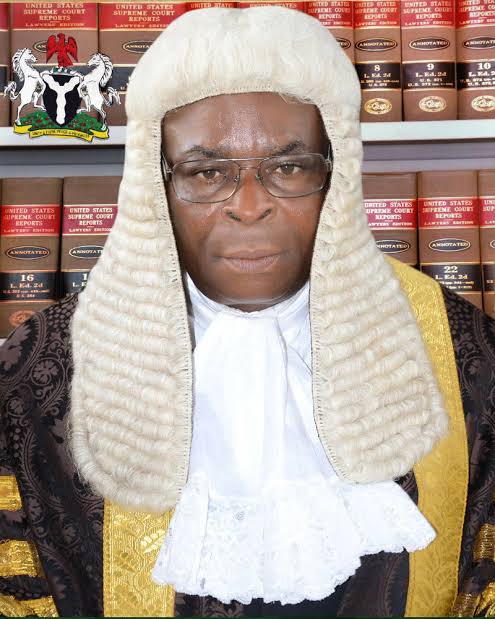
In hindsight, the 2016 purge marked the beginning of a new chapter: one where judicial independence became negotiable, and loyalty sometimes weighed more than law.
A Judiciary on Trial
The National Judicial Council (NJC), then chaired by Chief Justice Mahmud Mohammed, issued a furious statement condemning the raids as unconstitutional. The Nigerian Bar Association (NBA) called for a nationwide boycott of courts, describing the operation as “a return to the dark days of military dictatorship.” Prominent Senior Advocates — from Wole Olanipekun SAN to Femi Falana SAN — warned that the executive had crossed a line that could never be redrawn.
But the government of President Muhammadu Buhari stood firm. The Minister of Information, Lai Mohammed, insisted no one was above the law. The Attorney General, Abubakar Malami SAN, described the sting as a lawful intervention to save a decaying system. In the court of public opinion, Nigerians split into two loud camps: those who saw the raids as long-overdue justice and those who recognized them as institutional bullying.
For decades, Nigeria’s judiciary had battled allegations of bribery, conflicting injunctions, and opaque wealth among some judges. Yet the manner of the DSS operation — nocturnal, forceful, and public — raised larger philosophical questions. Could corruption be cured through illegality? Could justice emerge from fear?
Within legal circles, judges began to speak in whispers. Some refused to preside over politically sensitive cases. Others quietly avoided confrontation with the executive arm. What began as an anti-corruption mission soon morphed into an atmosphere of self-censorship, where every gavel struck a little more timidly than before.
Media, Myths, and the Making of a Spectacle
The raids unfolded in the age of instant digital outrage. By dawn, hashtags like #DSSRaid and #JudgesArrest trended across Nigerian Twitter. Some citizens hailed the operatives as heroes, flooding comment sections with calls for more arrests. Others invoked dark historical memories of Decree No. 2, when dissenters were dragged from beds in the 1980s.
Mainstream newspapers struggled to catch up. Reporters from Premium Times, The Guardian, and Punch scrambled to verify names and locations, phoning correspondents through the night. In Port Harcourt, Governor Nyesom Wike personally confronted DSS officers outside a judge’s house, accusing them of operating illegally — a tense standoff captured in shaky videos that went viral before sunrise.
That single image — a sitting governor arguing in the dark with armed operatives — became the defining metaphor of the event. It illustrated a constitutional collision, a state against itself. The judiciary, executive, and security agencies were no longer co-equal partners in governance; they were adversaries in a silent war for legitimacy.
Legal Fallout and Institutional Scars
Over the following year, courts across Nigeria were caught in procedural storms. The cases against the raided judges collapsed one after another, exposing flaws in both investigation and prosecution. Evidence was ruled inadmissible, confessions uncorroborated, warrants missing. In 2018, Justice Ngwuta’s case was struck out by the Federal High Court, which ruled that only the NJC had the constitutional power to discipline sitting judges.
That ruling became a landmark precedent — reinforcing the autonomy of the judiciary, but also quietly indicting the government’s heavy-handedness. Yet by then, the damage was already moral, not legal. Judges had become symbols of suspicion, and the public’s faith in justice faltered.
The EFCC and DSS continued to clash with lawyers over jurisdiction, while the NJC hardened its internal processes, quietly vetting appointments with greater scrutiny. Within legal circles, young magistrates began to speak more carefully, aware that their independence could be interpreted as defiance.
The purge had achieved what years of constitutional debate could not: it redrew the emotional boundaries of judicial power in Nigeria.
Behind Closed Doors: The Fear and the Files
Inside courtrooms, the raided judges tried to return to normal routines. They sat through hearings, their faces stoic, while journalists scribbled furiously from the gallery. Yet beneath their robes, a quiet dread persisted. Justice Ngwuta was later charged with money laundering and false asset declarations — accusations he denied until his death in 2021. Justice Adeniyi Ademola faced trial but was eventually acquitted after the court found no credible evidence of bribery.
Meanwhile, Justice Inyang Okoro alleged that his arrest was retaliation for refusing to compromise politically charged cases. In a letter later made public, he accused senior political figures of attempting to influence Supreme Court verdicts on election petitions — an accusation that was never formally investigated.
The deeper story of the purge was not in the court documents but in the silence that followed. For months, judges across the federation went to bed earlier, fearing midnight visitors. Searchlights that once symbolized justice now reminded them of torches cutting through the dark. The judiciary, once perceived as distant and dignified, suddenly felt human — frightened, vulnerable, and exposed.
When the trials of the arrested judges collapsed for lack of evidence, the government offered no apology. Instead, it doubled down, insisting that the operation had achieved “moral deterrence.” Yet moral deterrence built on fear often breeds resentment rather than reform. In those years, the relationship between the bench and the executive fractured beyond repair.
The Human Cost of a Midnight Revolution
Away from the headlines, the raids left invisible casualties. Families of the arrested judges endured public shame; neighbours avoided their gates; law clerks resigned quietly to avoid association. For the judges themselves, the humiliation lingered long after acquittal.
Justice Ademola, though cleared, eventually resigned from the bench, unable to erase the stain of accusation. Justice Ngwuta returned to the Supreme Court but never fully recovered from the trauma; colleagues later described him as quieter, withdrawn, and reflective. His death in 2021 was mourned not only as the loss of a jurist but as a reminder of an era when truth and reputation no longer traveled together.
Those who served in the DSS during the operation have also spoken, anonymously, of their unease. Some described being caught between obedience and conscience — executing orders they believed were politically motivated. It was a rare moment when even enforcers questioned the ethics of enforcement.
Legacy and Lessons
Nearly a decade later, the midnight raids remain one of the most controversial episodes in Nigeria’s democratic journey. They revealed how fragile institutional boundaries can be when moral panic meets political ambition. They also exposed the paradox of reform — that the fight against corruption can, if mismanaged, become a corruption of its own purpose.
For Nigeria’s judiciary, the purge was a baptism of vulnerability. It forced conversations about accountability, lifestyle audits, and the need for transparency within the bench. Yet it also birthed a climate of timidity that persists today. Judges who once issued bold rulings against state abuse now weigh political consequences before pronouncing justice.
Every time the DSS or EFCC appears at a judge’s gate, echoes of 2016 resurface — whispers of fear, flashes of that humid Abuja night, and the unspoken question: Could it happen again?
Closing Reflection— The Echo After the Knock
History often returns as metaphor. The 2016 Judiciary Purge was not merely a series of arrests; it was an x-ray of Nigeria’s moral skeleton. It showed a nation struggling to balance law with power, integrity with intimidation. The judges may have been the ones in handcuffs, but it was the institution of justice itself that stood accused.
When the last DSS vehicle left those driveways at dawn, the city looked the same, but something irreversible had shifted. Trust — the invisible currency that sustains every democracy — had been withdrawn from circulation.
Years later, Nigerians still debate whether the raids were courage or chaos, truth or theatre. Perhaps they were all of these at once — a moment when justice lost its sleep, and the country discovered how easily night can invade the law.
Discussion about this post