


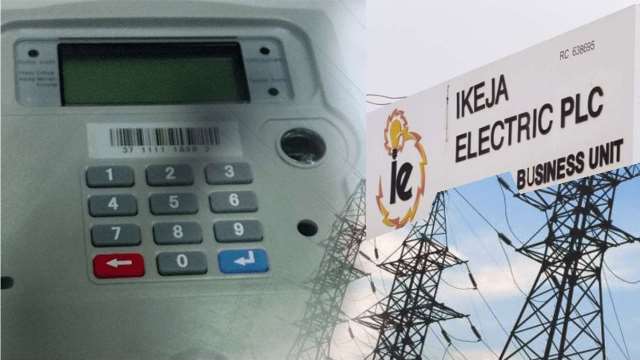

The hum of a ceiling fan. The sudden sigh of darkness. Then, the faint blue blink of a prepaid meter. Every Lagos night begins and ends with this small ritual — the vigil of numbers, the fear of depletion. Somewhere in Ikeja, a woman stands before her meter like a priest before an altar, punching in a 20-digit code that promises light. The code enters, the digits blink — Accepted. For a few hours, power flows, and the house exhales.
But what really happens between that code and the current that lights up her bulbs? Who holds the key to that invisible economy — the one where electricity is no longer a service, but a fiscal algorithm? Behind every token lies a vast network of money, data, and accountability gaps. And in Nigeria’s most commercially vibrant state, Ikeja Electric sits at the centre of that digital labyrinth.
Since the 2013 privatization of the Power Holding Company of Nigeria (PHCN), electricity has ceased to be a mere utility — it has become a currency, traded in codes. The meter, once a simple gauge of consumption, is now a fiscal machine. Every time a customer buys a token, they feed into a complex system of collection agencies, remittance platforms, and regulatory bodies. What began as a reform for efficiency has morphed into one of the most intricate prepaid economies in sub-Saharan Africa.
To trace the story of who truly holds power over Nigeria’s token code, one must descend into the country’s prepaid matrix — from policy desks in Abuja to the transformer stations of Alimosho, where residents speak of tokens as if they were prayers answered or denied by unseen gods of electricity.
The Code that Feeds the Darkness
The introduction of prepaid meters in Nigeria promised liberation. Before 2013, electricity billing was a realm of estimated consumption, handwritten tariffs, and endless arguments with PHCN officials. Consumers paid for darkness as much as they did for light. When the federal government unbundled the power sector under the Electric Power Sector Reform Act, it ushered in the age of Distribution Companies (DisCos) — and with them, the prepaid token.
Ikeja Electric emerged as one of the eleven DisCos, inheriting the largest customer base in Lagos. Its prepaid system was meant to symbolize accountability: pay before you consume, control your usage, and end disputes. In principle, it was elegant. In practice, it birthed a fiscal puzzle.
The prepaid token operates on a universal standard known as STK (Standard Transfer Key). When a customer pays — whether through mobile apps, bank channels, or vendors — the payment data travels through an accredited vending platform before it’s converted into a unique, meter-specific token. That token isn’t just a number; it’s a cryptographic code tied to both the customer’s account and Ikeja Electric’s central server.
Yet, few customers realize that the money they pay doesn’t go directly to Ikeja Electric. It first passes through layers of collection intermediaries — revenue assurance platforms, payment processors, and remittance channels — before settling in accounts managed jointly by Ikeja Electric, the Market Operator (MO), and the Nigerian Bulk Electricity Trading Plc (NBET). Each token thus carries a traceable fiscal DNA — part customer payment, part regulatory obligation, part revenue remittance.
The darkness comes not from the absence of electricity, but from the opacity of this system. Customers see only the front end — the token they buy. But the backend is a digital jungle where financial accountability is constantly negotiated. And as many discovered over the years, when a token fails, it is rarely just a technical glitch; it’s a symptom of the system’s fiscal fragility.
From NEPA to Ikeja Electric: The Privatization Paradox
The transformation from NEPA to Ikeja Electric was Nigeria’s largest post-independence privatization experiment. When the Power Holding Company of Nigeria was unbundled in 2013, the Federal Government transferred control of the distribution networks to private investors. Ikeja Electric was acquired by NEDC/KEPCO Consortium, a partnership between Nigerian and Korean investors. The vision: attract private capital, boost efficiency, and end the decades-old cycle of poor power delivery.
But privatization didn’t automatically deliver transparency. Instead, it created new forms of fiscal control. While Ikeja Electric inherited infrastructure and manpower, it also inherited debt — not just from PHCN, but from an entire culture of non-payment. The prepaid system was supposed to solve this. It ensured that power distribution became a direct fiscal relationship: you pay first, you get supply.
Yet, over the years, this directness has blurred. Consumers today speak of mysterious deductions, vanishing tokens, and varying rates even among neighbors with identical meters. Between 2015 and 2024, the number of prepaid users in Lagos grew from about 250,000 to over 1.2 million, according to NERC’s annual performance reports. But with growth came complexity — and allegations of overbilling, meter tampering, and digital manipulation.
The paradox is painful: privatization promised autonomy, but the prepaid model introduced dependency — not on government bureaucracy, but on software, server uptime, and fiscal compliance protocols invisible to the end user. In essence, the customer is still powerless, only this time the bureaucracy wears a digital face.
To understand the current matrix, one must see Ikeja Electric not just as a distributor of light but as a collector of coded revenue, navigating between the profit motive of private ownership and the accountability demand of a public utility. The balance is thin — and the breach, frequent.
Inside the Token Economy: How Power Became Currency
A token is not just electricity — it’s money transfigured. Every time a consumer purchases a 1,000-naira token, that transaction becomes part of a national energy ledger. This ledger fuels the entire electricity market chain: from gas suppliers to generation companies, from NBET’s clearinghouse to NERC’s regulatory oversight.
Between 2018 and 2024, Ikeja Electric consistently ranked among the top three DisCos in Nigeria for revenue collection, averaging over ₦170 billion annually. Much of this came through prepaid purchases. But the structure of this collection reveals the duality of the token economy — fiscal precision on the surface, fiscal opacity beneath.
The Meter Asset Provider (MAP) and National Mass Metering Programme (NMMP) introduced by the federal government further complicated the matrix. Consumers often paid directly to third-party meter vendors, expecting integration into Ikeja Electric’s token network. But delays in activation, incompatible firmware, and failed synchronization meant that thousands of new meters remained stranded — installed but inactive, paid for but unlinked.
As digital payment platforms multiplied — Quickteller, Paystack, JumiaPay, and bank USSD services — the token economy decentralized even further. Each platform had its own service fee, transaction time, and remittance schedule. For the average consumer, the token appeared instantly. But in reality, the money might take hours or even days to reach Ikeja Electric’s settlement account. The result: mismatched ledgers, delayed crediting, and a cascade of “invalid token” complaints.
Power, in this ecosystem, is no longer measured merely in kilowatts. It is measured in data points, timestamps, and fiscal signatures. The light that comes on in a single apartment depends on a trail of digital approvals — each one monetized, each one taxable. The irony is stark: Nigeria’s most essential service has become its most complicated transaction.
The Middlemen of Light: Vendors, Platforms, and Digital Leakage
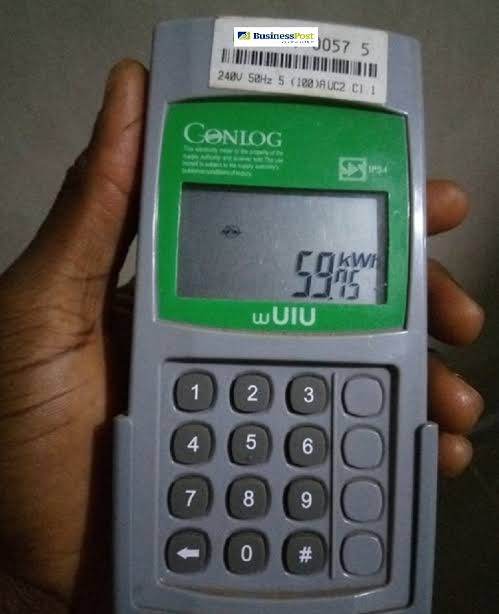
Every transaction in Ikeja Electric’s prepaid chain passes through middlemen — vendors who resell tokens, banks that host payment gateways, and software providers that secure the transfer keys. These intermediaries form what insiders call the “collection architecture.” It’s an ecosystem of permissions, each taking a small slice of the consumer’s payment before it reaches the utility.
In the early years after privatization, these middlemen were seen as partners in financial modernization. But over time, their proliferation created fiscal leakage. A 2022 NERC report on DisCo performance revealed discrepancies between actual energy sales and revenue remittance. Some of this gap was attributed to technical losses, but a portion — nearly 15% — was classified as “collection inefficiency,” an opaque term often used to mask revenue slippage across digital channels.
For consumers, this leakage manifests as token errors and delayed activation. For Ikeja Electric, it translates into daily cashflow volatility. Because prepaid transactions are instant, the company must reconcile its books in real-time — across hundreds of vendors and thousands of endpoints. Any lag between purchase and remittance can distort its fiscal balance sheet.
The vendors, however, are not mere profiteers. Many operate under tight commission margins, often below 2%. They bear the cost of network downtime, customer complaints, and reconciliation disputes. Yet, the opacity of the system means even they cannot trace the full journey of a single token. Somewhere in the data flow, money pauses — temporarily, or sometimes permanently — in holding accounts that blur the line between public oversight and private control.
By 2024, the prepaid ecosystem had become a digital bazaar. Apps promised “instant token delivery,” fintechs boasted “zero downtime,” and banks advertised “seamless energy vending.” But for the ordinary user in Alagbado or Ojodu, light still depended on chance — on whether the code would load before darkness swallowed the room again.
Consumers in the Loop: The Hidden Burden of Fiscal Electricity
To the ordinary Lagos consumer, prepaid power was meant to bring freedom — to eliminate disconnection threats and monthly billing arguments. Yet, what many found was an economic treadmill. As tariffs adjusted yearly through Multi-Year Tariff Orders (MYTO) — 2015, 2020, 2024 — the price per kilowatt-hour crept upward, outpacing wage growth. What used to buy a week’s power now lasted barely three days.
The prepaid meter, in this light, became a fiscal conscience — a reminder of the state’s invisible taxation. Each top-up now triggers deductions for Energy Cost, VAT, Regulatory Charge, and Market Operator Fee. These are legitimate policy instruments, but their cumulative effect traps the consumer in a loop of diminishing returns. You pay for power, but also for governance, inefficiency, and debt recovery.
Households across Lagos speak of the same exhaustion: budgeting not in food or rent, but in tokens. Some keep diaries — ₦3,000 on Monday, darkness by Thursday. Small businesses, especially barbers, welders, and cybercafés, treat electricity tokens as operating capital. Their survival depends on keeping the code alive.
Yet, what most don’t realize is how these everyday purchases sustain an entire fiscal edifice. Every ₦1,000 token purchase contributes to Nigeria’s bulk energy market settlement — paying generators, transmission operators, and regulators. The prepaid system thus functions as an invisible tax regime — one where light is the commodity, and every blink of a bulb finances the nation’s energy debt.
By 2025, as NERC introduced new tariff bands reflecting service levels, Ikeja Electric consumers found themselves stratified — Band A customers enjoying up to 20 hours of power daily at premium rates, while Band E users languished at the fringes of supply. The prepaid code, once a democratic tool, had evolved into a class marker.
The Token that Vanishes: Fraud, Meter Faults, and Ghost Billing
In the underbelly of Nigeria’s power economy lies a darker current — the vanishing token phenomenon. It’s a phrase whispered in compound corridors and shouted in call centres: “I bought a token; it didn’t load.” The message recurs with eerie familiarity. Some customers claim their meters rejected codes without error prompts. Others say their balances drained overnight, light flickering out even when credit remained.
Between 2018 and 2024, NERC’s Consumer Affairs Division documented thousands of complaints from Ikeja Electric’s coverage area, many of which related to token rejection, meter failure, or untraceable deductions. The root causes are technical — yet, their fiscal implications are far-reaching. Each failed token represents not just an inconvenience, but a lost microtransaction in a multi-billion-naira system.
Ikeja Electric attributes many of these failures to “meter synchronization issues.” Prepaid meters, like smartphones, operate on firmware that requires periodic updates. When not refreshed, they fall out of sync with the central vending database, causing token rejection. But consumers rarely hear this explanation. They see only their money vanish — a digital disappearance that erodes trust.
There are also darker stories — of cloned meters, ghost accounts, and fraudulent token sales by unregistered vendors. In 2021, a joint audit between NERC and NBET uncovered irregular vending activities across several DisCos, with token serial numbers duplicated in multiple states. Some rogue agents had accessed vendor portals to generate unauthorized codes, selling them at discounted rates. The buyers — often unsuspecting consumers — enjoyed temporary power until their meters were blacklisted.
The scam exposed a vulnerability at the heart of the prepaid system: the token code itself. Because each 20-digit sequence corresponds to a specific meter, any breach in the vending chain compromises revenue. The Standard Transfer Specification (STS) protocol was supposed to safeguard this, but human corruption remains an unpatchable flaw. When a rogue staff manipulates the vending portal or bypasses reconciliation, the code loses meaning — it becomes counterfeit light.
Consumers pay the ultimate price. In Alimosho, residents recount stories of vendors who vanished after issuing fake tokens. In Ogba, a barber shop owner swears his meter “eats” units faster since a field technician “serviced” it. These anecdotes reveal more than frustration — they expose the fragility of Nigeria’s prepaid illusion, where electricity depends as much on trust as on technology.
Regulators in the Shadow: NERC, NBET, and the Quiet Monopoly
At the top of the prepaid pyramid sit the regulators — NERC (Nigerian Electricity Regulatory Commission), NBET (Nigerian Bulk Electricity Trading Plc), and the Market Operator (MO). Together, they form the fiscal spine of Nigeria’s power market, ensuring that every kobo paid for tokens finds its way into the national settlement pool. But even regulation, like light, casts shadows.
The structure seems straightforward: NBET purchases power in bulk from Generation Companies (GenCos) and sells it to DisCos like Ikeja Electric. DisCos collect payments from customers and remit a portion to NBET and the MO. In theory, this creates a self-sustaining market. In practice, it breeds fiscal tension.
Since 2013, DisCos have struggled to remit full payments. Ikeja Electric’s remittance ratio improved steadily — from about 65% in 2016 to nearly 95% by 2024 — yet it still operates under constant financial surveillance. Any delay in remittance triggers regulatory penalties, while consumers continue to accuse the company of overbilling. Between both ends, transparency evaporates.
NERC’s role is to monitor tariff compliance, consumer protection, and metering targets. Yet, in the labyrinth of digital vending, oversight often trails innovation. The proliferation of fintech vendors and mobile channels has outpaced NERC’s auditing capacity. Token sales are now faster, broader, and more decentralized than the commission’s monitoring frameworks.
The result is a paradoxical monopoly — a system that appears open but is tightly controlled by a few data custodians. Only licensed entities can generate tokens under NERC’s STS mandate, giving Ikeja Electric immense control over access. The company determines who can vend, what fees apply, and how reconciliations are handled. This centralization ensures revenue protection but also concentrates fiscal power in corporate hands.
As Nigeria’s most technologically advanced DisCo, Ikeja Electric stands as both pioneer and gatekeeper. Yet, its strength exposes a broader truth: the power sector’s digitization has created a regulated monopoly of data and payment flow, where consumer choice exists only in appearance. The true control lies in the unseen servers where code becomes current and current becomes cash.
The Fiscal Web: Who Truly Owns the Token Matrix?
Beneath the visible operations of vending platforms and customer service desks lies a deeper question — who truly owns Nigeria’s token infrastructure? The STS (Standard Transfer Specification) system, which governs prepaid token generation, is administered globally by the South Africa–based STS Association. This means every meter and token in Nigeria relies on a foreign encryption protocol.
At the local level, DisCos lease access to these secure vending environments through certified software providers. Ikeja Electric’s vending architecture, like that of its peers, depends on these licensed third-party systems to encrypt and decode tokens. Thus, while Nigerians buy electricity in naira, the digital infrastructure that authenticates their purchase exists in a transnational space.
This dependency has fiscal implications. Every token generated through STS-certified systems attracts licensing and maintenance fees paid in foreign currency. In a country battling forex scarcity, that adds pressure to operational costs. It also raises sovereignty concerns: how can a nation truly control its power economy when the encryption keys lie abroad?
Within Nigeria, the matrix deepens further. Each DisCo’s token vending system is interfaced with the National Central Database (NCD) managed under the Market Operator’s oversight. This ensures that tokens are unique and traceable, preventing cross-DisCo duplication. But this centralization means that a handful of institutions — Ikeja Electric, NERC, NBET, MO, and foreign STS administrators — collectively hold dominion over every flicker of electricity sold through the prepaid channel.
Ownership, therefore, is layered. Consumers fund the system; DisCos control the interface; regulators manage oversight; and foreign firms maintain the encryption backbone. The “power” in this network is not just electrical — it is financial, political, and algorithmic. The true token code, the one that determines who profits from every recharge, is guarded not by electricians, but by accountants and software engineers.
This structure explains why transparency in token billing remains elusive. Even when NERC publishes tariff updates or DisCos release remittance reports, the inner mechanics — encryption fees, vendor commissions, reconciliation delays — remain hidden. Consumers see only the light; the ledger is elsewhere.
A Nation’s Power in Code: Between Data, Dollars, and Darkness
Nigeria’s electricity crisis is often portrayed as a supply problem — too little generation, too many blackouts. Yet, the prepaid system reveals another dimension: a data problem. Power is now as much about who controls the code as who supplies the current. The prepaid meter, once heralded as liberation from estimated billing, has evolved into a data-harvesting device — silently recording consumption patterns, purchasing habits, and fiscal compliance.
Every token purchase generates data trails stored across multiple servers: payment timestamps, meter IDs, location coordinates, and usage frequency. For Ikeja Electric, this data is gold — enabling targeted load management, tariff planning, and customer segmentation. For regulators, it provides performance metrics. But for consumers, it represents an asymmetry of power.
While the average Lagos resident cannot access their detailed consumption history without visiting an Ikeja Electric office, the company’s analytics dashboard aggregates real-time statistics across millions of households. This imbalance turns electricity into surveillance — not maliciously, but structurally. The system knows more about you than you do about it.
Economically, the token matrix is both an achievement and a trap. On one hand, it ensures steady cashflow, making electricity one of Nigeria’s few sectors where users prepay for services. On the other, it embeds inefficiencies that perpetuate fiscal strain. Each transaction incurs banking fees, software costs, and tax components. The cumulative effect is that Nigeria’s electricity consumers fund not just power generation, but the entire digital bureaucracy that mediates it.
In this digital economy of light, data becomes the new oil — and power, the new currency. The prepaid code embodies Nigeria’s paradox: a technologically advanced mechanism built atop an unreliable supply. The result is a nation where electricity is both modern and medieval, instant and elusive, coded and chaotic.
Closeout: The Light That Doesn’t Forget
When the woman in Ikeja presses those 20 digits, she is not merely buying electricity. She is participating in a national ritual — a quiet communion between hope and bureaucracy. Her meter hums, her room glows, and for a moment, the system works. But behind that light lies a chain of transactions stretching across banks, servers, regulators, and encrypted databases — a system so complex that no single entity fully owns it, yet everyone profits from it.
The true power over Nigeria’s prepaid matrix, therefore, is not held by Ikeja Electric alone. It is distributed across institutions, algorithms, and policies — each feeding on the other in a circle of fiscal interdependence. Consumers fund it. Regulators enforce it. Vendors sustain it. And foreign encryption standards guard it. The code is both the key and the cage.
The story of Ikeja Electric’s prepaid matrix is ultimately a story of modern Nigeria — a nation seeking transparency through technology, yet finding new forms of opacity in the process. Every light switched on tonight in Lagos is a reminder that progress is not linear. It flickers — like the current it delivers, like the trust it depends on.
And so, when the next blackout comes — as it inevitably will — the question will not only be “When will power return?” but “Who truly holds power over the token code?” Because in that answer lies the fiscal soul of a nation still paying for its light — one code at a time.
Discussion about this post