


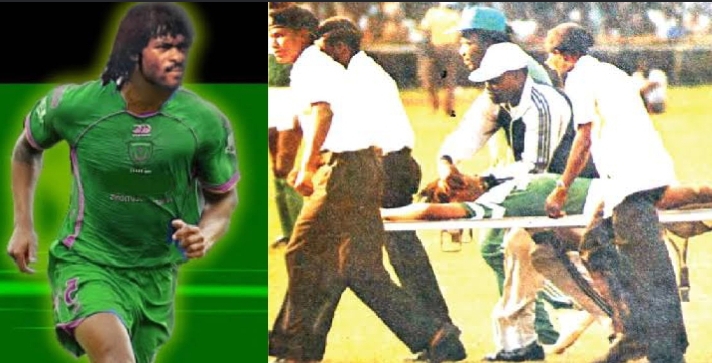

The stadium pulsated with expectation. August heat pressed down on every corner of the National Stadium, Surulere. Samuel Okwaraji sprinted across the pitch with the ball glued to his feet, his eyes scanning the field as if anticipating moves not yet made. Each pass, each darting run, reflected years of discipline, training, and unspoken ambition. Fans cheered, waving green and white, unaware that time itself had begun its quiet countdown. One moment the stadium vibrated with energy; the next, it held its breath.
Samuel had never seemed mortal. The son of Imo State, scholar and athlete, balanced legal texts with football boots, European aspirations with Nigerian patriotism. His body moved with precision, yet hidden beneath his strength were vulnerabilities unspoken — an enlarged heart, pressures silently building with every sprint. That day, the 77th minute became more than a marker on a scoreboard; it became a punctuation in history. When he collapsed, the cheers dissolved into stunned silence. Time did not slow. It did not wait. It took.
Even decades later, recounting the scene evokes disbelief. An ambulance that struggled to respond, teammates frozen mid-run, a nation realizing the fragility of life. Samuel Okwaraji’s fall was instantaneous but profound. Football historians, medical experts, and fans alike have tried to parse the tragedy, yet every retelling folds into the larger question: How do we honor lives so luminous yet so fleeting?
This story is an excavation of Samuel Okwaraji’s life, his death, and the legacy of urgency and fragility he left behind. It is a narrative that fuses biography with history, observation with reflection, and above all, it reminds us that time is never ours to keep.
From Orlu to the National Stage: Roots of a Rising Star
Samuel Okwaraji’s journey began far from the floodlights of Lagos or the roaring stadiums of Europe. Born on May 19, 1964, in Orlu, Imo State, he grew up in a household where discipline and education were as important as skill with a ball. Neighbors recall a boy who ran with intensity across dusty fields, who watched every passing game with analytical eyes, already calculating the angles, the passes, the space. Soccer was not just sport; it was a laboratory for instinct, patience, and endurance.
Even as a child, Samuel balanced academics and athletics. His schooling was rigorous, and he displayed an aptitude for law and international studies. By the time he left for Europe to pursue football, he had already earned respect as a scholar-athlete — a rare combination that set him apart from his peers. While many players focused solely on the pitch, Samuel carried books alongside boots, plans alongside passion.
His talent did not remain confined to local leagues. Coaches noted a natural intelligence on the field: the ability to read the game, anticipate opponents’ moves, and adjust with remarkable precision. A midfielder’s mind coupled with a striker’s courage, Samuel’s presence was magnetic. Every practice session, every local match, became a stepping stone toward a destiny he, and perhaps no one else, could fully comprehend.
The foundation of his early life speaks to a recurring motif: potential intertwined with discipline, brilliance shadowed by fragility. Orlu shaped him, yes, but it also instilled in him a relentless pursuit of time — to train, to excel, to leave a mark before life’s inevitable limits intervened.
Scholar, Athlete, Patriot: The Dual Life
Balancing a burgeoning football career with academic pursuits was not merely an exercise in multitasking for Samuel Okwaraji; it was a testament to his sense of purpose. While teammates rested or indulged in leisure, Samuel studied international law at the Pontifical Lateran University in Rome. Textbooks and match schedules merged into a rhythm that defined his days, a rhythm others struggled to maintain.
Football provided visibility and opportunity; academics provided depth and resilience. Samuel’s dual identity allowed him to navigate European clubs with a sophistication unusual for his age. Yet beneath the polish was an intensity that demanded bodily precision. Hours of sprinting, drills, and matches were layered atop hours of study, leaving little margin for error, little margin for oversight.
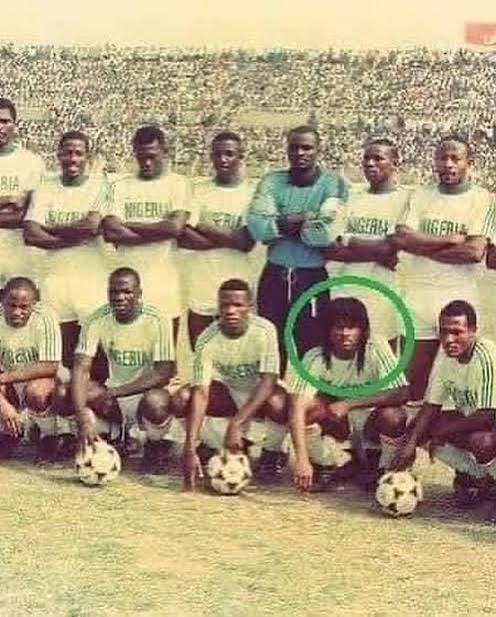
His patriotism remained unwavering. Returning to Nigeria for national duty, Samuel carried both the pride of a professional athlete and the gravitas of an educated ambassador. Each game became more than competition; it was an affirmation of identity, a negotiation between personal ambition and collective expectation. Every sprint, tackle, and pass became a metaphorical ledger of time invested, a testament to a life that sought to reconcile passion with discipline, intellect with instinct.
This duality magnified the tragedy of his death. The man who balanced two worlds did not falter in ambition, yet his heart — the silent arbiter of time — failed. Samuel Okwaraji’s collapse is thus both biological and symbolic, a reminder that even the most disciplined, focused lives are subject to the invisible currents of mortality.
The 77th Minute That Stopped a Nation
The stadium clock ticked relentlessly toward the 77th minute of the World Cup qualifying match between Nigeria and Angola. Samuel Okwaraji, draped in green and white, accelerated down the field, every muscle taut with determination. Fans cheered, unaware that the pulse of a life was about to falter beneath their feet. Football, usually a rhythm of action and reaction, became a still frame. One heartbeat, one misalignment, and the invisible thread connecting Samuel to time snapped.
The ball slid past his feet, the roar of the crowd blurred, and he slumped onto the turf. Teammates froze, eyes wide, as the realization unfolded in slow motion. Time, which had seemed endless, evaporated for Samuel in an instant. The roar of the stadium turned into murmurs of confusion and horror. Spectators who had come to witness a qualifier against Angola now bore witness to mortality itself.
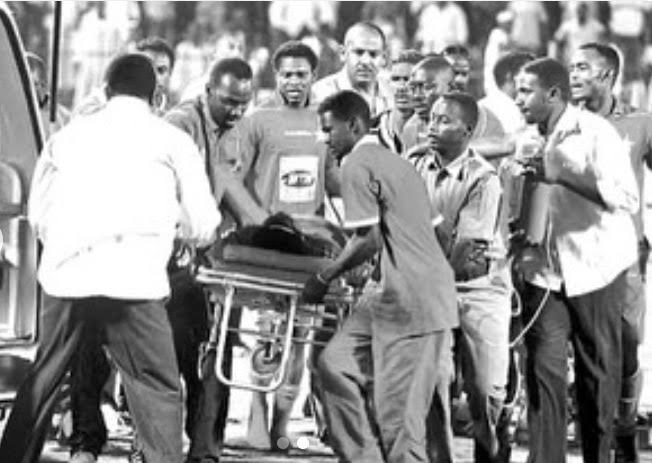
Doctors and medics rushed toward him, yet even the trained hands were impeded by hesitation and insufficient equipment. Moments that could have made a difference stretched into eternity. Every second became a reminder of fragile preparedness, the unpredictable intersection of human ambition and biological limitation. The collapse was sudden, brutal, and devastating, transforming an afternoon of sport into a national reflection on vulnerability.
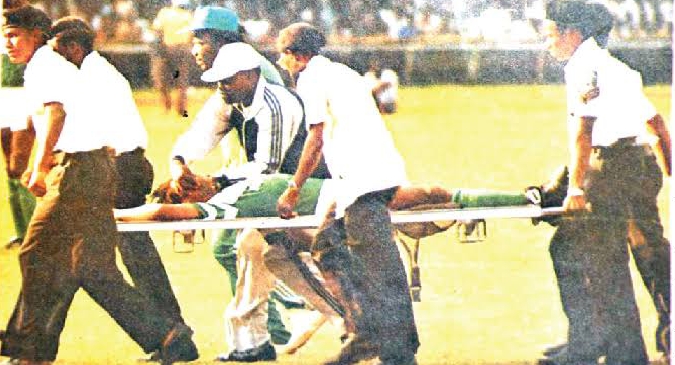
News of his death traveled faster than the game could continue. A nation united in grief, eyes misting with disbelief, voices choking on unspoken questions. Samuel Okwaraji had collapsed on the pitch, but the impact rippled far beyond Surulere, forcing Nigeria to confront how fleeting time can be, and how quickly potential can vanish despite diligence, discipline, and desire.
Fans and Nation React: Grief in Motion
The day Samuel Okwaraji fell, Nigeria’s collective grief erupted in real-time. Across homes, stadiums, and streets, fans struggled to comprehend a reality where a vibrant life could vanish in an instant. Television cameras froze images of teammates clustered around him, while commentators’ voices wavered between disbelief and horror. Social spaces became temporary shrines; the air carried both mourning and bewilderment.
His death transcended the realm of sport. Citizens saw in Samuel a reflection of youth, talent, and ambition — qualities celebrated but now fragile. Prayers, tears, and public vigils poured across communities, demonstrating a rare unity born from shared loss. The abruptness of his passing forced Nigerians to pause, reflecting not only on football but on the ephemeral nature of all human endeavors.
Journalists and historians chronicled the collapse with precision, but also with emotion. Detailed reports revealed medical failures, delayed response, and missed interventions, while columns and essays explored the symbolic weight of his passing. Samuel became more than a player; he emerged as a cultural touchstone, a human story that illustrated the transient, precious nature of life.
Even decades later, his memory endures in the collective consciousness. Fans recount his runs, his skill, and the tragic 77th minute with reverence. Stadiums host tributes, documentaries revisit the day, and football academies cite his discipline as an exemplar. Samuel Okwaraji’s story is embedded in national memory, a narrative that continues to evoke tears, reflection, and admiration for both his life and the brevity that defined it.
Medical Oversight and Fragility in Nigerian Football
Samuel Okwaraji’s heart was a silent adversary. Medical reports later revealed hypertrophic cardiomyopathy, an enlarged heart with subtle signs that were difficult to detect without specialized screening. He had trained harder than most, his stamina enviable, yet the very discipline that drove him forward concealed an unseen vulnerability. Every sprint, every tackle, every calculated pass had been a negotiation with a body unaware of its own limits.
The National Stadium of Lagos, vibrant and crowded, had no contingency for the invisible enemy that struck from within. Ambulances struggled to maneuver, and the delay in critical intervention magnified the tragedy. Discussions of oversight and infrastructure followed in the aftermath, highlighting systemic gaps in player care that had silently endangered countless athletes before and since.
Even decades later, this episode serves as a stark reminder of the fragility embedded in high-performance sports. Passion and discipline cannot compensate for unseen health risks, and Samuel’s death became a touchstone for conversations on medical readiness, emergency protocols, and institutional responsibility. Nigerian football inherited both grief and lessons from his loss, recognizing that human brilliance requires not only support but also protection.
Beyond medical oversight, Samuel’s story underscores the tension between talent and vulnerability. His ambition, his relentless drive to excel, and his national pride collided with biology in a way that remains hauntingly instructive. His passing exposed an uncomfortable truth: dedication does not render the human body invincible, and even heroes are bound by the limits of time and flesh.
Dreams Deferred: European Aspirations Cut Short
Samuel Okwaraji’s career was poised at a cusp of international recognition. European clubs had begun to notice the midfielder whose tactical intelligence matched his athletic prowess. Offers beckoned, contracts loomed, and the promise of global football stardom lay within reach. Every training session in Nigeria was a rehearsal for the opportunities awaiting him abroad.
Yet those dreams were never realized. The sudden collapse during the Angola qualifier transformed potential into elegy. While European scouts would later reflect on his skill, their assessments were forever tempered by what never came to pass. Samuel’s trajectory, meticulously built through years of dedication and sacrifice, was abruptly halted, leaving fans and analysts alike to imagine the what-ifs.
The human dimension of this loss resonates beyond statistics. He was more than a player; he was a young man navigating dual identities — scholar and athlete, patriot and aspiring international professional. His death robbed not only the national team but also the broader footballing world of a rare talent capable of bridging continents through skill, intellect, and strategic vision.
In contemplating what Samuel could have achieved, one is reminded of the fragility inherent in every pursuit of excellence. Talent, preparation, and ambition are indispensable, yet they exist in constant tension with forces beyond control. His European aspirations remain an unfulfilled narrative, a story suspended between possibility and tragedy, echoing the eternal truth that time is never ours to keep.
Lessons for Nigerian Football and Athlete Welfare
The death of Samuel Okwaraji catalyzed discourse on athlete safety and institutional responsibility in Nigeria. Medical screenings, emergency preparedness, and protocol reforms became topics of urgent attention, yet the conversation extended beyond mere bureaucracy. Samuel’s passing illustrated the delicate balance between high-performance ambition and physiological risk, highlighting gaps that, if left unaddressed, could imperil future generations.
Sports federations began reassessing training regimens and medical oversight. Cardiac evaluations, hydration strategies, and on-site emergency protocols received heightened scrutiny. Samuel’s life and death provided tangible evidence that talent, dedication, and professional achievement cannot substitute for preventative care. The tragedy became a template for integrating wellness into elite athletic performance.
Beyond policies and procedures, Samuel’s death influenced the ethical dimensions of sport. Coaches, managers, and institutions confronted moral imperatives: protecting athletes, balancing ambition with safety, and ensuring that dedication is not punished by neglect. The story prompted educational campaigns in academies, highlighting the necessity of health literacy alongside athletic skill.
Samuel Okwaraji’s legacy in this realm extends well beyond football statistics. It embodies the interplay of personal responsibility, institutional vigilance, and collective accountability. His collapse teaches that passion without protection is perilous and that safeguarding talent is a societal duty. In honoring his memory, Nigerian football recognizes that human life is the ultimate metric, and time, once lost, can never be reclaimed.

Legacy Carved in Silence: Remembering Samuel Okwaraji
The memory of Samuel Okwaraji persists in ways both tangible and ineffable. A bust at the National Stadium in Lagos commemorates his life, yet the silence around it speaks volumes. Fans chant his name, not merely in remembrance of athletic skill but as a ritual acknowledgement of courage, sacrifice, and fleeting brilliance. Each August, journalists, historians, and football enthusiasts pause to reflect on the life of a man who embodied discipline, intellect, and unrelenting ambition.
Stories circulate of young players inspired by Samuel’s dual commitment to academics and sport, choosing to emulate the balance he so effortlessly maintained. His death is no longer solely a tale of tragedy but also a lesson in preparation, self-awareness, and respect for the physical vessel that carries one’s dreams. The discourse extends beyond football, inviting reflection on priorities, fragility, and the preciousness of time.
Samuel’s passing became a mirror reflecting systemic shortcomings and personal resilience. It forced a reevaluation of emergency response protocols, medical screening standards, and the ethical responsibility of institutions toward their athletes. In acknowledging the gaps that contributed to his death, Nigerian football has since adopted incremental reforms, yet the memory of the missed moments lingers, emphasizing that structural improvements cannot undo individual loss.
Ultimately, Samuel Okwaraji’s legacy endures not in statistics or trophies but in the emotional and moral imprint left on the nation. His story reminds us that even when life is brief, the impression of a well-lived, fully committed existence can ripple through generations. Through his collapse and the collective grief it elicited, Samuel teaches the profound human lesson: every moment is precious, every heartbeat finite, and time is never ours to keep.
Reflections on Time, Mortality, and Purpose
Samuel Okwaraji’s story is a meditation on the fleeting nature of existence. His 25 years were marked by ambition, intellect, and relentless pursuit of excellence. Yet in one instant, time seized him, revealing a universal truth: mortality is impartial, indifferent to preparation, discipline, or desire. His life and death challenge us to confront the value of each moment, the choices we prioritize, and the urgency with which we pursue purpose.
The human mind often treats time as a currency we control, but Samuel’s collapse exposed its fragility. Life, like a football match, has definitive boundaries, and the clock stops without notice. His story encourages reflection on priorities — the delicate equilibrium between striving for greatness and honoring our corporeal limitations. It is a cautionary tale and an inspiration, demonstrating both the heights of human endeavor and the inevitability of our physical boundaries.
Samuel’s death also offers lessons on grief and memory. Mourning his absence provides not only catharsis but also insight into the value of presence. Each goal, each sprint, each study session is imbued with significance precisely because it is temporary. Observing the life of a young man who achieved so much in so little time teaches empathy, humility, and awareness of our own temporal fragility.
Ultimately, Samuel Okwaraji’s life and death remind us that every heartbeat, every effort, every choice carries weight. Time is fleeting; legacy is built not in decades but in moments. His memory endures as both celebration and warning: live fully, honor your potential, but never assume the clock will wait.
The Eternal Echo of Samuel Okwaraji (Conclusion)
Decades later, Samuel Okwaraji’s presence remains palpable in Nigerian football. Coaches narrate his discipline, young players mimic his runs, and fans invoke his memory during games. The echoes of that fateful 77th minute linger in stadiums, classrooms, and homes, a reminder that excellence often comes intertwined with fragility.
Tributes have expanded beyond the pitch. Schools, community programs, and sports academies invoke his story as a parable of dedication, intelligence, and caution. His dual identity as scholar and athlete underscores a lesson rarely emphasized: holistic preparation, encompassing mind, body, and spirit, is essential for sustaining brilliance.
The story also inspires broader reflection on human potential. Samuel’s life demonstrates that achieving greatness is possible, yet maintaining it requires vigilance, respect for limits, and an awareness of the temporal boundaries that define existence. Each fan, scholar, or athlete who remembers him participates in an ongoing dialogue about the preciousness of time, the responsibilities of institutions, and the moral imperative to protect life.
Samuel Okwaraji’s death, though tragic, is not solely a cautionary tale. It is a chronicle of ambition, courage, and impact compressed into a life too brief for its full measure.
Time claimed him, yet the lessons, inspiration, and questions he left behind endure. His story reminds the living to cherish every heartbeat, every opportunity, and every fleeting moment — a human testament that time, ultimately, is never ours to keep.
Discussion about this post