


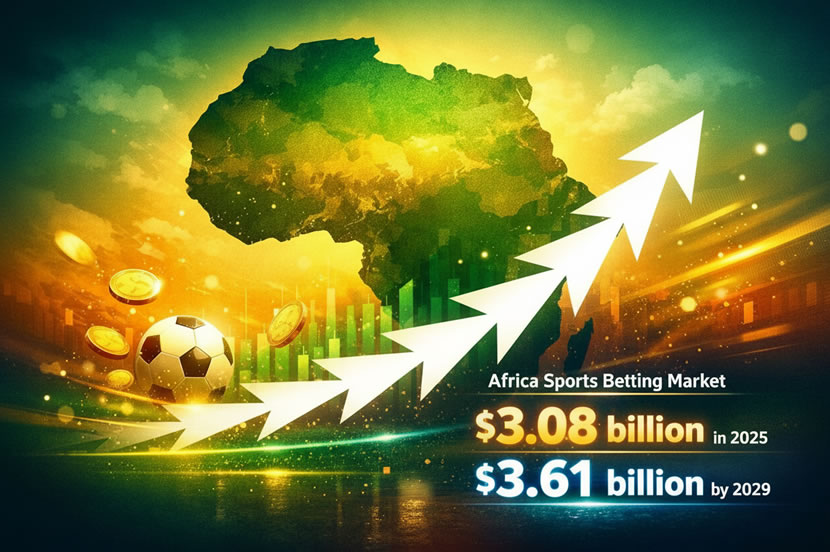

Across Sub-Saharan Africa, sports betting has matured from a side hobby into a defining feature of urban youth culture; as of last year, more than 440 million Africans are estimated to actively place sports bets, making the continent one of the world’s fastest-growing betting regions. Walk through Lagos or Dar es Salaam, and you feel the momentum immediately, from roadside kiosks to smartphones glowing with live odds.
You hear Premier League debates spilling from cafés and commuter buses, where rapid mobile adoption, youthful populations and deep football loyalty have turned wagering into a daily ritual. Lagos drives West Africa’s surge, while Dar es Salaam anchors the rise of the betting Tanzania now offers.
Market size and momentum in Lagos
Lagos sits at the center of Nigeria’s vast gambling economy, which is projected to generate roughly $3.6 billion in revenue in 2025, with sports betting dominating that total. Scale defines this market, with Nigeria’s population advantage translating into tens of millions of active bettors, many placing wagers weekly. In Lagos, you can fund an account in seconds through mobile transfers or USSD codes, where betting shops remain visible, yet digital platforms command growing traffic as speed, convenience and constant match coverage attract younger audiences. Industry analysts also note that Nigeria ranks among Africa’s top three gambling markets by total value, reinforcing Lagos’s strategic importance.
Surveys indicate that more than 70% of Nigerians have participated in sports betting at some point, a remarkable penetration rate for any consumer product. Lagos amplifies that enthusiasm, fueled by tech-savvy youth and intense loyalty to European football leagues. Marketing campaigns blanket billboards and social media feeds, while local agents extend reach into dense neighborhoods. Meanwhile, tax revenue from licensed operators contributes to state finances, tying betting growth directly to public budgets and reinforcing its role in the broader urban economy. Even informal retail clusters in high-traffic districts reflect how deeply embedded betting has become in daily commercial life.
Dar es Salaam and the rise of betting in Tanzania
Shift your focus east, where Dar es Salaam tells a different, though equally compelling, story. The betting Tanzania offers has expanded rapidly, with participation estimates hovering around 56% of the population, translating to tens of millions of users nationwide. Urban concentration drives much of that activity, so in Dar es Salaam, mobile money platforms integrate seamlessly with betting apps, making deposits simple and immediate. In this context, digital access has unlocked a market where physical betting shops once set the pace, with strong telecom penetration in urban Tanzania continuing to accelerate this digital-first transition.
Typically, online channels dominate the conversation around the betting Tanzania provides, accounting for well over 70% of wagers placed nationally. Commonly, younger bettors prefer apps that deliver live statistics, instant payouts and global match access without leaving home; for example, you can track odds during a Champions League match while riding a daladala across the city. Ultimately, regulatory oversight has tightened in recent years, yet licensed operators continue expanding, signaling confidence in sustained growth across Tanzania and its urban heart, Dar es Salaam. As a result, international operators have also shown increased interest in partnerships that deepen competition within Tanzania.
Economic stakes and regulatory direction
Economic impact forms a central pillar of Lagos’s betting narrative, where licensing fees and gaming taxes generate substantial public revenue; meanwhile, marketing, tech support and payment services create formal employment opportunities. Nigeria’s betting sector is now valued at roughly ₦5.6 trillion (about $3.3 billion) in 2025, with more than 60 million adults placing wagers daily, illustrating just how embedded betting has become in the national economy. Competition among domestic and international brands has intensified innovation, pushing platforms to improve user interfaces and customer service. When you place a wager in Lagos, you participate in a vast ecosystem that stretches from telecom providers to payment processors, all benefiting from sustained consumer engagement. Moving forward, financial regulators continue refining compliance standards to manage risk while maintaining investor confidence.
In comparison, a similar fiscal dynamic is unfolding within the betting Tanzania supports, where government authorities collect millions annually from regulated gambling activities, where digital transaction trails offer greater transparency and tax efficiency, strengthening oversight mechanisms. However, policymakers face a delicate balance: encouraging investment while addressing social risks linked to compulsive play, with public debates in Dar es Salaam increasingly centering on responsible gambling campaigns and age restrictions. Ultimately, Tanzania stands at a crossroads, combining economic opportunity with mounting calls for tighter consumer protections, where revised tax structures in recent years reflect ongoing efforts to calibrate growth with accountability.
Youth culture, technology and the road ahead
Youth engagement drives both markets, so you see it most clearly on match days: groups gather around shared screens, debating odds and potential payouts as fiercely as tactical formations. In Lagos, unemployment pressures and entrepreneurial ambition intersect with betting culture, creating a perception of quick opportunity. Dar es Salaam mirrors that sentiment, and the betting Tanzania supports has woven itself into everyday conversations among students and young professionals navigating a competitive economic terrain. Here, social media platforms amplify this culture, turning betting discussions into highly visible digital communities.
Looking ahead, technology will likely determine how these markets advance. For example, expansion of 4G and 5G coverage, deeper smartphone penetration and fintech innovation promise further growth in both cities. Analysts expect steady revenue increases in Nigeria and continued acceleration in the betting Tanzania proffers through the end of the decade. You may witness more localized platforms partnering with global firms, blending international expertise with regional insight. Overall, from Lagos to Dar es Salaam, Tanzania and Nigeria’s giant market remain defining case studies in Africa’s digital consumer revolution.
Discussion about this post