

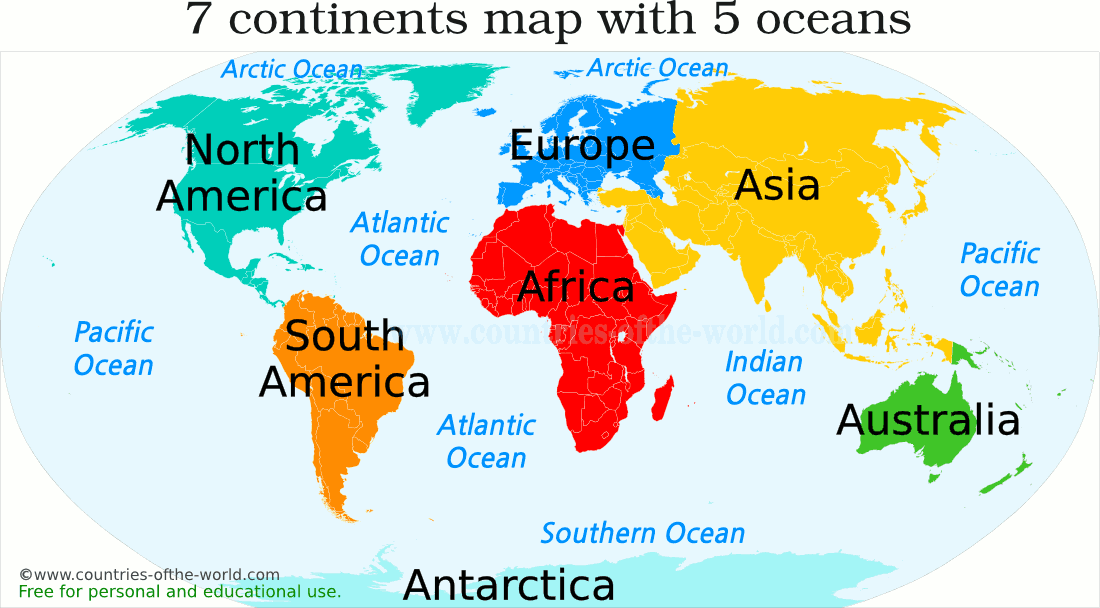

As you gaze at a world map, seven distinct landmasses capture your attention. These are the seven continents that comprise Earth’s vast terrestrial expanses. From the sprawling tundra of Asia to the sun-baked deserts of Africa, each continent offers a unique tapestry of landscapes, cultures, and biodiversity.
Understanding these continental divisions is crucial for grasping global geography, climate patterns, and human civilization. In this article, you’ll embark on a journey across the globe, exploring the defining characteristics of each of the 7 continents. Prepare to broaden your geographical knowledge and gain a deeper appreciation for the diverse world in which you live.
Introducing the 7 Continents of the World

The Earth’s landmasses are divided into seven distinct continents, each with its own unique characteristics and cultural significance. These 7 continents form the foundation of our global geography and play a crucial role in shaping the world as we know it today.
The continents are:
- Africa
- Antarctica
- Asia
- Australia (Oceania)
- Europe
- North America
- South America
These landmasses vary greatly in size, population, and biodiversity, contributing to the rich mosaic of our planet’s surface.
Moreover, the continents are home to a vast array of human cultures and civilizations. From the ancient traditions of Asia to the modern metropolises of North America, each landmass tells a story of human adaptation and innovation. Understanding the 7 continents is not just about geography, it’s about appreciating the incredible diversity of our world and the interconnectedness of all its inhabitants.
North America
North America is a diverse and expansive landmass that’s home to a rich tapestry of cultures, landscapes, and histories. Let’s dive into what makes this continent truly unique.
North America spans from the Arctic Circle in the north to the Isthmus of Panama in the south. It’s the third-largest continent by area, covering about 24.7 million square kilometers (9.5 million square miles). The continent is bordered by the Arctic Ocean to the north, the Atlantic Ocean to the east, the Caribbean Sea to the southeast, and the Pacific Ocean to the west.
Origin and History
The geological history of North America dates back billions of years. The continent as we know it today began to take shape around 200 million years ago when the supercontinent Pangaea started to break apart. Native peoples inhabited the land for thousands of years before European explorers arrived in the late 15th century, leading to colonization and eventually the formation of modern nations.
Demographics and Countries
North America is home to 23 countries and dozens of territories, with a total population of over 590 million people. The three largest countries by area are Canada, the United States, and Mexico. The continent boasts incredible cultural diversity, with hundreds of languages spoken and a mix of indigenous, European, African, and Asian influences.
North America has 23 independent countries:
- Antigua and Barbuda
- Bahamas
- Barbados
- Belize
- Canada
- Costa Rica
- Cuba
- Dominica
- Dominican Republic
- El Salvador
- Grenada
- Guatemala
- Haiti
- Honduras
- Jamaica
- Mexico
- Nicaragua
- Panama
- Saint Kitts and Nevis
- Saint Lucia
- Saint Vincent and the Grenadines
- Trinidad and Tobago
- United States of America
Notable Characteristics
What sets North America apart? Here are a few key features:
- Diverse ecosystems: From the tundra of Alaska to the tropical rainforests of Costa Rica
- Iconic landmarks: The Grand Canyon, Niagara Falls, and the Panama Canal, to name a few
- Technological innovation: Silicon Valley and other tech hubs drive global progress
- Cultural exports: Hollywood movies, pop music, and fast food chains have global reach
North America’s blend of natural wonders, cultural diversity, and economic power make it a continent of contrasts and opportunities.
South America
South America is a land of breathtaking diversity and rich cultural heritage. This vast continent spans over 6.8 million square miles, making it the fourth largest of the world’s continents. From the Amazon rainforest to the Andes Mountains, South America boasts an incredible array of landscapes and ecosystems.
Origin and History
The continent’s history dates back millions of years, with the formation of the Andes Mountains around 45 million years ago. Human settlement began around 15,000 years ago, leading to the rise of advanced civilizations like the Incas. The arrival of European explorers in the late 15th century marked a turning point, resulting in colonization and the mixing of indigenous, European, and African cultures.
Demographics and Countries
South America is home to over 430 million people, with a fascinating blend of ethnicities and languages. The continent comprises 12 independent countries and 3 dependencies, each with its unique character:
- Brazil (the largest country)
- Argentina
- Colombia
- Peru
- Venezuela
- Chile
- Ecuador
- Bolivia
- Paraguay
- Uruguay
- Guyana
- Suriname
South America also has three dependent territories and one internal territory: the Falkland Islands and South Georgia and the South Sandwich Islands; and one internal territory: French Guiana.
Notable Characteristics
What sets South America apart? Here are a few standout features:
- Biodiversity: The Amazon rainforest, covering about 40% of the continent, is home to an estimated 10% of the world’s known species.
- Geographic Wonders: From the world’s highest waterfall, Angel Falls in Venezuela, to the driest place on Earth, the Atacama Desert in Chile, South America is full of natural marvels.
- Cultural Richness: The continent’s history has created a vibrant tapestry of cultures, languages, and traditions.
- Economic Importance: South America is a major producer of agricultural products and minerals, playing a crucial role in the global economy.
From the vibrant streets of Rio de Janeiro to the ancient ruins of Machu Picchu, South America offers a world of adventure and discovery. It’s a continent that continues to captivate and inspire, making it an essential part of our planet’s incredible diversity.
Europe
Europe is a diverse landmass located entirely in the Northern Hemisphere. It’s the second-smallest continent by land area, covering about 3.9 million square miles. Despite its size, Europe packs a punch with its rich history, varied landscapes, and cultural diversity.
Origin and History
Europe’s history is as complex as its geography. The continent’s name comes from Europa, a Phoenician princess in Greek mythology. Throughout millennia, Europe has been the stage for countless empires, wars, and cultural revolutions. From the ancient Greeks and Romans to the Renaissance and Industrial Revolution, European history has shaped much of the modern world.
Demographics and Countries
Home to around 750 million people, Europe is the third most populous continent. There are 50 countries in Europe, but only 44 of them have their capital city on the European continent. Some of the most populous nations include Russia, Germany, France, and the United Kingdom. The European Union, a political and economic union of 27 member states, plays a significant role in shaping the continent’s policies and economy.
Here are the 50 countries in Europe:
- Albania
- Andorra
- Armenia
- Austria
- Azerbaijan
- Belarus
- Belgium
- Bosnia and Herzegovina
- Bulgaria
- Croatia
- Cyprus
- Czech Republic
- Denmark
- Estonia
- Finland
- France
- Georgia
- Germany
- Greece
- Hungary
- Iceland
- Ireland
- Italy
- Kazakhstan
- Kosovo
- Latvia
- Liechtenstein
- Lithuania
- Luxembourg
- Malta
- Moldova
- Monaco
- Montenegro
- Netherlands
- North Macedonia
- Norway
- Poland
- Portugal
- Romania
- Russia
- San Marino
- Serbia
- Slovakia
- Slovenia
- Spain
- Sweden
- Switzerland
- Turkey
- Ukraine
- United Kingdom
Notable Characteristics
Europe’s diversity is one of its most striking features. You’ll find a wide range of landscapes, from the fjords of Norway to the sunny beaches of Greece. The continent is known for its architectural wonders, world-class museums, and vibrant cities. Europe’s contributions to art, literature, music, and science have left an indelible mark on global culture.
Europe’s food scene is another highlight, with each region boasting its own culinary traditions. From Italian pasta to French wine, German beer to Spanish tapas, the continent is a food lover’s paradise.
In terms of education and quality of life, many European countries consistently rank among the world’s best. The continent’s focus on work-life balance, healthcare, and social welfare systems contributes to high standards of living in many areas.
As one of the 7 continents, Europe continues to be a global powerhouse in politics, economics, and culture, shaping world events and attracting millions of visitors each year.
Asia
Asia, the largest of the 7 continents, is a land of incredible diversity and rich history. Covering about 30% of Earth’s total land area, it’s home to roughly 60% of the world’s population. From the frozen tundras of Siberia to the tropical jungles of Southeast Asia, this continent offers a stunning array of landscapes, cultures, and experiences.
You’ll find an astounding 49 countries within Asia’s borders, each with its own unique identity. Five of them (Georgia, Azerbaijan, Russia, Kazakhstan and Turkey) are transcontinental countries lying partly in Europe. These countries are divided into several subregions, including Eastern Asia, Southern Asia, Southeastern Asia, Western Asia, and Central Asia.
Here are the 49 countries in Asia:
- Afghanistan
- Armenia
- Azerbaijan
- Bahrain
- Bangladesh
- Bhutan
- Brunei
- Cambodia
- China
- Cyprus
- East Timor
- Georgia
- India
- Indonesia
- Iran
- Iraq
- Israel
- Japan
- Jordan
- Kazakhstan
- North Korea
- South Korea
- Kuwait
- Kyrgyzstan
- Laos
- Lebanon
- Malaysia
- Maldives
- Mongolia
- Myanmar
- Nepal
- Oman
- Pakistan
- Palestine
- Philippines
- Qatar
- Russia
- Saudi Arabia
- Singapore
- Sri Lanka
- Syria
- Taiwan
- Tajikistan
- Thailand
- Turkey
- Turkmenistan
- United Arab Emirates
- Uzbekistan
- Vietnam
- Yemen
These countries showcase the vast cultural, linguistic, and geographical diversity of Asia.
From Ancient Civilizations to Modern Marvels
Asia’s history stretches back millennia, with some of the world’s oldest civilizations taking root here. The Indus Valley, Mesopotamia, and ancient China all left indelible marks on human history. Today, you can witness this legacy in the form of awe-inspiring structures like the Great Wall of China, India’s Taj Mahal, and the temples of Angkor Wat in Cambodia.
Economic Powerhouse and Technological Hub
In recent decades, Asia has emerged as a global economic powerhouse. Cities like Tokyo, Shanghai, and Singapore have become synonymous with cutting-edge technology and financial might. Yet, this rapid modernization coexists with age-old traditions, creating a fascinating juxtaposition of old and new.
Natural Wonders and Biodiversity
From the towering peaks of the Himalayas to the crystal-clear waters of the Maldives, Asia’s natural beauty is unparalleled. The continent is home to diverse ecosystems, including tropical rainforests, vast deserts, and lush river deltas. This variety supports an incredible array of plant and animal life, making Asia a hotspot for biodiversity.
As you explore the wonders of Asia, you’ll quickly realize why this continent continues to captivate and inspire people from all corners of the globe. It’s a land where ancient wisdom meets modern innovation, where bustling metropolises give way to serene landscapes, and where the human spirit continues to push boundaries and redefine what’s possible.
Africa
Africa is a vast and diverse landmass that’s home to an incredible array of cultures, landscapes, and wildlife. Let’s dive into the fascinating world of this continent and explore what makes it unique.
Africa is the world’s second-largest continent, covering about 30 million square kilometers. It’s bounded by the Mediterranean Sea to the north, the Red Sea and Indian Ocean to the east, the Atlantic Ocean to the west, and the Southern Ocean to the south. The continent straddles the equator, giving it a wide range of climates and ecosystems, from the Sahara Desert to lush rainforests.
Origin and History
Africa is often called the “Cradle of Humankind” because it’s where the earliest human ancestors evolved. The continent has a rich history of ancient civilizations, including the Egyptians, Carthaginians, and various kingdoms across sub-Saharan Africa. European colonization in the 19th century dramatically reshaped the continent, but the mid-20th century saw a wave of independence movements that established the modern African nations we know today.
Demographics and Countries
With over 1.5 billion people, Africa is the second-most populous continent. It’s home to 54 recognized countries, each with its own unique culture and heritage. The largest country by area is Algeria, while Nigeria has the largest population. Africa’s population is notably young, with a median age of just 19.7 years.
Here is the list of 54 countries in Africa:
- Algeria
- Angola
- Benin
- Botswana
- Burkina Faso
- Burundi
- Cameroon
- Cape Verde
- Central African Republic
- Chad
- Comoros
- Côte d’Ivoire
- Democratic Republic of the Congo
- Djibouti
- Egypt
- Equatorial Guinea
- Eritrea
- Eswatini
- Ethiopia
- Gabon
- Gambia
- Ghana
- Guinea
- Guinea-Bissau
- Kenya
- Lesotho
- Liberia
- Libya
- Madagascar
- Malawi
- Mali
- Mauritania
- Mauritius
- Morocco
- Mozambique
- Namibia
- Niger
- Nigeria
- Republic of the Congo
- Rwanda
- São Tomé and Principe
- Senegal
- Seychelles
- Sierra Leone
- Somalia
- South Africa
- South Sudan
- Sudan
- Tanzania
- Togo
- Tunisia
- Uganda
- Zambia
- Zimbabwe
Notable Characteristics
Africa is renowned for its incredible biodiversity. It’s home to iconic animals like lions, elephants, and gorillas, as well as lesser-known but equally fascinating species. The continent boasts some of the world’s most dramatic landscapes, from the towering peaks of Kilimanjaro to the sprawling savannas of the Serengeti.
Culturally, Africa is incredibly diverse, with thousands of ethnic groups and languages. This diversity is reflected in its art, music, cuisine, and traditions. From the ancient pyramids of Egypt to the vibrant markets of Marrakech, Africa offers a wealth of experiences for visitors and residents alike.
Australia (also called Oceania or Australasia)
Australia is a unique landmass that’s both a country and a continent. Located in the Southern Hemisphere, it’s the smallest continent but the sixth-largest country by total area. This fascinating land Down Under has a rich history, diverse demographics, and remarkable characteristics that set it apart from other continents.
Origin and History
Australia’s story began over 50,000 years ago when Indigenous Australians first settled the land. European exploration started in the 17th century, with the British establishing a penal colony in 1788. Over time, Australia evolved from separate colonies into a federation in 1901, becoming the Commonwealth of Australia.
Demographics and Countries
Unlike other continents, Australia comprises just one country, Australia itself. However, depending on how you define the “Australian continent” geographically, you could also include Papua New Guinea and New Zealand, making it three countries in total.
It’s home to over 25 million people, with a multicultural population that includes Indigenous Australians and immigrants from around the world. Major cities like Sydney, Melbourne, and Brisbane are melting pots of cultures, languages, and traditions.
Notable Characteristics
Australia boasts some truly unique features that make it stand out among the 7 continents:
- Diverse ecosystems: From the Great Barrier Reef to the Outback, Australia’s landscapes are breathtaking and varied.
- Endemic wildlife: Kangaroos, koalas, and platypuses are just a few of the animals found nowhere else on Earth.
- Isolation: As an island continent, Australia’s flora and fauna have evolved in relative isolation, resulting in many distinctive species.
Australia’s climate ranges from tropical in the north to temperate in the south. The continent is known for its vast deserts, lush rainforests, and stunning coastlines. The Great Dividing Range, running along the eastern coast, is the third-longest mountain range in the world.
In conclusion, Australia stands out among the 7 continents as a land of contrasts and unique wonders. Its rich history, diverse population, and remarkable natural features make it a truly fascinating part of our world.
Antarctica
Antarctica is the fifth-largest continent, covering about 10% of the Earth’s land surface. It is surrounded by the Southern Ocean and is separated from other continents by vast distances. The continent’s terrain is characterized by vast ice sheets, glaciers, and snowfields, with an average elevation of about 2,500 meters above sea level. It covers an area of approximately 14 million square kilometers.
Origin and History
Antarctica’s history dates back millions of years, with evidence suggesting that it was once part of the supercontinent Gondwana. Over time, the continent broke apart, and Antarctica drifted to its current location. The first confirmed sighting of Antarctica was by the British navigator Edward Bransfield in 1820. Since then, numerous expeditions and scientific missions have explored the continent, including the famous journeys of Robert Falcon Scott and Ernest Shackleton.
Demographics and Countries
Antarctica has no indigenous population, only temporary residents who are scientists, researchers, and support staff from various countries at the research stations. The Antarctic Treaty, signed in 1959, established Antarctica as a natural reserve, devoted to peace and science, and prohibited military activities, nuclear explosions, and the disposal of radioactive waste on the continent. Currently, there are 70 research stations on the continent, operated by more than 25 countries.
Notable Characteristics
- Extreme Climate: Antarctica is the coldest, driest, and windiest continent on Earth, with an average temperature of -50°C (-58°F) in winter and -12°C (10°F) in summer.
- Unique Wildlife: Despite the harsh climate, Antarctica is home to a variety of unique and adapted wildlife, including penguins, seals, and whales.
- Ice Sheets and Glaciers: Antarctica’s ice sheets and glaciers cover about 98% of the continent, containing about 70% of the world’s fresh water.
- Scientific Research: Antarctica provides a unique and relatively pristine environment for scientific research, with scientists conducting studies on climate change, astronomy, and geology.
- International Cooperation: The Antarctic Treaty and the Protocol on Environmental Protection to the Antarctic Treaty have established Antarctica as a symbol of international cooperation, with countries working together to protect the continent’s environment and ecosystem.
In the words of Robert Swan, a renowned Antarctic explorer, “Antarctica is a continent of superlatives, a place where the extremes of nature are more pronounced than anywhere else on Earth.”
Frequently Asked Questions
Here are some frequently asked questions and answers about the 7 continents in the world:
What is the largest continent?
Asia is the largest of the 7 continents, covering approximately 30% of Earth’s total land area. It is home to about 60% of the world’s population and includes countries like China, India, and Russia.
Which continent has the fewest countries?
Antarctica, one of the 7 continents, has no countries. It is governed by the Antarctic Treaty System, which sets aside the continent as a scientific preserve and bans military activity.
Prior to the Antarctic Treaty of 1959, seven countries: Argentina, Australia, Chile, France, Great Britain, New Zealand, and Norway, made territorial claims on parts of the continent. However, the treaty does not recognize these claims, and instead established Antarctica as a territory to be governed by the principles of international cooperation and environmental protection.
Are there inhabited continents?
Six of the 7 continents are permanently inhabited. Antarctica is the only continent without a permanent human population, though it hosts temporary residents at various research stations.
How are the continents divided?
The 7 continents are divided based on large landmasses separated by oceans. However, the boundaries between some continents, like Europe and Asia, are more cultural and historical than geographical. This division system is taught in most English-speaking countries and is widely used in international contexts.
Conclusion
As you’ve journeyed across the seven continents, you’ve discovered the incredible diversity our planet offers. From the icy expanses of Antarctica to the lush rainforests of South America, each landmass has its own unique character and wonders to explore. By understanding the distinct features, cultures, and ecosystems of these continents, you gain a deeper appreciation for the complexity of our world.
Discussion about this post