

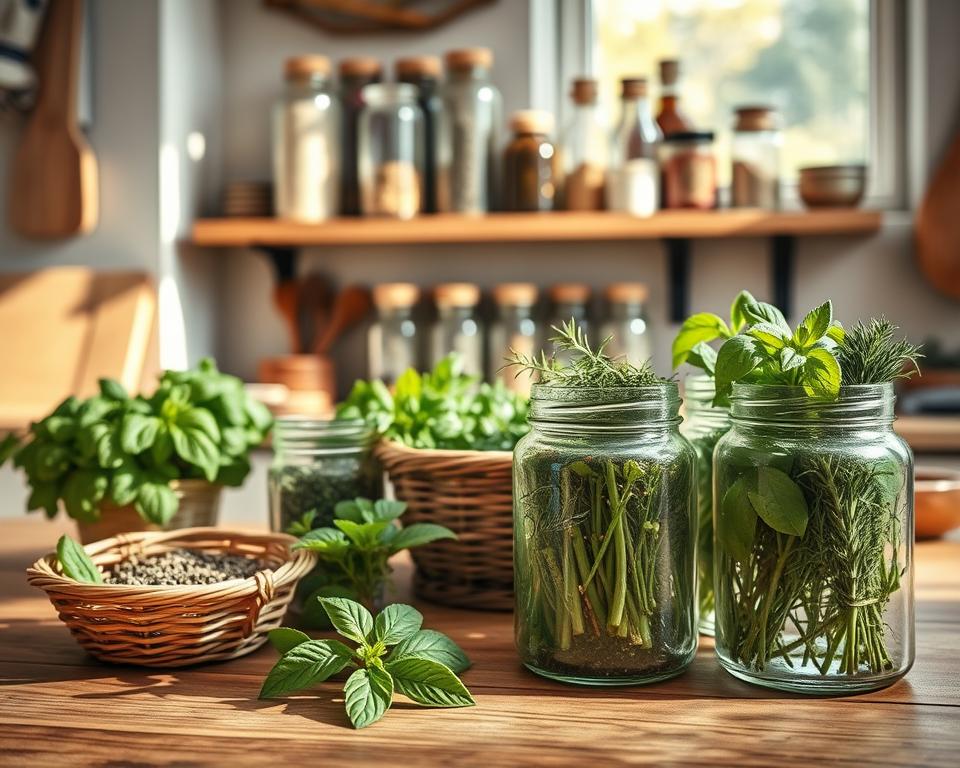

Using herbs for tea, cooking, wellness, or skincare? Their quality matters a lot. At Akshar Herbs & Spices, we harvest and dry herbs like marigold, lavender, and hibiscus. We do this to keep their natural goodness intact.
Storing them right is essential. It keeps their aroma, flavor, potency, and color fresh. With proper storage, your herbs and spices stay good for longer. This means you get the most from their benefits.
Using the right storage methods lets you enjoy your herbs and spices fully. Whether it’s for a calming tea or a special recipe, they’ll be perfect.
Herbs and Spices: The Basics
To get the most out of your herbs and spices, it’s key to know the basics. Herbs and spices come from plants and add flavor, color, and help preserve food. They fall into two main groups: herbs and spices.Herbs are usually leaves, stems, or flowers. Spices are seeds, bark, roots, or fruit.
You can use herbs and spices in many ways, like fresh, dried, or ground. Storing them right is important to keep their flavor and potency. Here are some important points:
- Herbs like basil, rosemary, and thyme are often used in cooking. They can be stored fresh or dried.
- Spices like cinnamon, cumin, and turmeric are used ground or whole. They can be stored for a long time if kept properly.
- Both herbs and spices can add flavor to many dishes, from soups to baked goods.
Keeping herbs fresh is key to enjoying your spice collection. Techniques like drying, freezing, or storing in airtight containers can help. By knowing how to preserve herbs, you can improve your cooking and cut down on waste.
Some main benefits of good herb and spice storage include:
- Maintaining flavor and aroma
- Reducing waste by keeping herbs and spices fresh longer
- Saving money by not having to often replace stale or expired herbs and spices
By understanding the basics of herbs and spices, you can start preserving their quality and flavor.
The Enemies of Herb and Spice Freshness
Many things in your kitchen can harm the freshness of herbs and spices. Knowing what these are is key to keeping them flavorful.
Light is a big enemy of fresh herbs and spices. It can break down the oils that give them taste and smell. Storing fresh herbs in a dark place helps keep them fresh.
Heat also harms herbs and spices. It makes them lose their strength faster. Moisture can cause mold and spoilage, too.
Air can make herbs and spices lose their smell. It’s important to keep them away from air, light, heat, and moisture.
| Factor | Effect on Herbs and Spices |
|---|---|
| Light | Breaks down essential oils, fades color and nutrients |
| Heat | Accelerates oxidation, reduces potency |
| Moisture | Creates mold, leads to spoilage |
| Air | Causes stale aromas, reduces freshness |
Knowing these enemies helps you protect your herbs and spices. For example, storing herbs in the fridge keeps them fresh. We’ll talk about how to store them properly next.
Essential Storage Containers for Herbs and Spices
The life and taste of your herbs and spices depend on the storage containers. It’s key to pick the right ones to keep them fresh and strong.
Choosing the right container for herbs and spices is important. Here are some top picks:
- Glass jars with tight lids are great for keeping moisture and pests out.
- Miron UV jars protect from ultraviolet light, which can harm herbs and spices.
- Resealable kraft pouches with foil lining are handy for dry herbs, keeping them fresh longer.
These containers solve common storage problems like moisture, light, and pests. Using the right ones can make your herbs and spices last longer.
Think about the material and design when picking containers. Glass jars won’t react with your herbs and spices. Miron UV jars block light, which helps keep herbs and spices fresh. Resealable kraft pouches are eco-friendly and keep air and moisture out.
To get the most from your containers, make sure they:
- Are air-tight to keep moisture and air out.
- Are light-proof, which is important for sensitive herbs and spices.
- Are stored in a cool, dry spot to keep the quality up.
By picking the right containers and storing them right, you can enjoy your herbs and spices longer. They’ll stay flavorful and potent.
How to Store Herbs: Fresh vs. Dried Methods
Storing herbs right is key to keeping them fresh and potent. The choice depends on the herb type and how you plan to use it.
Refrigerator Storage Methods
For fresh herbs, the fridge is the best place. Store them in a damp paper towel in a plastic bag or a jar with a lid. This keeps them cool and dry, helping them stay fresh longer.
Water Storage Method
Storing fresh herbs in water is another smart move. It’s like keeping flowers in a vase. This method works well for herbs like basil and mint. Just remember to change the water often to avoid bacteria.
Before putting the herbs in water, trim their stems. This boosts water absorption and keeps them fresh.
Whole vs. Ground Considerations
Whether to store herbs whole or ground depends on your needs and taste. Whole herbs keep their flavor and scent longer than ground ones because they’re less exposed to air.
| Storage Method | Best For | Benefits |
|---|---|---|
| Refrigerator Storage | Fresh Herbs | Maintains freshness, easy to implement |
| Water Storage | Fresh Herbs like Basil and Mint | Keeps herbs hydrated, visually appealing |
| Whole Storage | Both Fresh and Dried Herbs | Retains flavor and aroma longer |
Storing herbs effectively is a simple yet critical step in keeping their quality. By picking the right storage method, you can enjoy your herbs longer and improve your cooking.
Spice Storage Strategies for Maximum Potency
Proper storage can make your spices last longer. It’s important to keep their flavor, aroma, and potency. Whole spices stay fresh longer than ground ones because they’re less exposed to air, light, and heat.
Store your spices in a cool, dry spot. This could be a pantry or cupboard away from sunlight and heat. Avoid storing spices near windows or in moist areas to prevent flavor and aroma loss.
Choosing the right containers is essential for herb preservation techniques. Use airtight containers like glass jars with tight lids for whole and ground spices. These keep air, moisture, and light out, preserving the spices’ potency.
Keep whole spices whole until you’re ready to use them. Grinding or crushing just before use releases more flavor and aroma. This method makes your cooking more enjoyable and ensures you get the most from your spices.
By following these storage tips, your cooking will taste better and smell amazing. The secret to keeping spices potent is proper storage.
Best Locations for Storing Your Herb Collection
Choosing the right spot for your herbs is key. Look for a cool, dry place like a cabinet or pantry. Make sure it’s away from heat and sunlight.
Herbs lose flavor and smell fast in sunlight and heat. Dark-colored or opaque containers can block light. But, think about the storage spot too.
A cool, dry cabinet is perfect for herbs. Don’t store them near ovens or stoves. Also, stay away from damp places to avoid mold.
Consider these when picking a spot:
- Avoid areas with high humidity
- Keep herbs away from strong-smelling foods, as they can absorb odors easily
- Store herbs in a spot that’s easy to reach, so you can check on them often
Preserving Fresh Herbs for Extended Use
To keep your herbs fresh longer, try different preservation methods. These methods not only extend shelf life but also let you enjoy your favorite flavors all year.
Air Drying Technique
Air drying is easy. Just tie herbs in small bunches and hang them upside down in a warm, dry, dark spot. It’s great for thyme, oregano, and rosemary.
Oven and Dehydrator Methods
For faster drying, use your oven or dehydrator. Spread herbs on a baking sheet and dry them on the lowest oven setting. Or, follow your dehydrator’s instructions.
Chop fresh herbs and mix with a bit of water. Pour into ice cube trays and freeze. These ice cubes are perfect for soups, stews, and sauces.
Oil Preservation Technique
Preserving herbs in oil is also effective. Just chop the herbs and cover them with oil in a clean glass jar. Keep the jar in the fridge to slow down oxidation.
| Preservation Method | Ideal Herbs | Storage Tips |
|---|---|---|
| Air Drying | Thyme, Oregano, Rosemary | Store in airtight containers |
| Oven/Dehydrator | Basil, Mint, Parsley | Keep in a cool, dark place |
| Ice Cube | Cilantro, Dill, Chives | Use in soups and stews |
| Oil Preservation | Sage, Thyme, Rosemary | Refrigerate to maintain freshness |
Using these preservation methods lets you enjoy fresh herbs longer. Try different techniques to find what works best for you and your favorite herbs.
Troubleshooting Common Herb Storage Problems
Storing herbs right means knowing how to handle moisture and pests. You might face issues like mold and pests when keeping herbs fresh. These problems can affect how long your herbs stay good.
Mold is a big problem, caused by too much humidity and bad air flow. To stop mold, use containers that seal tight and keep them dry. Adding a desiccant packet can help soak up extra moisture.
Pests like insects and rodents can get into your herbs. To keep them away, store herbs in sealed containers. Also, keep them far from places pests might be. Check your herbs often for any signs of pests.
Moisture can spoil your herbs. To fight this, dry your herbs well before you store them. Freezing herbs is another way to keep them fresh longer.
| Common Herb Storage Problems | Solutions |
|---|---|
| Mold Growth | Use airtight containers, desiccant packets |
| Pest Infestations | Store in airtight containers, inspect regularly |
| Moisture Damage | Dry herbs before storing, consider freezing |
Knowing how to solve these common problems can help you enjoy your herbs longer. Using these herb preservation techniques will make your herb collection last longer.
Discussion about this post