The coalition, however, faulted the use of manipulated videos, still images to depict the attack on the troops by the insurgents.
According to a report released by the human rights groups on Wednesday, some political players used the attack as part of their campaign for the 2019 general elections, which poses the risk of validating the crimes Boko Haram sect.
Maxwell Gowon, Executive Director of the coalition, said the materials released online were mostly captured from Kannywood movie scene.
Gowon, therefore, called on the Nigerian government to carry out a comprehensive review of the activities of correspondents of foreign media platforms to ascertain the extent to which they are working with terrorists and some local actors to discredit the Nigerian military and its efforts.
The report reads in full.
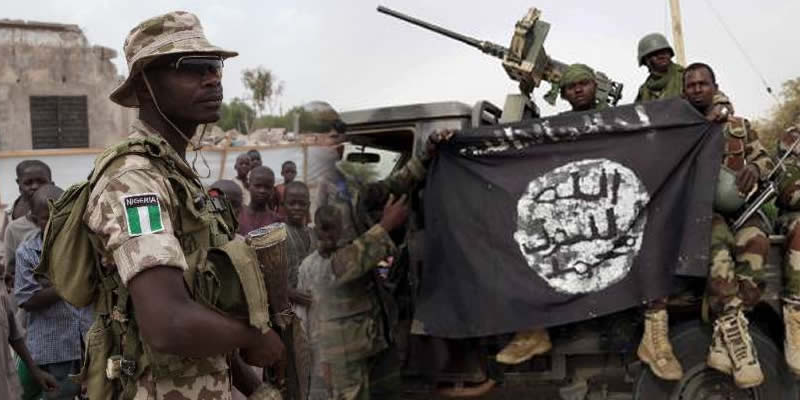
The Nigerian Army confirmed that Boko Haram insurgents on November 18, 2018 attacked its 157 Battalion in Metele village in Guzamala Local Government Area of Borno State. The casualty figure from the attack remains in contention as Boko Haram propaganda has been unwittingly shared and promoted by websites and members of the public, causing distortion in the reckoning of the number of the dead and wounded.
There were also attacks in Gajiram and Mainok, both in Borno state.
Media reports of the attacks, with particular emphasis on the casualty figure, were monitored for comparative value. The video released by the Boko Haram and the various versions published, as well as screen grabs and still photos published and shared on social media were analysed.
The comment sections of some of the sites that reported the attacks or published the aforementioned multimedia content were reviewed (as posted at the time of compiling this report).
The main video (or collection, since some site published split versions) was shot to project Boko Haram as strong while at the same time aimed at causing distress and terror to Nigerians. However, vegetation in the clip remain green, which is not consistent with the start of the harmattan/dry season when the attack happened – the grass should have matured to the point beginning to dry up on account of almost bordering the desert.
Other unrelated footages of terror attacks were published by some platforms that possibly do not have the necessary skills for video authentication and verification. Unrelated gory pictures were similarly misappropriated in reporting the incidents.
In a few instances, stills from a Kannywood movie of an actor-soldier weeping over a fallen colleague-actor were serially shared as Nigerian soldiers mourning after the attack.
Some political players used the attack as political prop as part of their campaign for the 2019 General Elections, which poses the risk of validating the crimes Boko Haram is committing while encouraging them to commit more atrocities since they are being incentivised to see themselves as having a participatory audience.
International news networks and organizations have cashed in on the attack reiterate their long held stereotype to cast aspersion on the war against terrorism while meetings of the Service Chiefs to brief the Commander-in-Chief have been interpreted as censure of these high ranking military officials. This raised the concern of what relationship exists between these foreign media and the terrorists.
The foreign media have shifted from referring to the terrorists as Boko Haram to using the term “Islamic State in West Africa (ISWA)” a clear departure from their hesitation to acknowledge the IS/ISIS name in the Middle East.
Similar to 6 above, locals reported that those that carried out the attacks were foreigners and not Nigerians, which reinforces earlier expressed views of indigenous conflict monitoring and peacebuilding groups that had earlier argued that the initial Boko Haram has been degraded and eventually defeated by the Nigerian Army.
Well-meaning Nigerians should condemn the use of fake videos and photos that play on the psyche of Nigerians. The condemnation should extend to warning those that do this to desist from further terrorising Nigerians by helping Boko Haram to promote its act of terror.
The federal government should carry out a comprehensive review of the activities of correspondents of foreign media platforms to ascertain the extent to which they are working with terrorists and some local actors to discredit the Nigerian military and its efforts. The review should benchmark the conduct of these correspondents with the prevailing legislation and practice in their countries of origin and those of the countries where their organizations have their international headquarters.
The extant anti-terrorism legislation in the country should be activated to see the possibility of making the promoters of fake news to account for their actions.
In the light of the accounts by the local population and the transition of foreign media into adopting ISWA as opposed to Boko Haram, Nigerian authorities should review its treatment of the terrorists as Boko Haram members (that the record have shown to have been defeated) and see what international intervention can be brought in since the Islamic State is not a creation of Nigerian factors.
The Nigerian military should organize a refresher clinic on reporting terrorism for bloggers with a view to highlighting the imperatives of video and photo authentication.
The federal government should engage the social media and internet giants (Google, Facebook, Instagram, Twitter and others) on the need to accord Nigeria the same level of respect they show countries in Europe and North America by not condoning terrorist propaganda on their platforms.