- Founder of Nigeria Women’s Party, Oyinkansola Abayomi’s demise
- Boatloads of Nigerian troops stormed Niger Delta over ethnic violence that left dozens dead
Julian Barnes once stated that history is that certainty produced at a point where the imperfections of memory meet the inadequacies of documentation.
The course of history is not a simple graph. Every history cannot be straight because of the events that shaped it. Every circumstance or episode significant and must be documented, yet doing so deprives history of the extremely rare opportunity to be accurate.
WITHIN NIGERIA highlighted two significant events that shaped March 19 in Nigerian history in an effort to raise awareness for educational and enlightenment objectives, particularly by bringing famous historical events to people’s doorsteps.
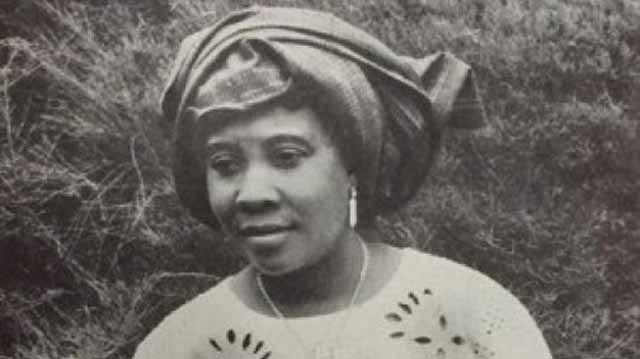
Founder of Nigeria Women’s Party, Oyinkansola Abayomi’s demise
On this date, 19th of March in 1990, Nigerian nationalist and feminist, Iyaloye Oyinkansola Abayomi who was born on 6th of March in 1897 died in Lagos, Nigeria.
Oyinkansola Abayomi was the head of the Nigerian Girl Guides and founder of the Nigerian Women’s Party.
Her father was Sir Kitoye Ajasa, a prominent Saro tribesman who was the first Nigerian to be knighted by the British, and her mother was Lucretia Olayinka Moore, an omoba of an Egba royal family. She was also the first cousin of Kofo, Lady Ademola. She attended Anglican Girls’ Seminary school, Lagos.
She graduated in 1909. She then went to school at the Young Ladies Academy at Ryford Hall, located in Gloucestershire, England. In 1917, she attended the Royal Academy of Music in London.
She moved back to Lagos in 1920. She became a music teacher at the Anglican Girls’ Seminary. It was during this time when she met a lawyer named Moronfolu Abayomi. They married in August 1923. He would be assassinated in court two months later.
On May 10, 1944, she founded the Nigerian Women’s Party during a meeting at her home with twelve women. The organization sought equal rights for women. When Kofo Abayomi was knighted by the Queen of the United Kingdom in 1954, Abayomi became known as Lady Abayomi.
Boatloads of Nigerian troops stormed Niger Delta over ethnic violence that left dozens dead
On this date, 19th of March in 2003, Boatloads of Nigerian troops headed for the oil-rich Niger Delta to put down days of ethnic violence that left dozens dead and disrupted multinational oil operations.
According to reports, the fighting had a severe impact on oil production, both because some flow stations were themselves attacked, and because of the general insecurity.
By March 19, SPDC had closed ten flow stations in Delta State as a result of the violence, evacuating employees and losing 126,000 bpd production; four more were closed a few days later, bringing the total loss in output to 320,000 bpd.
Chevron stated that it had closed its onshore facilities, and then its main export terminal at Escravos, closing down output of 440,000 bpd. Both SPDC and CNL declared force majeure—an inability to fulfill their obligations due to events beyond their control—on their Nigerian exports.
Youth militants destroyed several flow stations after the oil companies abandoned them, including CNL’s Olero Creek and Dibi flow stations; and SPDC’s Otumara and Saghara flowstations, and a logistics base at Escravos.
There was minor vandalization elsewhere. Total (formerly Elf; the joint venture in Nigeria is still known as Elf Petroleum Nigeria Ltd, EPNL) also closed its production in the area.
By March 24, combined total loss of production was more than 800,000 bpd, around 40 percent of Nigeria’s usual oil output. FNDIC announced that it had seized eleven oil facilities and threatened to blow them up if government attacks on Ijaw villages did not cease.
Not till the second week in April did production begin to resume. As of August 11, SPDC was still down 125,000 bpd, and ChevronTexaco by 140,000 bpd; Total had not restarted its own 7,500 bpd closed in since March. By October, SPDC was reporting production reduced by 80,000 bpd and CNL still by 140,000 bpd.