

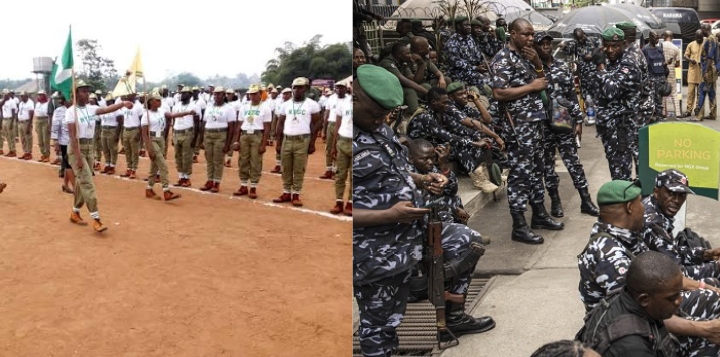
When November 26, 2025 hit, Abuja felt the weight of urgency. The Presidential Villa released a statement that made headlines across every corner of Nigeria. President Bola Tinubu declared a nationwide security emergency. Tens of thousands of Nigerians were to join the police and army to confront the rising tide of kidnappings, banditry, and communal attacks. The government made an unusual move. NYSC camps, long associated with youth service and national integration, were suddenly repurposed to train police officers on an accelerated timeline. Dormitories that once housed young graduates now hosted recruits preparing for streets and forests riddled with insecurity.
It was not just a numbers game. The decision was about presence, speed, and a visible demonstration of the government taking charge. Officers who had been handling VIP duties were pulled back for crash courses designed to prepare them for frontline deployments. Communities that had felt abandoned now suddenly saw uniformed personnel appearing in towns, villages, and highways almost overnight. This article traces how this extraordinary transformation happened and what it means for Nigeria’s security and youth service landscape.
Why Emergency 2025s Security Surge
The security situation in Nigeria in 2025 had been worsening for months. Kidnappings for ransom had spiked, bandit attacks became more brazen, and insurgent activities intensified in northern states. Kaduna, Zamfara, Niger, Benue, and some parts of the South East faced repeated attacks. Citizens grew anxious and vocal. Social media amplified the stories of abductions and attacks. Pressure mounted on the government to respond decisively.
On November 26, President Tinubu declared a nationwide security emergency. He ordered the recruitment of 20,000 additional police officers and signaled plans to eventually bring the number of new recruits to 50,000. The statement was clear. The existing security structure was insufficient, and extraordinary measures were needed. This was a call for action across all security agencies. The Department of State Services, the Nigerian Army, and the Nigeria Police Force were tasked with immediate operational expansions.
NYSC Camps From Youth Service to Police Barracks
NYSC camps have historically been spaces for national integration and youth service training. They are scattered across all states, designed to host graduates for orientation programs, community development service, and short trainings. In late November 2025, these camps took on a completely new role. The government authorized them to serve as temporary police training centers. Dormitories were converted to sleeping quarters for recruits, lecture halls became classrooms for fast track instruction, and parade grounds turned into drill fields.
The rationale was practical. NYSC camps already had infrastructure, security perimeters, and space for large groups. They could accommodate a massive intake without waiting for permanent academy expansions. The government needed speed and scale. Within days of the declaration, instructors were repurposed, curricula were condensed, and the first batches of recruits were enrolled in what was called crash training.
Crash Training, Redeployment, and Speed Versus Standard
The accelerated training program focused on getting recruits ready for immediate deployment. Officers who had been on VIP duty were pulled back for condensed instruction. Courses included patrol procedures, crowd management, basic investigative skills, and drills. The goal was to prepare personnel for immediate action, particularly in areas under threat from kidnappers, bandits, and insurgents.
While the urgency was real, concerns about training quality emerged. Traditional police academy programs take months to instill discipline and operational understanding. Here, the timeline was compressed into weeks. Some communities noticed inexperienced officers in early deployments. Logistical challenges, feeding, accommodation, and transport created additional pressure. Still, the centralized use of NYSC camps allowed mass deployment faster than conventional methods.
Operational Realities: What Changed on the Ground
By early December, the first wave of crash trained officers had been deployed. Patrols increased, checkpoints appeared on highways, and towns with previous insecurity noticed a visible presence of law enforcement. States like Kaduna, Zamfara, Niger, and Benue received personnel based on threat assessments.
Reports suggested over ten thousand recruits had passed through the temporary NYSC training hubs. While numbers improved, coordination and experience remained a concern. Some officers struggled with unfamiliar terrains, communities, and local challenges. Nevertheless, communities reported feeling somewhat safer, seeing more boots on the ground than before.
What This Means for NYSC Identity and Nigeria’s Youth Policy
This temporary repurposing of NYSC camps has implications for the program itself. NYSC has long symbolized national integration and youth development. Converting camps for security training challenges that identity. Critics worry that frequent use of NYSC infrastructure for policing may influence public perception, affecting youth participation in the future.
On the other hand, supporters argue that this is a pragmatic use of idle resources in times of crisis. The government showed it could adapt and deploy existing infrastructure rapidly. The challenge moving forward will be balancing youth service mandates with security needs and ensuring that the original purpose of NYSC is not permanently undermined.
Challenges, Criticisms, and Oversight Gaps
Despite the practical benefits, several challenges surfaced. Rapid training risked creating gaps in knowledge, readiness, and discipline. Oversight mechanisms were stretched thin. The sudden deployments across multiple states raised concerns about accountability, potential misconduct, and effectiveness. Some NYSC camps were not designed for military style operations, creating pressure on facilities and staff.
Political influences and deployment decisions also drew criticism. Questions arose about whether emergency recruits were assigned based on strategic needs or local political calculations. Civil society groups emphasized the need for transparency, monitoring, and follow up to ensure emergency measures did not compromise ethics or professionalism.
Looking Ahead: Is This Stop Gap or New Normal?
The temporary use of NYSC camps may be a stop gap or it may signal a shift in how Nigeria responds to security crises. Discussions have already begun about building permanent rapid response training centers and reforming police training infrastructure. The 2025 experience demonstrated that speed and flexibility are possible but also highlighted the risks of emergency improvisation.
Will NYSC camps return fully to their original role? Will the government invest in separate fast track police academies to avoid relying on youth service infrastructure? These questions will shape the future of both Nigeria’s security strategy and the youth service program.
Closing Thoughts: Emergency Pragmatism or Dangerous Precedent?
The 2025 decision to repurpose NYSC camps for fast track police training reflects a country in crisis grappling with urgent security threats. It showed the government could adapt and mobilize resources quickly. At the same time, it raises questions about training quality, youth service identity, and oversight.
Nigeria’s gamble is underway and the coming months will reveal whether it was a necessary emergency measure or a dangerous precedent.